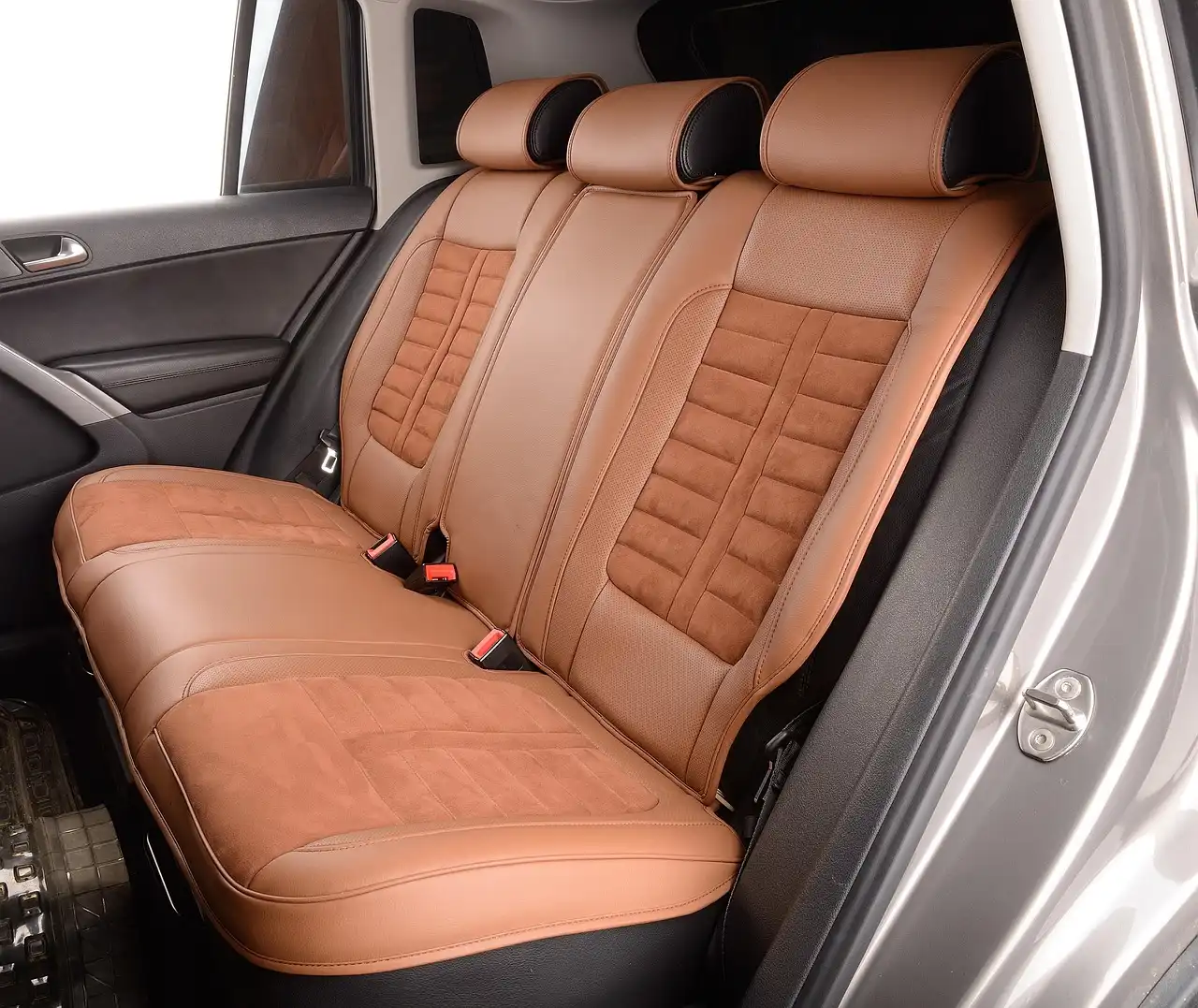
How to Compare Rear Seat Room and Comfort in Cars
Compare rear-seat room by measuring legroom, kneeroom, headroom, seat height, and door opening, then verify fit with your tallest passenger and your child seat; about 38 inches of rear legroom is a useful adult benchmark. Skip that check and you can end up with cramped knees, poor head clearance, or a car seat that pushes the front seat too far forward. This guide shows a repeatable way to compare specs, test seating position, and judge comfort in real use.
Side-by-Side rear seat comparison


Use the same front-seat position in both cars, then judge adult space and child-seat space separately. A spec sheet can tell you legroom, but it can miss a steep backrest, a short cushion, or a roofline that steals headroom. You need a side-by-side check with the driver seat set to a normal driving position.
What you’ll need
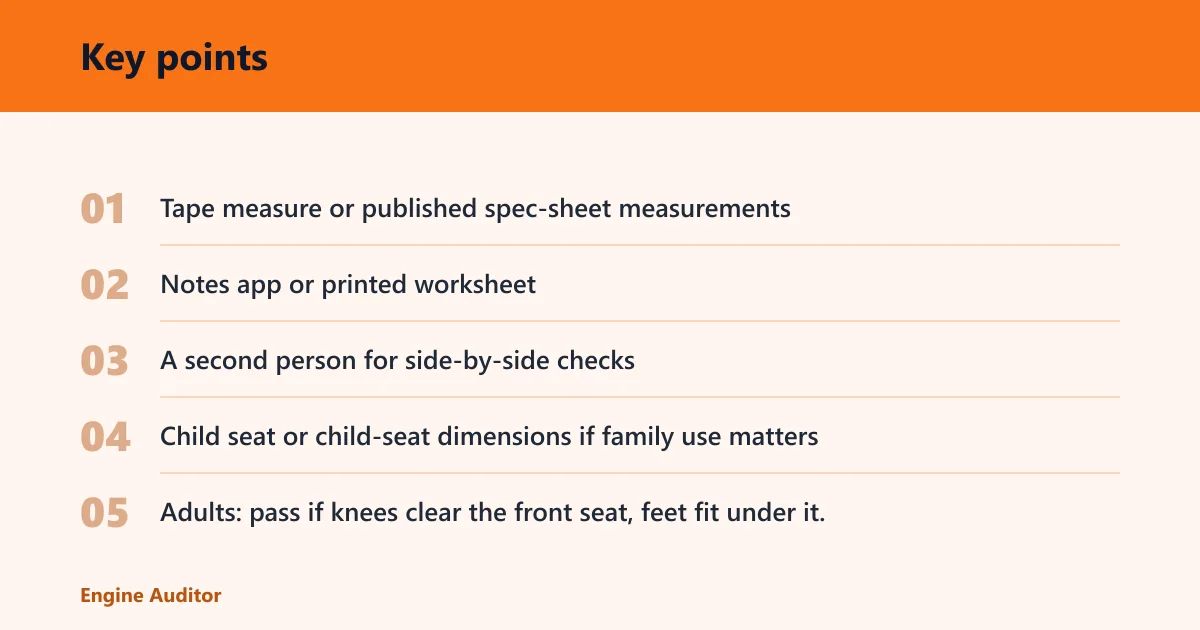
- Tape measure or published spec-sheet measurements
- Notes app or printed worksheet
- A second person for side-by-side checks
- Child seat or child-seat dimensions if family use matters
Rear seat comparison worksheet
| Car | Legroom | Headroom | Hip room / width | Cushion length | Backrest angle | Child-seat clearance | Comfort notes | Adults | Tall passengers | Rear-facing car seats |
|---|---|---|---|---|---|---|---|---|---|---|
| Car A | 40 in | 37 in | 54 in / good three-across | 19 in | upright | 2 in front-seat gap | Good thigh support; center seat narrow | Pass | Pass | Pass |
| Car B | 38 in | 35 in | 52 in / limited three-across | 17 in | slightly reclined | 0 in front-seat gap | Short cushion; roof limits tall riders | Pass | Fail | Fail |
Pass/fail scoring
- Adults: pass if knees clear the front seat, feet fit under it, and the cushion supports most of the thigh.
- Tall passengers: pass if the head clears the roof by about 1 inch and the seatback does not force a slouch.
- Rear-facing car seats: pass if the child seat fits without hard contact with the front seat at your chosen driving position.
Say your first car lists 40 inches of rear legroom and the second lists 39 inches. That 1-inch gap may disappear if the first car has a thicker front seatback or a more upright rear bench. Use the same seating position before you decide which one is actually easier to live with.
What measurements matter most for rear seat comfort?
Legroom, headroom, hip room, cushion length, backrest angle, and rear-seat width matter most. Legroom tells you whether knees fit. Headroom tells you whether the roofline or sunroof will force a hunched posture. Cushion length and backrest angle decide whether taller adults can sit for long rides without sliding forward or slumping.
Measure the right way
- Set the driver seat to a normal driving position.
- Measure legroom from the front seatback to the rear knee area.
- Measure headroom from the seat cushion to the roofline, with the passenger seated upright.
- Measure rear seat width across the bench and note hip room separately.
- Check cushion length and backrest angle, then write down any pressure points.
Rear seat legroom is useful, but it is not the whole answer. A car with 38 inches of legroom can still feel cramped if the cushion is short, the backrest is too upright, or the front seatback sits deep into the rear knee area. Hip room also matters for side-by-side adults and three-across seating.
How do you check rear seat comfort on a test drive?
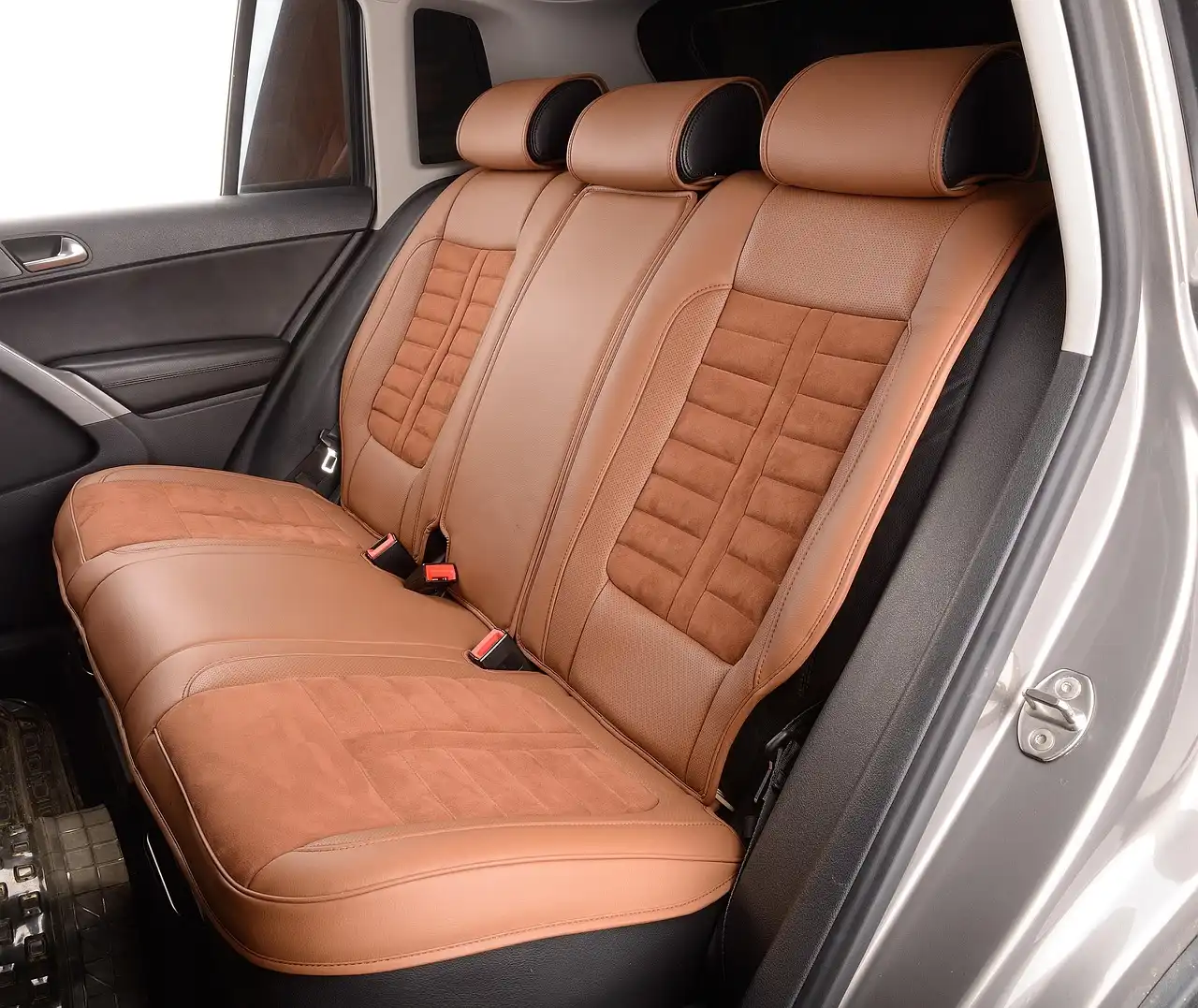
Put a passenger in the rear with the front seats set to the normal driving position, then check knees, feet, head, and shoulder clearance. A test drive should answer one question: can a real adult sit there without compromise? Do not judge by sitting sideways for a few seconds.
Use this test-drive order
- Set the front seat for the driver’s normal position.
- Have the rear passenger sit upright behind it.
- Check knee clearance, then foot space under the front seat.
- Check headroom against the roofline and sunroof.
- Check shoulder room, door opening angle, and seatbelt reach.
Picture a 6-foot passenger behind a tall driver in a sedan with a sloping roof. The knee room may look fine on paper, but a low roof and a short cushion can still create a cramped posture after 20 minutes. The same passenger in a square-roof wagon may fit better even with similar legroom.
What to recheck if the fit is borderline
If the rear passenger’s knees touch the seatback, move the front seat back by about 1 inch and recheck. If the head brushes the roof, look at a different trim or body style instead of assuming the problem will disappear. If the cushion ends before the thigh, note it as a long-ride comfort penalty.
What should tall passengers look for in the back seat?
Tall passengers should check knee clearance, head clearance, thigh support, and foot space under the front seat. Rear headroom is often limited by a fast roofline or a panoramic sunroof. A tall rider also needs enough cushion length to support the thighs, or the seat will feel short even when legroom looks generous.
Look for these four points
- Knee clearance: space between the knees and the front seatback.
- Head clearance: room between the head and the roof.
- Thigh support: cushion length and seat-bottom depth.
- Foot space: room under the front seat and around the center tunnel.
A common first-timer mistake is judging only by knee room. A tall passenger can clear the front seat but still sit with knees high and thighs unsupported. That creates fatigue on long drives, especially in cars with short rear cushions or a bench that slopes downward toward the doors.
How do you tell if rear-facing car seats fit?
Check how much front-seat legroom disappears, then confirm the child seat does not contact the front seat at your normal driving position. Rear-facing seats often need more front-to-back space than parents expect. The key checks are base footprint, recline range, and whether the front seat can stay where the driver needs it.
Child-seat fit checks
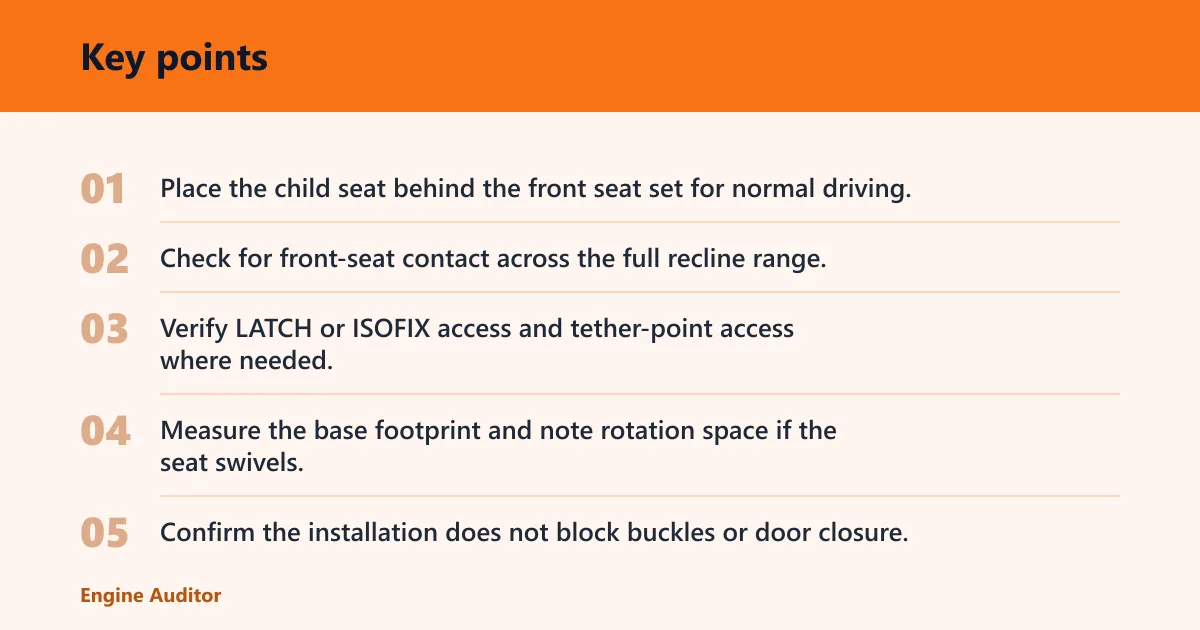
- Place the child seat behind the front seat set for normal driving.
- Check for front-seat contact across the full recline range.
- Verify LATCH or ISOFIX access and tether-point access where needed.
- Measure the base footprint and note rotation space if the seat swivels.
- Confirm the installation does not block buckles or door closure.
Rear-facing child seats can shrink front legroom fast. A vehicle that looks fine for adults may fail as soon as a deep rear-facing shell is installed behind the driver. If the child seat requires the front seat to move forward by several inches, the car may not work for your driving position even if the brochure legroom is strong.
Front vs rear facing car seat
A rear-facing seat usually needs more fore-aft space because the shell and recline angle extend farther into the cabin. A forward-facing seat often needs less front-seat clearance, but it still depends on the seat’s shell height, top tether access, and how the rear bench shape supports the base. Always check both configurations if your seat will change later.
How body style changes rear seat room
Body style can change usable rear space even when spec-sheet legroom looks similar. Sedans often lose headroom to sloping roofs. SUVs can have higher rooflines but different floor heights. Battery-pack floors, panoramic roofs, captain’s chairs, and bench seats all change how the back seat actually works for adults and child seats.
Common configuration effects
- Sloping roof: can reduce headroom for tall passengers.
- Sunroof or panoramic roof: may lower usable headroom at the rear.
- Battery-pack floor: can raise the seat position and affect thigh support.
- Captain’s chairs: improve access but remove the center seating position.
- Bench seat: supports three-across use better, depending on width and buckle layout.
Rear-seat width is not the same as hip room. Width is the outer-to-outer bench measurement. Hip room is the usable space for adults sitting side by side. A car can post a decent width number and still be poor for three-across use because the cushions pinch inward or the center buckle sits in the wrong place.
Common mistakes
Most bad comparisons come from trusting one number. A single legroom figure can hide a short cushion, a low roof, or a thick front seatback. The fix is simple: measure the same seating position in both cars and note how each seat supports the body, not just the knees.
- Trusting brochure legroom alone: check kneeroom, headroom, cushion length, and seat angle.
- Ignoring roof shape: sit upright and measure head clearance with the same posture.
- Skipping the bench shape: look for side bolsters and center-seat shape that reduce usable width.
- Forgetting child-seat fit: install or simulate the seat before you decide.
Suppose one SUV lists 41 inches of legroom, but the rear bench is short and upright. A second SUV lists 39 inches, yet the cushion is longer and the roof is flatter. The second one may be the better rear-seat choice for a 6-foot adult, even though the number on the brochure is smaller.
How do you compare rear seat comfort between two cars?
Compare them with the same passenger, the same front-seat setting, and the same checklist. Score each car for adults, tall passengers, and rear-facing car seats. Then separate the results. A car can be good for adult comfort and still fail for child-seat clearance, or the other way around.
Use this pass/fail method
- Measure the published legroom, headroom, hip room, and width for both cars.
- Set both front seats to the same driving position.
- Test rear seating for adults first, then child-seat fit.
- Mark pass or fail for each use case.
- Use the car with the fewest compromises for your main need.
Rear comfort features matter after fit. Air vents help airflow. Seat heaters matter in cold weather. Rear USB ports help with charging. A center armrest can improve long-trip comfort. Door opening angle matters for installing a child seat and getting a passenger in without twisting.
Frequently asked questions
How do I compare rear seat room and comfort in cars?
Measure legroom, headroom, hip room, cushion length, and backrest angle in both cars, then test them with the front seats set for normal driving. Add a rear-facing child seat check if family use matters. A single spec number is rarely enough to judge comfort.
How can I tell if a car fits rear facing car seats?
Install or simulate the seat behind the normal driver position, then check front-seat contact, recline range, and LATCH or ISOFIX access. If the child seat forces the driver seat too far forward, the car fails for that setup even if the spec sheet looks good.
What is a good rear seat legroom measurement?
About 38 inches is a useful adult benchmark, but the number only matters in context. A car with 38 inches can still feel tight if the front seatback is thick or the cushion is short. Use the same seating position before comparing two models.
Front vs rear facing car seat: a rear-facing car seat usually
A rear-facing car seat usually needs more front-to-back space and can reduce front-seat legroom more than a forward-facing seat. A forward-facing seat often needs less clearance but still depends on tether access, base footprint, and rear-bench shape. Check both if the seat will change later.
Products related to this article
Sponsored / affiliate links. As an Amazon Associate I earn from qualifying purchases. I may earn additional commission from eligible campaigns.
 LASFIT Rear Seat Back Protector&Cargo and Backrest Mats for Toyota 4Runner 2025-2026(Only Fit 7 Seats), All Weather TPE Custom Fit Cargo Liner for 4Runner 6th gen 4 Runner Cargo MatLASFIT Rear Seat Back Backrest Mat & Cargo Mats for Toyota 4Runner 2013-2024 (Only for 7 Seats), All Weather Custom Fit Cargo Liner for Toyota 4 Runner 2025 TPE Mats Seatback Mat & Trunk Mat, Black