Can Brake Fluid Cause a Car to Shake? Here’s the Truth
Brake fluid is a critical component of your car’s braking system, but can it actually cause your car to shake? The short answer is that while brake fluid itself rarely causes shaking directly, contaminated or degraded fluid can contribute to symptoms that feel like shaking. This post explains how brake fluid affects braking performance and what really causes that unsettling vibration.
Simply put, old or contaminated brake fluid cannot directly cause a car to shake, but it can lead to uneven brake force distribution, brake fade, and pulsation that feels like shaking. The real culprits are usually warped rotors, uneven brake pad wear, or suspension issues. However, neglected brake fluid accelerates these problems.
Key Takeaways
- Brake fluid does not directly cause shaking, but contaminated fluid can worsen braking inconsistencies that feel like vibration.
- Warped brake rotors remain the most common cause of steering wheel or pedal vibration during braking.
- Low or degraded brake fluid can lead to brake fade, which creates a pulsating sensation mistaken for shaking.
- Regular brake fluid replacement every 30,000 miles or as recommended prevents moisture contamination and performance issues.
- Diagnosing shaking requires checking rotors, pads, fluid condition, and suspension components — not just the fluid level.
What Does Brake Fluid Actually Do in Your Car?
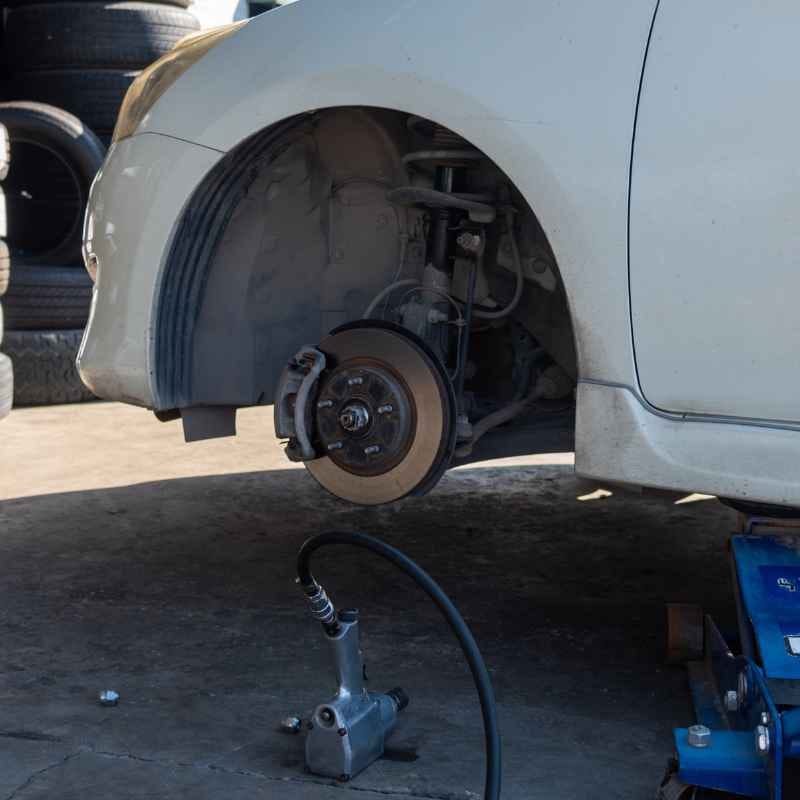
Brake fluid is a hydraulic fluid that transfers the force from your foot on the brake pedal to the brake calipers at each wheel. When you press the pedal, the fluid pushes pistons in the calipers, which clamp the brake pads against the rotors. This hydraulic system relies on the fluid being incompressible and free of air bubbles.
Most modern cars use DOT 3, DOT 4, or DOT 5.1 glycol-based fluids, which have high boiling points and absorb moisture over time. As the fluid absorbs water, its boiling point drops, and its chemical properties change. This degradation affects how consistently the brakes apply force across all four wheels.
The key properties of brake fluid that matter for smooth braking:
- Boiling point — higher is better; moisture reduces it
- Viscosity — affects flow at low temperatures
- Compressibility — must be near zero for firm pedal feel
- Corrosion resistance — prevents internal damage to calipers and lines
- Hygroscopic nature — absorbs water from the air over time
Important: Brake fluid should be replaced every 2 years or 30,000 miles regardless of appearance. Clear fluid can still be contaminated with moisture.
Can Brake Fluid Directly Cause a Car to Shake?
No, brake fluid alone does not directly cause a car to shake in the way that warped rotors or unbalanced wheels do. The shaking or vibration you feel — through the steering wheel, brake pedal, or floorboard — is a mechanical issue, not a hydraulic one. However, degraded brake fluid can create conditions that mimic or worsen shaking.
When brake fluid absorbs too much moisture, its boiling point drops significantly. Under hard braking, the fluid can boil inside the caliper, creating gas bubbles. Gas is compressible, so the pedal feels spongy and braking becomes inconsistent.
This inconsistent braking can cause the car to pull or pulse, which feels like a shake or vibration.
Here is how brake fluid problems can indirectly create shaking-like symptoms:
- Brake fade from overheated fluid — causes uneven braking force between wheels
- Air in the lines — leads to a spongy pedal and delayed, uneven braking
- Contaminated fluid causing caliper sticking — one wheel brakes harder than others
- Fluid leaks — low fluid leads to reduced hydraulic pressure and pulling
- Old fluid accelerating rotor warping — due to uneven heat transfer from inconsistent pad contact
Warning: If you feel a strong vibration only when braking, do not assume it is the fluid. Driving with warped rotors or stuck calipers is dangerous. Have the entire brake system inspected immediately.
| Symptom | Likely Caused By Brake Fluid? | Most Common Real Cause |
|---|---|---|
| Steering wheel shake when braking | No | Warped front rotors |
| Pedal pulsation | Rarely | Uneven rotor thickness or runout |
| Spongy or soft pedal | Yes — air or moisture in fluid | Contaminated or low brake fluid |
| Car pulls to one side when braking | Sometimes | Stuck caliper or collapsed brake hose |
| Vibration through floorboard | No | Warped rear rotors or wheel balance |
As the table shows, brake fluid issues primarily cause pedal feel problems, not mechanical shaking. But the two can overlap.
What Are the Real Causes of Shaking When Braking?
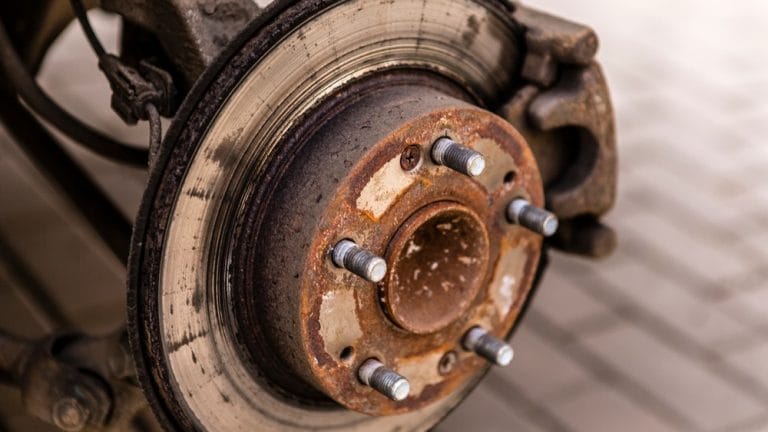
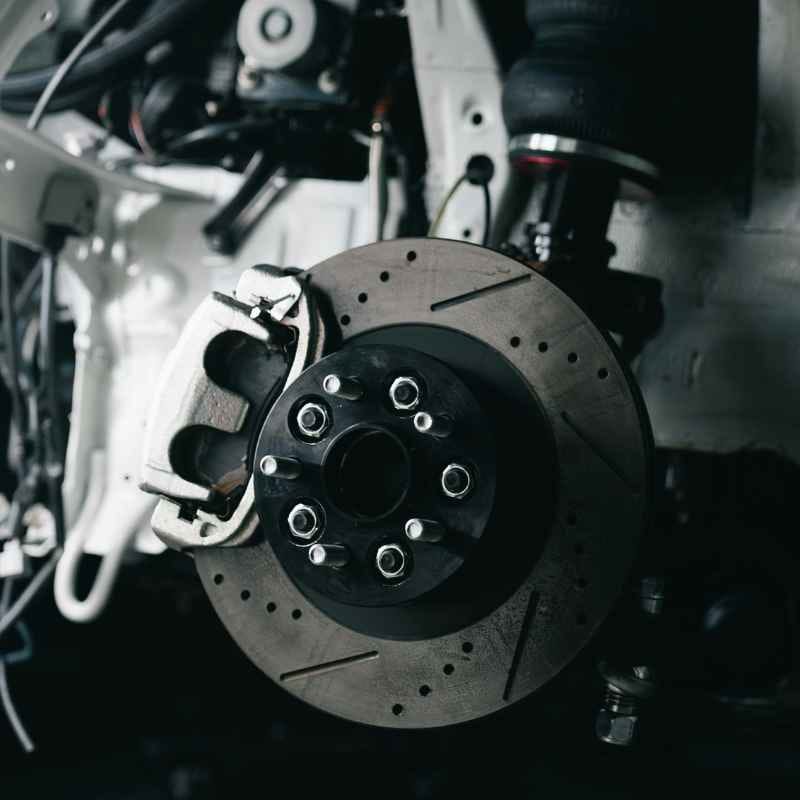
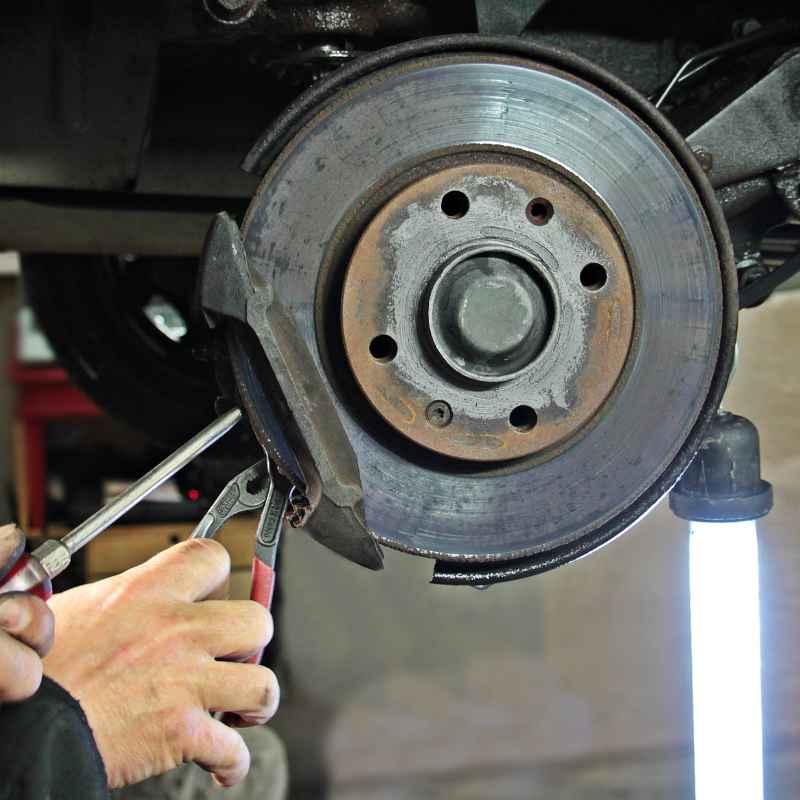
The most common cause of shaking when braking is warped or unevenly worn brake rotors. Rotors are metal discs that the brake pads clamp onto. Over time, heat from friction can cause the rotor surface to become uneven — either warped (bent) or having thickness variation (runout).
When the pads contact uneven metal, you feel a pulse or shake through the pedal and steering wheel.
According to the National Highway Traffic Safety Administration (NHTSA), brake system issues are involved in roughly 22% of vehicle-related accident reports each year. Rotor problems account for a large portion of brake vibration complaints. The Car Care Council also reports that nearly 30% of vehicles on the road have brake components worn past safe limits.
Other common mechanical causes of braking shake include:
- Warped front rotors — causes steering wheel shake at highway speeds
- Warped rear rotors — causes floorboard or seat vibration
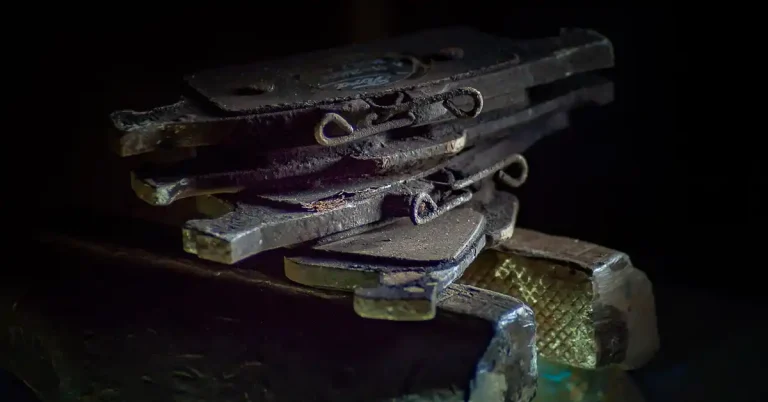
- Uneven brake pad wear — one pad grabs harder, creating a pulse
- Stuck brake caliper — constant drag on one wheel leads to vibration
- Wheel balance issues — causes shaking that worsens at speed
- Worn suspension components — ball joints or tie rods amplify brake vibration
- Bent wheel — creates wobble that feels similar to brake shake
Tip: If your car shakes only when braking at high speeds, the front rotors are likely warped. If it shakes when braking from low speeds, suspect rear rotor issues or suspension wear.
The important thing to understand is that while brake fluid rarely causes mechanical shaking, it can accelerate rotor wear. Fluid with high moisture content boils at a lower temperature, which means the rotors absorb more heat during each stop. Over time, this extra heat stress increases the likelihood of rotor warping.
So fluid neglect can indirectly lead to the conditions that cause shaking.
How to Diagnose Shaking Related to Your Brake System
Diagnosing brake shake correctly saves you time and money. Many drivers replace brake fluid or pads hoping to fix a vibration, only to discover the rotors were the real issue. The best approach is systematic: start with the fluid, then move to mechanical components.
Here is a step-by-step diagnostic process:
- Check brake fluid level and condition — look at the reservoir. Dark, cloudy, or gritty fluid indicates contamination. Use a test strip to check moisture content if possible.
- Feel the pedal — a spongy pedal suggests air or moisture in the fluid. A hard pedal with pulse suggests mechanical issues.
- Test brake at different speeds — note when the shake occurs. Highway braking shake points to front rotors. Low-speed shake points to rears or alignment.
- Inspect rotors visually — look for blue spots (heat damage), deep grooves, or cracks. Any of these means rotor replacement.
- Check pad wear — uneven pad wear indicates a caliper problem. Replace pads if below 3mm thickness.
- Jack up each wheel — spin the wheel and listen for grinding or dragging. A sticking caliper will make the wheel hard to turn by hand.
| Diagnostic Step | What to Look For | Likely Fix |
|---|---|---|
| Fluid condition check | Dark or milky fluid, low level | Flush and replace brake fluid |
| Rotor inspection | Blue spots, grooves, cracks | Resurface or replace rotors |
| Caliper function test | Wheel hard to spin, uneven pad wear | Rebuild or replace caliper |
| Suspension check | Loose ball joints, worn bushings | Replace worn suspension parts |
Working through these steps in order helps you avoid replacing the wrong parts. The AAA reports that 25% of vehicles have brake fluid that is contaminated beyond safe levels, yet many drivers never check it until a warning light comes on.
Why Proper Brake Fluid Maintenance Matters for Smooth Stops
Brake fluid maintenance is often overlooked, but it directly affects braking consistency. Over time, brake fluid absorbs moisture at a rate of about 1-2% per year in normal driving conditions. This moisture does three things: lowers the boiling point, causes internal corrosion, and changes the fluid’s compressibility.
Any of these can create symptoms that feel like shaking.
When moisture content reaches 3% or higher, the boiling point of DOT 3 fluid drops from about 460°F to below 300°F. Under hard braking, the fluid can boil inside the caliper, creating vapor lock. Vapor lock causes a sudden loss of pedal pressure and uneven braking — a dangerous situation that can feel like a violent shake just before brake failure.
Key reasons to keep brake fluid fresh:
- Prevents brake fade — fresh fluid maintains a high boiling point for consistent braking
- Protects calipers and ABS components — moisture causes rust and corrosion inside expensive parts
- Maintains pedal feel — uncontaminated fluid stays incompressible for firm, linear braking
- Reduces rotor warping risk — consistent hydraulic pressure prevents uneven pad contact
- Extends brake system life — the average cost of a fluid flush is under $100 versus thousands for caliper and ABS replacement
Important: Do not top off old brake fluid with fresh fluid. The entire system needs to be flushed because moisture and contaminants are distributed throughout all lines and calipers.
Common Symptoms of Brake Fluid Problems You Should Know
Recognizing brake fluid problems early can prevent them from escalating into shaking or brake failure. The symptoms of bad brake fluid are different from the symptoms of worn mechanical components. Here is what to watch for:
Spongy or soft brake pedal: This is the number one sign of contaminated or low brake fluid. If the pedal feels mushy or sinks toward the floor, air or moisture has entered the hydraulic system. The fluid can no longer maintain full hydraulic pressure, leading to delayed and uneven braking that can feel like a shudder.
ABS light on the dashboard: Modern cars monitor brake fluid condition and hydraulic pressure. If the fluid is too contaminated or low, the ABS system may trigger a warning light. This does not always mean shaking, but it indicates the fluid condition is affecting brake performance.
Dark or gritty fluid in the reservoir: Fresh brake fluid is clear with a slight amber tint. If you see dark brown, black, or cloudy fluid, it contains moisture, dirt, or degraded additives. This fluid cannot transfer force evenly, which contributes to inconsistent braking feel.
Reduced braking performance after hard stops: If your brakes feel fine during normal driving but fade or pulse after aggressive braking, the fluid may be boiling. This is a direct sign that moisture has lowered the boiling point. Repeated boiling events accelerate rotor warping.
Warning: Never add brake fluid from a previously opened bottle. Brake fluid absorbs moisture from the air, so an opened bottle that has been sitting on a shelf is already contaminated. Always use a fresh, sealed container.
When to Replace Brake Fluid and Inspect Brake Components
Knowing when to replace brake fluid is just as important as knowing what causes shaking. Most manufacturers recommend a brake fluid flush every 2 years or 30,000 miles, whichever comes first. However, driving conditions can accelerate fluid degradation.
Replace brake fluid sooner if you experience any of these conditions:
- Frequent stop-and-go driving — generates more heat and moisture absorption
- Mountain or hilly driving — constant braking heats fluid faster
- High humidity or rainy climate — moisture enters the system faster
- Track days or heavy towing — extreme heat degrades fluid rapidly
- Any brake system repair — new fluid should be installed when calipers or lines are opened
The cost of a professional brake fluid flush ranges from $80 to $150, depending on the vehicle and fluid type. Compare that to the cost of replacing a set of warped rotors ($300-$800) or a stuck caliper ($200-$600). Regular fluid maintenance is one of the cheapest ways to prevent the conditions that lead to shaking.
Tip: Test your brake fluid moisture content at home with a simple test pen from an auto parts store. It costs about $10 and gives you an immediate reading of whether your fluid needs changing.
How Does Contaminated Brake Fluid Affect Brake Performance?
Contaminated brake fluid affects performance in several measurable ways. The most important is the drop in boiling point. Fresh DOT 4 fluid boils at around 450°F.
With just 3% water content, that drops to roughly 310°F. During a hard stop, brake calipers can easily reach 400°F, which means the fluid boils inside the system, creating vapor bubbles.
These vapor bubbles compress under pressure, which means the brake pedal has to travel further before the pads engage. This creates a delay in braking response and an inconsistent feel. If one caliper has more moisture in its fluid than another, that wheel will brake later and with less force, causing the car to pull or pulse.
The effects of contaminated brake fluid on braking performance:
- Longer stopping distance — pedal must travel further to build pressure
- Uneven braking force between wheels — causes pulling and vibration
- Increased brake fade — performance drops significantly after repeated stops
- Corrosion of internal components — leads to caliper sticking and uneven wear
- Reduced ABS effectiveness — contaminated fluid interferes with ABS modulation
According to the Brake Manufacturers Council, using fluid with moisture content above 3% increases stopping distance by up to 15% during emergency braking. That extra distance can be the difference between a close call and a collision.
| Fluid Condition | Boiling Point (DOT 4) | Stopping Distance Increase | Risk of Vibration |
|---|---|---|---|
| Fresh (0% moisture) | 450°F | Baseline | Low |
| 1 year old (~1.5% moisture) | 380°F | 5% | Moderate |
| 2 years old (~3% moisture) | 310°F | 10-15% | High |
| 3+ years old (>4% moisture) | Below 280°F | 15-20% | Very High |
This data makes it clear that old brake fluid creates real risks. While it may not directly cause a car to shake, it certainly creates the conditions where shaking develops faster and becomes more dangerous.
Frequently Asked Questions
Can low brake fluid cause a car to shake?
Low brake fluid alone does not directly cause shaking, but it can lead to a soft pedal and uneven braking. If the fluid level is very low, air may enter the system, creating a spongy pedal feel and delayed brake response. This can feel like a shudder or hesitation when braking.
What does warped rotor shake feel like compared to fluid issues?
A warped rotor typically causes a rhythmic pulse or vibration that you feel in the steering wheel or brake pedal only when braking. Fluid issues usually cause a soft, mushy pedal that sinks deeper than normal, with less defined vibration. Rotor shake is speed-dependent; fluid problems are not.
How often should I replace brake fluid to prevent shaking?
Replace brake fluid every 2 years or 30,000 miles, whichever comes first. If you drive in humid climates or do frequent hard braking, consider annual fluid changes. Regular replacement prevents moisture buildup that accelerates rotor wear and brake fade.
Will bleeding the brakes fix a shaking problem?
Bleeding the brakes removes air bubbles from the system and can fix a spongy pedal, but it will not fix shaking caused by warped rotors, stuck calipers, or suspension issues. If the rotors are warped, bleeding the fluid will not change the mechanical vibration.
Can bad brake fluid damage my rotors over time?
Yes. Contaminated brake fluid with low boiling point causes brake fade, which forces the rotors to absorb more heat. Repeated overheating leads to rotor warping and thickness variation.
Keeping fresh fluid reduces thermal stress on rotors and extends their life.
Final Thoughts
Brake fluid does not directly cause a car to shake, but neglecting it creates the right conditions for mechanical problems that do. Warped rotors, stuck calipers, and uneven pad wear remain the primary causes of braking vibration. Check your brake fluid condition regularly, replace it on schedule, and address any pedal pulsation or steering wheel shake immediately.
A well-maintained brake system stops smoothly and safely every time.
See also what to do if your car brakes fail while driving. See also how to fix car brake imbalance before it causes an accident.
Products related to this article
Sponsored / affiliate links. As an Amazon Associate I earn from qualifying purchases. I may earn additional commission from eligible campaigns.