Can the Brake System Cause a Car Not to Start?
Sometimes, when you try to start your car, nothing happens. It can be confusing when your car won’t turn over, and you might wonder if something as basic as your brakes could be the problem. For many people, thinking about brakes and starting issues together seems a bit strange, making it a tricky spot to figure out.
But don’t worry! We’ll make it super simple. This guide will walk you through exactly why this happens and what you can do about it.
We’ll break it down step-by-step so you can get your car running again.
Can the Brake System Cause a Car Not to Start?
It might seem odd, but yes, sometimes your brake system can play a role in why your car won’t start. This usually happens because of a safety feature designed into modern cars. Many cars have a brake-pedal switch that needs to be pressed before the engine can be cranked.

Roadmaster
Roadmaster 9400 Even Brake Supplemental Braking System…
- Compatibility: The Roadmaster Even Brake Support Braking System with LED Monitor and Breakaway Emergency Braking System fits Any T…
- Even Braking: Proportional braking is even braking - your towed vehicle’s brakes respond to your motorhome’s brakes, at the same t…
- Automatic Brake Protection: The monitor alerts you of an extended period of continuous braking, then Even Brake releases braking p…
As an Amazon Associate I earn from qualifying purchases.
This switch is part of the car’s electronic system, and if it’s not working right, it can prevent the car from starting. This connection isn’t always obvious, especially to those new to car troubles, because the brake pedal is for stopping, not starting.
The Brake-Pedal Switch Explained
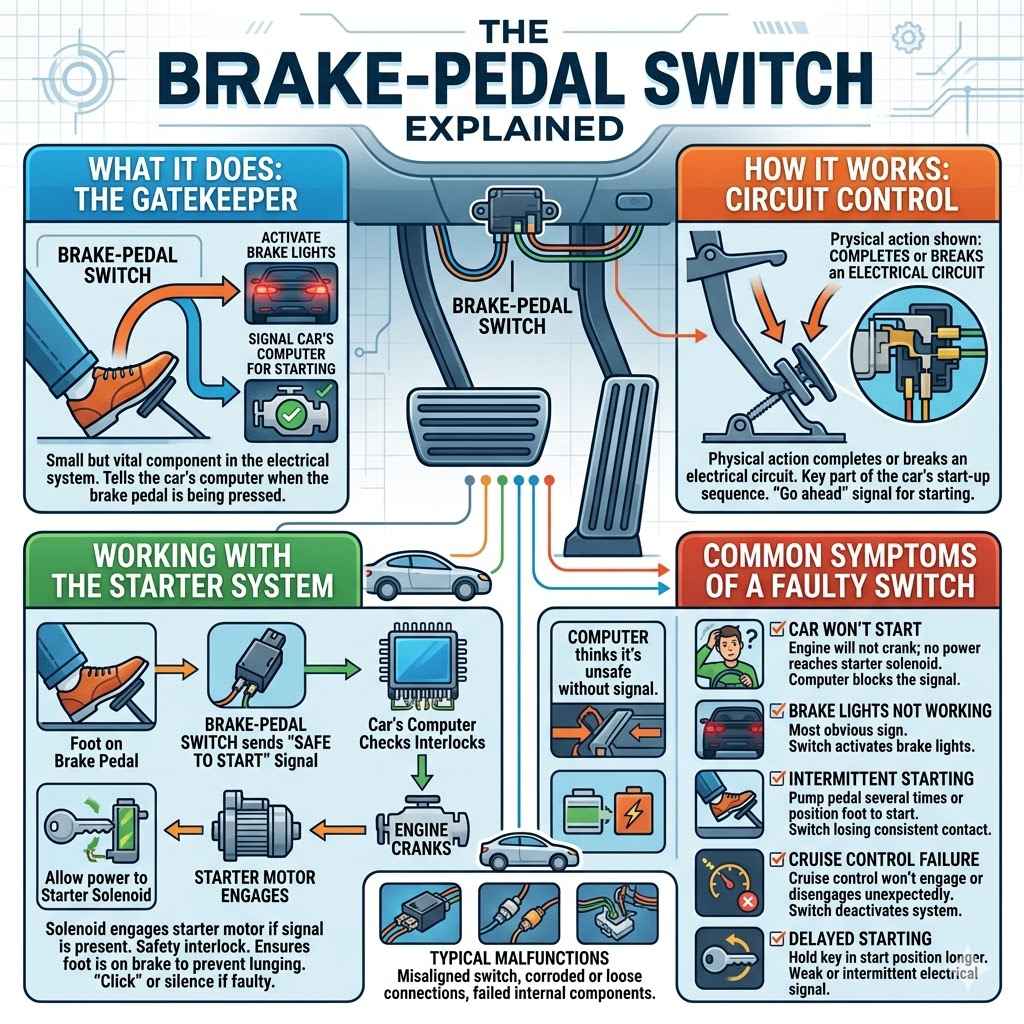
The brake-pedal switch is a small but vital component in your car’s electrical system. Its primary job is to tell the car’s computer when the brake pedal is being pressed. This signal is used for several functions, most importantly to allow the car to start and to activate the brake lights.
When you press the brake pedal, it physically pushes a lever or button that either completes or breaks an electrical circuit within the switch. This action is a key part of the car’s start-up sequence.
Think of it like a gatekeeper for your engine. When the car is in park or neutral, and you press the brake pedal, the switch sends a “go ahead” signal. This signal is necessary for the starter motor to engage.
Without this signal, the car’s computer thinks it’s unsafe to start the engine, or it’s simply not programmed to allow it. This system is designed for safety, ensuring you have your foot on the brake when starting the engine, preventing the car from lurching forward unexpectedly.
The switch itself is usually located on or near the brake pedal arm under the dashboard. It’s often a small plastic or metal component with wires connected to it. Over time, these switches can wear out, get dirty, or become misaligned, leading to malfunctions.
A faulty switch might not send the correct signal, or it might send no signal at all, leaving your car unable to start.
How the Brake Switch Works with the Starter System
Your car’s starter system is what actually cranks the engine to get it running. It’s a powerful electric motor that uses battery power to turn the engine’s flywheel. This process requires a lot of electrical current.
To manage this, cars have safety interlocks, and the brake-pedal switch is a common one. It’s linked to the car’s starter solenoid or relay.
When you turn the ignition key or push the start button, the car’s computer checks for several conditions to be met. One of these conditions is often a signal from the brake-pedal switch indicating that the brakes are applied. If this signal is present, the computer allows power to flow to the starter solenoid.
The solenoid then engages the starter motor, which begins to crank the engine. If the brake-pedal switch is not working correctly, the computer will not send the signal to the starter solenoid, and the engine will not crank, leaving you with silence.
This is why you might hear a click when you try to start, or nothing at all, even if your battery is good. The “click” might be the starter solenoid trying to engage but not receiving the full power because the brake switch hasn’t given the okay. Or, if there’s no click and no sound, the signal is completely blocked.
A common issue is a misaligned switch. Over time, the pedal might shift slightly, or the switch can become loose, meaning it doesn’t register that the pedal is being pressed even when it is. Electrical connections can also become corroded or loose, preventing the signal from reaching the computer.
In some cases, the internal components of the switch itself can fail, rendering it useless.
Common Symptoms of a Faulty Brake Switch
When a brake-pedal switch starts to fail, it can cause a few noticeable symptoms, not just the car not starting. The most obvious sign is that your brake lights might not work, or they might work intermittently. This is because the same switch activates the brake lights.
If your brake lights are out, it’s a strong indicator that the switch needs attention.
You might also experience a situation where the car starts sometimes but not others. This can happen if the switch is failing and only makes contact when the pedal is pressed in a very specific way. Sometimes, you’ll have to pump the brake pedal several times or position your foot in a particular spot to get the car to start.
This is a classic sign that the switch is losing its ability to consistently send the signal.
Another symptom could be your cruise control not working. Many modern cruise control systems are also deactivated when you press the brake pedal, and they rely on the brake-pedal switch for this function. If the switch is faulty, the cruise control might not engage or might disengage unexpectedly.
Some drivers might notice a slight delay when trying to start their car. You might have to hold the key in the start position for a few seconds longer than usual. This can happen if the electrical signal from the brake switch is weak or intermittent.
It’s the car’s computer waiting for a clear signal before allowing the starter to engage.
Other Safety Interlocks and Why They Matter
Cars today are packed with safety features to protect drivers and passengers. The brake-pedal switch is just one of many interlocks designed to prevent accidents. Other common interlocks include the neutral safety switch, also known as the park/neutral position (PNP) switch.
This switch ensures that the car can only be started when it is in Park or Neutral, preventing it from suddenly lurching forward if you try to start it in gear.
Clutch safety switches are found in manual transmission vehicles. These switches prevent the engine from starting unless the clutch pedal is fully depressed. This is similar to the brake-pedal switch in that it ensures the driver is actively engaged in preparing the car to move.
Without this switch, starting a manual car in gear could be dangerous.
These interlocks work together, often through the car’s main computer (ECU or ECM), to create a sequence of events required for starting. When you turn the ignition, the computer checks to see if all these safety conditions are met. If even one of these safety circuits is broken or malfunctioning, the computer will prevent the starter from engaging.
This might seem inconvenient when your car won’t start, but it’s a testament to the advanced safety measures built into vehicles.
Understanding these systems helps demystify why a car might refuse to start. It’s not always a dead battery or a completely broken engine. Often, it’s a small, overlooked sensor or switch that’s causing the problem.
These safety features are so integrated into the car’s start-up protocol that a fault in one can bring the whole process to a halt. It’s like a domino effect; one piece out of place stops everything.
How a Faulty Brake Switch Compares to Other Starting Issues
When a car won’t start, people usually first think of the battery. A dead battery is the most common culprit for a car not starting. You’ll often hear a rapid clicking sound, or nothing at all, and the dashboard lights might be dim or not come on.
Another common issue is a faulty starter motor. If the starter is bad, you might hear a single loud click when you turn the key, but the engine won’t crank.
Fuel system problems, like a clogged fuel filter or a bad fuel pump, can also prevent a car from starting. In these cases, the engine might crank, but it won’t catch and run. You might smell fuel or notice that the car hesitates before shutting off if it manages to start briefly.
A faulty brake-pedal switch, however, presents a unique scenario. Often, when the brake-pedal switch is the cause, you will hear absolutely nothing when you turn the key, or just a faint click from the dashboard, not from the starter motor. The dashboard lights usually come on brightly, and the battery is confirmed to be good.
The engine won’t even attempt to crank. This lack of cranking activity, combined with a known good battery and no other obvious issues, points towards an electronic interlock like the brake switch.
It’s important to differentiate these symptoms. A mechanic will often go through a checklist, starting with the simplest and most common issues like the battery and then moving to more complex ones like the starter or the electronic interlocks. The brake-pedal switch issue is often diagnosed by checking for voltage at the starter solenoid and working backward to see if the signal is being properly initiated by the brake switch and the car’s computer.
Diagnosing a Brake-Pedal Switch Problem
Diagnosing a brake-pedal switch issue involves a few systematic checks. The first step is often to verify that the battery is not the problem. If the battery is strong, and the engine still won’t crank, you move on to other potential causes.
A visual inspection of the brake-pedal area can reveal if the switch is obviously damaged or disconnected.
Next, you can try to manually test the switch. This often involves using a multimeter to check for continuity or voltage. When the brake pedal is pressed, the switch should complete a circuit, allowing electricity to flow.
If it doesn’t, the switch is likely faulty. A mechanic can use a diagnostic scanner to read trouble codes from the car’s computer, which might point towards a fault in the brake switch circuit.
Another simple diagnostic test for the driver is to try starting the car in different ways. For example, some cars might have a slightly different starting procedure if the transmission is in Park versus Neutral. Or, as mentioned before, if you can get the car to start by jiggling the brake pedal or pressing it very hard, it suggests a problem with the switch’s alignment or contact.
However, relying on these tricks is not a long-term solution and can be unreliable.
If the brake lights are not working, this is a significant clue. Checking the brake light fuse is a good first step, but if the fuse is fine, the problem often lies with the switch that activates them. The brake-pedal switch is the common component for both starting interlock and brake light activation in many vehicles.
Steps to Test the Brake-Pedal Switch
To test the brake-pedal switch, you’ll typically need basic tools and some knowledge of your car’s electrical system. Safety first: always disconnect the negative battery terminal before working on electrical components to prevent short circuits.
- Locate the Switch: Find the brake-pedal switch. It’s usually mounted where the brake pedal arm meets the car’s body. It will have wires connected to it.
- Visual Inspection: Check for obvious damage, loose connections, or if the switch itself is broken. Ensure it’s properly aligned with the brake pedal arm.
- Multimeter Test: Set your multimeter to measure continuity or resistance. With the brake pedal released, you should get one reading. With the brake pedal pressed, the reading should change, indicating the circuit is completing. If there’s no change or a constant open circuit, the switch is likely bad.
- Voltage Test: You can also check for voltage. With the ignition on (but not trying to start the engine), and the brake pedal pressed, you should see voltage at the appropriate wire terminal of the switch, indicating it’s sending the signal.
It’s important to consult your car’s repair manual for the exact location and testing procedure for your specific make and model. Incorrect testing can lead to further damage or misdiagnosis. If you’re not comfortable with electrical testing, it’s best to have a qualified mechanic perform the diagnosis.
Replacing a Faulty Brake-Pedal Switch
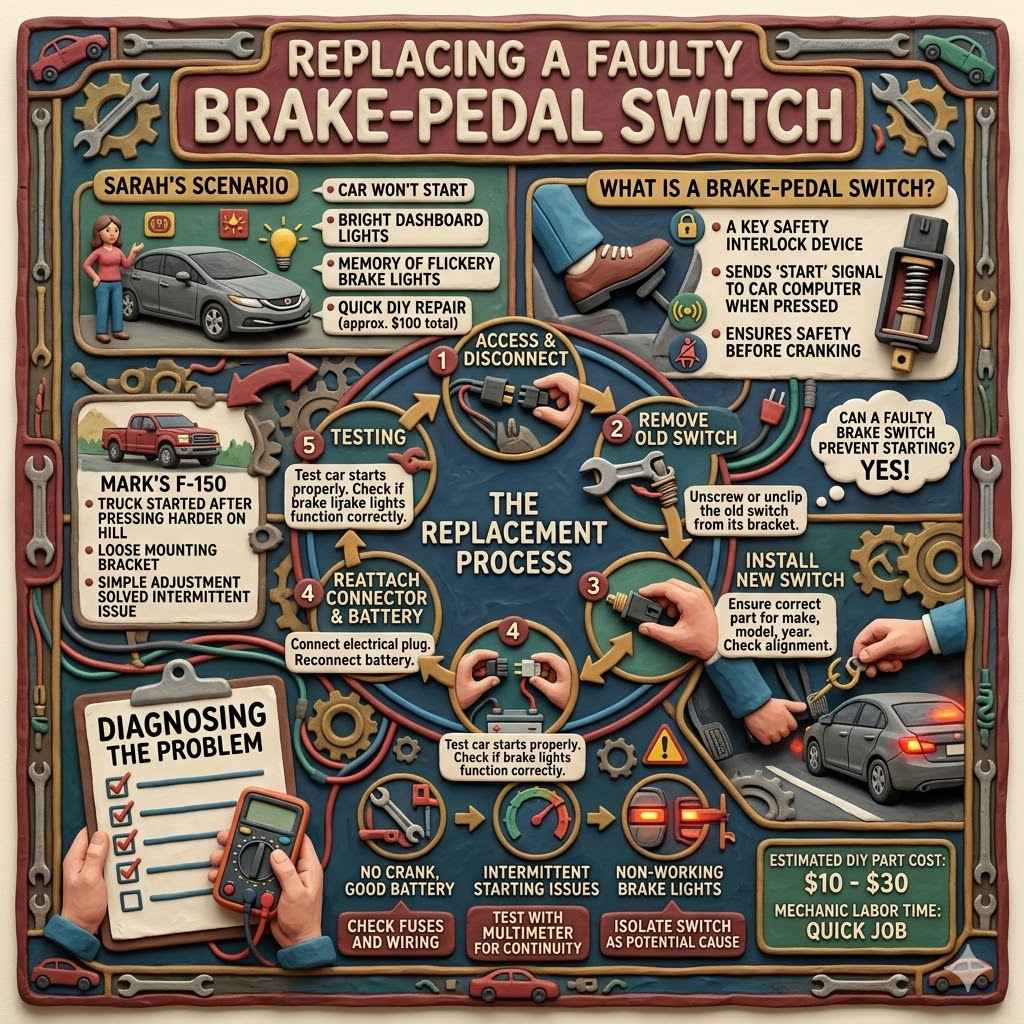
Replacing a brake-pedal switch is often a straightforward repair that many DIY mechanics can handle. The process typically involves accessing the switch, disconnecting the electrical connector, and then removing the old switch. The new switch is then installed in its place, the connector reattached, and the battery reconnected.
The cost of a replacement brake-pedal switch is usually quite affordable, often ranging from $10 to $30 for the part itself. This makes it a very cost-effective solution if it is indeed the cause of your starting problem. The labor cost at a mechanic shop would vary, but given the relatively simple nature of the replacement, it’s usually a quick job.
After replacing the switch, it’s crucial to test the car to ensure it starts properly and that the brake lights are functioning as they should. If the car still won’t start, or if other symptoms persist, further diagnosis may be required to rule out other issues in the starting or electrical system.
It’s essential to purchase the correct replacement part for your vehicle’s make, model, and year. Using an incorrect part can lead to improper function or damage. Auto parts stores can help you find the exact switch you need based on your car’s information.
Real-World Examples and Scenarios
Consider Sarah, who drives a 2015 Honda Civic. One morning, her car wouldn’t start. She turned the key, and there was no sound from the engine, just the dashboard lights coming on brightly.
She checked the battery, which was relatively new and showed full charge. She then remembered that her brake lights had been a bit flickery for a few weeks. A quick Google search for “Honda Civic won’t start no crank bright lights” led her to forums discussing faulty brake-pedal switches.
She had a mechanic confirm the diagnosis. The switch was replaced in under an hour, and her car started perfectly afterward. The cost for the part and labor was around $100.
Another instance involved Mark and his Ford F-150. He was trying to start it after parking on a slight incline. He turned the key, and nothing happened.
He assumed it was the starter. However, after checking the battery and finding it good, he tried pressing the brake pedal harder, and the truck started. He noticed this happened more often when he parked on hills.
He realized the brake pedal wasn’t fully engaging the switch due to the angle. A simple adjustment to the switch mounting bracket, tightening a loose nut, solved the intermittent starting issue. This highlights how alignment can be a factor.
A common scenario many drivers face is experiencing intermittent starting issues. You try to start your car, and it cranks fine. Then, the next day, nothing.
The engine won’t even turn over. You might try multiple times, jiggle the steering wheel, or shift the gear selector back and forth, but still no luck. If your battery is good, and you hear no sounds from the starter, the problem could be a brake-pedal switch that’s failing and not consistently sending the “start” signal.
This is a situation where the switch might be making contact sometimes but not others, depending on the exact position of the brake pedal.
Imagine a situation where you’ve just had your car serviced. You drive it home without any problems. The next morning, it won’t start.
You might think the mechanic did something wrong, but often, if the car was moved around the service bay, the brake pedal might have been engaged differently, or perhaps the switch was bumped. When you try to start it at home, the slightly altered position of the pedal or switch prevents the signal. This is a case where a minor disturbance during service could expose an already weakening brake-pedal switch.
Can the Brake System Cause a Car Not to Start? A Summary of Links
The brake system, specifically the brake-pedal switch, can indeed cause a car not to start. This happens because the switch is an essential part of the car’s safety interlock system, which prevents the engine from starting unless certain conditions are met. When you press the brake pedal, it signals the car’s computer that it’s safe to engage the starter motor.
If this switch is faulty, misaligned, or has a bad electrical connection, the necessary signal is not sent, and the engine will not crank.
Key points to remember are:
- Safety Feature: The brake-pedal switch is a safety device. It ensures you’re pressing the brake before starting, preventing accidental movement.
- Signal Interruption: A malfunctioning switch means the “start” signal doesn’t reach the computer, stopping the cranking process.
- Symptoms: No cranking sound, bright dashboard lights, and a good battery are common signs. Also, non-working brake lights can point to this issue.
- Diagnosis: Testing with a multimeter or by observing for intermittent issues when pressing the brake can help identify the problem.
- Repair: Replacing the switch is usually an easy and inexpensive fix.
Understanding this link between your brakes and your car’s ability to start can save you time and money when troubleshooting starting problems. It’s a reminder that even seemingly unrelated systems can be connected in ways that affect your car’s overall function. This knowledge empowers you to better understand your vehicle and what might be going wrong.
Frequently Asked Questions
Question: Why won’t my car start when the battery is good?
Answer: If your car won’t start and your battery is good, there are several possibilities. It could be an issue with the starter motor, a problem with the fuel system (like a fuel pump or filter), an ignition system fault, or a safety interlock system failure. A common interlock issue is the brake-pedal switch, which must send a signal for the car to start in many vehicles.
Question: Can a car start without pressing the brake pedal?
Answer: In many modern cars with automatic transmissions, you cannot start the engine without pressing the brake pedal. This is a safety feature designed to prevent the car from moving unexpectedly when started. Cars with manual transmissions typically require the clutch pedal to be pressed instead.
Question: What happens if the brake-pedal switch fails completely?
Answer: If the brake-pedal switch fails completely, your car will likely not start. It will also prevent your brake lights from working. You might hear nothing when you turn the key, or just a faint click from the dashboard, as the car’s computer will not receive the necessary signal to engage the starter motor.
Question: How much does it cost to replace a brake-pedal switch?
Answer: The cost to replace a brake-pedal switch is generally low. The part itself typically costs between $10 and $30. If you have it replaced at a mechanic, labor costs will add to this, but it’s usually a quick and inexpensive repair, often costing under $100 in total.
Question: Can a bad brake switch affect my car’s driving?
Answer: While a bad brake switch primarily affects starting and brake light function, it can indirectly affect driving if cruise control is also linked to the switch. If your cruise control stops working or disengages unexpectedly, it might be due to a faulty brake-pedal switch, as many systems use it to disengage cruise control when the brake is applied.
Summary
The brake system, specifically the brake-pedal switch, can indeed prevent your car from starting. This switch acts as a safety interlock, signaling the car’s computer to allow the starter to engage only when the brake is pressed. If the switch fails, is misaligned, or has electrical issues, the signal is interrupted, and the engine won’t crank.
This often occurs even with a good battery. See also car brake sounds like a pump here’s what it means.
Related pick: Check today's price on Amazon
Products related to this article
Sponsored / affiliate links. As an Amazon Associate I earn from qualifying purchases. I may earn additional commission from eligible campaigns.