Transmission Control Warning Light on Dash: What to Do First
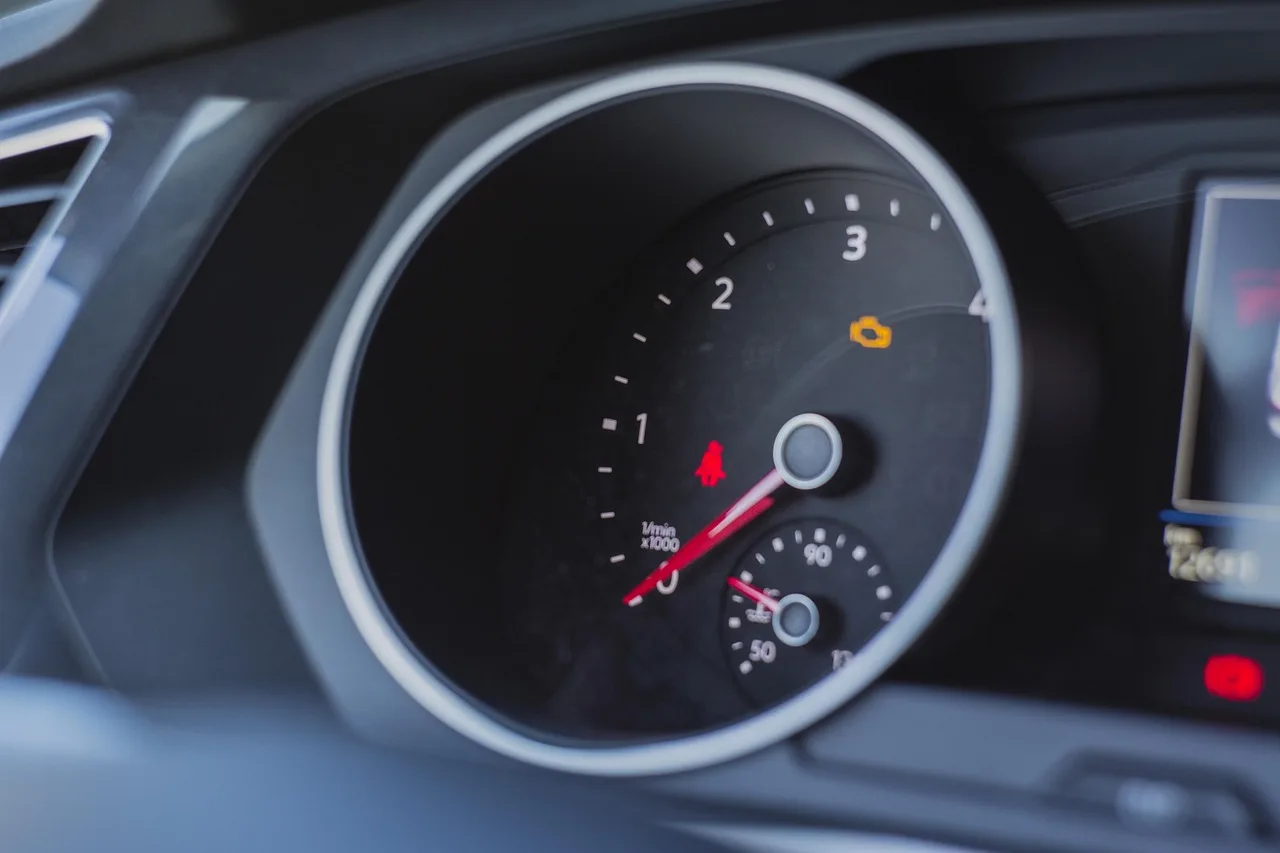
If the transmission warning light is red or flashing, or the car slips, refuses a gear, or smells burnt, stop driving and shut it off. If it is steady and the car still shifts normally, drive gently only to a safe place for a check. Ignoring the wrong symptom can turn a sensor issue into a failed gearbox and a much bigger repair bill. This guide separates safe-to-drive, limp-mode, and stop-now cases before you replace any parts.
What you’ll need


- A flashlight
- Paper towels or a clean rag
- Gloves
- A battery tester or multimeter
- A diagnostic scanner that can read the transmission module
- Your vehicle manual for fluid level and inspection points
Transmission warning triage table
| Dash behavior | Likely severity | First action |
|---|---|---|
| Steady warning light | Usually moderate; the TCU may have logged a reading outside range | Check battery terminals, then scan the transmission module before any repair |
| Blinking gear or D indicator | Often higher priority; some Hondas flash the D indicator instead of a message | Note the blink pattern, avoid hard acceleration, and plan a scan as soon as possible |
| Limp-home mode | Protective strategy, often third gear or one fixed CVT ratio | Drive gently only far enough to reach diagnosis, then stop pushing it |
| Slipping or jerking | Stop-now condition | Pull over, shut down, and call for help |
| No-shift condition | Stop-now condition | Do not keep cycling the selector; arrange towing |
| Intermittent light after startup | Often voltage, sensor, or connector related | Check battery age, terminal tightness, and recent voltage dips before clearing anything |
What should you do first when the transmission warning light comes on?
Start with the dash pattern and how the car behaves. A steady amber alert with normal shifting usually points to a fault that still needs diagnosis, while flashing symbols, jerking, slipping, or a refusal to shift call for an immediate stop. That first split saves time and prevents damage.
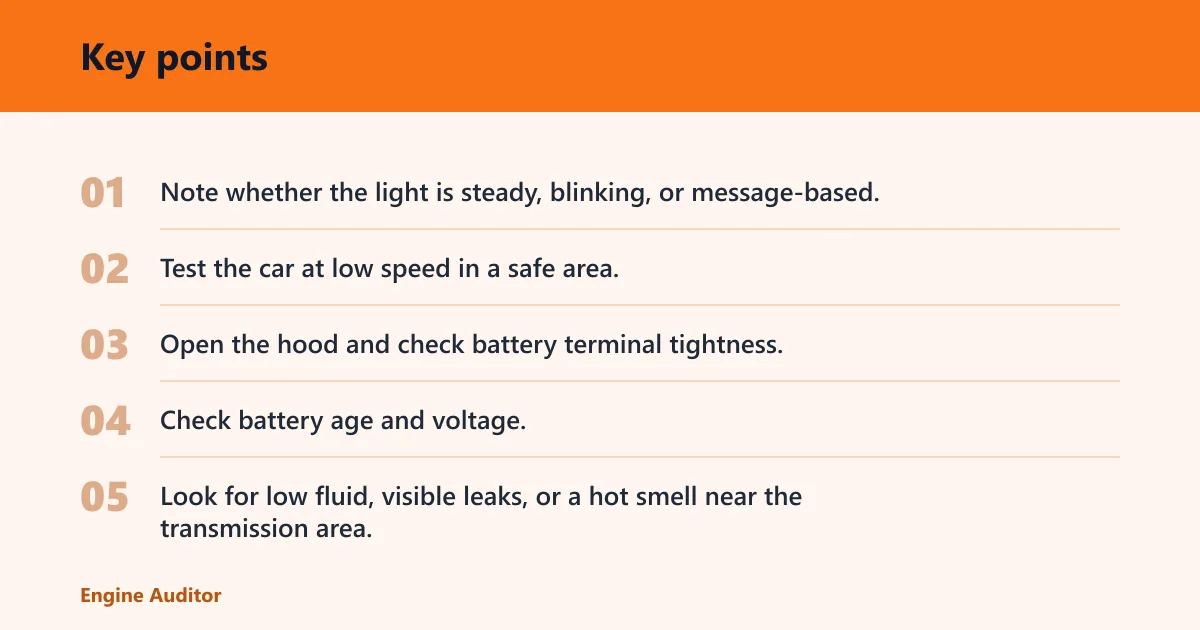
- Note whether the light is steady, blinking, or message-based, and write down any extra warning text.
- Test the car at low speed in a safe area. If it slips, jerks, or will not change ratio, stop driving.
- Open the hood and check battery terminal tightness. A loose or corroded connection can create voltage dips that trigger control faults.
- Check battery age and voltage. Low voltage is a common trigger for transmission warnings, and an aging battery is a frequent cause on BMWs and Mercedes.
- Look for low fluid, visible leaks, or a hot smell near the transmission area. Low or overheated fluid can change pressure behavior and confuse the computer.
If the light appears after a cold start and the car still shifts cleanly, that pattern often points to a voltage dip or a sensor signal that wavers early, not an immediate gearbox failure. A short, careful drive to a workshop may be reasonable if nothing else is wrong.
Can you keep driving if the transmission light is on but the car still moves normally?
If the car drives normally, a short, gentle trip to a workshop can be acceptable. Keep speed low, avoid hills and hard throttle, and stop if the behavior changes. Limp-home mode is a protective strategy, often limited to third gear or one fixed CVT ratio, so the aim is diagnosis, not normal use.
Stop now if the vehicle starts slipping, jerking, or refusing a gear. A warning lamp plus those symptoms means the fault is no longer a simple alert, and forcing continued driving can raise repair cost fast. If there is a burnt smell, treat it the same way.
Picture a sedan that still creeps forward in drive but will not upshift past one ratio on a long hill. That is not a good candidate for a “see if it clears” drive. The safer move is to get it towed or limped only the shortest distance possible.
How do you scan the transmission module?
A proper scan should reach the transmission control unit, not only the engine computer. The TCU stores fault codes and freeze-frame data, and it may also log temperature history and slip counters. Those details usually explain why the warning came on better than the dash message alone.
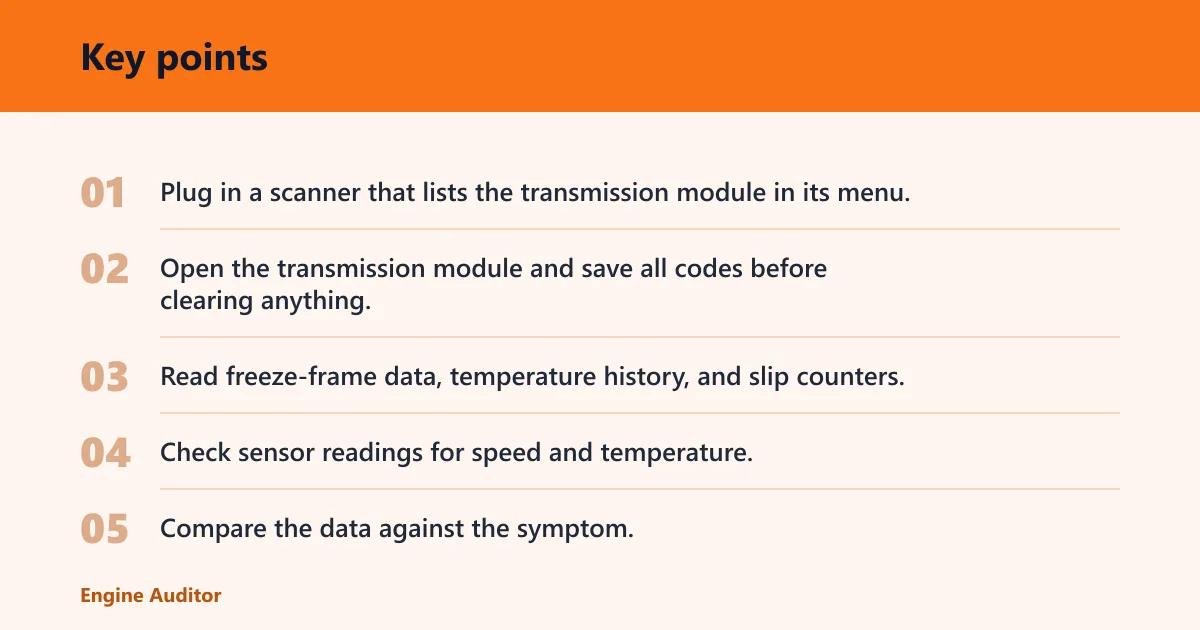
- Plug in a scanner that lists the transmission module in its menu, not just generic OBD engine codes.
- Open the transmission module and save all codes before clearing anything.
- Read freeze-frame data, temperature history, and slip counters.
- Check sensor readings for speed and temperature. Sensor drift or failure is a common source of warnings, and some transmissions place those sensors inside the unit.
- Compare the data against the symptom. If the numbers do not match the car’s behavior, that mismatch is the clue.
Generic readers can miss transmission faults completely. A cheap dongle may not reach the transmission module at all, so it can show “no codes” while the gearbox computer still has a stored problem. That is why a tool that can access the right module matters before anyone talks about parts.
Common mistakes
Clearing codes before checking the cause is a dead end. It may turn the light off for a while, but the fault often returns if the root problem remains. Disconnecting the battery can also erase freeze-frame data needed for diagnosis, which makes the next scan less useful.
- Do not clear codes first. Save the fault list and freeze-frame data first.
- Do not disconnect the battery as a reset. That can wipe learned adaptations and useful records.
- Do not authorize gearbox removal based on the warning light alone. The warning can come from voltage, sensors, fluid condition, software, or mechanical wear.
- Do not replace major parts until battery voltage, fluid condition, and scan data point the same way.
The battery reset habit causes a lot of false hope. Clearing a code without repair is ineffective, and disconnecting the battery can erase data that helps trace the fault. Some models later received manufacturer calibration updates for specific warnings, so software history can matter too.
Why does the light come and go?
An intermittent warning usually points to an unstable input rather than a hard mechanical failure. Low voltage and charging issues can make the control unit log a fault one day and clear it the next. Sensor drift, sensor failure, or a loose connector can do the same thing.
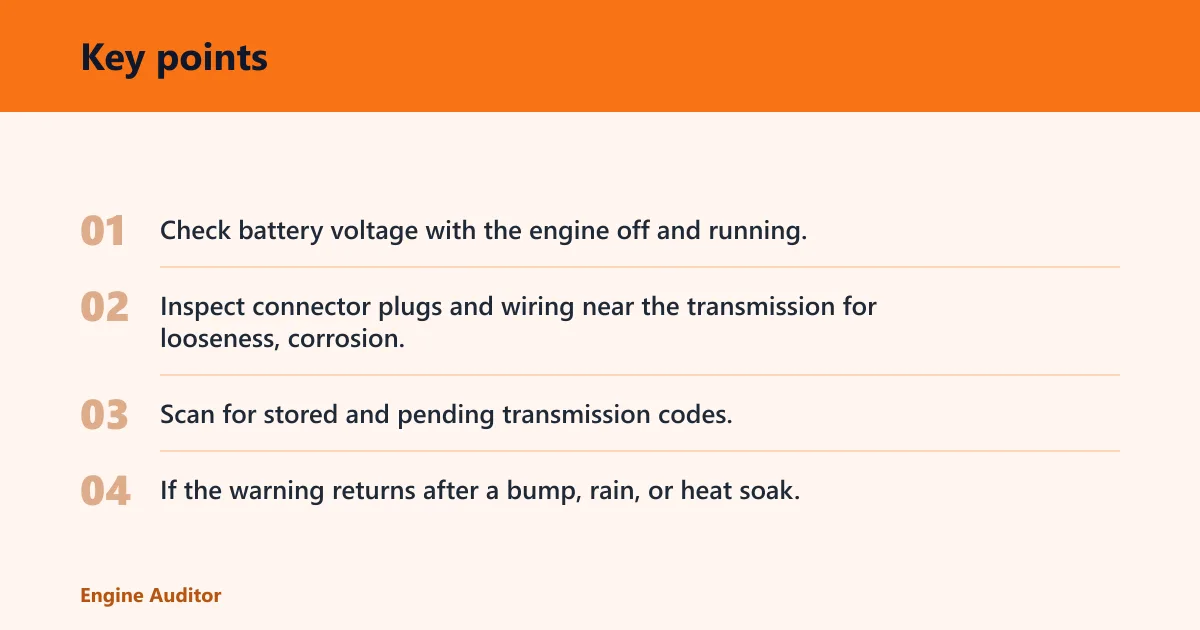
- Check battery voltage with the engine off and running, then inspect terminal tightness again.
- Inspect connector plugs and wiring near the transmission for looseness, corrosion, or oil contamination.
- Scan for stored and pending transmission codes, then compare them with temperature history and slip counters.
- If the warning returns after a bump, rain, or heat soak, suspect an intermittent connection before mechanical teardown.
A common first-timer mistake is to assume an on-off light means the fault is gone. It often means the signal is marginal. That is why voltage checks and module data matter before any parts are ordered.
What does a transmission control warning light mean?
It means the transmission control unit saw a reading outside its expected range and stored a fault. That reading can come from electrical, fluid, sensor, software, or mechanical issues. The dash alert is a prompt to check the system, not proof that the gearbox has failed.
Does low battery voltage trigger transmission control problems?
Yes. Low voltage is a common trigger for transmission warnings, and an aging battery is a frequent cause on BMWs and Mercedes. Check terminal tightness first, then test the battery and charging system so you do not chase a transmission fault that starts with power delivery.
Will disconnecting the battery reset the transmission warning light?
It may clear the light temporarily, but it does not fix the cause. Disconnecting the battery can erase freeze-frame data and learned adaptations, which makes diagnosis harder. If the fault is still present, the warning often returns after the next drive cycle.
What does it mean if my car is stuck in one gear?
That usually means the system has entered limp-home mode or another protective state. Limp-home mode often uses third gear or one fixed CVT ratio to limit damage. Drive gently only if the car still moves safely, then get a proper scan as soon as possible.
Why does the transmission warning light come and go?
Intermittent warnings often trace back to low voltage, a weak battery, sensor drift, or a loose connector. Temperature changes can also shift a marginal signal across the fault threshold. A scan that includes freeze-frame data and temperature history is the fastest way to sort it out.
Do I need a scanner that can read the transmission module?
Yes. A generic OBD dongle may not reach the transmission modules, so it can miss the real fault. You need a scanner that reads the transmission module, live sensor data, freeze-frames, and slip counters. That information is what separates a voltage problem from a true transmission issue.
Products related to this article
Sponsored / affiliate links. As an Amazon Associate I earn from qualifying purchases. I may earn additional commission from eligible campaigns.