Why Is My New Car Battery Dying in the Cold?
A new car battery can die in cold weather if it is undercharged, undersized, poorly installed, or drained by a parasitic load; below about 32°F, battery output drops enough to expose a weak link. Ignore the cause and you can strand yourself, stack up jump-starts, and ruin a battery that is not actually defective. This guide shows how to separate cold-weather chemistry from charging, fitment, installation, and draw problems.
Why a new battery can still fail in winter


Cold slows the lead-acid reactions inside a car battery and reduces the current it can deliver. A standard 12V automotive battery has liquid electrolyte, and that electrolyte reacts to temperature, so output and charge acceptance can fall in low temperatures. A battery can be “new” and still crank slowly if the car asks for more than the battery can give in the cold.
That matters because winter starting is a combined load problem. The starter motor draws high current, engine oil thickens, and the battery may already be short on charge from short journeys. A weak alternator, loose terminal, wrong battery size, or hidden drain can turn that reduced cold-weather output into a no-start.
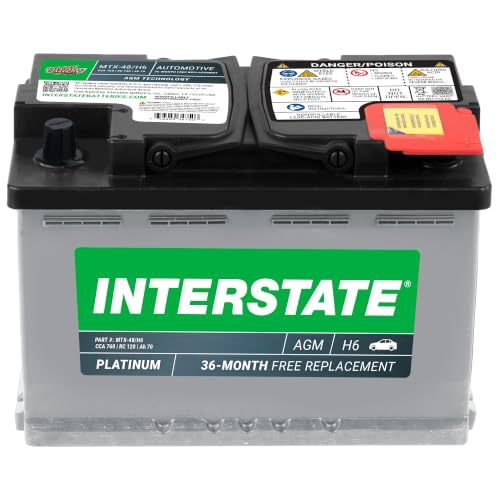
Cold Cranking Amps, or CCA, is the key winter battery rating. It compares cold starting output, and a higher CCA number means stronger cold-start performance. If the replacement battery does not meet the vehicle maker’s required CCA, it may fit physically and still struggle when the temperature drops.
A recent replacement also does not rule out a vehicle fault. A new battery that keeps going flat may point to an alternator problem, a parasitic draw, or a bad installation. Some vehicles also need battery registration, reset, or reprogramming after replacement, depending on the charging strategy.
New battery winter failure triage table
| Symptom | Likely cause | Quick check | Next action |
|---|---|---|---|
| Slow crank after sitting overnight | Low state of charge | Measure battery voltage before starting; compare it to a fully charged reading | Charge the battery fully, then retest for overnight loss |
| New battery still struggles in freezing weather | Undersized battery or wrong CCA | Check the battery label against the vehicle’s required CCA | Replace with the correct fitment and winter rating |
| Battery goes flat again after driving | Alternator undercharge | Watch for flickering dashboard lights and verify charging voltage | Test the alternator and charging circuit |
| Battery drains while parked | Parasitic draw | Look for a component or relay that stays active with the ignition off | Perform a parasitic draw test and repair the drain source |
| No-start with loose or corroded clamps | Poor terminal contact | Inspect for blue, green, or white deposits and loose clamps | Clean, tighten, and retest voltage drop at the terminals |
| Battery case looks swollen, leaking, or frosted | Frozen battery safety issue | Do not jump-start it; wear gloves and eye protection before inspection | Isolate the battery and have it inspected safely |
Replace vs diagnose: replace the battery first only if its CCA is below spec, it fails a proper load test, or it is physically damaged. Diagnose the vehicle first if the battery is new, the terminals are clean and tight, and the symptom returns after charging. In that case, charging-system, starter, and draw tests matter more than another battery swap.
📊 A typical car battery can lose half its potential power at 0 F. Source: Familyhandyman.
Is the battery actually undercharged?
Cold-soak failure and overnight discharge can look similar, but they are not the same problem. A cold battery can be healthy and still perform worse because cold weather limits how much power it can deliver. A discharged battery is different: it starts the night weak and wakes up weaker.
Short journeys are a common winter setup for undercharging. If the engine runs only long enough to move the car, the alternator may not restore the energy used by starting the engine and running heated seats, lights, wipers, defrosters, and washers. Short winter driving plus extra electrical loads can strain the battery.
Picture a commuter who drives 12 minutes to work, parks all day, then drives 12 minutes home with the blower, rear defroster, headlights, and wipers on. The battery may never recover to full charge, so by the next cold morning it behaves like a bad battery even if it is brand new.
As a rough maintenance rule, driving for at least 30 minutes once a week may help keep the battery topped up. That is not a cure for an alternator fault or a draw, but it does help a healthy charging system replenish what winter driving takes out.
Cold soak versus discharge
Cold-soak failure shows up after the car sits in low temperature, even if it was driven recently. The battery may recover somewhat after warming up. Overnight discharge usually shows the same weak crank whether the temperature is mild or severe, because the battery starts the day low on charge.
A simple clue is timing. If the car starts normally after a charger session but dies again after a night outside, look for self-discharge, parasitic draw, or charging trouble. If it starts poorly only after freezing nights, cold-crank demand and battery rating deserve a closer look.
Is the replacement battery sized correctly?
Cold Cranking Amps matters because winter starting asks for more current at the same time the battery can provide less. The replacement battery should meet the vehicle’s required CCA, not just fit the tray. A higher CCA number means stronger cold-start performance, provided the battery also matches the vehicle’s size, terminal layout, and charging plan.
Fitment errors show up in more than one way. A battery can be the wrong group size, have the wrong terminal orientation, or have enough nominal power on paper but too little cold-start output for the vehicle. In cold weather, that margin matters.
Suppose a vehicle calls for a battery with the proper winter rating, but the installed unit was chosen only because it was available locally. It may crank acceptably on a mild day and fail on a frozen morning. That is not a mysterious defect; it is often a sizing mistake.
What CCA changes in winter
CCA is a practical comparison number for cold starting. It tells you how much starting current a battery can supply under cold conditions. If the battery label lists a lower figure than the vehicle spec, the battery may be “new” and still be the wrong part for the job.
That is why a battery swap should begin with the label, not with guesswork. Match the required CCA, then confirm the battery is fully charged and the charging system is healthy.
Charging and draw faults to check next
A weak alternator can leave a new battery undercharged even after installation. The alternator charges the battery while the engine runs, so a fault there can mimic a dead battery. Flickering dashboard lights are a warning sign that the charging system may not be stable.
Parasitic draw is another common reason a new battery dies in cold conditions. It means a component keeps drawing power when the car is off, which can flatten a battery regardless of age. On modern vehicles, stuck relays, module faults, and wiring issues can hide behind a normal-looking exterior.
The starter motor can also be part of the problem. It draws high current during cranking, and cold oil makes the starter motor demand more power. Repeated clicking when you turn the key can point to starter motor failure rather than battery failure.
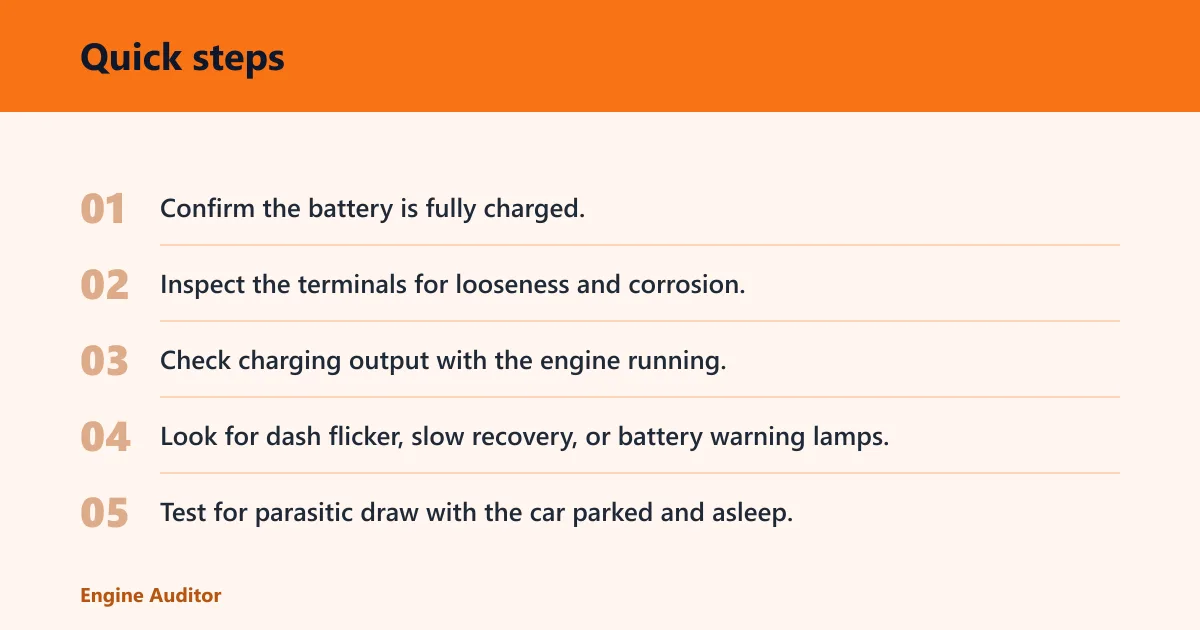
Check the charging path in order
- Confirm the battery is fully charged.
- Inspect the terminals for looseness and corrosion.
- Check charging output with the engine running.
- Look for dash flicker, slow recovery, or battery warning lamps.
- Test for parasitic draw with the car parked and asleep.
- Assess starter operation if the battery and charging system both pass.
Oil viscosity and cold crank load
Engine oil viscosity matters because thick oil raises cranking load. Winter grades such as 5W-30 and 10W-30 are designed to flow better in the cold than thicker oils, which can reduce starter strain. If the battery and charging system are borderline, heavy oil can be enough to expose that weakness.
That does not mean oil alone caused the failure. It means the starter had to work harder at the same time the battery had less cold-weather output. Those two effects stack.
Battery terminals, corrosion, and installation checks
Loose clamps and corrosion can block current flow even when the battery itself is fine. Blue, green, or white powdery deposits on the posts or clamps are a common sign to inspect the connection. A loose terminal can create the same no-start symptom as a weak battery because the current cannot reach the starter cleanly.
Installation mistakes matter too. A battery can be new, fully charged, and still fail to start the car if the terminal hardware is not seated correctly or if the clamp is not tightened enough. Check for movement by hand before moving on to deeper diagnosis.
Some vehicles also need battery registration, reset, or reprogramming after replacement. That is common enough to check in the service information, especially on vehicles with managed charging systems. If the car expects a new battery profile and does not get it, charging behavior can be wrong from the start.
Terminal check sequence
- Look for blue, green, or white deposits.
- Check that both clamps sit fully on the posts.
- Make sure the hold-down hardware is secure.
- Clean corrosion before retesting the start.
- Verify any required battery registration or reset.
A common first-timer mistake is assuming the battery is bad because the engine will not crank. If the terminal connection is loose, the symptom can look identical. One minute of inspection can save another unnecessary battery purchase.
How to prevent repeat winter failures
Prevention starts with keeping the battery fully charged and matched to the vehicle. A battery blanket or warmer can help reduce cold-related performance loss in very cold climates, but it is a prevention accessory, not a fix for a weak alternator or parasitic draw. Use it as support, not as a repair.
Reduce short-trip reliance where possible. If the car is mostly used for brief drives, the charging system may never catch up, especially in winter when lights, heaters, wipers, and washers run more often. A periodic longer drive can help, but only if the alternator and battery are already healthy.
Do not overlook storage conditions. Extremely low temperatures are needed to freeze a battery, but cold can still reduce output long before freezing becomes a risk. If the battery case is swollen, leaking, or suspected frozen, do not attempt to jump-start it.
Frozen battery safety
Frozen battery safety is non-negotiable. Do not jump-start a frozen battery; the risk of explosion and acid burns is real. Wear gloves and eye protection, inspect for swelling or leaking first, and keep clear of the battery until it can be evaluated safely.
Frequently asked questions
Why does my new car battery die in the cold?
A new battery can die in the cold if it is undercharged, undersized, poorly installed, or drained by a hidden load. Cold weather also cuts available output and raises cranking demand, so a weak alternator, bad terminals, or the wrong CCA can turn a new battery into a winter no-start.
Why is my car battery dying in the cold?
Cold weather lowers battery output, thickens engine oil, and increases the load from starting and winter accessories. If the battery is already low on charge, the car may not have enough reserve to crank the engine. That can happen even when the battery is not old.
Why does a new battery still struggle in freezing weather?
A new battery can still struggle if its CCA is below spec, the alternator is not charging properly, or corrosion is blocking current flow. Cold-soak conditions also reduce output by themselves. The battery may be fine, but the system around it is not.
How do I tell if it is the battery or something else?
Start with the battery state of charge, then inspect the terminals, then check charging output, then test for parasitic draw. If the battery is charged, clean, and still fails a proper load test, the battery is suspect. If it only fails after parking or driving, look at the vehicle.
If my car battery dies in the cold do I need to replace it
Not always. If the battery was discharged by short trips, a charging fault, or a parasitic draw, replacing it without fixing the cause can repeat the problem. Replace the battery if it is physically damaged, fails testing, or does not meet the required CCA for the vehicle.
Can my car battery die in the cold?
Yes. Car batteries can die in cold conditions because they produce less electrical current when cold. The risk is higher when the battery is weak, undercharged, or paired with a charging or starting problem. Cold does not create the fault, but it often exposes it fast.
Products related to this article
Sponsored / affiliate links. As an Amazon Associate I earn from qualifying purchases. I may earn additional commission from eligible campaigns.