Why Does the Inside of My Car Fog Up in Winter?
Car fog in winter usually falls into three buckets: inside fog from cabin moisture, outside fog from humid air condensing on cold glass, or recurring fog from hidden moisture or HVAC trouble. Leave it alone and visibility drops fast, which raises crash risk and can hide a failing heater, A/C, drain, or seal. This guide shows how to tell which type you have in under a minute and what to check next.
Why winter fogging happens
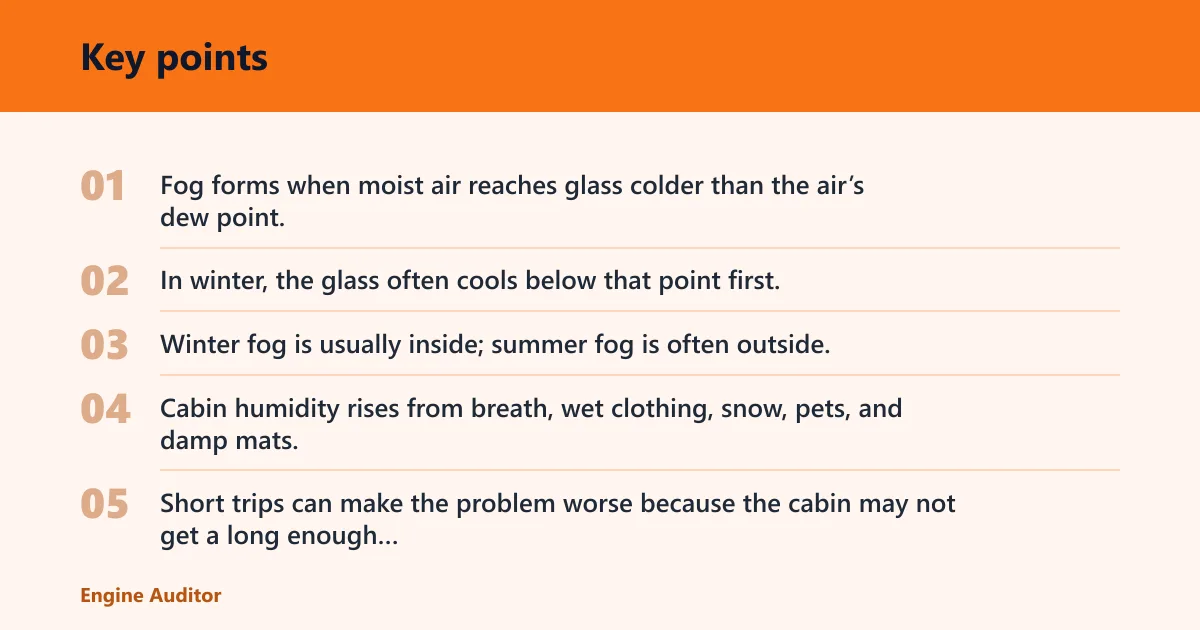

Fog forms when moist air reaches glass colder than the air’s dew point, so water condenses on the surface instead of staying invisible as vapor; ASHRAE describes this condensation behavior, and OEM defrost systems are designed around it. In winter, the glass often cools below that point first, so moisture lands on the window before the rest of the cabin feels damp. Winter fog is usually inside; summer fog is often outside.
Cabin humidity rises from breath, wet clothing, snow, pets, and damp mats. Short trips can make the problem worse because the cabin may not get a long enough dry-out cycle. A clean cabin, dry mats, and the right vent settings matter because fogged glass can block your view, and driving with an obstructed view can be illegal in some states.
What you’ll need
- Dash controls for the front defrost setting, including the windshield defrost symbol with the curved-arrow icon
- A clean microfiber cloth
- Glass cleaner for the inside glass
- A dry towel or extractor for wet mats
- A flashlight for carpet, drain, and filter checks
How do you tell inside fog from outside fog?
Inside fog looks like a cloudy film you can feel from the cabin side, while outside fog sits on the outer surface and often clears as the glass warms. If the windshield fogs in winter, start by assuming inside condensation, then confirm with a quick touch test and control check.
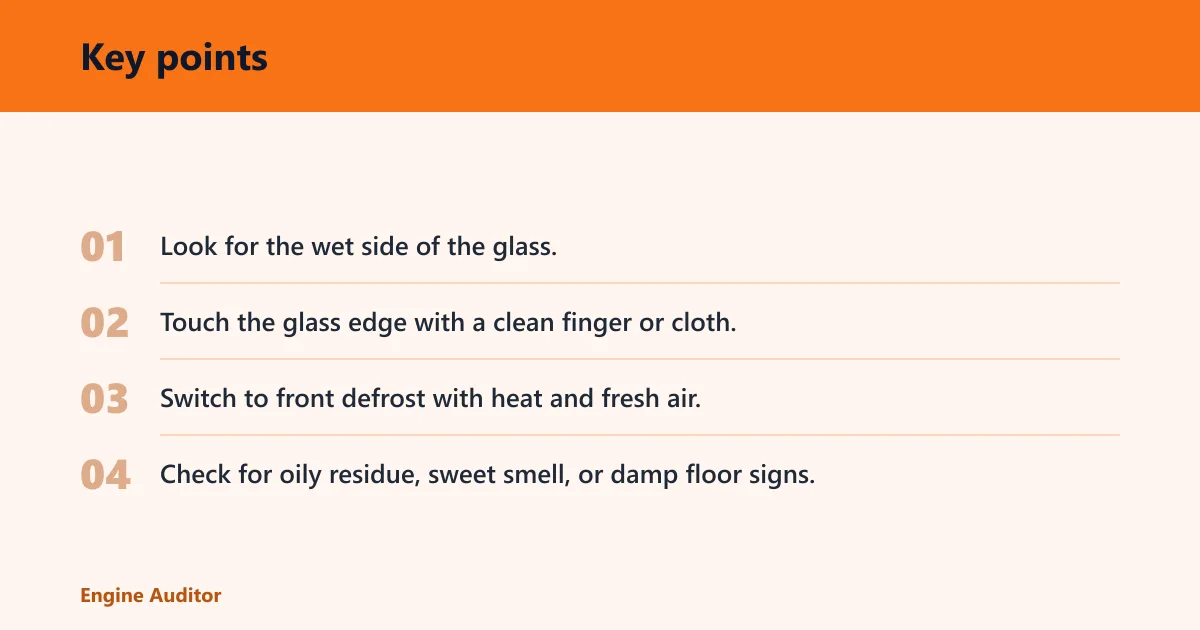
- Look for the wet side of the glass. If the cabin side looks hazy or streaked, think inside fog; if the outside face is beaded and the cabin side stays clear, think outside fog.
- Touch the glass edge with a clean finger or cloth. Moisture or slime on the inside edge points to cabin humidity, while an outside film points away from the cabin.
- Switch to front defrost with heat and fresh air. If the fog clears faster, it was likely inside fog; if recirculation makes it worse, stop using recirculation.
- Check for oily residue, sweet smell, or damp floor signs. Those point to a leak or film, not normal winter condensation.
Say your side windows fog first after two passengers get in with snowy coats. That pattern points to cabin moisture, not an outside-glass problem. Suppose the windshield stays clear on the outside but the inside edge keeps hazing after a five-minute drive; that points to trapped humidity or a dirty glass film slowing clearing.
Clear the glass fast

The quickest fix is front defrost, heat, A/C on, and recirculation off. Many modern vehicles turn on the A/C automatically in windshield defrost mode, and that is normal because the A/C compressor dries incoming air before the heater core warms it; Toyota, Honda, Ford, Mazda, and other owner manuals describe this behavior. Fresh air clears the screen far faster than recirculation in winter.
- Press the front defrost button, the curved-arrow windshield defrost symbol, and direct airflow to the windshield and side glass.
- Turn recirculation off so outside air can replace damp cabin air; AAA and major automaker manuals consistently recommend fresh air for defogging.
- Raise the fan to a high setting, then add heat gradually. Warm the glass steadily rather than blasting scalding heat.
- If your vehicle allows it, let the A/C compressor run while heat is on. The compressor dries the incoming air first.
- Crack a window slightly only if the cabin is still very damp and outside air is drier.
Why does fog keep coming back?
Fog that returns quickly usually means moisture is still entering the cabin, or airflow is too weak to dry the glass. Hidden water is common: wet mats, soaked carpet, trunk leaks, snow melting under the floor mats, or saturated insulation can keep cabin humidity high long after the first clear. A blocked cabin air filter can slow the whole process, and reduced airflow can leave the windshield repeatedly hazy.
- Remove wet boots, coats, and loose snow from the cabin so you stop adding moisture.
- Lift the floor mats and dry both sides. If the carpet underneath is wet, extract or towel it until it no longer feels damp.
- Clean the inside glass with a microfiber cloth and glass cleaner to remove greasy film that makes fog form more easily.
- Check the cabin air filter access. Replace a clogged filter if airflow is weak, then recheck whether the windshield clears faster.
AAA notes damp carpets after snowy boots are a common moisture source. Detailing1 says a greasy film on the inside makes the windshield fog up faster, which is why a dirty cabin can clear slowly even with the right settings. A car cabin holds about 2.5 to 3 cubic metres of air, so a little trapped moisture can affect the whole space.
Fog cause triage table
| Symptom pattern | Likely cause | Fastest immediate setting change | Next inspection step |
|---|---|---|---|
| Inside glass hazes after people enter | Cabin humidity from breath, coats, or snow | Front defrost, heat, fresh air, recirculation off | Dry mats and remove wet items |
| Outside film forms on cold mornings | Outside fog on chilled glass | Front defrost with heat; fresh air if needed | Watch whether it clears from the outside face first |
| Fog clears slowly and leaves streaks | Dirty or oily glass | Defrost plus fresh air and A/C on | Clean the inside glass with microfiber and glass cleaner |
| Fog returns in minutes | Hidden moisture or weak airflow | Defrost, fan high, recirculation off | Check carpet, mats, cabin filter, and trunk for water |
| Wet mats and damp carpet | Moisture reservoir underfoot | Defrost and fresh air to dry the cabin | Lift mats and dry or extract the floor |
| Low airflow from vents | Cabin air filter restriction | Fan high, front defrost, fresh air | Inspect or replace the cabin air filter |
| Fog has a sweet smell and oily film | Suspected heater-core leak | Defrost only long enough to maintain visibility | Inspect coolant level, glass film, and heater-core area |
| Defrost mode does not direct air properly | Defrost-system fault or blend-door issue | Use manual defrost, heat, and fresh air | Check vents, actuators, and HVAC response |
Common mistakes
Leaving recirculation on traps moisture inside the cabin and can make inside fog worse. Using heat alone without fresh air can warm the glass slowly while humid air may stay in place. Ignoring wet carpet, saturated mats, or a blocked cabin filter lets the problem return after a short clear.
Do not dismiss oily or sweet-smelling fog as normal winter condensation. That pattern can point to a heater-core leak, which often leaves a film on the glass and can produce a sweet coolant odor, damp passenger-footwell carpet, and repeated haze that returns even after you wipe the windshield. Also watch for blocked drains or a blend-door fault if air stops reaching the windshield the way defrost mode should send it.
When fog points to a fault
Fog is not always a weather problem. If the windshield fogs with a sweet smell, a greasy film, or visible dampness under the dash, inspect for a heater-core leak. If the fog returns even after mats are dried and the glass is clean, hidden moisture or an HVAC fault becomes more likely than ordinary condensation.
Modern automatic climate systems can turn on A/C automatically in defrost mode, and Mazda manuals also warn not to recirculate cabin air in cold or rainy weather. That matters because the quickest cure is usually a mix of defrost, heat, fresh air, and A/C drying, not heat alone.
If the windshield defrost symbol sends air to the wrong outlets, or the vents feel weak, a blend-door issue or blocked cabin filter can slow clearing. If the floor stays damp after weather shifts, check for trunk leaks, under-mat water, and clogged drains before the fog becomes a daily problem.
Frequently asked questions
Why does the inside of my car fog up in the winter?
Cold glass drops below the cabin air’s dew point, so moisture condenses on the inside surface. Breath, wet clothing, snowy boots, pets, and damp mats raise cabin humidity fast, especially on short trips. The quickest fix is front defrost, heat, fresh air, and A/C on if the vehicle allows it.
Why does a car fog up on the inside?
Inside fog usually means humid cabin air is touching colder glass. That moisture comes from people, wet fabric, or hidden water in the carpet and insulation. If the fog clears with fresh air and returns quickly, trapped moisture or a dirty cabin air filter are common things to check next.
What to do when the car gets foggy inside?
Switch to front defrost, turn recirculation off, set the fan high, and add heat. If your climate system allows it, let the A/C compressor run so the air dries before it reaches the glass. Then remove wet items and dry the mats so the fog does not return.
How do I clear inside windshield fog fast?
Use the windshield defrost symbol, direct air at the glass, and keep fresh air flowing. A high fan setting helps move drier air across the windshield quickly. If the engine is stone cold, a cold-air blast can help until the heater starts supplying warmer, drier air. For the fastest path, see front defrost, heat.
Should I use recirculation when the inside of my car fogs up?
No. Recirculation loops humid cabin air back through the system, which slows clearing for inside fog. Turn it off, use front defrost, and bring in outside air. Recirculation can help only in some outside-fog cases, not when the moisture source is inside the cabin.
Can I use the A/C in winter to demist windows?
Yes. The A/C compressor dries the air before the heater core warms it, so it can speed demisting even in winter. Many vehicles engage A/C automatically in defrost mode, and that is normal. Use heat and fresh air with it rather than relying on heat alone.
30-second fog diagnosis checklist
- If the haze is on the cabin side and appears after passengers enter, treat it as inside fog.
- If the outside of the glass beads up on a cold morning, treat it as outside fog.
- If the film looks oily, smells sweet, or returns after wiping, suspect heater-core leak or contamination.
- If the windshield clears briefly but fog comes back every few minutes, look for wet mats, hidden carpet moisture, or a weak cabin filter.
- If airflow is weak or defrost sends air to the wrong outlets, check the HVAC system rather than just the weather.
False positives and repeat-fog causes
Not every foggy windshield means a broken part. Outside humidity can coat the outer glass on mild, wet mornings, and a short commute can leave enough moisture in the cabin to fog the inside again by the next stoplight. Snow melting from boots, slush in floor mats, and damp insulation can mimic a leak for days.
If the fog only appears after cold starts with no passengers, outside condensation is more likely. If it appears after one person enters with a wet coat, or after several short trips, the cabin itself is the moisture source. A recurring pattern after cleaning and drying points to a hidden water entry, weak airflow, or a heater-core issue.
Products related to this article
Sponsored / affiliate links. As an Amazon Associate I earn from qualifying purchases. I may earn additional commission from eligible campaigns.