Why Do I Hear Grinding From the Front Wheel While Driving?
If the grinding changes with braking, inspect pads, rotors, caliper hardware, and the dust shield. If it changes with speed or steering, inspect the wheel bearing, tire tread, or CV axle, and stop driving if the noise is loud or the wheel feels loose. A brake issue can chew up a rotor, a bearing fault can turn into wobble, and a damaged tire can fail at speed. This guide helps you sort front-wheel grinding by straight-line speed, braking, left turns, right turns, and recent brake work.
Front wheel grinding diagnostic matrix
| Symptom trigger | Likely source | What to check | Stop driving? |
|---|---|---|---|
| Straight-line grinding that rises with road speed | Wheel bearing, tire contact noise, or rotor rubbing | Listen for a growl that changes with speed; look for uneven tire wear, wheel heat, or rotor dust shield contact | Yes if loud, growing, or paired with looseness |
| Grinding only while braking | Brake pads worn to the backing plate, rotor scoring, caliper drag | Inspect pad thickness, rotor grooves, and whether the noise starts the moment pedal pressure begins | Yes if metal-on-metal is present |
| Grinding when turning left | Right-side wheel bearing, brake rub, or tire contact noise | Note whether the noise gets louder as weight shifts to the right front wheel | Maybe, unless the wheel feels loose or hot |
| Grinding when turning right | Left-side wheel bearing, brake rub, or tire contact noise | Check whether the left front gets louder under load in the turn | Maybe, unless the wheel feels loose or hot |
| Rhythmic grinding that rises with speed | Tire cupping, separated belt, bearing noise, or bent dust shield | Look for scalloped tread, change in noise on different pavement, or a shield touching the rotor once per wheel rotation | Yes if the tire shows damage or vibration is strong |
| Noise after brake service | Bent dust shield, missing hardware, wrong pad fit, slide-pin problem | Check for fresh metal marks, loose clips, shield rub, or a caliper that does not slide freely | Yes if the sound is harsh or the wheel heats up |
| Noise with steering-wheel vibration | Rotor problem, tire defect, bearing wear, or hub issue | Feel for shimmy at speed, inspect for rotor scoring, and look for uneven tire wear or an ABS warning | Yes if vibration is strong or steering feel changes |
| Noise with wheel heat or pull | Sticking caliper, bearing drag, or tire problem | After a short drive, compare wheel temperatures carefully and check for brake odor, pulling, or one hot wheel | Yes |
What a front wheel grind usually points
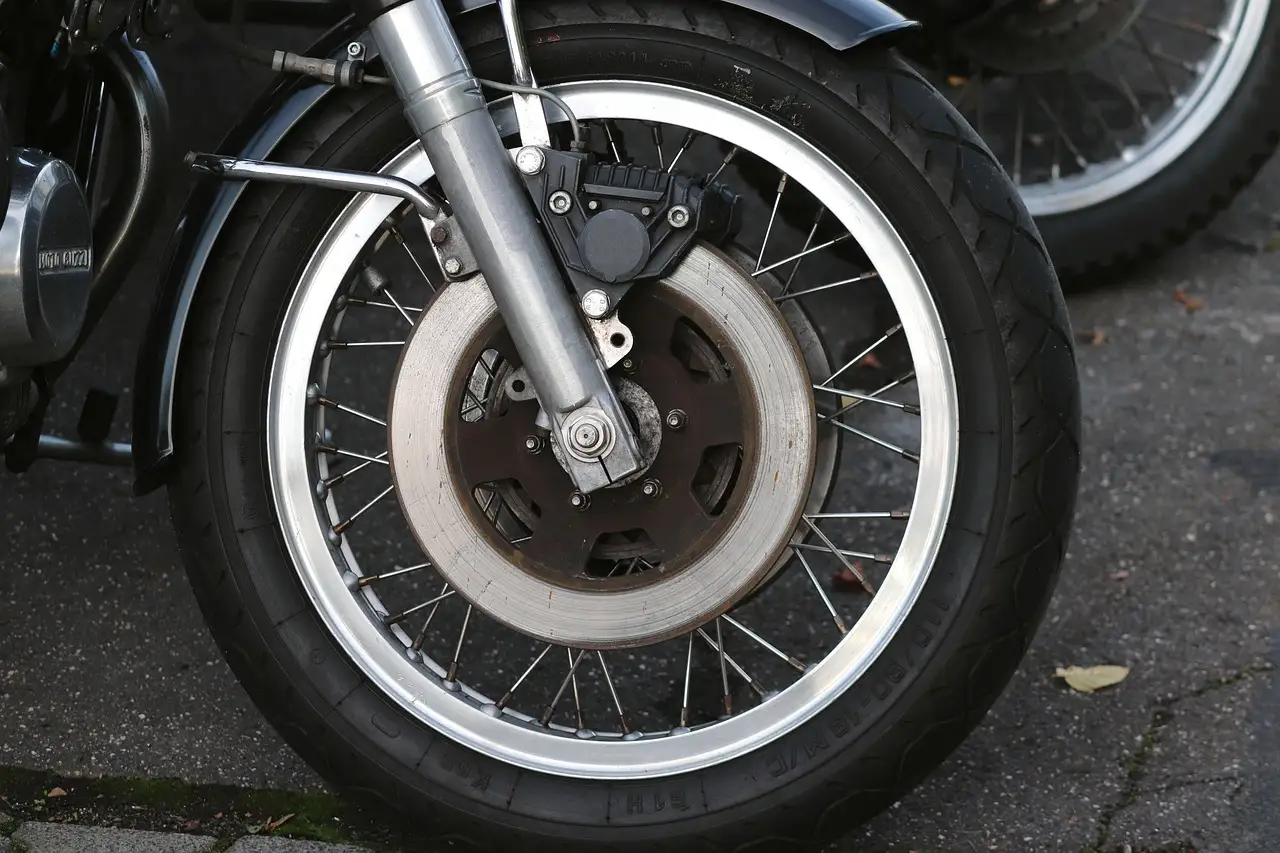
A front-wheel grind usually comes from one of four places: the brakes, the bearing or hub, the tire, or the axle area. The driving clue matters. Noise that appears only with braking points toward pad or rotor contact. Noise that changes with speed or turning points more toward bearing, tire, or hub issues.
Brake parts that touch when they should not
Brake pads can wear down to the backing plate, which is the metal support behind the friction material. Once metal touches the rotor, the sound is harsh and often constant during braking. Deep rotor scoring, a rust lip, or a sticking caliper can add noise or make the car pull to one side.
Bearing or hub noise under load
The wheel bearing supports the hub as it rotates. When it wears, it can make a growling or grinding sound that may change with speed and steering load. One side can fail first. In a turn, weight shifts to the outside wheel, so a bad bearing often gets louder when the load moves onto the failing side.
Tire noise that can sound similar
Cupped or scalloped tread can mimic a bearing hum or grind. A separated belt can add vibration and a repeating sound that follows wheel speed. If the noise changes with pavement texture, the tire becomes more likely. That clue matters because the repair path is very different from a brake or hub repair.
Axle and CV joint clues
A front-drive CV joint more often clicks on turns than it grinds. Boot damage can let grease escape and speed up wear. If the noise is a sharp click at low speed in a tight turn, think CV joint first. If it is a steady grind that follows wheel speed, look elsewhere first.
Why does the noise change when you turn?
Turning shifts weight across the front axle, and that load shift is a strong diagnostic clue. If a left turn makes the noise louder, the right front wheel is carrying more load. If a right turn makes it louder, the left front wheel is under more load. That pattern often separates bearing issues from brake rub.
Left turn versus right turn load shift
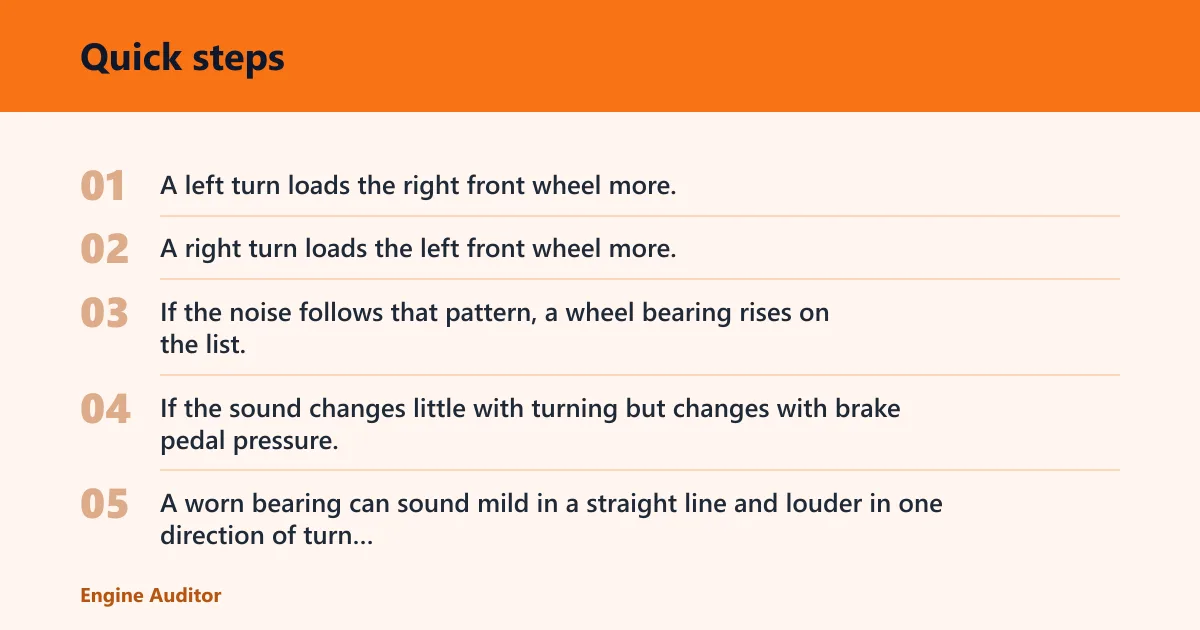
A left turn loads the right front wheel more. A right turn loads the left front wheel more. If the noise follows that pattern, a wheel bearing rises on the list. If the sound changes little with turning but changes with brake pedal pressure, brake parts move higher on the list.
How a bad bearing changes with side load
A worn bearing can sound mild in a straight line and louder in one direction of turn because the side load changes. The sound often starts as a growl, then becomes a grind as wear grows. A front hub assembly may package the bearing and hub as one unit, so the repair may be a full assembly rather than a loose bearing.
When a turn points more toward brakes than bearings
If the sound appears only when the steering is turned near full lock, the CV joint becomes more likely. If the sound appears only while braking in a turn, a rotor, pad, or caliper issue may be the real cause. A bent dust shield can also touch only when suspension or steering position changes.
Could brake parts be the source?
Yes. Brake pads, rotors, calipers, and shields can all make a front wheel grind. The strongest clue is whether the noise starts with pedal pressure. A grind that begins the instant you touch the brake pedal usually points to the braking system, not the tire or bearing.
Worn pads and backing plate contact
When pad material runs thin, the backing plate can touch the rotor. That contact often makes a loud, metallic grind and usually means urgent brake service. A common first-timer mistake is to assume the pads have a little life left because the car still stops. Once metal is rubbing, the rotor may already be damaged.
Rotor scoring, rust lips, and caliper drag
Rotors are the metal discs the pads clamp. Deep scoring, a rust lip at the outer edge, or warped surfaces can add noise. A brake caliper with stuck slide pins or a seized piston can keep the pad dragging on the rotor, which can cause noise, heat, and uneven pad wear on one side.
Bent dust shields after potholes or service
A dust shield is a thin metal shield behind the rotor. It can bend after a pothole hit or after brake work, then rub the rotor only sometimes. The noise may come and go with road bumps or steering angle. That pattern is common after recent service, especially if the shield was disturbed.
Can a wheel bearing or hub make this sound?
A failing wheel bearing is a common cause of front-wheel grinding, and the noise may change with speed or steering load. A front hub assembly can fail as one unit, and some modern cars use that unit near the ABS wheel speed sensor, so an ABS warning may show up too.
Common bearing sound pattern at speed
A bad bearing often sounds like a growl or grind that rises with road speed, even when you are not braking. It may get quieter or louder when you swerve gently in one lane. If the wheel feels loose, the noise is more concerning, because bearing wear can progress to wobble.
Why hub assemblies fail on one side first
Front hubs do not always wear evenly. One side can take more load from potholes, curb hits, or long-term stress, so one bearing fails before the other. Because many modern cars use a hub and bearing as one assembly, replacement often means the entire unit instead of a press-in bearing alone.
ABS sensor clues during hub failure
An ABS wheel speed sensor sits near the hub or bearing area. During hub service, the sensor or tone ring can be affected. If the grinding appears with an ABS warning light, the hub area needs careful inspection, because the sensor signal and the bearing condition may both be part of the problem.
Front wheel grinding after brake service
If the noise started after new pads, rotors, or caliper work, focus on service-related causes first. Bent shields, missing clips, pad hardware installed wrong, or slide pins that were not cleaned and lubricated can create fresh grinding. A post-service noise deserves attention quickly, especially if it was not there before the repair.
Bent shield or loose hardware
Brake work can move or bend a dust shield, and missing anti-rattle hardware can let pads shift and scrape. The noise may be intermittent at first, then constant. If the sound began within days of service, a quick visual check of the rotor area can save time and prevent rotor damage.
Pad fitment and slide pin issues
Wrong pad hardware or sticky slide pins can leave one pad dragging. That can cause one wheel to run hotter than the other and can wear the pads unevenly. If the wheel gets hot after a short drive, stop and inspect it. Heat means drag, and drag can escalate fast.
Rotor contact after recent repair
Suppose a sedan leaves the shop with a faint scrape that becomes a steady grind only at low speed. If the noise began right after front brake work, the first suspects are the dust shield, pad hardware, and caliper slide pins, not the bearing. A fresh rotor mark often points to a part that should not be touching.
How urgent is the repair?
Grinding plus loose steering, strong vibration, wheel heat, or a visible pull is a common urgent warning sign. A metal-on-metal brake noise is also urgent because the rotor can be damaged quickly. If the wheel feels unstable, or if the sound is getting louder by the mile, do not keep driving for long.
When to stop driving now
Stop driving now if the wheel feels loose, the car pulls sharply, the noise is loud enough to change cabin conversation, or the wheel is hot enough to smell brake odor. Those signs suggest bearing, brake, or caliper trouble that can get worse fast. A tow is safer than a short drive.
Signs that call for towing
Tow the car if the grinding is constant and growing, the steering wheel shakes hard, the ABS light appears with wheel noise, or you suspect a separated tire belt. A tire problem can become a blowout, and a bearing failure can lead to wheel wobble or hub damage.
When a short trip to a shop may still be reasonable
If the noise is light, the wheel is cool, the steering is normal, and the sound changes only slightly with speed, a short, careful trip to a repair shop may be reasonable. Keep speed low and avoid highways. If the sound changes for the worse, stop and arrange a tow.
Front wheel grinding diagnostic steps
- Note when the sound appears first: straight-line speed, braking, left turn, right turn, or after recent brake work.
- Listen for whether the sound changes with brake pedal pressure.
- Check for steering pull, vibration, or an ABS warning light.
- After a short drive, compare wheel heat carefully by hovering a hand near each front wheel.
- Look through the wheel spokes for pad thickness, rotor scoring, and a bent dust shield rubbing the rotor.
- Inspect the tire tread for cupping, scalloping, or sidewall damage.
- If the wheel feels loose, hot, or noisy at all times, stop driving and get it inspected.
Frequently asked questions
Why do I hear grinding from the front wheel while driving?
Most often, the sound comes from brakes, a wheel bearing, a tire problem, or a bent dust shield. The key clue is when the noise changes. If it follows braking, think pads or rotors. If it follows speed or turns, think bearing, tire, or hub issues.
Is it safe to drive with a grinding noise from the front wheel?
Only for a short distance if the sound is light, the wheel stays cool, and steering feels normal. If the grind is loud, constant, or paired with vibration, pull, or heat, do not keep driving. Those signs can point to brake damage, bearing failure, or tire failure.
Does a grinding sound from the front wheel mean my wheel bearing is bad?
It can, but not always. A bad bearing usually makes a growl or grind that rises with speed and may change in turns. If the noise appears only while braking, the brakes are more likely. If it changes with pavement texture, tire wear may be part of it.
Could brake pads or rotors make a front wheel grinding noise?
Yes. Thin pads can let the backing plate touch the rotor, and a scored or rusted rotor can add noise. A sticking caliper can keep a pad dragging and make one wheel hotter than the other. Grinding that starts with pedal pressure belongs in the brake system first.
Why does the grinding get louder when I turn or brake?
Turning shifts weight onto one front wheel, which can make a worn bearing or rubbing brake part louder on that side. Braking adds pad force to the rotor, so a rotor, pad, or caliper issue often gets louder then. The trigger tells you where to look first.
How can I tell if the noise is from the tire, CV joint, or wheel bearing?
A tire noise often changes with pavement and may come with cupping or scalloped tread. A CV joint usually clicks more than it grinds, especially on tight turns. A wheel bearing often grows louder with speed and load transfer in turns. That pattern helps separate them quickly.
How much does it cost to fix a grinding front wheel?
Cost depends on the cause. A dust shield bend or minor brake hardware issue may be far cheaper than a brake job with rotors and pads. A wheel bearing or front hub assembly usually costs more, and caliper repair can sit in the middle. Exact pricing depends on the car and the damaged parts.
When should I stop driving and get the car towed?
Stop driving if the wheel feels loose, the grinding is constant and loud, the car pulls hard, the steering wheel shakes, or the wheel gets hot. Towing is the safer call when the noise is paired with vibration or heat, because those signs can point to failure that worsens quickly.
Products related to this article
Sponsored / affiliate links. As an Amazon Associate I earn from qualifying purchases. I may earn additional commission from eligible campaigns.