Why Does My Clutch Pedal Stay on the Floor?
If your clutch pedal stays on the floor, check for a hydraulic leak or failed master or slave cylinder first. Driving can leave you unable to shift, and repeated pumping may worsen the fault. This guide gives a fast diagnosis path for hydraulic, cable, and wear-related causes, plus the checks that separate them. On hydraulic systems, the pedal is expected to move a master cylinder that builds pressure and a slave cylinder that applies release force; when that pressure path is interrupted, the pedal can sink or stay down.
What it means when your clutch pedal won’t return


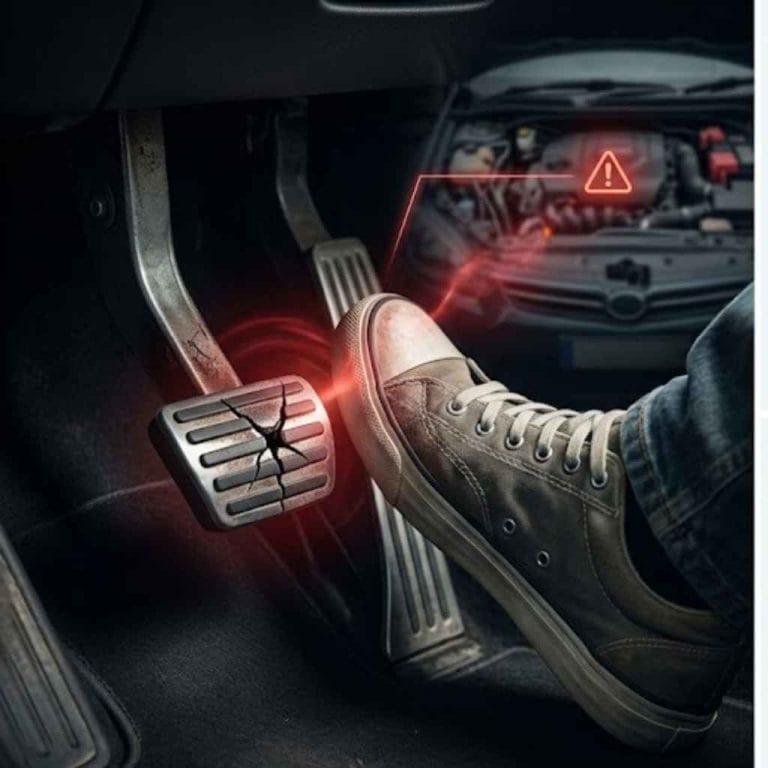
A clutch pedal that will not return normally is a control fault, not a generic clutch wear complaint. The common symptom groups are soft, hard, sticking, or sinking pedals, and a pedal that goes to the floor is generally the most urgent of the four. That pattern usually points to lost hydraulic pressure or a broken return path.
Do not confuse this with clutch slip or a high engagement point. A slipping clutch still releases and engages, but the pedal usually returns. A pedal that remains down, sinks during hold, or only comes back after pumping points you toward the actuation system.
The RAC describes a clutch as part of controlling engine and transmission engagement. That matters here because a fault in the pedal, cable, or hydraulic circuit can stop that control before the clutch disc itself has worn out.
Clutch pedal diagnosis table
Use the table below as a roadside decision guide. Start with the clue you can actually see or feel, then match it to the likely failure point and the safest next step.
| Symptom pattern | Likely failure point | Immediate action |
|---|---|---|
| Pedal slowly sinking while held down | Master cylinder internal seal wear, slave cylinder internal bypass, or air in the hydraulic line | Check fluid level and look for wet fittings; avoid further driving until the leak source is found |
| Pedal falling instantly to the floor | Major hydraulic leak, failed master cylinder, failed slave cylinder, or broken cable on a cable system | Stop driving; arrange a tow if reverse or first gear cannot be selected cleanly |
| Pedal sticking after release | Broken return spring, cable bind, release bearing drag, or pedal pivot issue | Inspect the pedal return path and cable routing before restarting the engine |
| Pedal pumps up temporarily | Air in the hydraulic line, low fluid, or a weak master cylinder that needs repeated strokes to build pressure | Use pump response only as a clue; treat it as a warning, not a repair |
| Tow now vs safe to limp | Tow now if the pedal stays down, fluid drops again, or gears will not engage; a short limp is only reasonable if the pedal fully returns and shifts remain normal | Do not plan a long trip; limit movement to the shortest safe route to repair |
Why does my clutch pedal stay on the floor?
The most likely cause is hydraulic failure. A soft or spongy clutch pedal usually indicates hydraulic leaks, and a pedal that goes to the floor signals complete hydraulic failure. In practical terms, that means pressure is not staying in the system long enough to push the slave cylinder through its full stroke. Service information from OEM brake and clutch systems follows the same basic principle: a sealed hydraulic circuit must hold pressure to transmit pedal input effectively.
The master cylinder converts pedal movement into hydraulic pressure. If its internal seals wear or it leaks, the pedal can feel soft, travel too easily, and remain down after use. A faulty master cylinder can leave the pedal easier to press and down after use. The master cylinder is the first component to suspect when the reservoir is not obviously empty but the pedal still falls away.
The slave cylinder receives that pressure and moves the clutch mechanism. A faulty slave cylinder is a likely reason a clutch pedal sticks to the floor. On external slave layouts, the leak is often visible at the slave body, hose, or pushrod boot. On concentric internal slave setups, the leak may show up inside the bellhousing, which means fluid loss can be hidden until the reservoir is low.
Low clutch fluid can make the pedal feel spongy or stick to the floor. Air contamination in the hydraulic system can do the same because air compresses instead of transmitting force cleanly. If the car uses a shared brake/clutch reservoir, a low level can affect both systems, so the reservoir check matters before anything else. This shared-reservoir behavior is common on many manual-transmission vehicles, and a low reservoir can point to either a clutch-side leak or a brake-side leak depending on the design.
Why does my clutch pedal keep sticking to the floor?
Sticking after release usually points to a return problem or a cable that no longer moves freely. A broken clutch cable can make the pedal stick to the floor, and the clutch pedal can stick if the return spring breaks. Both faults leave the pedal limp, slow to rise, or stuck low after each press.
On cable-operated cars, the cable can stretch, bind, fray, or snap. Stretch changes pedal height and engagement point, while bind or fraying can stop the pedal from returning cleanly. If the cable has snapped, the pedal may fall with little resistance and stay there.
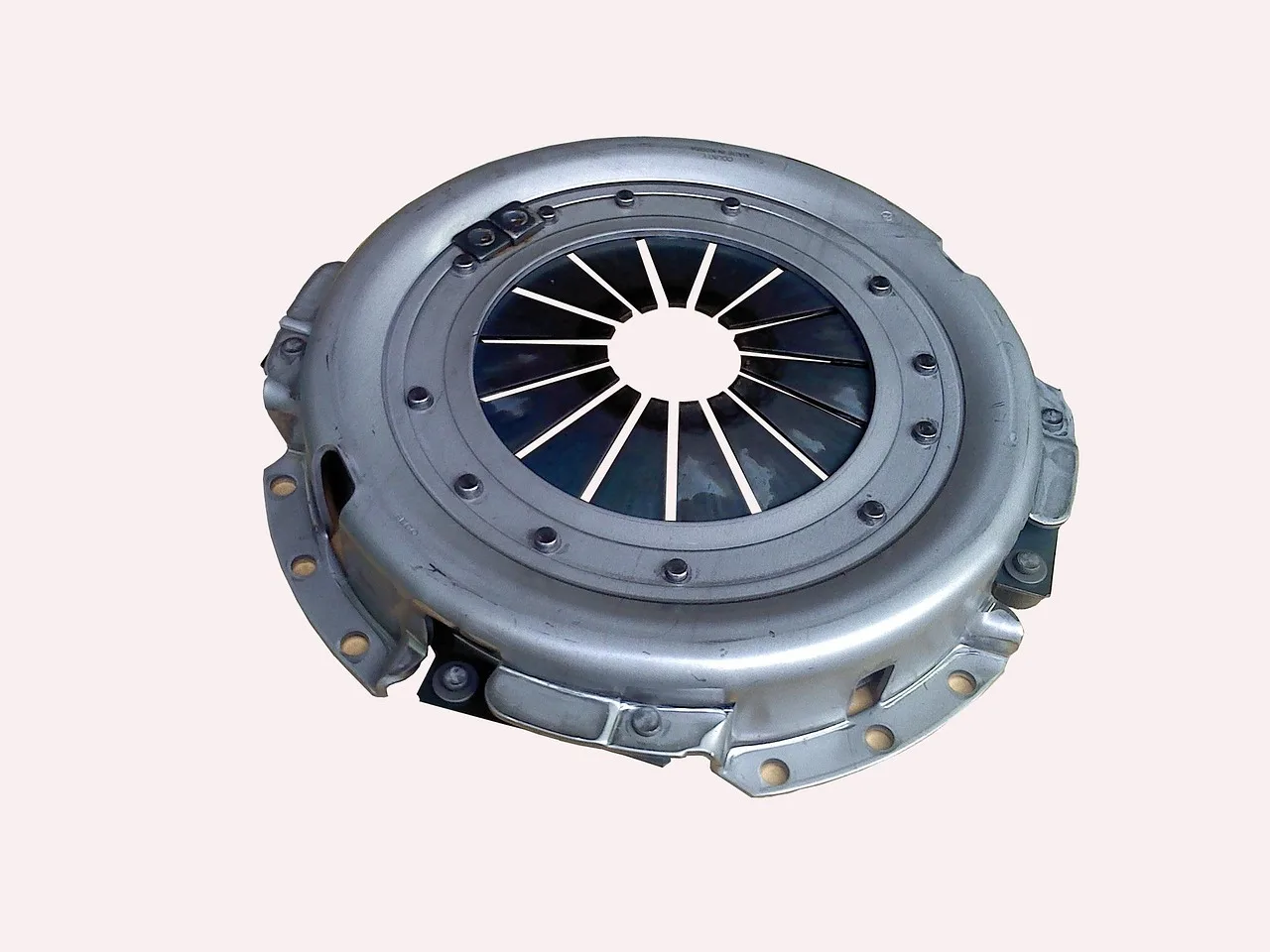
A worn release bearing, also called a throw-out bearing, can add stiffness, vibration, or noise during pedal movement. It pushes against the diaphragm spring during clutch release, so wear there can change pedal feel. It is less likely to be the sole reason a pedal stays on the floor, but it can add drag that makes a weak return spring or marginal cable problem worse. Release bearings are designed to let the clutch release smoothly as the rotating drivetrain and stationary release mechanism interact; when they drag or seize, pedal effort and noise can change noticeably.
Picture a compact hatchback with a hydraulic clutch, a reservoir level just below the minimum mark, and a pedal that returns only after two or three pumps. That pattern points more toward air or fluid loss than a pure clutch wear issue. The pedal action itself is the clue.
How to tell hydraulic from cable failure
Start by identifying the actuation type. If the car has a clutch fluid reservoir and hydraulic lines, treat it as hydraulic until proven otherwise. If it uses a cable from pedal to transmission, look for binding, stretch, or a broken cable before chasing hydraulic faults that are not there.
- Check whether the car has a clutch fluid reservoir or a cable connection at the transmission.
- Inspect the reservoir level and condition of the fluid.
- Look for wet fittings, damp firewall areas, or fluid around the slave cylinder.
- Press the pedal several times and note whether it briefly pumps up.
- Watch pedal return speed and whether the engagement point jumps around.
Hydraulic problems often show a soft pedal, a sinking pedal, or a pedal that improves briefly after pumping. Cable failures more often show stiffness, poor return, or a pedal that drops and stays down without fluid loss. The difference matters because the likely fix is different, and the leak clues are different too.
With an external slave cylinder, look under the vehicle and around the gearbox for fresh fluid. With a concentric internal slave cylinder, check the reservoir and bellhousing area, then note whether the pedal improves only after repeated pumping. Hidden leaks are common in that layout.
Symptoms by actuation type and failure location
The fastest way to narrow the fault is to separate what the owner can see from what is hidden. The same pedal symptom can come from different locations depending on whether the car uses a master cylinder, an external slave, a concentric internal slave, a cable, or a pedal return spring.
Master cylinder
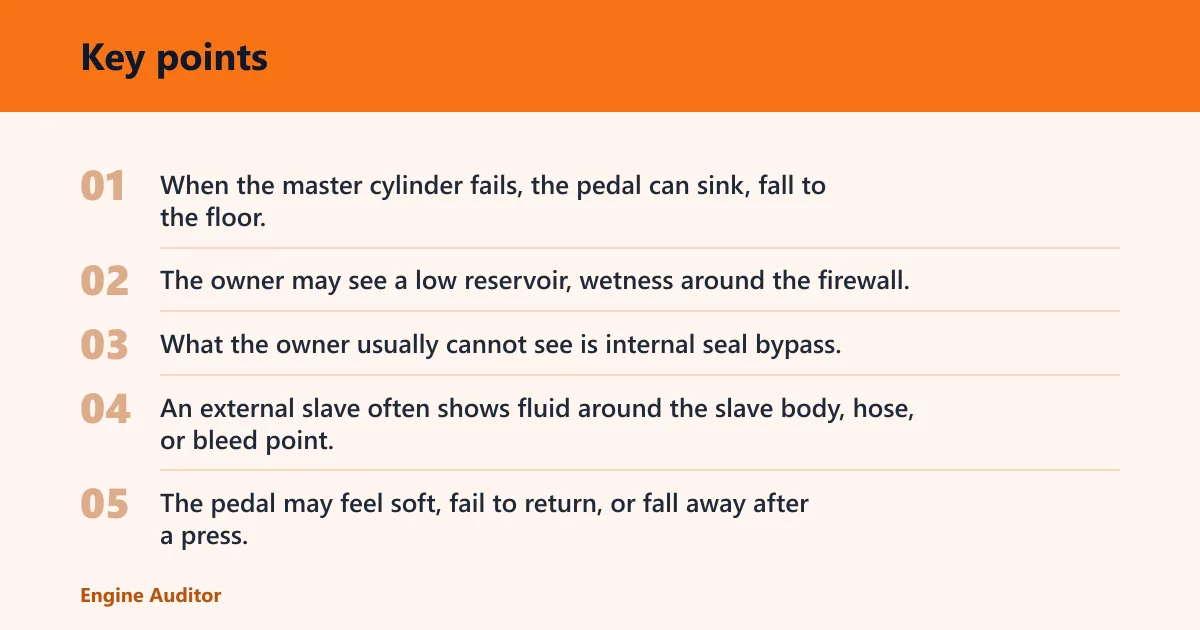
When the master cylinder fails, the pedal can sink, fall to the floor, or improve only briefly after pumping. The owner may see a low reservoir, wetness around the firewall, or dampness at the master pushrod area. What the owner usually cannot see is internal seal bypass; that kind of leak can lose pressure without obvious dripping.
External slave cylinder
An external slave often shows fluid around the slave body, hose, or bleed point. The pedal may feel soft, fail to return, or fall away after a press. In many cases the owner can inspect it from underneath and see wetness directly.
Concentric internal slave cylinder
A concentric internal slave is harder to inspect because it sits inside the bellhousing. The owner may only notice a low reservoir, changing pedal feel, or poor gear selection with no visible outside leak. Fresh fluid may collect where it is not easy to see, so the fault can be hidden until the system loses enough fluid to fail.
Cable
A cable system tends to show stiffness, sticking, loss of return, or a pedal that drops without any fluid clue. The owner may see a frayed cable, a broken outer sheath mount, or a cable that no longer moves smoothly. There is no fluid reservoir to inspect on a pure cable setup.
Pedal return spring
A failed return spring can make the pedal stay low even when the hydraulic side is intact. The owner may notice a limp pedal that comes back slowly or not at all, but the fluid level may look normal. This fault is usually visible around the pedal assembly rather than the transmission.
What the engagement point and free play tell you
Pedal free play and the engagement point are useful clues, but they are not the whole diagnosis. Too much free play can leave the clutch slow to disengage, while too little free play can hold slight pressure in the system and make the car harder to drive smoothly. Neither one automatically explains a pedal that stays on the floor.
If the engagement point has moved very high or very low before the pedal failed, that shift can point to wear, cable stretch, or a hydraulic issue developing over time. If the pedal suddenly dropped and the engagement point vanished, suspect a more direct pressure loss.
Say your pedal has 20 mm of free play one day and nearly none the next, then starts returning only halfway. That change fits a developing actuation fault better than friction disc wear. Clutch wear changes how the car engages; it does not usually pin the pedal down by itself.
What to do before you drive again
Use pumping only as a temporary clue. If the pedal pumps up and you can select gears for a short move, that suggests trapped air, low fluid, or a weak hydraulic component. It does not clear the fault, and repeated pumping can hide the leak long enough to leave you stranded.
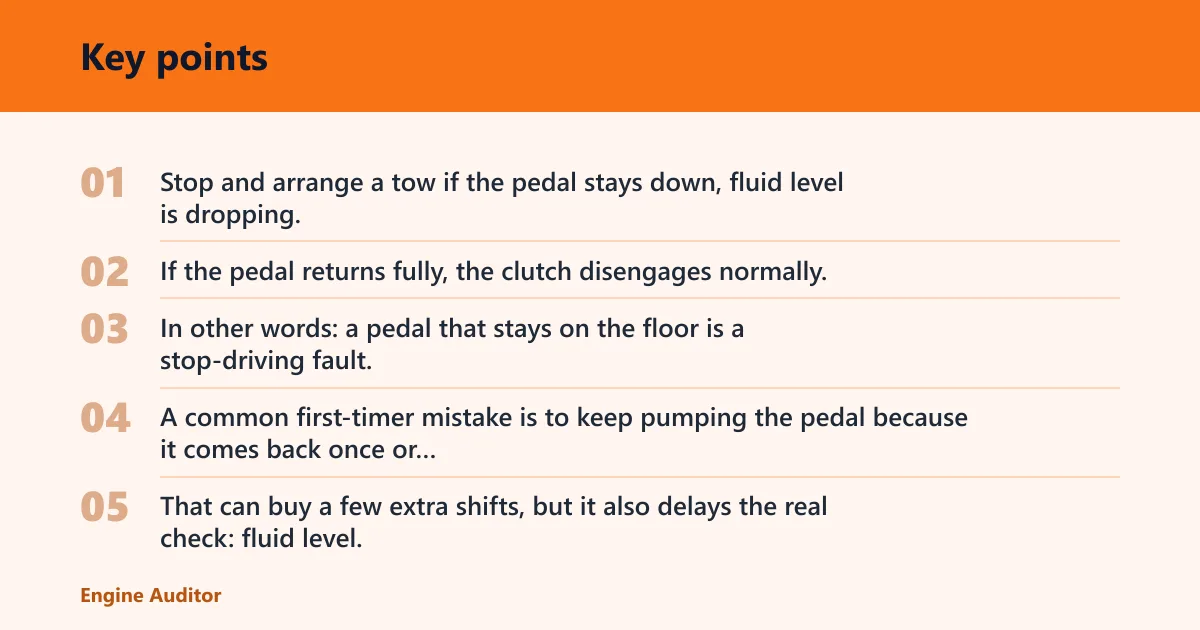
Stop and arrange a tow if the pedal stays down, fluid level is dropping, or the car will not select gears cleanly with the engine running. That is the safest threshold. If the pedal returns fully, the clutch disengages normally, and there is no fresh fluid loss, a short limp to a repair bay may be reasonable. In other words: a pedal that stays on the floor is a stop-driving fault, while a pedal that fully returns and shifts normally may allow only the shortest necessary move.
A common first-timer mistake is to keep pumping the pedal because it comes back once or twice. That can buy a few extra shifts, but it also delays the real check: fluid level, leak location, and whether the system is hydraulic or cable operated. The quick fix is not the repair.
Here is the practical order that works best at the roadside: check the reservoir, look for wet fittings, press the pedal and note pump response, then decide whether the layout is hydraulic or cable. That sequence separates master cylinder, slave cylinder, air, cable, and spring faults faster than guessing from pedal feel alone.
Frequently asked questions
Why does my clutch pedal stay on the floor: the usual causes are loss?
The usual causes are loss of hydraulic pressure, a failed master cylinder, a failed slave cylinder, low fluid, air in the line, or a broken return spring on a cable system. If the pedal stays down after release, stop driving and check for leaks before trying to move the car again.
Why does my clutch pedal keep sticking to the floor: a pedal that keeps sticking?
A pedal that keeps sticking points to a repeat fault in the return path or pressure circuit. On hydraulic cars, suspect air, low fluid, or a slave issue. On cable cars, look for stretch, fraying, binding, or a broken spring that no longer pulls the pedal back.
Why does my clutch pedal keep going to the floor?
That pattern usually means pressure is not being held in the system. A master cylinder with internal seal wear can let pressure bypass internally, while a leaking slave cylinder can lose fluid externally or internally. If pumping helps only briefly, do not assume the problem is fixed.
What does it mean when your clutch pedal goes to the floor?
It means the clutch actuation system has lost enough force that the pedal cannot return and transmit pressure normally. In hydraulic systems, that can signal complete failure. In cable systems, it can mean the cable or return spring has failed, so the pedal no longer comes back up.
What happens when your clutch pedal goes to the floor
Shifting becomes difficult or impossible because the clutch may not disengage properly. You may lose the ability to select gears at a stop, or the car may creep when you expect it to be free. That is why a pedal on the floor is treated as a stop-driving fault.
What does it mean when your clutch pedal stays down?
A pedal that stays down usually points to a return or pressure loss problem rather than a worn friction disc alone. Check the fluid reservoir, look for leaks, and note whether the pedal pumps up. If it does not recover quickly and fully, towing is the safer choice.
Products related to this article
Sponsored / affiliate links. As an Amazon Associate I earn from qualifying purchases. I may earn additional commission from eligible campaigns.