What Causes a Clicking Noise From the Pedal Area?
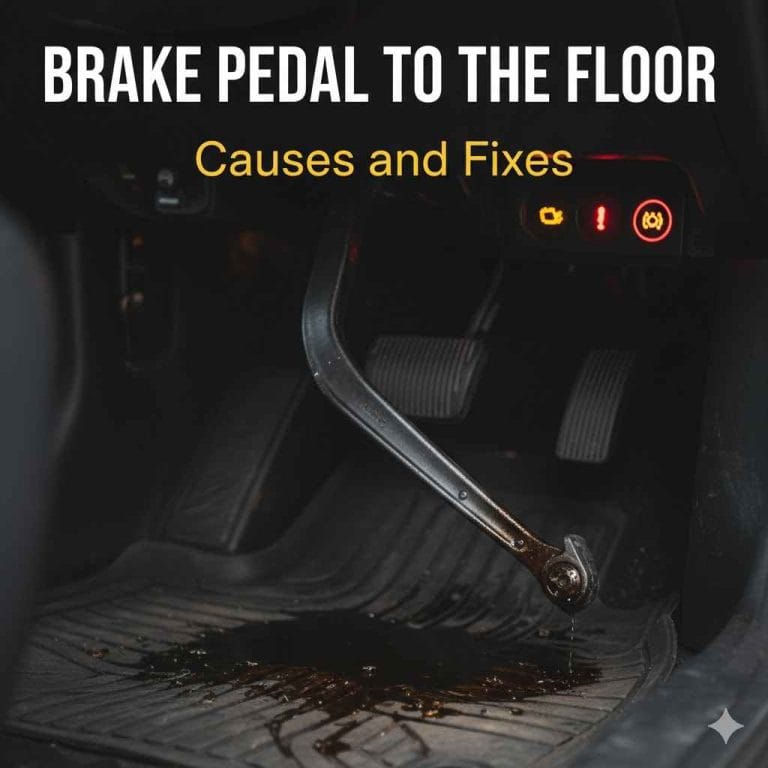
If it clicks once as you press or release the pedal and the pedal feels normal, the cause is often the pedal switch or stop-lamp switch. Repeated clicks, soft travel, or warning lights can point to a brake fault that affects safe stopping or shifting. This guide shows how to trace the noise by pedal timing, feel, and dash warnings.
How to locate the source using pedal timing

What the noise location tells you
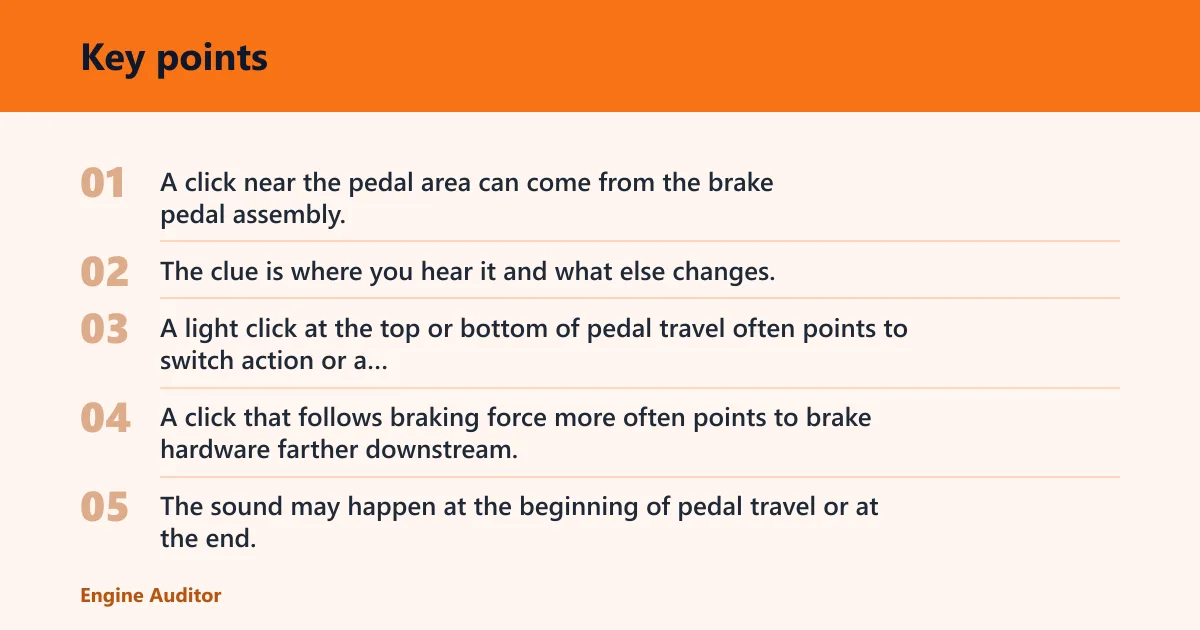
A click near the pedal area can come from the brake pedal assembly, the brake light switch, or the brake booster connection. The clue is where you hear it and what else changes. A light click at the top or bottom of pedal travel often points to switch action or a moving linkage. A click that follows braking force more often points to brake hardware farther downstream.
When the click happens matters
The sound may happen at the beginning of pedal travel or at the end. That timing matters because a pedal switch, a pivot point, or a booster pushrod is most active there. A noise that shows up only while the vehicle is moving, or only during a stop, shifts attention toward ABS or wheel-end hardware instead of the cabin side of the pedal.
Quick signs that point to the pedal or the brakes
Pedal feel narrows the source fast. A pedal that sticks, returns slowly, feels sideways, or sits lower than normal deserves more concern than a single light click. Warning lights matter too. Brake warning lights, ABS warnings, traction-control warnings, or brake lights staying on move the problem from nuisance to inspection priority.
Is the pedal click normal?
Light switch clicks that can be normal
A light mechanical click from the brake light switch can be normal during pedal movement. The switch or sensor sits near the pedal and may also control cruise control and brake light operation. If the click is single, light, and matched by normal pedal feel with no warning lamps, it is often the least serious source.
Clicks that point to wear or looseness
Repeated clicking, a pop, or a snap is different from a clean switch tick. The brake pedal assembly moves on a pivot and uses bushings, pins, clips, springs, and mounting hardware that must stay positioned. If those parts are dry, worn, loose, or misaligned, the pedal can click near the cabin as it starts or finishes travel.
When to stop driving
Stop driving now if the click comes with a soft pedal, a hard pedal, a lower-than-normal pedal, sticking, or any brake warning light. That combination can point to a hydraulic or mechanical fault rather than a harmless switch noise. A brake that changes feel can still stop the car for a while, then fail without much warning.
Brake pedal hardware sources
Pivot point, bushings, pins, and clips
The brake pedal moves on a pivot and connects to other components. That means the pivot point, bushings, pins, and clips are all possible noise sources. If one of those parts dries out, wears, or shifts in its bracket, the pedal can click in the cabin with a short, sharp sound that repeats at the same spot in travel.
Springs and mounting hardware
Springs and mounting hardware also matter. They keep the pedal centered and returning cleanly. A loose fastener or a spring that is out of position can produce a light pop or a click as the pedal loads and unloads. If the pedal feels off-center or returns unevenly, that hardware deserves a close look.
What loose or dry hardware sounds like
Loose or dry pedal hardware usually sounds close to your foot, not out at a wheel. The sound may happen only with a small press, only with a full press, or only when the pedal is released. A quick cabin-side check often focuses on visible movement at the pedal arm, stop pad, clips, and the bracket around the pivot.
Could the brake light switch click?
How the switch works near the pedal
Yes. A brake light switch or sensor near the pedal can create a light mechanical click during normal operation. It may also control cruise control and brake light behavior, so a problem there can show up as more than a sound. The click is often most noticeable at the start of pedal movement.
Adjustment and mounting problems
Adjustment and mounting matter because a switch that sits too far in, too far out, or at an angle can make a louder or less consistent click. A loose bracket can also let the switch shift as the pedal moves. That can create a tick at the same point every time you press or release the brake.
Brake lights and cruise control clues
If the brake lights stay on, delay coming on, or act erratically, the switch deserves attention. Cruise control that drops out oddly can also point to the same area. A simple click with normal light behavior is less urgent than a click paired with electrical symptoms, because the same switch can affect more than one system.
Booster and pushrod noise
Where the booster connects
The brake booster connection uses a pushrod and related hardware. That connection sits between the pedal side and the brake assist unit, so noise there can sound like it comes from behind the pedal. A pop or click from that area can be tied to mounting, connection, or return problems.
How pushrod or mount issues sound
A pushrod or mounting issue may often sound heavier than a switch click. It can be a click followed by a small pop as the pedal loads the booster connection. If the sound changes with pedal force, or if it appears only near the top of travel, the booster area becomes a stronger suspect than the switch alone.
Pedal height and return changes
Booster-related faults may affect pedal height or return. A lower-than-normal pedal, a slow return, or a pedal that feels different from one stop to the next deserves prompt inspection. Those symptoms suggest the pedal is not just noisy; it may be interacting with the booster or pushrod in a way that changes brake operation.
ABS and wheel-end clicks
Normal ABS sound during active braking
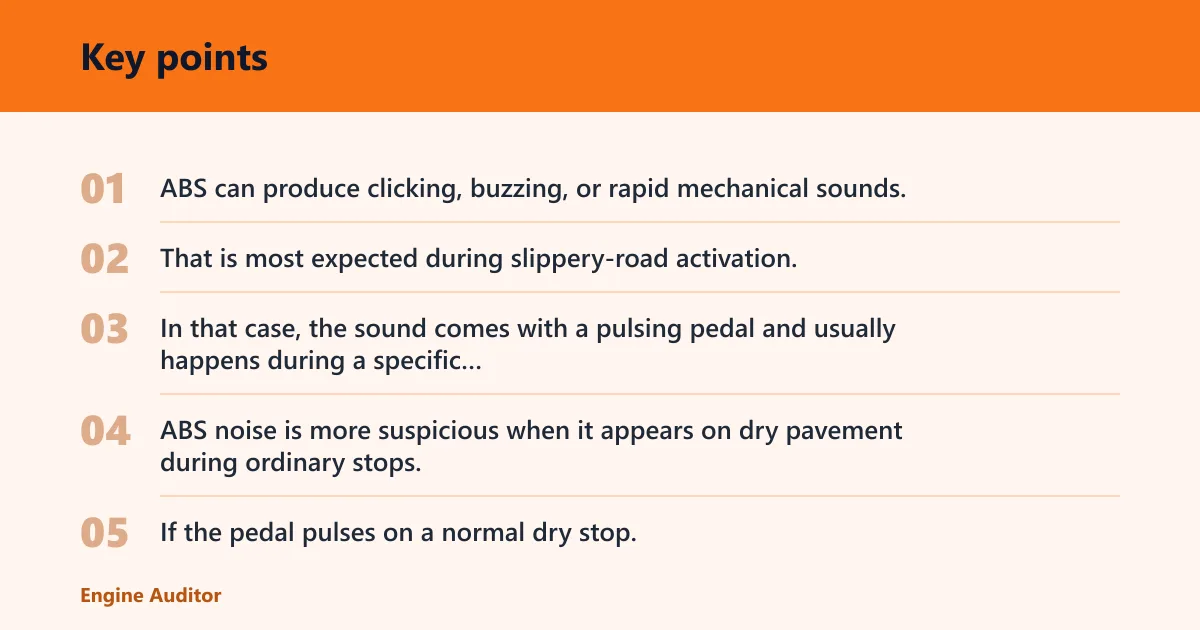
ABS can produce clicking, buzzing, or rapid mechanical sounds. ABS activity can also cause pedal pulsation. That is most expected during slippery-road activation, when the system is rapidly modulating brake pressure to keep the wheels turning. In that case, the sound comes with a pulsing pedal and usually happens during a specific stop, not every time.
When ABS noise is suspicious
ABS noise is more suspicious when it appears on dry pavement during ordinary stops, repeats without wheel slip, or comes with ABS or traction-control warnings. If the pedal pulses on a normal dry stop, or if the noise happens long after the wheels should have settled, the system needs checking rather than dismissal.
Say your SUV clicks and buzzes only on a wet downhill stop, with a pulsing pedal and no warning lights. That fits ABS activity much better than a loose pedal part. Now change only one detail: the same click happens on a dry parking-lot stop at low speed. That is no longer routine and needs diagnosis.
Caliper, pad, and slide pin movement after service
Worn pad hardware can create a click when brakes are first applied. Caliper brackets, slide pins, and mounting hardware can also shift under braking, especially after service. If the noise starts after new pads, a caliper job, or hardware replacement, inspect the parts touched during the repair first. A missed clip or loose pad fit can click every time the brakes load.
Pedal noise diagnostic table
Use this table as a quick separator. Start with when the noise happens, then match the pedal feel and warning lights to the most likely source.
| Symptom | Most likely source | Quick shop check | Urgency |
|---|---|---|---|
| Single light click at the top or bottom of pedal travel; pedal feel normal | Brake light switch or stop-lamp switch near the pedal | Check switch adjustment, bracket position, and whether brake lights work normally | Monitor soon; inspect if it gets louder or irregular |
| Click, pop, or side movement from the cabin side of the pedal | Brake pedal assembly pivot point, bushings, pins, clips, springs, or mounting hardware | Inspect for loose, dry, worn, or misaligned parts at the pedal bracket and pivot | Prompt inspection |
| Click or pop near the pedal with lower-than-normal pedal height or slow return | Brake booster connection, pushrod, or related mounting hardware | Check pushrod connection, mounting area, and pedal return movement | Do not delay |
| Clicking, buzzing, rapid mechanical sound, or pedal pulsation during a slippery-road stop | ABS valves and hydraulic pump during ABS activation | Confirm whether the stop happened on wet, icy, or loose pavement and whether warning lights are on | Usually expected only during active ABS; inspect if it happens on dry pavement |
| Click when brakes are first applied after service | Brake pads, caliper brackets, slide pins, or mounting hardware | Inspect pad clips, caliper fit, hardware torque, and slide pin movement | Prompt inspection, especially if the noise started after repair |
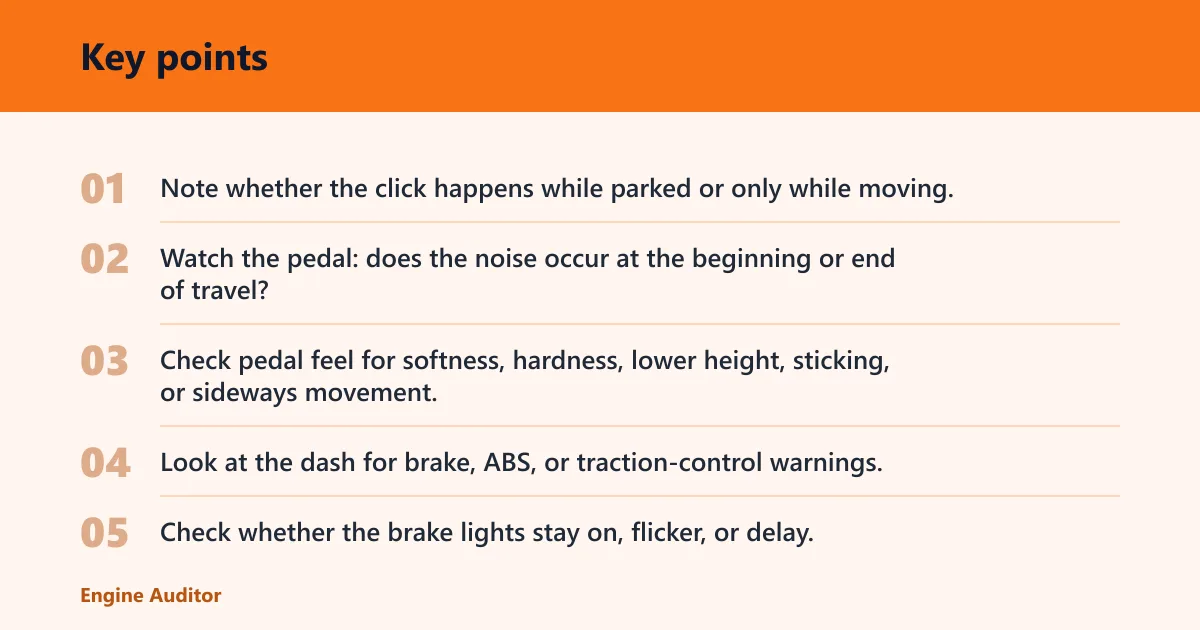
- Note whether the click happens while parked or only while moving.
- Watch the pedal: does the noise occur at the beginning or end of travel?
- Check pedal feel for softness, hardness, lower height, sticking, or sideways movement.
- Look at the dash for brake, ABS, or traction-control warnings.
- Check whether the brake lights stay on, flicker, or delay.
- If the noise began after brake service, inspect the parts that were just touched first.
Picture a compact car that starts clicking after front pad replacement. The pedal still feels normal, but the sound is right at the first inch of brake travel. That pattern points more toward pad hardware, caliper fit, or a disturbed clip than toward ABS or a booster fault. The repair history matters.
Frequently asked questions
What causes a clicking noise from the pedal area when I press the pedal?
The most common sources are the brake light switch, pedal pivot hardware, or the booster pushrod connection. A click at the beginning or end of travel may point toward the pedal side, while a click with pedal pulsation or warning lights may point farther into the brake system.
Is a clicking brake pedal normal or a sign of a problem?
A single light click can be normal if it seems to come from the brake light switch and the pedal feels normal. Repeated clicks, popping, sticking, or changes in pedal height are different. Those signs suggest worn hardware, booster connection trouble, or brake components that should be inspected soon.
Could the brake light switch be making the clicking sound?
Yes. A brake light switch or sensor near the pedal can make a light mechanical click during normal operation. If the switch is out of adjustment or the mounting is loose, the click can become more noticeable. Brake light behavior and cruise control changes help confirm that area.
Can worn pedal bushings or hardware cause a click in the cabin?
Yes. The brake pedal assembly typically moves on a pivot and uses bushings, pins, clips, springs, and mounting hardware. If those parts are loose, dry, worn, or misaligned, the pedal can click near the cabin. Sideways movement, uneven return, or a gritty feel makes that source more likely.
Can the brake booster or pushrod make a clicking noise?
Yes. The brake booster connection uses a pushrod and related hardware, and noise there can sound like a click or pop near the pedal. A change in pedal height, slow return, or a different feel under foot makes that area more suspect and deserves prompt inspection.
Could ABS cause clicking through the pedal during normal stopping?
ABS can make clicking, buzzing, or rapid mechanical sounds, and it can also cause pedal pulsation. That is usually expected during slippery-road activation. If the same sound happens on dry pavement during normal stopping, or if ABS or traction-control warnings are on, it is not routine.
What should I check if the clicking started after brake service?
Check the parts that were disturbed: pads, caliper brackets, slide pins, clips, springs, mounting hardware, switch mounting, and any booster or pedal fasteners that were removed. A new noise after repair often points straight to the last job. Brake lights, pedal feel, and the exact stop that triggers the click matter most.
Products related to this article
Sponsored / affiliate links. As an Amazon Associate I earn from qualifying purchases. I may earn additional commission from eligible campaigns.