Why Is My Brake Pedal Vibrating When Stopping?
Brake pedal vibration while stopping usually means rotor thickness variation, pad deposits, ABS activation, or a wheel torque problem. If the pulse happens only in hard stops on wet or loose roads, ABS is more likely. Ignoring the cause can mean longer stopping distances, uneven tire wear, and extra brake parts replacement. This guide shows how to tell rotor pulsation from ABS action, wet-weather effects, recent brake work, wheel lug torque issues, and other brake-system faults.
What brake pedal vibration feels like


Brake pedal pulsation is a rhythmic up-and-down movement through the pedal. If the front brakes are involved, that pulse can travel into the steering wheel too. A soft or spongy pedal is different. It points more toward hydraulic issues, not the steady rhythmic shake tied to rotor or pad contact problems.
Pedal pulse versus soft pedal
A pulsating pedal feels like repeated tapping or thumping under your foot. A soft pedal sinks more than expected and may feel airy or delayed. If the vibration rises and falls with wheel speed and braking force, suspect the friction parts first. If the pedal feels low, inspect the fluid level and hydraulic system as well.
When steering wheel shake points to the front brakes
Steering-wheel shake during braking often points to the front axle, because the front brakes do most of the work and their rotor problems transmit through the steering system. Rear brake issues can still cause pedal pulse, but they are less likely to shake the wheel. That distinction helps narrow the first inspection.
Why the symptom often changes with speed and brake pressure
Rotor problems usually show up most clearly as speed drops through a certain range, then fade at a stop. ABS feels different. It usually appears during harder stops on slippery roads and gives a rapid chatter rather than a steady pulse. That difference helps when you are deciding whether the brakes or traction control system is acting up.
Brake pedal vibration triage
Use the symptom pattern first. That keeps you from replacing rotors when the real issue is wet rust, ABS action, or a wheel-mounting mistake. The table below gives the quickest split between common causes and the next check to make.
| Symptom pattern | Likely cause | Quick check | Next action |
|---|---|---|---|
| Only during light stops | Rotor thickness variation or pad deposits | Feel for a steady pulse at gentle pedal pressure | Inspect rotor faces and pad wear |
| Only during highway-to-stop deceleration | Rotor runout, uneven rotor thickness, or heat damage | Notice whether the pulse gets stronger as speed falls | Measure rotor condition and check minimum thickness |
| Only after rain or snow | Temporary rust on rotor surfaces | See whether the roughness fades after a few stops | Dry the brakes with a few gentle stops if safe |
| Only after recent brake work | Normal bedding, uneven pad transfer, or a mounting mistake | Look for first-100-to-500-mile behavior and wheel torque concerns | Check bedding, lug nut torque, and rotor seating |
| Only with steering wheel shake | Front rotor problem or front brake unevenness | See whether the wheel shakes in step with the pedal | Inspect front rotors, pads, and caliper action |
| Vibration disappears after a few stops | Surface rust or early bedding behavior | Notice whether it improves as the rotors warm and clean off | Monitor if the brakes are new; otherwise inspect for corrosion |
| Pulse only in hard emergency stops on wet or loose roads | ABS activation | Check for rapid pedal chatter rather than a slow rhythmic pulse | No rotor repair needed unless another symptom is present |
| Shudder plus pulling or uneven braking | Sticking caliper, slide pin problem, or uneven heating | Look for one wheel that runs hotter or wears pads unevenly | Inspect calipers, slide pins, and hardware |
| Do not drive: cracked rotor, fluid leak, or severe pulsation | Unsafe brake condition | Visible crack, dripping fluid, or violent pedal kickback | Park the vehicle and arrange repair or towing |
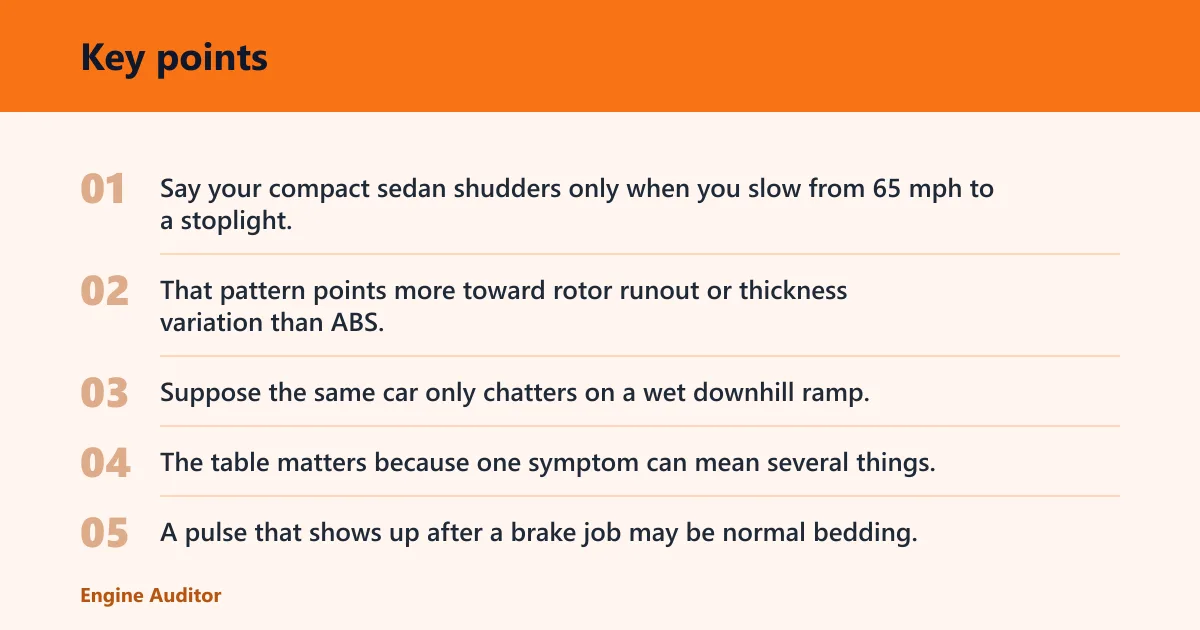
Say your compact sedan shudders only when you slow from 65 mph to a stoplight, but the pedal is smooth at lower speeds. That pattern points more toward rotor runout or thickness variation than ABS. Suppose the same car only chatters on a wet downhill ramp. Then ABS is the more likely source.
Pattern notes for wet weather, recent brake work, and highway stops
The table matters because one symptom can mean several things. A pulse that shows up after a brake job may be normal bedding. A pulse that starts after a tire rotation or wheel change may be a lug torque or wheel mounting issue. A pulse that appears only at highway speed usually deserves a closer rotor check than one that happens only on wet pavement.
What is causing the vibration?
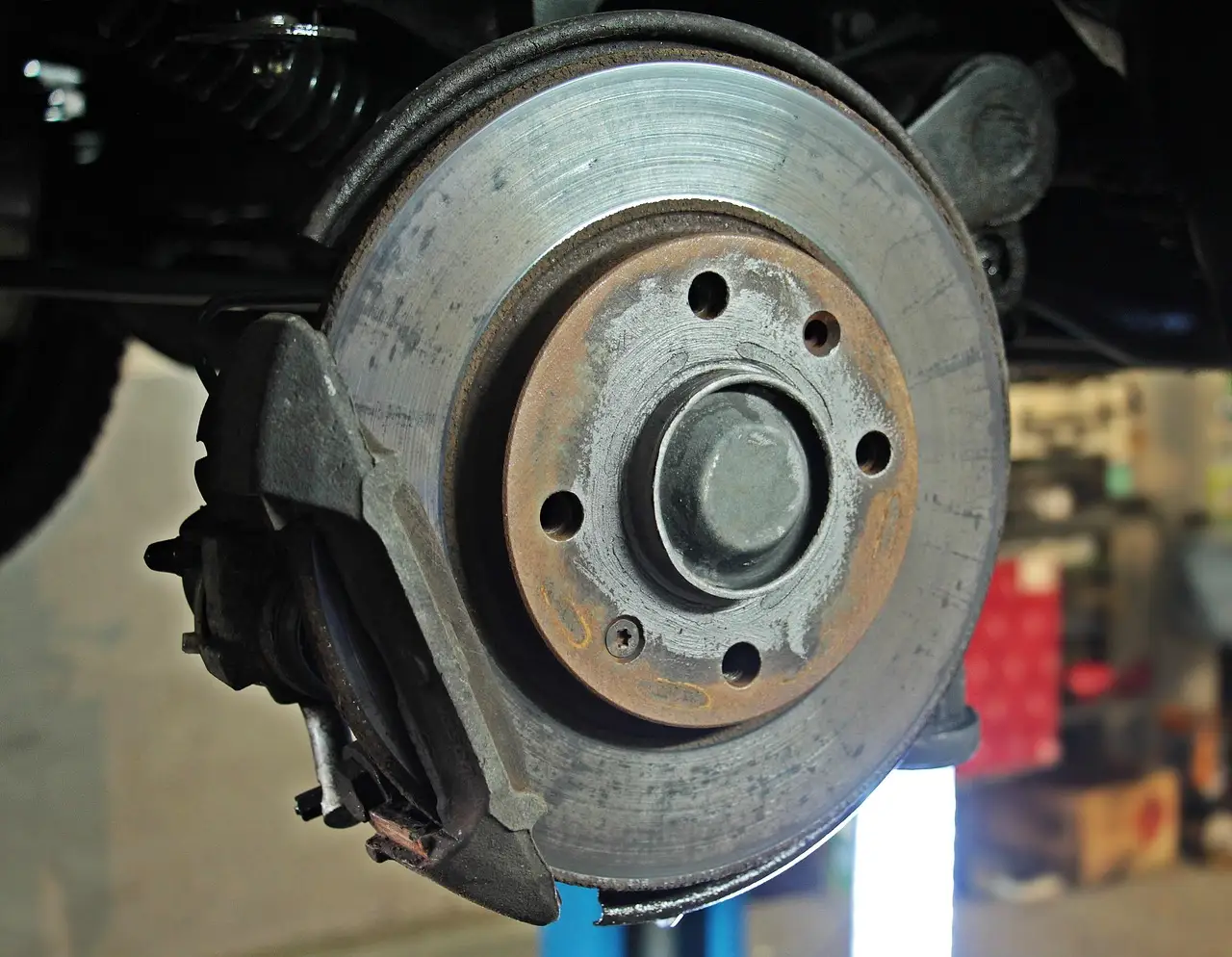
Brake rotors are the most common cause. Uneven thickness, runout, heat damage, rust, or cracking can all create pedal pulsation when the pads sweep across the surface. The symptom may also travel to the steering wheel if the front brakes are involved.
Brake rotors, thickness variation, and runout
Rotor thickness variation can be felt when it is about 0.007 inch or greater, which the metric equivalent given for that variation is 0.017 cm. That unevenness makes the pads grab and release in a repeating pattern. Runout can do the same thing, especially if the rotor face does not rotate true.
Rotors can also be rusted, heat-damaged, or cracked. A cracked or badly damaged rotor should be replaced, not machined. If the surface is only mildly uneven and the rotor still has enough thickness left, resurfacing may be possible.
Pad deposits, pad wear, and uneven contact
Brake pads can leave transfer material on the rotor during normal bedding, but uneven deposits can feel like vibration. New brake pads are typically 10–12 mm thick. Worn brake pads may be 2–3 mm thick. Uneven wear between the inner and outer pads can point to a caliper or slide-pin issue rather than the rotor alone.
Calipers, slide pins, and hardware drag
Brake calipers can stick or move unevenly. When slide pins seize or hardware is worn, one side of the pad may drag harder than the other side, which creates uneven heating and a shudder under braking. A seized caliper can overheat one rotor, leave patchy deposits, and make the pedal feel inconsistent.
Can wet weather or snow make it worse?
Yes. Water, slush, and road salt can leave a thin rust film on the rotor surface, and that film can feel like a brief vibration on the first few stops. If the symptom clears quickly, the brakes may simply be drying off rather than signaling a deeper fault.
Temporary rotor rust after rain or snow
After rain or snow, light rust often forms on exposed rotors. The first few stops scrape it away. That can create a rough pedal or slight shudder for a short time. If the vibration disappears after a few stops, that pattern fits surface rust better than a warped rotor.
Salt, moisture, and brief pedal roughness
Road salt and moisture can make rotor surfaces grab unevenly until the surfaces clean themselves. This is most noticeable after an overnight park or a long wet drive. If the pulse is mild and fades quickly, it may be temporary. If it stays, the rotor or pad surface needs inspection.
Could recent brake work be the cause?
Yes. New brakes often feel different for the first 100–500 miles during bedding. Pad and rotor surfaces transfer material during bedding to form a consistent friction layer. A very slight vibration in the first 50 miles can be normal on new brakes, but a strong vibration after braking is not normal after new brakes.
Brake bedding and the first 100 to 500 miles
During break-in, the pads and rotors are building a stable transfer layer. That process can create light squealing for 100–200 miles and a small change in pedal feel. If the symptom is mild and steadily improves, bedding is a reasonable explanation. If it gets worse, something is wrong.
Lug nut torque and wheel mounting errors
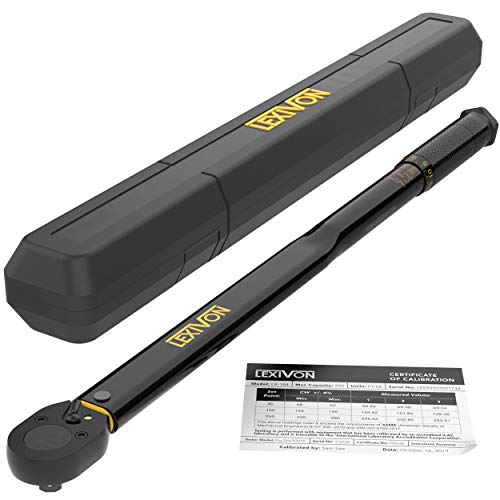
Uneven or over-torqued lug nuts can contribute to rotor issues. The wheel should be installed in the manufacturer’s pattern and spec, not tightened by feel. If the pedal started vibrating after a tire rotation, wheel swap, or brake job, check lug nut torque before buying rotors.
New pads, new rotors, and what is normal
New brakes can feel slightly different, but they should not produce a violent pulse. Light noise and a small amount of roughness can be part of the bedding window. A persistent shake, a steering-wheel shimmy, or a pulse that grows stronger means the setup needs inspection.
When to resurface or replace rotors
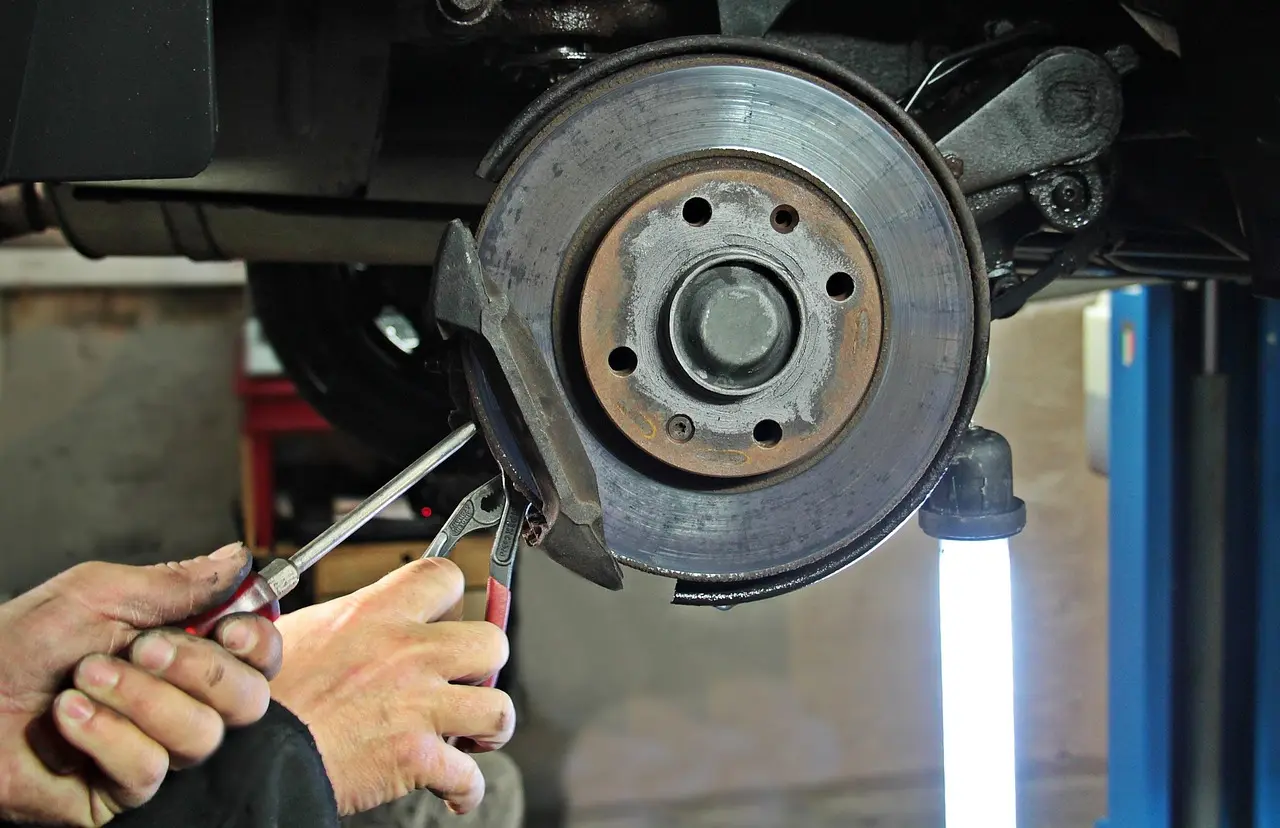
Resurfacing is also called turning the rotors. It uses a precision lathe to shave off metal and smooth the braking surface. That can fix light unevenness, but only if the rotor still has enough thickness left. If the rotor is below spec, cracked, or heat-damaged, replacement is the safer choice.
How rotor resurfacing works
Turning removes a thin layer from each face so the pads contact a cleaner, flatter surface. It can correct mild runout-related complaints and some uneven transfer deposits. It is not a fix for every pulse, and it cannot restore a rotor that is already too thin.
Thickness limits and when turning is not allowed
Rotors should only be resurfaced if they still have enough thickness left. If the finished rotor would fall below the minimum thickness after machining, do not turn it. A shop should check the current thickness, compare it with the rotor’s minimum spec, and decide from there.
Signs that replacement is the safer choice
Replace the rotor if it is cracked, badly heat-spotted, deeply grooved, or already near minimum thickness. Replacement is also the better call when the surface damage is uneven enough that machining would remove too much material. If both rotors on an axle are due, replace them as a pair.
Picture a minivan that needs front pads and the rotors are already close to minimum thickness. Resurfacing may not leave enough material for the next pad set, so replacement can be the better long-term choice. That is where the parts cost tradeoff matters: a rotor that is still thick enough may be turned, but one that is near spec usually should not be.
What else to inspect before buying parts
Before you order rotors, check the rest of the brake system. Pad wear, caliper action, fluid level, and wheel torque can all create a pedal pulse or make rotor wear look worse than it is. A short inspection can keep you from replacing good parts.
Pad thickness and uneven wear
Look at both pads on the affected wheel. If one pad is much thinner than the other, the caliper or slide pins may be sticking. If the friction material is near the 2–3 mm range, replacement is due. If the pads are still thick but the rotor is pulsing, the rotor surface deserves the first look.
Brake fluid level and fluid condition
Low fluid can accompany pedal problems, especially when pad wear has lowered the reservoir level or when there is a leak. Moisture contamination can affect hydraulic behavior, and old fluid can contribute to pedal inconsistency. If the fluid looks dark or the level is low, inspect the system before assuming the rotors are the only fault.
Caliper sticking and slide pin movement
A caliper that does not slide freely can keep one pad in light contact with the rotor. That creates heat, uneven deposits, and vibration. Check that slide pins move smoothly and that the hardware is intact. If one corner runs hotter than the others, caliper drag moves up the suspect list.
Is brake pedal vibration dangerous to keep driving with?
Yes, it can be. Brake pedal vibration can affect stopping distance, especially when rotor damage or caliper drag is involved. Do not ignore a severe pulse, visible rotor cracking, or any fluid leak. If the symptom is moderate and the brakes still work, get the system inspected soon rather than waiting for the next service interval.
Frequently asked questions
Why is my brake pedal vibrating when stopping?
Most often, the pedal pulse comes from rotor thickness variation, pad deposits, ABS activation, or wheel torque problems. If it happens during normal stops, inspect the rotors first. If it happens only in hard stops on wet or loose roads, ABS action is more likely than a damaged rotor.
Can warped rotors cause brake pedal vibration?
Yes, though many “warped rotor” complaints are really thickness variation, runout, or uneven pad material on the rotor face. Any of those can create a rhythmic pedal pulse and sometimes steering-wheel shake. If the rotor is cracked or too thin, replacement is better than resurfacing.
What causes brake pedal shudder?
Brake pedal shudder usually comes from uneven rotor contact, pad deposit buildup, caliper drag, or a wheel mounting issue. It can also appear briefly after rain or snow if surface rust is present. The key is whether the shudder fades quickly or stays with every stop.
Can new brakes still feel weird or vibrate a little?
Yes. New brakes often feel different for the first 100–500 miles while the transfer layer builds. A strong vibration is not normal.
When should I resurface rotors instead of replacing them?
Resurface rotors only when the surface problem is mild and the rotor still has enough thickness after machining. Resurfacing, or turning, uses a precision lathe to remove metal. If the rotor is near minimum thickness, cracked, or badly heat-damaged, replacement is the safer choice.
What else besides rotors can make the brake pedal pulse?
Uneven pad deposits, sticking calipers, seized slide pins, low or contaminated brake fluid, and uneven or over-torqued lug nuts can all contribute. ABS can also cause a fast pedal chatter during hard braking on slippery roads. That is why the symptom pattern matters before parts are replaced.
Products related to this article
Sponsored / affiliate links. As an Amazon Associate I earn from qualifying purchases. I may earn additional commission from eligible campaigns.