What Does a Vacuum Leak Sound Like?
A vacuum leak usually sounds like a steady high-pitched hiss, whistle, or sucking noise that often changes with engine load and idle speed. Ignoring it can trigger rough idle, stalling, lean-fuel faults, and damage from driving with an air leak the engine control system cannot fully correct. This guide shows the sound clues, the likely leak locations, and the next diagnostic step before you start replacing parts.
When to listen for vacuum leak sounds
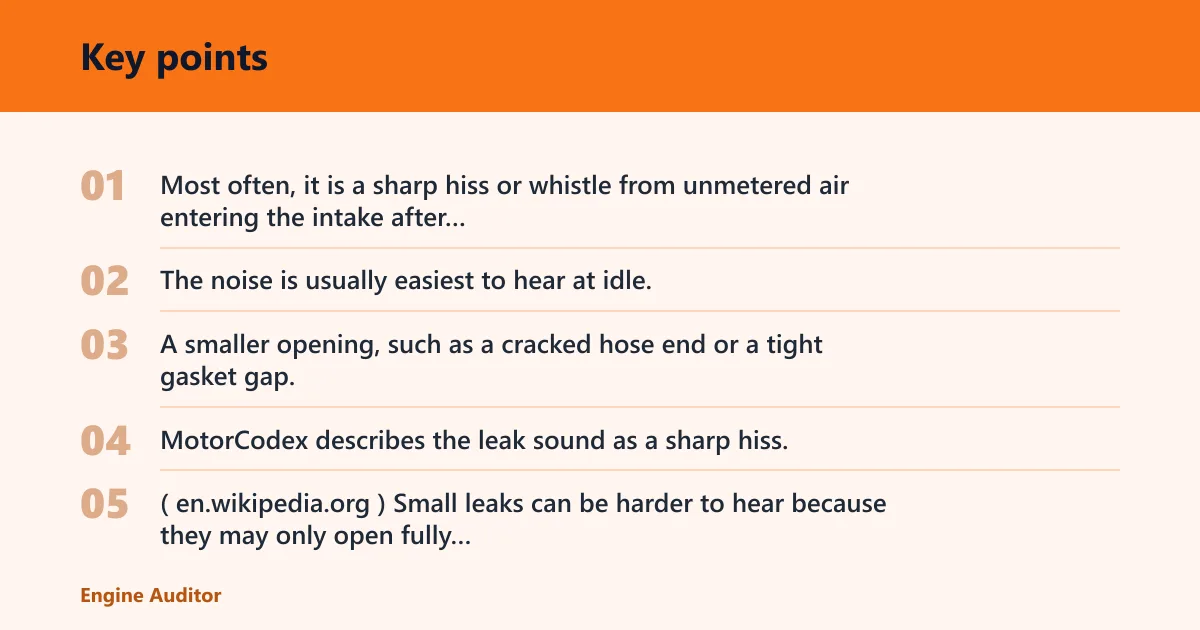


What sound does a vacuum leak make? Most often, it is a sharp hiss or whistle from unmetered air entering the intake after the airflow sensor. The noise is usually easiest to hear at idle, when engine vacuum is high and there is less masking noise from airflow and exhaust.
Hiss versus whistle
A broad opening tends to sound like a hiss. A smaller opening, such as a cracked hose end or a tight gasket gap, often turns into a whistle. MotorCodex describes the leak sound as a sharp hiss, but real-world diagnosis depends on pitch, load, and where the sound appears. (Wikipedia)
Small leaks can be harder to hear because they may only open fully when the engine rocks, warms up, or pulls more vacuum. That is why a sound alone is not enough. You want the sound, the idle behavior, and the location all pointing in the same direction.
When the sound is loudest
Vacuum leak noise is often loudest at cold start, warm idle, or after a throttle lift. Under steady acceleration, the sound may fade because the intake has less vacuum and the leak may be masked by engine and road noise. If the hiss gets stronger during a brake application, the brake booster line moves up the list.
Why small leaks are harder to hear
A tiny leak may show as a faint whistle, a chirp, or an intermittent hiss. It can show up as a faint whistle, a chirp, or an intermittent hiss that comes and goes with engine speed. On some engines, the leak is easier to hear with the hood open and the engine idling in a quiet place than it is from the driver seat.
What the sound tells you about the source
A vacuum leak sound is a location clue, not a final answer. The pitch and timing help separate a cracked hose, an intake manifold gasket leak, a PCV system issue, an intake boot leak, and a brake booster problem. The key is to match the sound to when it happens.
Vacuum hoses and fittings
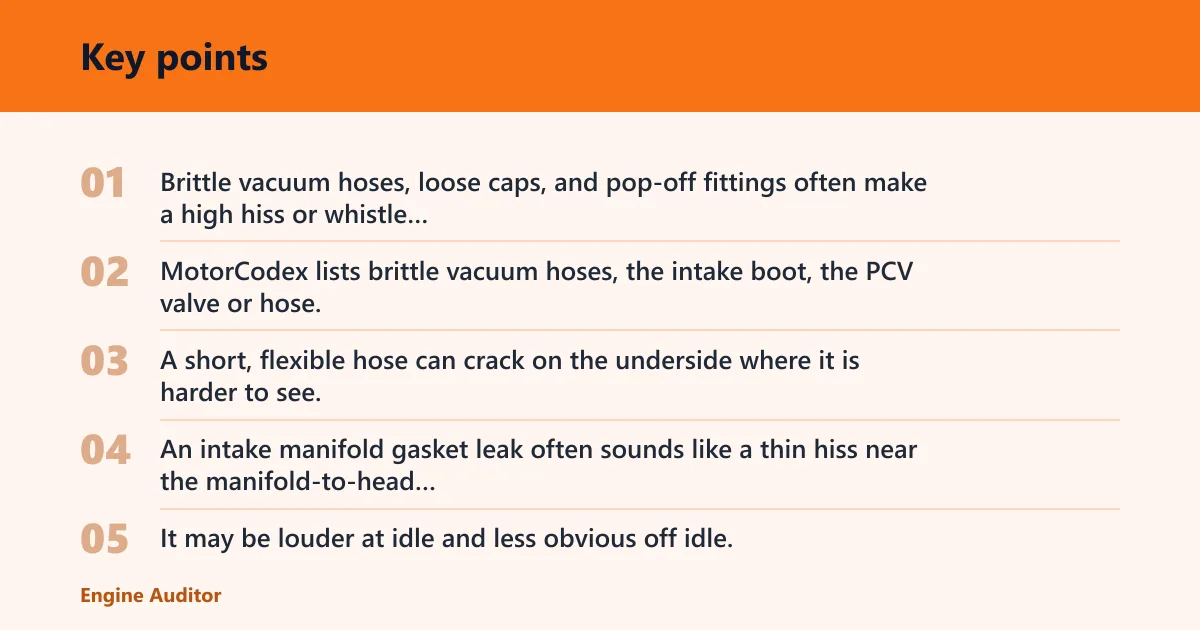
Brittle vacuum hoses, loose caps, and pop-off fittings often make a high hiss or whistle near the hose itself. The same source lists brittle vacuum hoses, the intake boot, the PCV valve or hose, intake manifold gaskets, and the brake booster hose as common leak points. A short, flexible hose can crack on the underside where it is harder to see.
Intake manifold gasket
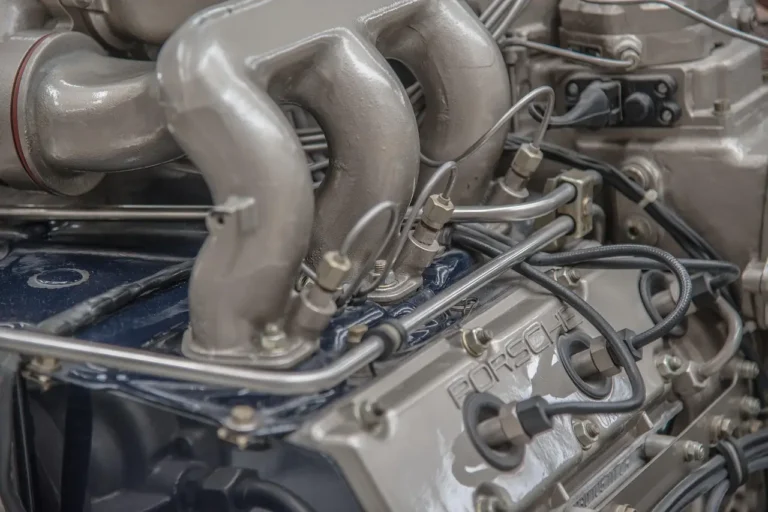
An intake manifold gasket leak often sounds like a thin hiss near the manifold-to-head seam. It may be louder at idle and less obvious off idle. Because that gasket leak changes how much air bypasses the throttle plate, it often goes with rough idle, surging, or a stoplight stall.
Brake booster hose and booster
A brake booster leak can sound deeper and broader than a small hose leak. The brake booster can be a huge leak and may hiss when you press the brake pedal. Outside Gear notes that this type of leak can reduce stopping performance through loss of power brakes, so the noise matters for safety as much as drivability.
PCV and intake boot noise
PCV valves, PCV hoses, and intake boots can make noises that sound like a leak but are sometimes just airflow turbulence. A worn PCV valve may rattle or chirp. A split intake boot can whistle under changing throttle, especially if the crack opens and closes as the engine torques over.
Picture a 4-cylinder engine that idles normally in park, then starts to flare and dip in gear with a faint whistle near the throttle body. That pattern points more toward a small leak at the intake boot or gasket than a random underhood noise.
Sound-to-source diagnostic matrix
This matrix maps the sound to the most likely source, the condition when it appears, and the fastest confirmation test. Use it to narrow the leak before you spend time on parts removal. It is a guide, not a substitute for follow-up checks.
| Sound | Likely location | When it appears | Fastest confirmation test |
|---|---|---|---|
| Hiss | Vacuum hose, loose fitting, intake manifold gasket | Idle, cold start, decel | Listen with a hose as a directional stethoscope, then inspect the hose ends and gasket seam |
| Whistle | Small crack, intake boot split, tighter gasket opening | Idle, throttle blip, light acceleration | Listen near the throttle body and boot while lightly changing rpm |
| Snort | Open hose end, large leak at fitting, manifold gap | Idle, after startup, when engine rocks | Pinch or reseat suspect hoses and watch for a sound change |
| Chirp | PCV valve, small split in PCV hose, belt-area turbulence mistaken for vacuum noise | Idle, warm idle, quick throttle changes | Check the PCV valve and hose routing, then compare sound at the valve cover area |
| Brake-pedal hiss | Brake booster, booster hose, check valve | Brake application, idle | Press the brake pedal with the engine idling and listen for a hiss change near the booster |
The table does one important thing: it separates steady idle leaks from noises that change when you move the throttle or press the brake. That difference keeps you from blaming every hiss on the same part.
Why the engine idles rough with a vacuum leak
Why does my car idle rough when I hear a hiss under the hood? Because a vacuum leak lets unmetered air enter the engine after the airflow sensor, which leans out the air-fuel mixture. MotorCodex and Outside Gear both tie vacuum leaks to rough idling or stalling, and MotorCodex notes that idle can be rough or too high.
Lean mixture at idle
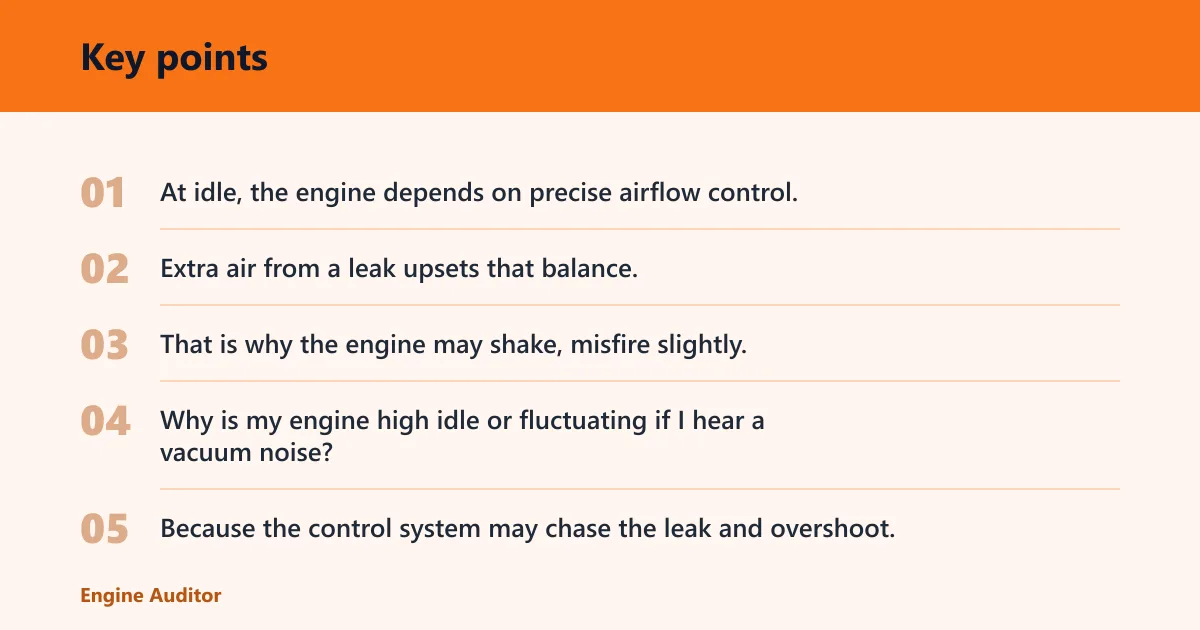
At idle, the engine depends on precise airflow control. Extra air from a leak upsets that balance, so the computer adds fuel and still may not fully correct the mixture. That is why the engine may shake, misfire slightly, or feel like it wants to stall at a stop.
Surging and stalling at stops
Why is my engine high idle or fluctuating if I hear a vacuum noise? Because the control system may chase the leak and overshoot. Buzzlyo notes that vacuum leaks can cause high or fluctuating RPM, and the idle may surge up and down as the computer tries to stabilize the mixture.
A common first-timer mistake is to hear a hiss and assume it is harmless because the car still drives. If the idle hunts between normal and high, the leak is already affecting engine control, even if the car still moves down the road.
High or fluctuating idle
The same source says a vacuum leak can cause a hard or high idle and trigger P0507. That matters because a high idle can mask the leak sound on the road while making it easier to hear in park or neutral. The sound and the rpm change often rise and fall together.
Can a vacuum leak set trouble codes?
Yes. What trouble codes can point to a vacuum leak? P0171 System Too Lean Bank 1 and P0174 System Too Lean Bank 2 are the common lean codes, and fuel trims are often positive at idle when the engine is adding fuel to offset extra air. A vacuum leak can also trigger P0507 when idle runs too high.
When a code points to a leak
A lean code plus a hiss at idle is a strong clue. If the code appears along with rough idle, high idle, or a brake-related hiss, the odds of a vacuum leak go up. The code does not name the leak location, though, so you still need a sound-based and visual check.
When it does not
Lean codes can also come from low fuel pressure, bad injectors, or airflow sensor errors. That is why a scan tool alone does not confirm the leak. Use the code as a starting point, then check whether the sound changes with idle, throttle, or brake application.
How do you find a vacuum leak without a smoke machine?
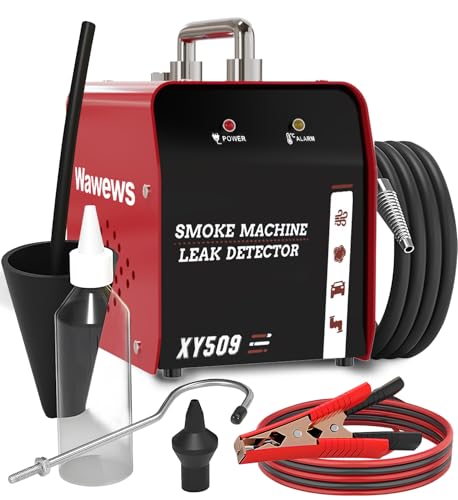
How do I find a vacuum leak without a smoke machine? Start with visual inspection, then use a hose to listen, then use a careful carb cleaner or propane test at idle. Stop and use smoke if the sound is faint, intermittent, or hidden by engine layout. Outside Gear also recommends smoke machines or soapy water tests for identification.
- Inspect vacuum hoses, the intake boot, and gasket seams for cracks, soft spots, oil wetting, or loose clamps.
- Use a length of hose as a directional stethoscope and listen around the throttle body, manifold, PCV hose, and booster line.
- At idle, spray carb cleaner around suspect joints in short bursts and watch for an rpm change.
- If you use propane, keep it controlled and away from ignition sources.
- If the leak remains hidden, move to a smoke test rather than guessing.
The spray test uses carb cleaner around suspect joints at idle. A change in rpm suggests the spray is being drawn into the engine through a leak. Treat that test with caution because it involves flammable material near a running engine.
Suppose the hiss is faint at idle but becomes clear only when the throttle snaps shut after a rev. That pattern often sends attention toward the intake boot or a gasket seam that opens when manifold vacuum rises.
Can a brake booster leak sound different?
Yes. What does a brake booster vacuum leak sound like? It often sounds like a pronounced hiss that changes when you press the brake pedal, and it may come with a hard brake pedal. Because the booster is tied to power assist, this leak matters for safety, not just idle quality.
Hard brake pedal clues
If the pedal feels harder than normal and the hiss grows when you step on the brake, suspect the booster, its hose, or the check valve. The same source says vacuum leaks can reduce stopping performance through loss of power brakes. That makes this one of the first leaks to check carefully.
Why this leak matters for safety
A booster leak can still let the engine idle, but the brake assist may drop off. That means the driver may need more force to stop the car, especially at low speeds and parking maneuvers. If the brake pedal is hard and the hiss is obvious, do not ignore it.
Where do vacuum leaks usually happen in a car?
Where do vacuum leaks usually happen in a car? The common spots are vacuum hoses, the intake manifold gasket, the throttle body area, the PCV hose or valve, the intake boot, and the brake booster hose or booster. Those parts see heat, vibration, and age, so rubber hardens and seals shrink or split.
Heat, vibration, and age
Heat cycles make rubber brittle. Vibration can loosen clamps or fittings. Repairs done with a hose that is slightly too short, a clamp that is not seated, or a gasket that was reused can also leave a small opening that whistles only under certain conditions.
Frequently asked questions
What sound does a vacuum leak make?
A vacuum leak usually sounds like a hiss, whistle, sucking noise, or sometimes a chirp. The sound is often clearest at idle or on deceleration, when engine vacuum is highest. A small leak may be faint and intermittent, so location and engine behavior matter as much as pitch.
How do I tell if a hissing noise is a vacuum leak?
Listen for whether the hiss changes with idle speed, throttle blips, or brake application. A true vacuum leak usually lines up with rough idle, high idle, or lean codes, and it often gets stronger near a specific hose, gasket seam, or booster line.
Can a vacuum leak make a whistling sound?
Yes. A whistling sound is common when the opening is small, tight, or partly blocked. It may change pitch as engine speed changes and is often heard near the intake boot, throttle body area, or a cracked hose end.
Why does my car idle rough when I hear a hiss under the hood?
Because the engine is likely pulling in extra air that it did not measure. That extra air leans the mixture, and idle is where the engine is most sensitive to that imbalance. Rough idle, surging, and stalling at stops fit that pattern.
Can I drive with a vacuum leak?
Maybe for a short distance, but it is not a good idea to ignore it. Fuel economy can drop, emissions can rise, and the engine may stall or run poorly. If the leak affects the brake booster or the brake pedal feels hard, treat it as urgent.
What trouble codes can point to a vacuum leak?
A code supports the diagnosis, but it does not locate the leak. Follow the code with a sound check and a targeted inspection.
Products related to this article
Sponsored / affiliate links. As an Amazon Associate I earn from qualifying purchases. I may earn additional commission from eligible campaigns.