Why Is My Car Popping When I Accelerate?
A pop on acceleration usually points to a misfire, a lean fuel mix, an exhaust leak, or a drivetrain fault; if the car loses power, flashes the check-engine light, or the pop repeats under load, stop driving and tow it. Ignoring it can turn a small sensor, ignition, or exhaust fault into catalytic-converter damage or a broken axle. This guide shows how to tell engine pop from exhaust or drivetrain noise and what quick checks are safe.
Why does my car pop when I accelerate?

- Reads and clears standard OBD-II trouble codes
- Shows freeze frame, readiness, and live data
- Works with compatible iOS and Android apps
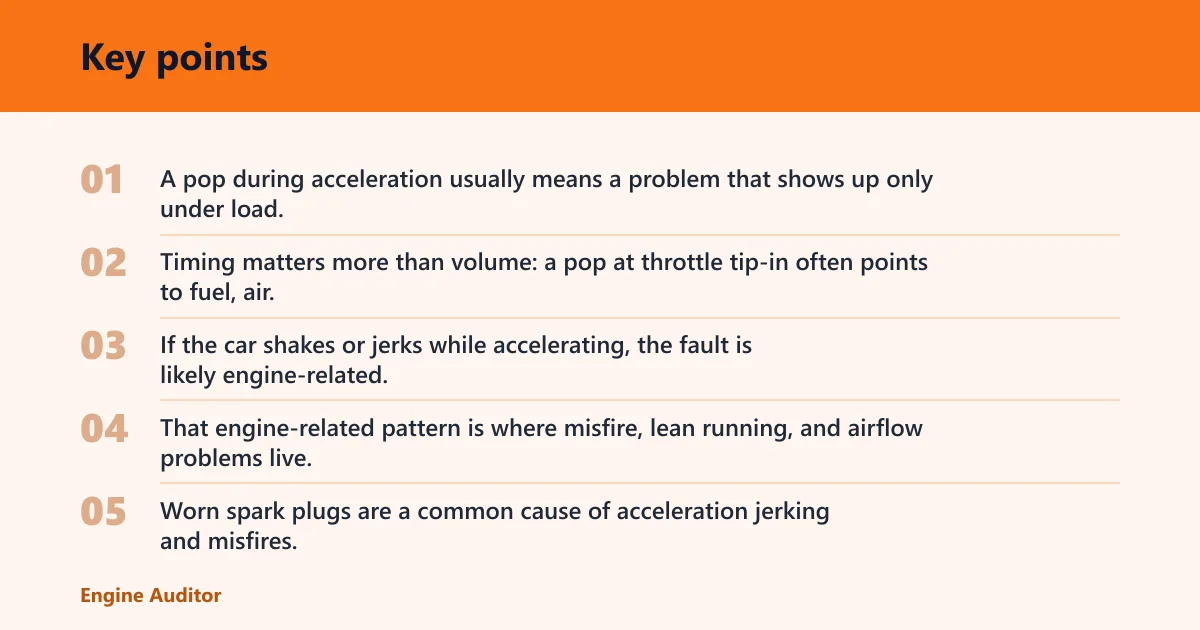
A pop during acceleration usually means a problem that shows up only under load. Timing matters more than volume: a pop at throttle tip-in often points to fuel, air, or ignition faults, while a pop on lift-off points more toward exhaust or overrun behavior. If the car shakes or jerks while accelerating, the fault is likely engine-related.
That engine-related pattern is where misfire, lean running, and airflow problems live. Worn spark plugs are a common cause of acceleration jerking and misfires, dirty fuel injectors are a top acceleration problem, and a faulty MAF sensor can create jerkiness during acceleration. A dirty air filter and a blocked catalytic converter can also show up as power loss.
What a pop can mean
A single pop can come from combustion, exhaust, or the drivetrain. Combustion pop usually comes from ignition misfire or lean air-fuel delivery. Exhaust pop often follows an exhaust leak or a damaged converter. Drivetrain pop can happen with gear changes, delayed power delivery, or a slipping transmission, which is why location and timing matter so much.
Why timing matters more than volume
If the noise happens only when you press the pedal, the engine is being asked for more load and fuel. If it happens when you lift off, the fuel cut and exhaust flow change, which points somewhere else. A loud pop is not automatically worse than a soft one. Repetition under the same load is the part that tells the story.
When it points to engine load
Load dependence is the clue many drivers miss. A car can sound fine at idle, then pop uphill or at wide-open throttle because the fault appears only when cylinder pressure rises and fuel demand increases. That pattern fits spark, injector, MAF, vacuum leak, or converter restriction far better than a random road noise.
Accelerate car popping diagnostic matrix
This matrix sorts the noise by when it happens. Start with the timing, then match the companion symptom. That gets you closer to the right system before you replace parts.
| When it pops | Likely system | Most likely parts | What else you should notice | Stop-driving flags |
|---|---|---|---|---|
| Tip-in | Ignition | Spark plugs, coil packs, plug wires, fuel delivery | Hesitation as you press the pedal, rough running, check-engine light, occasional sulfur or fuel smell | Flashing CEL, heavy shaking, repeated misfire under light throttle |
| Steady throttle | Fuel | Fuel injectors, fuel filter, MAF sensor, vacuum hose or intake leak | Jerking, sluggish acceleration, poor mpg, rough idle after the drive, lean running clues | Loss of power that keeps getting worse, stalling, flashing CEL |
| Lift-off | Exhaust | Exhaust leak, damaged manifold gasket, missing or restricted catalytic converter | Popping or crackling on overrun, louder exhaust note, sudden noise change after theft or impact | Strong exhaust smell in the cabin, loud leak near the floor, visible pipe damage |
| Under load uphill | Ignition or drivetrain | Spark plugs, coils, transmission, CV joint, driveshaft, axle | Knocking under load, delayed power delivery, whining, shifting issues, pop tied to gear changes | Flashing CEL, severe jerk, transmission slip, axle or wheel noise |
Could a misfire be the cause?
Yes. Ignition misfire is one of the leading reasons a car pops on acceleration, especially if the sound comes with shaking, jerking, or a check-engine light. Misfire means one cylinder is not burning the air-fuel charge correctly, and that interruption can sound like a pop or backfire-like snap.
Spark plugs and ignition coils
Worn spark plugs are a common cause of poor acceleration and misfires. They can also trigger knocking or popping under load because the spark weakens when cylinder pressure rises. Coils and plug wires can do the same thing if they leak or break down. A plug that is overdue for replacement is worth inspecting first.
Check plugs if the noise started gradually, the engine feels lazy on hills, or the car stumbles when you roll into the throttle. Bad plugs often travel with rough idle, poor fuel economy, and a check-engine light. If the plugs are worn, replacement is usually more sensible than chasing the symptom around the car.
Fuel delivery and injector issues
Dirty fuel injectors can reduce fuel delivery and cause jerking, hesitation, and power loss. Vehicle Seeks also notes that a clogged fuel filter can restrict fuel flow and cause jerking. If the car feels starved only when you ask for more power, fuel delivery moves higher on the list.
Injector trouble often shows up as a stumble at steady throttle or during passing acceleration. You may also notice longer cranking, uneven idle, or a lean code. Cleaning can help if the injectors are dirty, but blocked or failing injectors may need replacement.
What the check-engine light tells you
A check-engine light changes the odds fast. A solid light with a pop under acceleration still needs attention, but a flashing light means active misfire and a higher risk of catalytic-converter damage. If the light flashes under load, do not keep testing it on the road.
Code scanning helps sort ignition from fuel and air faults. Misfire codes, lean codes, and airflow codes point in different directions, and that is better than guessing from the sound alone. If the noise is load-dependent and the light is on, start with a code scan before buying parts.
Air and fuel issues to check
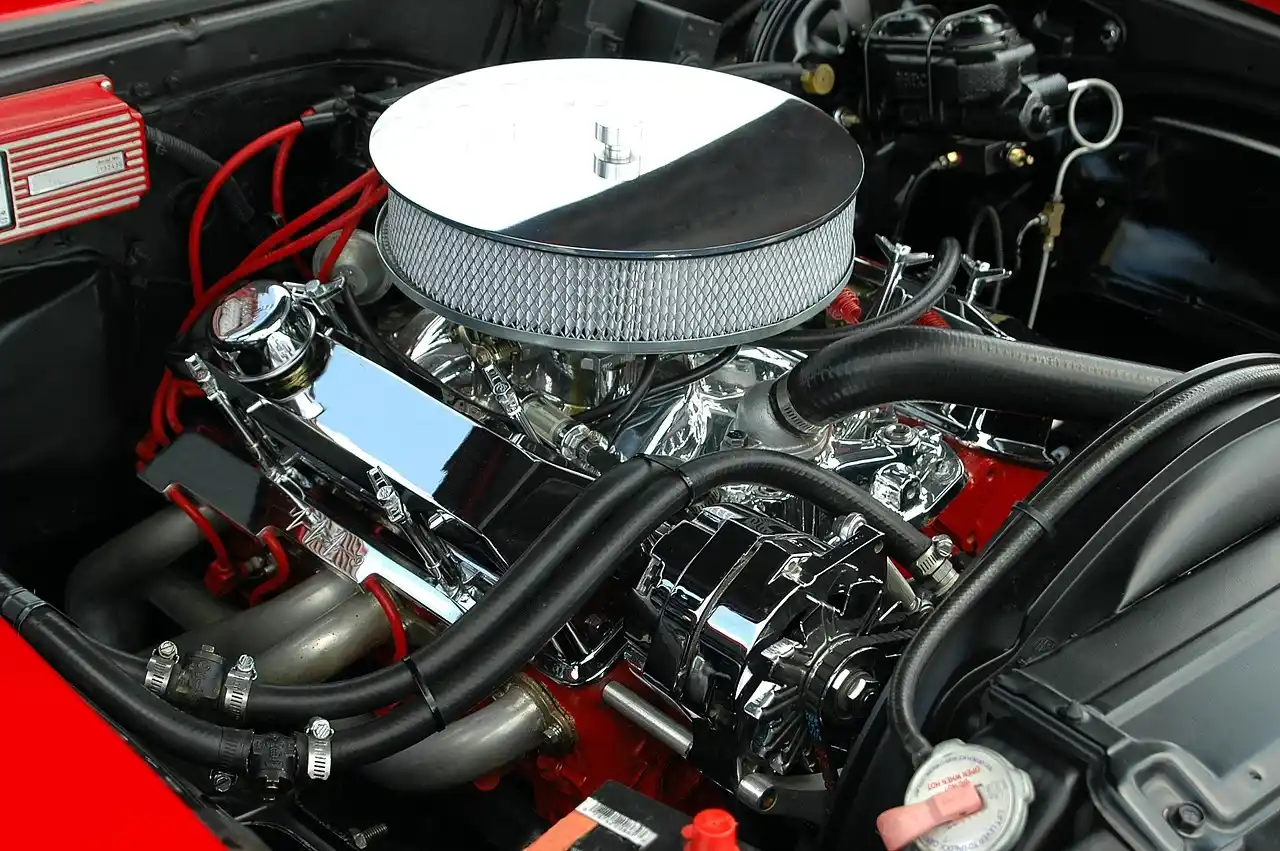
Airflow faults can make the mixture too lean, which can sound like a pop, hesitation, or weak pull when the throttle opens. A dirty or faulty MAF sensor skews the air-fuel ratio, and a vacuum hose or intake leak can let unmetered air in. Both are common enough to inspect early.
MAF sensor faults
A faulty MAF sensor can cause jerkiness during acceleration, sluggish response, and lean running. It measures incoming air, so a dirty sensor can send bad data and the engine computer may command the wrong fuel amount. That often feels like the car falls flat when you step into the throttle.
If the pop comes with hesitation but no obvious exhaust damage, the MAF deserves attention. Dirty sensors can sometimes be cleaned with the correct cleaner, but a failing sensor usually needs replacement. A scan tool that shows airflow data can help confirm the fault.
Vacuum hose or intake leaks
Could a vacuum leak cause popping under throttle? Yes. A vacuum hose or intake leak can create a lean condition, often with rough idle, hesitation, or a whistle. wikiHow notes that whistling during acceleration can indicate a vacuum or hose issue.
Say your 4-cylinder sedan pops only when merging uphill, and you hear a faint whistle near the intake tube. That pattern fits a leak better than a drivetrain fault. Look for split hoses, loose clamps, cracked intake boots, and disconnected vacuum lines before assuming the engine is failing.
Air filter restriction
A dirty air filter can reduce airflow and power. That simple maintenance item can create a sluggish feel, and it may travel with black smoke or poor mpg if the mixture goes out of range. It is a fast check, so inspect it before digging deeper.
A restricted filter will not explain every pop, but it can make other faults worse by limiting clean airflow. If the filter is packed with debris, replace it. If the filter is clean and the intake tract is intact, move on to leaks and sensor checks.
Could exhaust or catalytic damage be the cause?
Yes. A blocked catalytic converter can cause acceleration problems, and a missing or stolen converter can also create jerking acceleration and a sudden change in exhaust tone. Exhaust faults often sound louder or harsher than engine faults, especially when the throttle closes or the engine is under load. (Wikihow)
Restricted catalytic converter
A restricted catalytic converter can reduce performance, make the exhaust sound strained, and leave the car feeling weak on hills. The engine may rev slowly, lose top-end pull, or feel like it is breathing through a blockage. That is a different pattern from a simple spark plug misfire.
Cat restriction is more likely if power drops off as speed rises and the engine feels choked at sustained throttle. If the converter overheats or breaks apart, the symptom can worsen quickly. That is a stop-driving problem if the car can barely accelerate or the smell of hot exhaust gets strong.
Exhaust leak clues
An exhaust leak can produce popping or crackling that changes with load and throttle lift. You may also notice ticking at startup, louder exhaust under acceleration, or fumes where they should not be. The noise often gets louder outside the cabin than inside.
Do not confuse this with a tire, suspension, or body rattle. An exhaust leak usually tracks engine speed and load. A broken hanger, cracked flex pipe, or leaking manifold gasket can all create sounds that seem like a pop when the engine is working hard.
Theft-related damage and sudden noise
Missing catalytic converter damage can appear all at once. If the converter was cut out, the car may suddenly sound much louder and may jerk or hesitate because the exhaust path changed. That theft-related loss is one reason a pop that starts overnight deserves immediate inspection.
If the noise changed sharply after the car was parked, look underneath for fresh pipe damage, missing sections, or dangling hangers. A sudden exhaust change is not a tune-up issue. It is a structural fault until proven otherwise.
Could the transmission be involved?
Yes. If the pop comes with gear changes, delayed power delivery, whining, or shifting issues, the transmission or drivetrain may be the source. A transmission problem can feel like a pop because the vehicle catches, slips, or re-engages under load. That is different from engine misfire.
Popping with gear changes
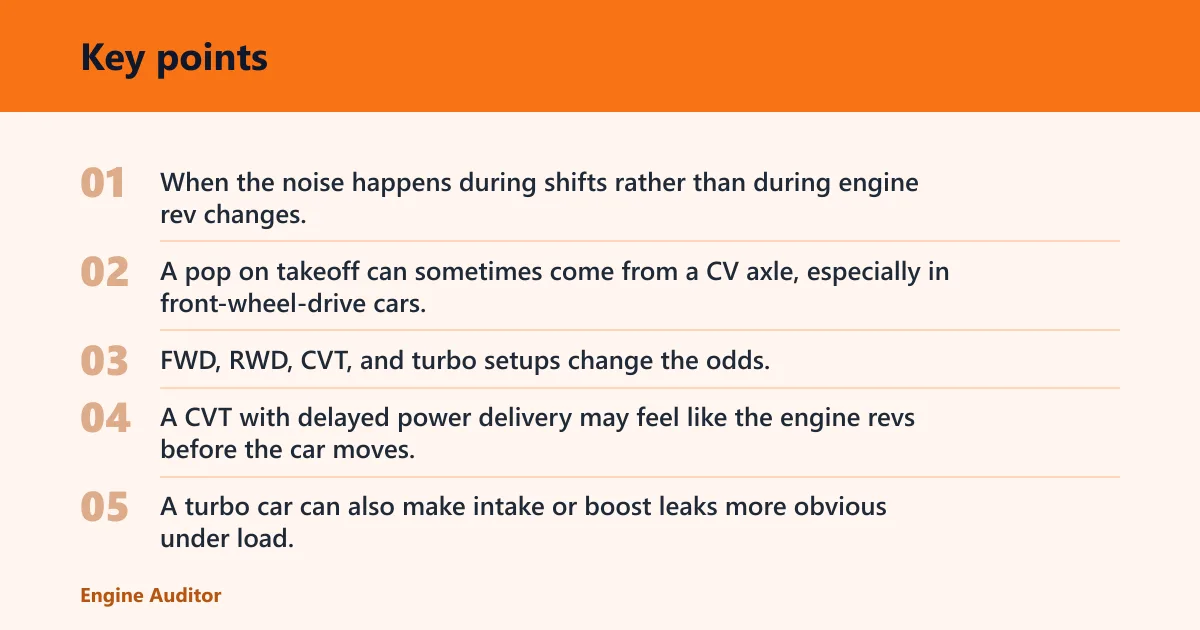
When the noise happens during shifts rather than during engine rev changes, think transmission, mounts, axles, or CV joints. A pop on takeoff can sometimes come from a CV axle, especially in front-wheel-drive cars, while a driveline clunk can also show up in rear-wheel-drive layouts.
FWD, RWD, CVT, and turbo setups change the odds. A CVT with delayed power delivery may feel like the engine revs before the car moves. A turbo car can also make intake or boost leaks more obvious under load. Layout matters because the same sound does not mean the same fault.
Delayed power delivery
If the engine revs but the car hesitates, the transmission may be slipping or not applying power cleanly. That complaint can travel with whining, flare between gears, or a delayed downshift. A pop in that setting may be the drivetrain taking up load, not the engine backfiring.
A common first-timer mistake is to blame the engine because the sound is heard at the front of the car. A bad axle, mount, or transmission mount can transmit noise forward and make the source hard to place. Follow the shift pattern, not just the sound location.
When drivetrain noise points away from the engine
If the engine idles smoothly, no misfire codes are present, and the pop only happens during gear changes or steering input, move away from ignition theory. Look for axle noise, mount movement, or transmission behavior first. Engine misfire usually leaves more clues than a single sharp pop.
What should you check first?
Start with the easiest and safest checks. Scan for codes, inspect plugs and intake hoses, and look at the air filter before replacing parts. If the car is flashing a CEL, losing power badly, or making the same pop repeatedly under load, stop driving and arrange a tow.
- Scan for codes. A flashing or solid check-engine light changes the diagnosis path fast.
- Inspect spark plugs if the symptom matches tip-in hesitation, rough idle, or load-related knocking.
- Look for loose or cracked intake hoses, vacuum leaks, and a whistling sound under throttle.
- Check the air filter for restriction and replace it if it is packed with dirt.
- Stop and tow if the car shakes, loses power, flashes the CEL, smells strongly of exhaust, or pops harder uphill.
Suppose a compact SUV pops only when climbing a steep on-ramp, then runs normally at cruise. That pattern points more toward a load-related ignition, fuel, or intake issue than a random chassis noise. If the same vehicle starts losing power on each hill, it should not stay in service until the fault is found.
Frequently asked questions
Why do cars pop when accelerating?
Cars pop when accelerating because something changes under load: spark, fuel delivery, airflow, exhaust flow, or drivetrain engagement. The most useful clue is timing. Tip-in pops usually point to ignition or lean conditions, while lift-off pops often point to exhaust behavior or overrun-related noise.
What makes a car pop under acceleration?
Common causes include worn spark plugs, dirty injectors, a faulty MAF sensor, a vacuum leak, a clogged fuel filter, or a restricted catalytic converter. Transmission issues can also create a pop if the sound happens with gear changes, delayed engagement, or shifting problems.
Could a misfire cause popping when I accelerate?
Yes. A misfire can sound like a pop because one cylinder fails to burn the mixture correctly under load. That fault often comes with a check-engine light, shaking, jerking, or poor acceleration. Worn spark plugs, coils, wires, or fuel delivery issues are common paths to misfire.
Can bad spark plugs make my car pop?
Yes. Worn spark plugs are a common cause of misfires, poor acceleration, and knocking or popping under load. If the pop comes with rough idle or hesitation, plugs move near the top of the list. They are also a normal wear item, so overdue replacement matters.
Could a vacuum leak cause popping under throttle?
Yes. A vacuum hose or intake leak can create a lean condition that shows up as popping, hesitation, rough idle, or a whistle during acceleration. If the car sounds lean only when you open the throttle, inspect hoses, clamps, and the intake tract before deeper repairs.
Is a popping sound when accelerating bad?
It can be. A repeat pop under load may mean active misfire, fuel starvation, exhaust restriction, or drivetrain trouble. If the car also loses power, shakes, or flashes the check-engine light, stop driving. A mild, single pop is less urgent than a repeated load-related fault.
Why is my car popping and losing power?
Popping plus power loss usually means the engine is not making clean combustion or the exhaust is restricted. Worn plugs, dirty injectors, a bad MAF sensor, a vacuum leak, or a blocked catalytic converter are all plausible. If the power loss is sudden, tow the car.
Products related to this article
Sponsored / affiliate links. As an Amazon Associate I earn from qualifying purchases. I may earn additional commission from eligible campaigns.