Why Is My Engine Hissing? Causes and Checks to Try
A new engine hiss usually points to a vacuum leak, coolant leak, or brake booster issue; if it gets louder with throttle, inspect intake hoses first, and if it appears after shutdown or with heat, check for coolant. Ignoring it can lead to misfires, overheating, reduced brake assist, or a breakdown. This guide shows how to narrow the cause by sound location and driving condition.
Quick diagnosis by sound and timing
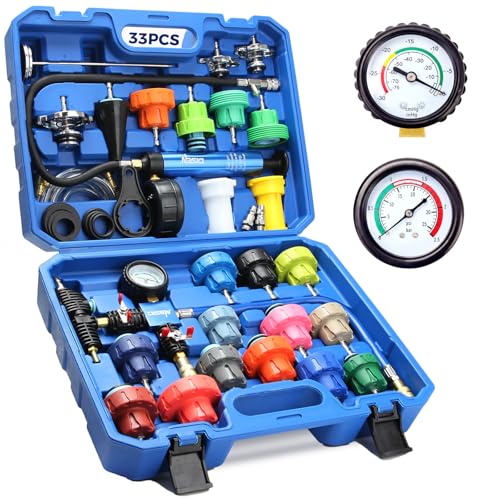
- Pressure tests cooling system leaks
- Vacuum refill helps reduce air pockets
- Includes many adapters for broad compatibility
Start with when the hiss happens, not with parts replacement. A hiss in the engine bay at idle points one way, while a hiss that appears after shutdown, during braking, or with the A/C on points elsewhere.
Hiss at idle in the engine bay
A steady suction-like hiss at idle often points to a vacuum leak, especially on older vehicles. A leaking vacuum hose is a common failure point, and air drawn into the low-pressure intake system is audible all the time. If the noise changes as engine speed rises, move intake and hose checks to the front of the list.
Hiss during acceleration
If the sound gets louder when you press the throttle, think intake leak, split hose, or another seal opening under load. A vacuum leak can make the engine lag, sputter, or hiccup, and the tachometer may bounce or sit higher than normal when the leak is affecting airflow and mixture.
Hiss after turning the car off
A hiss that starts after shutdown often points to the cooling system, not the intake. Pressure release from a radiator, hose, cap, or reservoir can make a short hiss after the engine stops. If the hiss seems to come from the cap area, continues, or is accompanied by steam, sweet smell, or rising temperature, treat it as a possible fault.
Hiss while braking or with A/C
A hiss during braking calls for separate checks of the brake booster, vacuum supply, and related hose routing. A hiss with the A/C on can come from refrigerant moving through the system, an expansion valve, or a leak in the system; noticeable hissing should not be assumed normal. Those noises call for a different inspection path than an engine vacuum leak.
Why is my engine hissing?
The first suspect is a vacuum leak, especially if the noise sounds like suction and comes from the engine bay. Engine vacuum is created in the intake manifold as air is drawn into the engine, and a leak can affect engine performance, set a check engine light, and make the car run unevenly.
Why vacuum leaks are the first suspect
Hissing from the engine often means one of the vacuum hoses is leaking. That fits the classic sound pattern: a suction noise near the intake, a rough idle, and a fault that shows up more clearly under load or at idle. Older automobiles are mentioned more often because age makes hoses and seals more likely to split.
How engine vacuum pressure creates a hiss
Engine vacuum is the low-pressure condition inside the intake manifold that helps move air and operate components. When a hose splits or a seal opens, outside air is drawn into the intake system and the leak becomes audible. In practical terms, that air being pulled into the system is the hiss you hear.
Which symptoms make a vacuum leak more likely?
Look for a check engine light, erratic or higher-than-normal RPMs, hesitation, and poor fuel economy. A bouncing tachometer is a useful clue because the leak can make idle speed unstable. If the engine feels lazy, stumbles, or changes note as you feather the throttle, a vacuum leak moves higher on the list.
Engine hissing diagnostic matrix
This matrix links sound location and timing to the most likely system, the common symptom pair, and the first check. Use it as a sorting tool before you touch parts.
| Location and timing | Likely system | Common symptom pair | Urgency | First check |
|---|---|---|---|---|
| Engine bay at idle | Vacuum hose or intake seal | Suction hiss + rough or high idle | Prompt inspection | Listen around hose joints, intake boots, and the brake booster line |
| During acceleration | Vacuum leak or intake leak under load | Hiss + lag or hiccup | Prompt inspection | Check for split hoses, loose clamps, and cracked plastic fittings |
| After shutdown | Cooling system pressure release | Short hiss + sweet smell or steam | Stop-driving if overheating is present | Check coolant level only after the engine cools, then inspect cap, hose, and reservoir area |
| While braking | Brake booster or vacuum supply | Hiss + hard pedal or changed assist | Urgent safety check | Inspect the booster hose and note pedal feel before any further driving |
| With A/C on | A/C refrigerant circuit | Hiss + cooling change or cycle noise | Service when practical | Check vent performance, compressor cycling, and visible signs of leakage at fittings |
Say your compact sedan starts hissing only at idle after a cold start, and the tachometer dips and rises by a few hundred rpm. That pattern fits a vacuum leak better than a coolant issue, so the intake hoses and small vacuum lines deserve the first look.
What a vacuum leak sounds and feels like
A vacuum leak usually sounds like a fine suction hiss, not a heavy rush of air. It often shows up with unstable idle, hesitation, or a slight stumble when you tip into the throttle. The repair starts with the damaged vacuum hose or other failed seal, and replacement is the usual fix.
Leaking vacuum hose symptoms
A leaking vacuum hose is a primary failure point. The hose may be split, loose, brittle, or disconnected. Because the leak is on the low-pressure side, the sound can be faint at first and then become easier to hear as engine load changes.
Tachometer clues and rough running
Watch the tachometer when the engine is idling. A bouncing needle or a reading that sits higher than normal can point to a vacuum leak. That same fault can make the engine lag or sputter because the air-fuel mix is no longer being controlled the way it should be.
Check engine light and fuel economy changes
The check engine light may illuminate with a vacuum leak, and it may stay on until the problem is repaired, although it can also clear after enough drive cycles or if the codes are reset. Fuel economy may worsen when the engine runs inefficiently, because the engine has to compensate for unmetered air. Those signs do not prove the diagnosis by themselves, but they do support it.
Suppose the hiss appears only when you climb a hill and the engine feels flat. That combination points more toward an intake or vacuum issue than a radiator problem, because load makes a marginal hose leak more obvious.
Why is my radiator hissing?
A radiator can hiss after shutdown when hot coolant and pressure are moving through the cooling system. That sound is often different from a vacuum leak because it shows up with heat, may fade as pressure drops, and can come with steam, a sweet coolant smell, or a temperature warning.
Why a radiator or hose can hiss after shutdown
After the engine stops, heat soak can push pressure through the radiator, upper hose, reservoir, or cap area. A short hiss can happen as pressure bleeds down, but a hiss at the cap area, a continuous hiss, visible steam, or wet coolant points to a leak. That needs attention before the engine overheats again.
Coolant smell, steam, or pressure release
Coolant-related hiss is usually paired with one of three clues: a sweet smell, steam, or visible residue around a hose clamp, radiator end tank, or cap. If the hiss starts at shutdown and the temperature gauge has been running high, stop driving and let the engine cool before any inspection.
When to stop driving right away
Stop driving immediately if the hiss is paired with overheating, a growing coolant puddle, steam from the front of the car, or a temperature warning. Coolant loss can move quickly from a nuisance to engine damage. Do not remove a cap while the system is hot.
Why can I hear brakes hissing?
Brake hiss often points to the vacuum brake booster or its hose, and it can affect pedal assist. If the hiss appears when you press the brake pedal, or the pedal feels hard, low-assist braking is possible. That is a safety issue, so it deserves prompt inspection.
Vacuum brake booster and hose checks
Many brake boosters rely on engine vacuum to help reduce pedal effort. If the booster diaphragm or supply hose leaks, the hiss may appear near the firewall or under the dash. A failed hose can also let air into the system and make the noise audible during braking.
Pedal feel clues
A change in pedal feel is a strong clue. A hard pedal, reduced assist, or a hiss that stops when the pedal is released can point to the booster or hose. If the brake feel changes at the same time as the sound, do not treat it like normal engine noise.
When brake hiss needs urgent service
Brake-related hiss needs urgent service if the pedal effort rises, the car pulls unpredictably, or the hiss is new and loud. A vacuum issue in the brake assist system can leave the car with much less stopping help than expected. That is not a wait-and-see problem.
What makes a hissing sound in a car?
Several systems can hiss. The source may be a vacuum leak, cooling-system pressure release, brake booster fault, or A/C refrigerant movement. Belt noise is usually different, since belts tend to squeal, chirp, or whine instead of making a steady suction hiss.
Normal versus not-normal noise
Short A/C or cooling-system sounds can be normal, especially near pressure changes. A steady hiss that grows louder, repeats often, or comes with drivability changes is not something to ignore. The key is to match the sound with where it happens and what the car is doing.
What to check before booking service
- Note where the sound is strongest: engine bay, firewall, wheel area, or dash side.
- Note when it happens: idle, acceleration, shutdown, braking, or A/C use.
- Check the tachometer, temperature gauge, and brake pedal feel.
- Look for steam, coolant residue, loose hoses, or a fresh warning light.
- Decide whether the car should be parked until a shop can inspect it.
Why is my car making a hissing noise when accelerating?
A hiss under acceleration usually points to air escaping from the intake or a vacuum line that opens wider as engine load rises. If the sound grows with throttle, start with hoses, clamps, and intake boots. If the car also lags or hiccups, a vacuum leak is especially likely.
Acceleration-specific checks
Check the intake tube, PCV-related hoses, vacuum lines, and any plastic fittings near the throttle body. A split hose can be quiet at idle and louder under load. If the check engine light is on, that reinforces the case for a leak, but the sound and driving condition still matter most.
Why is my engine whining?
Whining is related but different. A whine usually points to belts, pulleys, a power steering pump, alternator bearings, or other rotating parts, while a hiss points more toward air or pressure escaping. If the sound is sharp and airy, keep chasing hiss sources first.
How to tell whining from hissing
Whine often rises with engine speed and sounds smooth or mechanical. Hiss is usually more airy and can sound like a leak. If both are present, a belt or pulley problem may be separate from a vacuum or coolant issue, so do not force one diagnosis onto both noises.
Why is my car air con making a hissing noise?
A/C hiss can come from refrigerant moving through the system, the expansion valve, or a leak at a hose, fitting, or component. Some brief sound during cycling can be normal. A steady or worsening hiss, especially with weaker cooling, suggests inspection is needed.
Signs the A/C system needs inspection
Watch for warm air at the vents, compressor cycling that changes the sound, oily residue around A/C fittings, or a hiss that appears only when the system is on. Do not confuse A/C hiss with engine vacuum noise; the timing and location usually separate them.
How to check before service
Listen at idle with the A/C off, then on. If the hiss appears only with the A/C engaged, the system deserves attention from a technician who can handle refrigerant safely. Refrigerant work is not a simple DIY task for most drivers.
Frequently asked questions
Why is there a hissing sound after turning the car off?
After shutdown, a hissing sound often comes from cooling-system pressure release as hot coolant settles. That can be normal for a short time, but a hiss at the cap area, repeated noise, or pairing with steam or coolant smell points to a leak. If those signs are present, stop driving and inspect for a fault.
Products related to this article
Sponsored / affiliate links. As an Amazon Associate I earn from qualifying purchases. I may earn additional commission from eligible campaigns.