OEM vs aftermarket engine parts: which is better for you?
Neither is universally better. For high-criticality, calibration-sensitive engine parts, I buy OEM. For wear items and simple non-calibrated pieces, quality aftermarket often gives better value. Get this wrong and you can create misfires, leaks, sensor faults, or repeat labor that costs far more than the part. This guide sorts common engine parts by failure cost, fit, and calibration sensitivity so you can choose the right option.
This guide is part of our Car engine components: parts, functions and diagrams series.
OEM vs aftermarket engine parts: the real trade-off
What OEM means for fit, spec, and channel
OEM parts are built to the original vehicle specification and used during vehicle construction. OEM can also mean the same company that produced the original part, or an approved supplier tied to the vehicle program. That usually gives cleaner fitment, simpler part-number matching, and less guesswork.
What aftermarket means across budget and premium tiers
Aftermarket parts are made by companies other than the OEM. The quality range is wide: bargain parts sit at one end, premium aftermarket can sit close to factory spec at the other, and some parts include performance upgrades or broader application coverage. Availability is often better for older vehicles, and the price is usually lower.
Why the right choice changes by engine part
The label on the box matters less than the job the part does. A fuel injector, ECU-related component, or high-pressure fuel part can create cascading faults if it is off spec. A cabin filter or brake pad usually cannot. The cost of failure, coding, and repeat labor is what separates the safe bargain from the expensive mistake.
OEM vs aftermarket at a glance
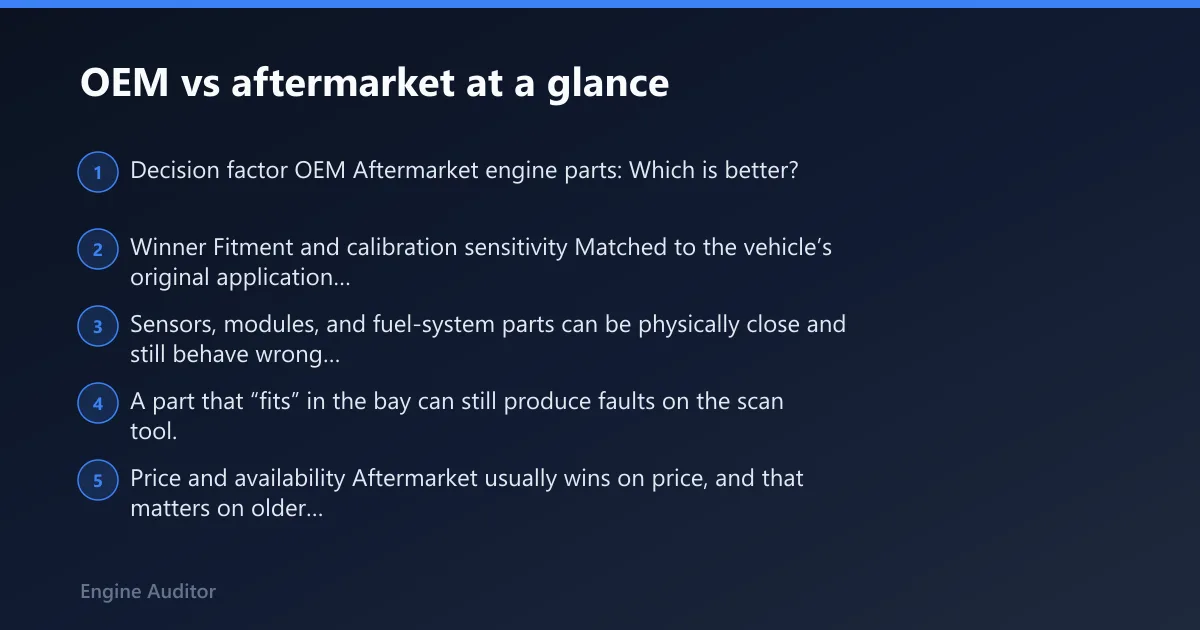
| Decision factor | OEM | Aftermarket engine parts: Which is better? | Winner |
|---|---|---|---|
| Fitment and calibration sensitivity | Matched to the vehicle’s original application and usually easier to verify by VIN or part number | Can be excellent, but the buyer must confirm exact application, connector style, coding, and revision | OEM |
| Price and availability | Often higher priced and sometimes slower to source | Usually lower priced, with more choice and better availability for older vehicles | Aftermarket |
| Warranty and documentation risk | Often easier to defend during warranty-related claims when the part is the correct factory equivalent | Fine when documented well, but claim friction rises if the part cannot be traced or suspected in the failure | OEM |
| Best use case | Critical, coded, or vehicle-specific parts with high failure cost | Routine wear items, simple replacements, and known-good premium or OE-supplier pieces | Depends on part |
Fitment and calibration sensitivity
OEM wins where drop-in installation is not the whole story. Sensors, modules, and fuel-system parts can be physically close and still behave wrong because the calibration, connector keying, resistance curve, or programming is off. A part that “fits” in the bay can still produce faults on the scan tool.
Price and availability
Aftermarket usually wins on price, and that matters on older vehicles or routine repairs. My Motor says good aftermarket can save 30-50% for routine replacements, and that is plausible when the part is low risk and the seller is reputable. The savings disappear fast if the first part fails and the job has to be done twice.
Warranty and documentation risk
OEM has the cleaner paper trail. My Motor notes OEM parts often keep manufacturer or extended warranty happier, and that tracks with how claims are handled when a failure is under review. Still, the key issue is causation: a claim is more likely to be denied when the installed part caused the failure, not merely because it was aftermarket.
Which engine parts should stay OEM?
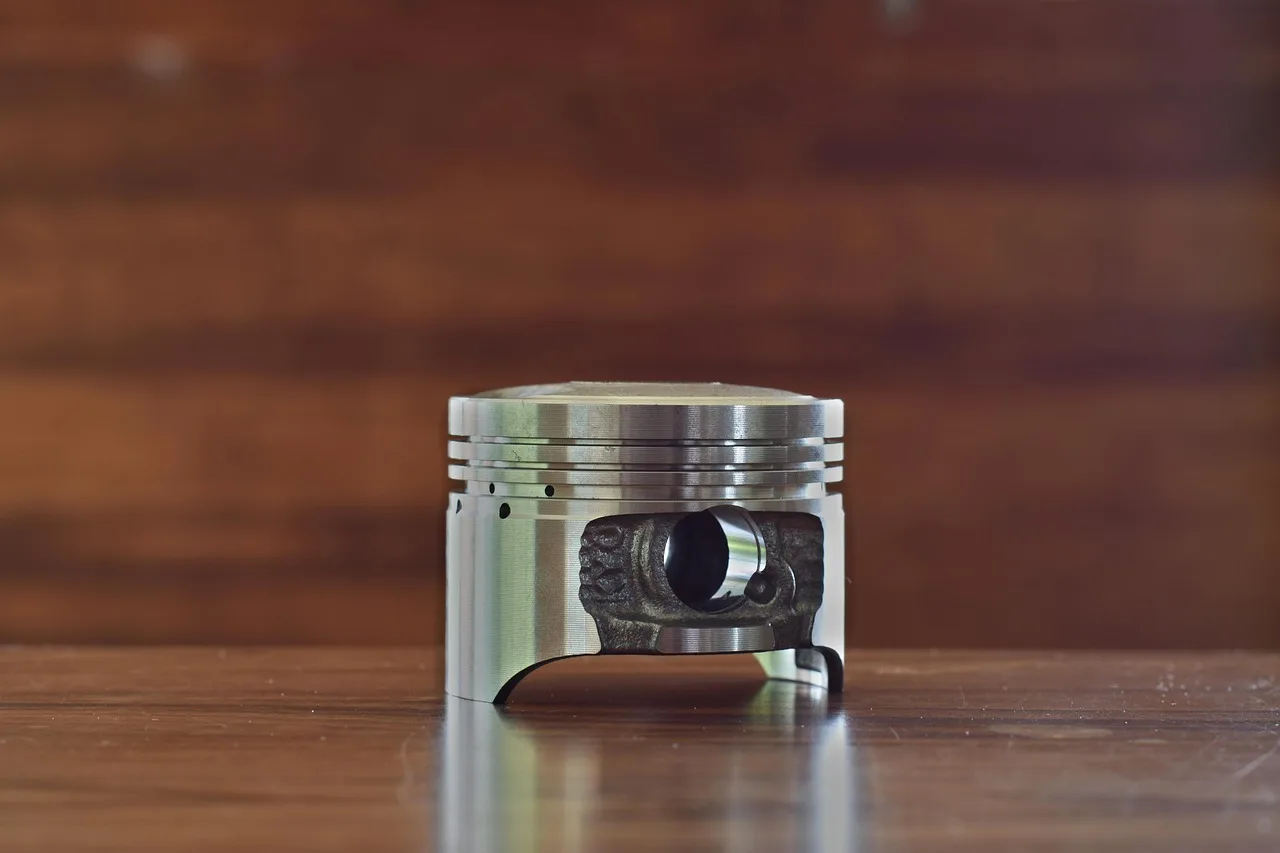
Stay OEM on parts where a small mismatch can trigger a large repair bill. Fuel injection hardware, ECU or BCM-related electronics, sensors tied to engine management, and high-pressure fuel system parts fall into that group because fitment, coding, and signal behavior matter as much as the physical shape.
Fuel injection and high-pressure fuel parts
Injectors, rails, pumps, and control valves work under tight tolerances. A cheap part can cause lean running, hard starts, misfires, fuel trims out of range, or contamination that spreads through the system. If the part controls delivery or pressure, the margin for error is thin.
Sensors and ECU or BCM-related electronics
Sensors are not generic hardware. A signal that is slightly off can set codes, change fueling, or cause drivability complaints that can take time to trace. For modules and coded electronics, the cost is not only the part; it is coding, programming, and the diagnosis that follows if the first replacement misses the mark.
Parts with tight vehicle-specific calibration
Some parts are built around a specific engine family, emissions setup, transmission pairing, or software revision. In those cases, OEM or a verified OE-supplier part gives a clearer path through VIN lookup, part-number matching, and calibration compatibility. That is where the wrong “same-looking” part becomes a time sink.
Parts where a mistake can trigger secondary damage
If a failure can contaminate oil, dilute fuel, overheat a catalyst, or cause repeated misfires, the part belongs in the high-caution bucket. The cheap option is no longer cheap once it creates towing, labor, scan time, and follow-on damage. That is the hidden cost many shoppers miss.
Which aftermarket engine parts are safe to buy?
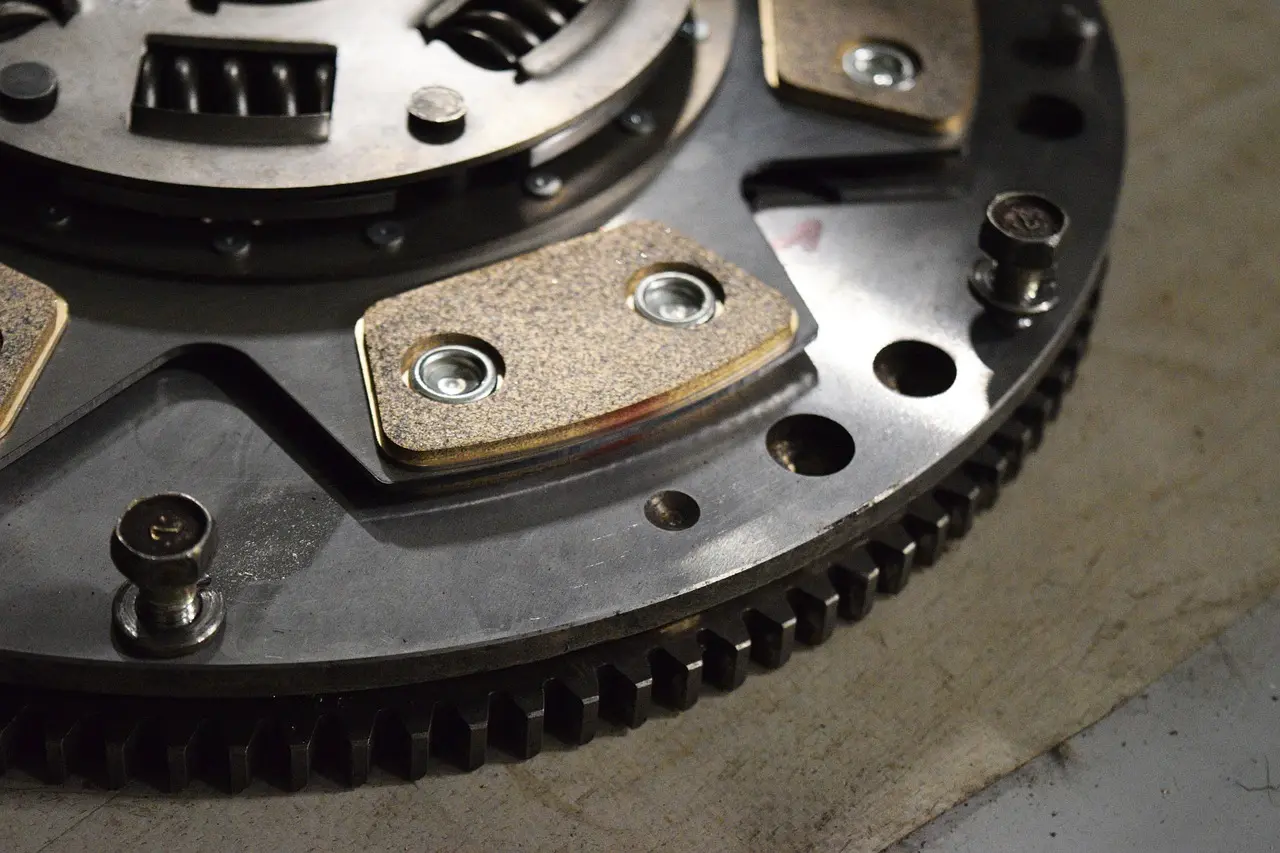
Routine wear items with straightforward fitment are the safest aftermarket buys. Filters, spark plugs, belts, batteries, brake pads and rotors, and wipers usually do not need the same calibration discipline as engine electronics. In those categories, value often comes from a reputable brand, good packaging, and correct application data.
Routine wear items with straightforward fitment
These parts are replaced often and are usually visible, measurable, and easy to compare. If the catalog data is clean, the risk is limited. My Motor recommends aftermarket for filters, pads, wipers, batteries, belts, radiators, and shock absorbers, which fits the low-complexity side of the map.
Premium aftermarket brands that match spec
Premium aftermarket can be a smart buy when it matches OE dimensions, materials, and fit. This is where you get lower cost without stepping down into unknown quality. Look for clear testing claims, traceable part numbers, and a return policy that is actually usable if the part arrives wrong.
When OE-supplier parts are a smart middle ground
Some OEM suppliers also sell aftermarket versions on other channels or for different models. That matters because the same factory may produce parts for both OEM and aftermarket use, but the packaging, application, and support can differ. OEM Parts Online says it offers multi-brand OEM auto parts and accessories, and it searches catalogs by part name, part number, or VIN.
Signs the part is not worth the risk
A part is poor value when the seller cannot document traceability, the listing is vague on application, the return policy is weak, or the catalog data does not tie to a VIN or exact part number. Cheap unknown brands become a bad bet when the part is buried, coded, or labor-heavy to replace.
Can aftermarket parts affect your warranty?
Yes, but the label alone is not the issue. A warranty claim can be denied when the installed part caused the failure, and that is true whether the part was aftermarket, OEM, or even installed incorrectly. Receipts, part numbers, and clear notes matter because they help show what was fitted and when.
When a dealer can deny a claim
If a non-OEM part directly leads to the failure being claimed, the dealer or manufacturer has a stronger basis to push back. That is different from a blanket denial for using aftermarket parts. Documentation makes the discussion factual instead of speculative.
Why causation matters more than the label
A matching part that does not cause the failure should not automatically void unrelated coverage. The practical question is whether the replacement part changed the failure path. For example, a poor sensor can create drivability complaints; a brake pad usually cannot be blamed for a fuel-system claim.
What receipts, part numbers, and notes to keep
Keep the invoice, the part number, the brand name, the install date, and any labor records. If the part was selected by VIN lookup or verified against the original number, keep that note too. Paper trails reduce friction when a claim is reviewed later.
How warranty stage changes the buy decision
During the factory warranty period or an extended warranty, OEM preference rises because the documentation is simpler and the dispute risk is lower. After warranty, the balance shifts toward value, especially on routine wear items. The farther you move from warranty coverage, the more sense premium aftermarket can make.
How to judge quality before you buy
Quality control matters more than the box color. Certifications, return policies, traceability, and testing claims help separate a serious supplier from a random listing. If the seller cannot prove what the part is, the savings are shaky.
VIN lookup and part-number matching
Start with the VIN when the part is vehicle-specific. OEM Parts Online says it searches catalogs by part name, part number, or VIN, which is exactly the kind of lookup that reduces ordering mistakes. If the seller cannot confirm the exact application, stop there.
Return policy and seller traceability
A usable return policy is part of quality control. A seller that will not stand behind fitment or packaging defects shifts the risk to the buyer. Traceability matters too, because a branded box is not enough if no one can identify the actual manufacturer or revision.
Testing, certifications, and brand history
For aftermarket, look for evidence of testing, quality certification, and a brand with a track record in the specific part category. My Motor says aftermarket quality ranges from bargain to best-in-class, and that spread is real. A reputable brand is the filter that keeps a low-price part from becoming a false economy.
When OEM supplier overlap matters
OEM supplier overlap can be a good sign, but it is not automatic permission to buy anything with the same manufacturer name. OEM Parts are the parts used during vehicle construction, and they can be made by the same company that produced the original part. The key is whether the exact aftermarket part matches the application and revision you need.
Use this decision matrix before you order
| Part category | Failure consequence | Fitment sensitivity | Warranty risk | Likely best-buy category |
|---|---|---|---|---|
| Fuel injectors | High; misfire, poor running, possible secondary damage | High | High | OEM or OE-supplier aftermarket |
| High-pressure fuel pump parts | High; can contaminate or starve the system | High | High | OEM |
| Engine sensors | Medium to high; can trigger codes and drivability faults | High | Medium to high | OEM or premium aftermarket |
| ECU or BCM-related electronics | High; coding and communication issues can stop the car | Very high | High | OEM |
| Filters | Low | Low | Low | Premium aftermarket |
| Spark plugs | Low to medium | Medium | Low | Premium aftermarket or OEM |
| Belts | Medium; failure can cause roadside trouble | Medium | Low to medium | Premium aftermarket |
| Batteries | Medium; no-start risk | Medium | Low to medium | Premium aftermarket |
- Score the failure consequence first. If a bad part can create engine damage, a no-start, or repeated diagnostic time, move it toward OEM.
- Check fitment sensitivity next. If the part needs coding, calibration, or exact connector geometry, do not treat it like a generic replacement.
- Review warranty stage and documentation needs. If the vehicle is still under coverage, keep the invoice trail clean and the application exact.
- Choose the least risky category that still fits the job: OEM, OE-supplier aftermarket, premium aftermarket, or avoid unknown brands.
Choose OEM if… / choose aftermarket engine parts: Which is better if…
Choose OEM if the part is critical, coded, or tied to fuel delivery, engine management, or emissions control. Choose OEM if the vehicle is still under warranty and the paperwork needs to be straightforward. Choose OEM if a mistake would cost more in towing, labor, or secondary damage than the part itself.
Choose aftermarket engine parts: Which is better if the part is a routine wear item, the fitment is simple, and the seller can prove the exact application. Choose premium aftermarket when you want lower price without stepping down into unknown quality. Choose OE-supplier aftermarket when you want factory-like fit at a lower cost and the part number matches cleanly.
Frequently asked questions
Are OEM engine parts better than aftermarket parts?
Not across the board. OEM is usually the safer choice for critical, coded, or calibration-sensitive parts, while quality aftermarket is often the better value for routine wear items. The right answer depends on failure cost, fitment sensitivity, and whether the part touches engine control or can be replaced cheaply if needed.
Which aftermarket engine parts are safe to buy?
Filters, spark plugs, belts, batteries, brake pads and rotors, and wipers are usually the safest aftermarket buys because fitment is straightforward and failure costs are lower. Premium aftermarket is strongest when the seller can document exact application, testing, and a workable return policy. Avoid unknown brands on buried or coded parts.
Do OEM parts always fit better than aftermarket?
OEM usually gives the best fit confidence, though some aftermarket parts can still fit well. Premium aftermarket and OE-supplier parts can match factory dimensions very closely when the exact application is correct. The real issue is not the label; it is whether the part number, revision, connector, and calibration match the vehicle.
Can aftermarket parts affect my warranty?
Yes, if the part causes the failure that is being claimed. Warranty disputes usually hinge on causation and documentation, not on a blanket rule against aftermarket parts. Keep invoices, part numbers, and install notes. OEM preference tends to rise during warranty periods because the paper trail is cleaner.
Which engine parts should stay OEM?
Fuel injectors, high-pressure fuel parts, sensors, ECU or BCM-related electronics, and other tightly calibrated components should usually stay OEM. These parts can create misfires, drivability faults, or repeat labor if they are slightly off. When the repair is buried or expensive to revisit, factory-spec confidence matters more.
Can OEM suppliers also sell aftermarket parts?
Yes. Some OEM suppliers also sell parts through aftermarket channels for different models or applications. That does not mean every part from that supplier is identical to the dealer part, so the buyer still needs part-number matching, VIN lookup, and confirmation of the exact vehicle application before ordering.
Products related to this article
Sponsored / affiliate links. As an Amazon Associate I earn from qualifying purchases. I may earn additional commission from eligible campaigns.
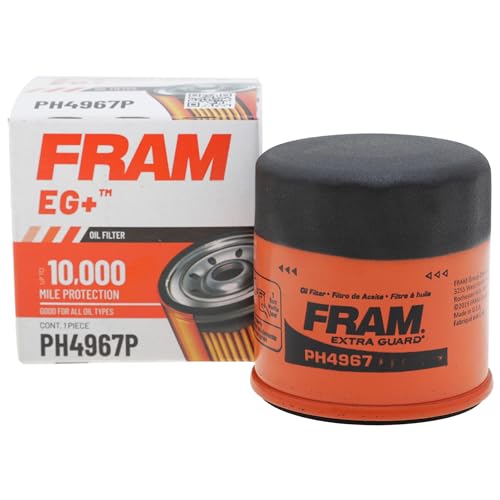 FRAM EG+ PH4967P, 10K Mile Change Automotive Replacement Interval Spin-On Engine Oil Filter for Select Vehicle Models
 RVS Technology G6 Engine oil Treatment; For Gasoline Engines with a Motor oil capacity up to 6 quarts; Save fuel, Boost Power and Safely Restore and protect your Car, Truck, and all other engines