Why Is My Engine Shaking at Idle? Common Component Issues
If the shake changes with rpm or sets a misfire code, start with ignition, fuel, and air faults; if the vibration stays about the same at idle but changes in gear or with A/C on, suspect mounts or idle-load issues. Ignoring it can damage the catalytic converter, waste fuel, and turn a cheap fix into a bigger repair. This guide helps you separate misfire, air/fuel, and mount-related causes before you replace parts.
Idle is the engine’s lowest-momentum condition, usually around 600–1000 RPM on many passenger vehicles, so small faults show up there first. A rough idle can smooth out once rpm rises because the engine has more rotating inertia to mask an ignition, fuel, or airflow problem. That pattern is useful because it helps separate combustion faults from vibration transfer into the cabin.
Why is my car shaking at idle but smooth while driving?



The first split is simple: does the engine itself run rough, or does the cabin shake while rpm stays steady? A true misfire often brings an uneven exhaust note, rpm twitching, or a scan code. A mount problem often feels like a strong shake through the seat, floor, or steering wheel, especially in Drive or Reverse, with little change in engine speed.
Think of a stoplight complaint in two layers. If the tach stays near idle speed but the body shudders more in gear, the issue may be a failed mount or an engine load transfer problem. If the engine itself stumbles, smells rich, or sets misfire or lean codes, the priority shifts to combustion, airflow, and fuel delivery. That distinction keeps diagnosis focused.
Idle shake triage table
| Symptom pattern | Likely component | Quick test | Code clues | What a failing result means |
|---|---|---|---|---|
| Rough idle, intermittent stumble, smooths above 1,500 RPM | Spark plugs | Remove and inspect gap, color, and electrode wear | P0300, P0301–P0308 | Worn, fouled, or gapped-open plugs can misfire at low RPM |
| Single-cylinder shake that may move with a coil swap | Ignition coil | Swap the coil with another cylinder and recheck the code | P0301–P0308 | The misfire follows the coil, so the coil or its boot is suspect |
| Idle miss with fuel smell, lean or rich cylinder contribution issue | Fuel injector | Listen for injector click and compare balance or flow data | P0300, cylinder-specific misfire, fuel trim drift | Uneven spray or clogging is disturbing one cylinder’s fuel delivery |
| High idle, idle surge, or shake that changes with spray tests | Vacuum leak | Inspect hoses, intake gasket areas, and PCV connections for leaks | P0171, P0174 | Unmetered air is leaning the mixture and upsetting idle control |
| Unstable idle after warm-up, carbon visible at the throttle bore | Throttle body | Check for heavy carbon and clean the bore with the correct method | Idle instability, sometimes lean trims | Restricted airflow at idle is disrupting the idle air control path |
| Rough idle with lean trims that improve after cleaning | MAF sensor | Inspect the sensor element and clean it with MAF-specific spray cleaner | P0171, P0174, fuel trim drift | Incorrect airflow data is skewing mixture and idle fueling |
| Cabin shake at stoplights, strongest in Drive or Reverse | Engine mount | Watch engine movement in gear with the brake held | Usually no code | Rubber or fluid-filled damping is no longer isolating vibration |
| Vibration rises and falls with engine speed, not load choice | Accessory or belt vibration | Check belt tension, pulleys, alternator, and accessory bearings | Usually no code | A spinning accessory is adding vibration that can feel like engine shake |
What codes point to a misfire when the engine shakes?
P0300 means a random misfire, while P0301 through P0308 point to a specific cylinder. That split matters because a cylinder code narrows the next test to one plug, coil, injector, boot, or wiring branch. Lean codes such as P0171 or P0174 often point more toward unmetered air than a pure ignition fault. These definitions align with generic OBD-II service logic used by OEM and scan-tool references.
Use an OBD-II scanner first and check both stored and pending codes. Pending codes matter because the fault may not have lit the malfunction indicator lamp yet, but the computer has already seen the pattern. A steady light usually means the fault is repeatable. A flashing light means the misfire is severe enough that raw fuel may be reaching the catalyst, which is consistent with NHTSA and OEM service warnings about catalyst damage from active misfire.
P0300 versus cylinder-specific codes
P0300 often means the problem is broad enough to affect several cylinders or move from one cylinder to another. That can happen with low fuel pressure, a vacuum leak, or multiple weak plugs on a high-mileage engine. A code such as P0302 or P0306 usually means the next check should stay on that one cylinder instead of replacing parts across the engine.
On many modern engines, especially coil-on-plug setups, a single coil or boot can fail without upsetting every cylinder. That is why a coil swap test is still useful on many makes with individual coils: if the misfire follows the coil, the coil or boot becomes the leading suspect. If it stays put, the plug, injector, compression, or wiring branch becomes more likely.
Lean codes that point to unmetered air
P0171 and P0174 are the code pattern to watch for when idle shake comes with a lean mixture. A vacuum leak can raise idle speed and create surging. Cracked hoses, a leaking intake gasket, or a PCV leak can all let in air the engine did not meter, which often shows up first at idle. That diagnosis is consistent with OEM fuel-trim strategy: positive trims mean the PCM is adding fuel to compensate for a lean condition.
Short-term fuel trims above about +10% at idle are a useful clue, but they are not a standalone verdict. A positive trim trend can point to a vacuum leak, a dirty or underreporting MAF sensor, or another airflow mismatch. Cross-check idle trims with rpm, load, and pending codes rather than treating one number as a final answer.
How pending codes help before the light stays
Pending codes are a first-pass diagnostic tool. They can catch a fault that appears only at hot idle, only in gear, or only after a cold start. If the engine shakes but the light is off, pending data can still separate a one-cylinder ignition fault from a lean-air issue or a mount problem.
Do not read the code in isolation. A P0301 with rough idle and fuel-trim drift may need a plug, coil, or injector check. A P0171 with an unstable idle and no single-cylinder pattern sends you toward air leaks, MAF data, and throttle body condition first. When both pending misfire and lean codes are present, the diagnosis is often in the air/fuel path rather than in a single ignition part.
How do I tell if it’s spark plugs or engine mounts?
Spark plugs usually change the way the engine runs. Mounts usually change the way the vibration feels in the cabin. If the tach needle wobbles, the engine sounds uneven, or the shake tracks with one-cylinder codes, start with plugs and ignition. If rpm stays steady but the seat, floor, or wheel shakes harder in Drive or Reverse, mounts move higher on the list.
Plug wear and gap checks
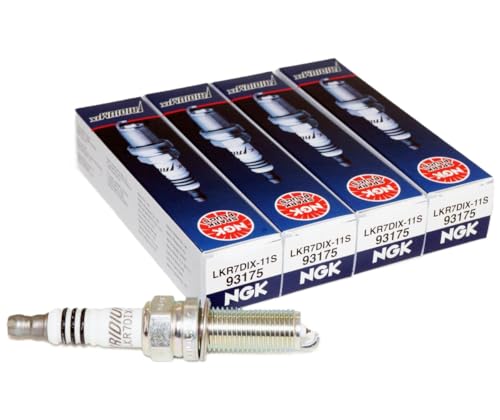
Old or fouled spark plugs can cause misfire, and the problem is often most noticeable at low rpm. A visible inspection should include the gap, the ceramic color, and the electrode shape. Heavy deposits, rounded electrodes, or a gap that has grown beyond spec can all weaken spark under idle conditions.
Replacement interval often falls between 30,000 and 100,000 miles depending on plug type and OEM specification. Copper plugs tend to live shorter lives than platinum or iridium types. If the engine has higher mileage and the service history is unknown, plugs are a common place to begin because the part cost is usually lower than a coil, injector, or mount diagnosis.
Coil swap tests and cylinder-specific codes
Ignition coils can break down at idle because a weak coil has less margin when combustion quality is already marginal. Coil-on-plug systems place one coil directly on each plug, which makes cylinder-specific misfires easier to isolate. A swap test is simple: move the suspect coil to another cylinder and see whether the code follows.
Damaged coil boots and wiring connectors deserve the same attention. A bad boot can leak spark. A loose connector can create an intermittent miss that comes and goes with engine movement. If the misfire stays on the original cylinder after the swap, the coil is less likely to be the cause and the plug or injector becomes more likely.
Mount clues from cabin vibration in Drive and Reverse
Worn or broken engine mounts can transfer vibration into the cabin, especially in Drive or Reverse. These mounts use rubber or fluid-filled damping to hold the engine to the chassis and soak up movement. When they fail, the engine may still run smoothly enough, but the seat, floor, or steering wheel receives more vibration than it should.
Mount failures do not typically create a misfire code. That absence is useful. If the engine speed remains stable and shifting from Park to Drive makes the shake much worse, that pattern leans toward mounts or another load-related vibration transfer issue rather than spark or fuel delivery. A visual check for excess engine roll under load can be more telling than a rev test in Park alone.
Can a vacuum leak cause shaking only at idle?
Yes. A vacuum leak often shows up most clearly at idle because the engine is relying on small, precise air control then. Extra unmetered air can make the idle speed rise, surge, or shake, and the problem may fade as rpm increases and the engine can compensate better. That is one reason lean codes and idle complaints often arrive together.
Cracked hoses and intake gasket leaks
Look first at cracked vacuum hoses, split PCV lines, and intake gasket edges. These leaks are common and often cheap to confirm. Lean codes such as P0171 or P0174 fit this branch well. If the idle is high or hunts up and down, that pattern is a strong clue that air is entering where it should not.
Vacuum leaks can also be sneaky. Some only open when the engine rocks in gear, so the idle seems normal in Park and worse in Drive. That is why a shake that appears at a stoplight but eases at speed should be checked with load in mind, not just with the hood open.
PCV leaks as a nearby branch
The PCV system is close enough to a vacuum leak that it deserves its own check. A stuck valve, cracked hose, or broken fitting can act like extra unmetered air. If you find lean codes and no strong misfire on one cylinder, PCV routing should be part of the visual inspection before you buy parts.
A smoke test is one of the cleaner ways to confirm an air leak, but a careful hose inspection can still catch many faults. Pay attention to elbows, soft rubber sections, and anything oil-soaked or heat-hardened. On some engines, a PCV fault can create a lean idle complaint without any obvious hissing sound.
Can dirty throttle body or MAF sensor make the idle rough?
Yes. Dirty throttle bodies and faulty idle air control strategy can create unstable idle, and a contaminated MAF sensor can skew mixture by sending the wrong airflow reading to the computer. Both faults may show up as shake at idle first, then look less obvious once the engine speed rises. That is why OEM and major repair references often treat airflow quality as a first-tier idle diagnosis.
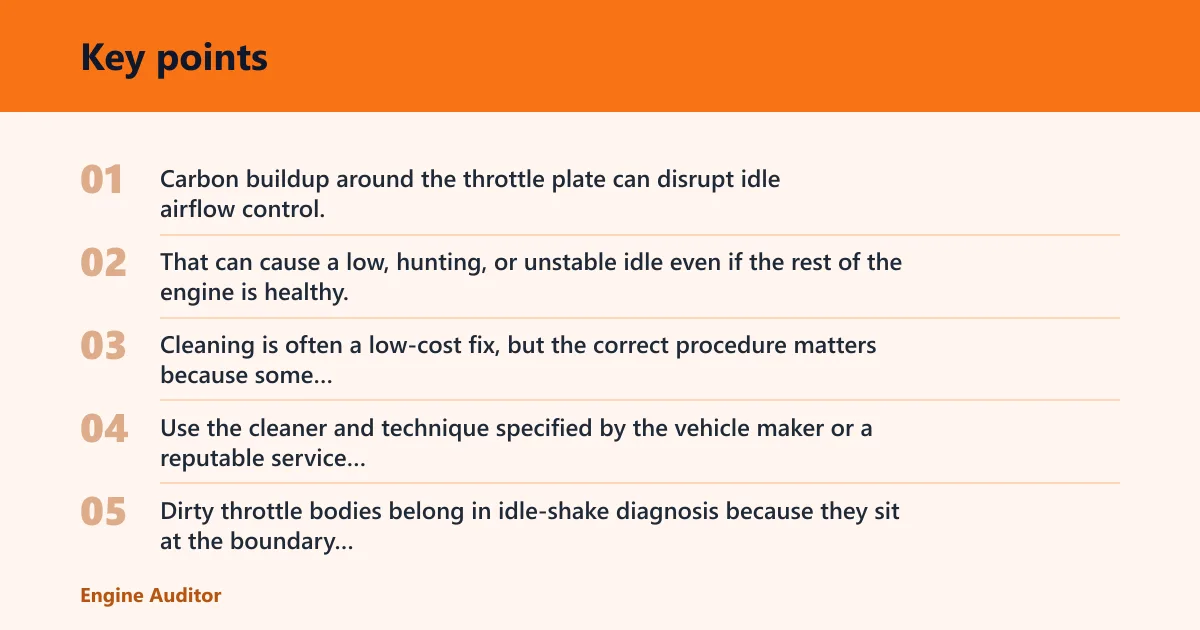
Throttle body carbon and idle airflow control
Carbon buildup around the throttle plate can disrupt idle airflow control. That can cause a low, hunting, or unstable idle even if the rest of the engine is healthy. Cleaning is often a low-cost fix, but the correct procedure matters because some electronic throttle bodies should not be forced open by hand. Use the cleaner and technique specified by the vehicle maker or a reputable service manual.
Dirty throttle bodies belong in idle-shake diagnosis because they sit at the boundary between air metering and idle control. If the plate is dirty enough, the engine may stumble at a stop and then smooth out once the throttle opens more at speed. The key is to clean only when the symptom pattern fits, not as a substitute for code-based diagnosis.
MAF contamination and mixture errors
The MAF sensor measures incoming airflow, so contamination can distort fuel calculation. A dirty sensor may make the engine run too lean or too rich at idle. Cleaning requires the correct MAF-specific spray cleaner, not brake cleaner or shop solvents. Those can damage the sensing element.
If short-term fuel trims are high and the engine shakes mainly at idle, a dirty MAF belongs on the short list. If cleaning the sensor changes the trim values and the idle steadies, that is a strong hint the airflow reading was off. If nothing changes, keep moving through the air leak and ignition branches. If trims are low or negative, that can point away from a lean-air issue and toward excess fuel or a different control fault.
When cleaning is worth trying before parts
Cleaning the throttle body or MAF is reasonable when the codes and symptoms fit. It is cheaper than replacing coils, injectors, or mounts, and it can prevent false part replacement. Still, do not use cleaning as a blind first step if the engine has a hard misfire, a flashing light, or a clear cylinder-specific code.
Loose battery terminals or a weak charging system can also create odd idle behavior, so check power and connection integrity if the problem is intermittent. Those issues are less common than plugs, coils, or leaks, but they can confuse diagnosis if you skip the basics. If the idle shake appears with electrical load, the charging system deserves a look alongside the engine controls.
What should I check first when my engine shakes at a stoplight?
Start with the scan tool, then inspect the easiest physical faults. Read stored and pending codes, then look for loose hoses, damaged coil boots, broken electrical connectors, and obvious vacuum leaks. After that, decide whether the pattern fits misfire, lean air, or mount transfer before replacing a part. This order works because it sorts symptoms by system, not by guesswork.
- Check stored and pending OBD2 codes first.
- Note whether the shake is present in Park, Drive, or Reverse.
- Watch the tach for rpm wobble versus steady idle speed.
- Inspect spark plugs, coil boots, and wiring connectors.
- Look for cracked hoses, intake gasket leaks, and PCV faults.
- Clean the throttle body or MAF only if the symptom pattern fits.
- Check mounts and accessory vibration if rpm stays steady but the cabin shakes.
Use the cheapest likely test before replacement. That order cuts false parts swapping and keeps you from buying a coil when the real issue is a vacuum leak, or buying mounts when the engine is actually misfiring. The symptom pattern should decide the branch. If the engine fault is intermittent, pending codes and live fuel-trim data are often more useful than one quick visual check.
Not every idle shake is severe, but it should not be ignored. A flashing or steady check-engine light, a strong shake, fuel smell, stalling, or a sudden change in how the engine idles means the fault is active and may be getting worse. Repairing it early is usually cheaper than repairing the aftereffects, especially if the catalyst is being exposed to raw fuel.
Frequently asked questions
Is a slight shake at idle normal?
A faint shake that smooths out above about 20 mph is often normal and no cause for alarm. A rough idle that is new, getting worse, or paired with a check-engine light is different. If the vibration is stronger in Drive or Reverse, mounts or idle-load transfer deserve attention.
When is engine shaking serious enough to stop driving?
Stop driving if the check-engine light is flashing, the engine is stalling, the shake is severe, or you smell raw fuel. A hard misfire can overheat and damage the catalytic converter. A sudden change in behavior is a stronger warning than a mild shake that has been present for a while.
Products related to this article
Sponsored / affiliate links. As an Amazon Associate I earn from qualifying purchases. I may earn additional commission from eligible campaigns.