Why Do I Hear Buzzing From the Engine?
A buzzing from the engine bay is often traced to a belt-driven accessory, vacuum leak, relay, or cooling fan. If the noise rises with engine speed, changes with load, or comes with a warning light, stop driving. Ignoring it can turn a small fault into overheating, charging loss, or a stalled engine. This guide shows how to match the sound to the condition that triggers it and decide what is normal, urgent, or dangerous.
What does engine buzzing usually mean?
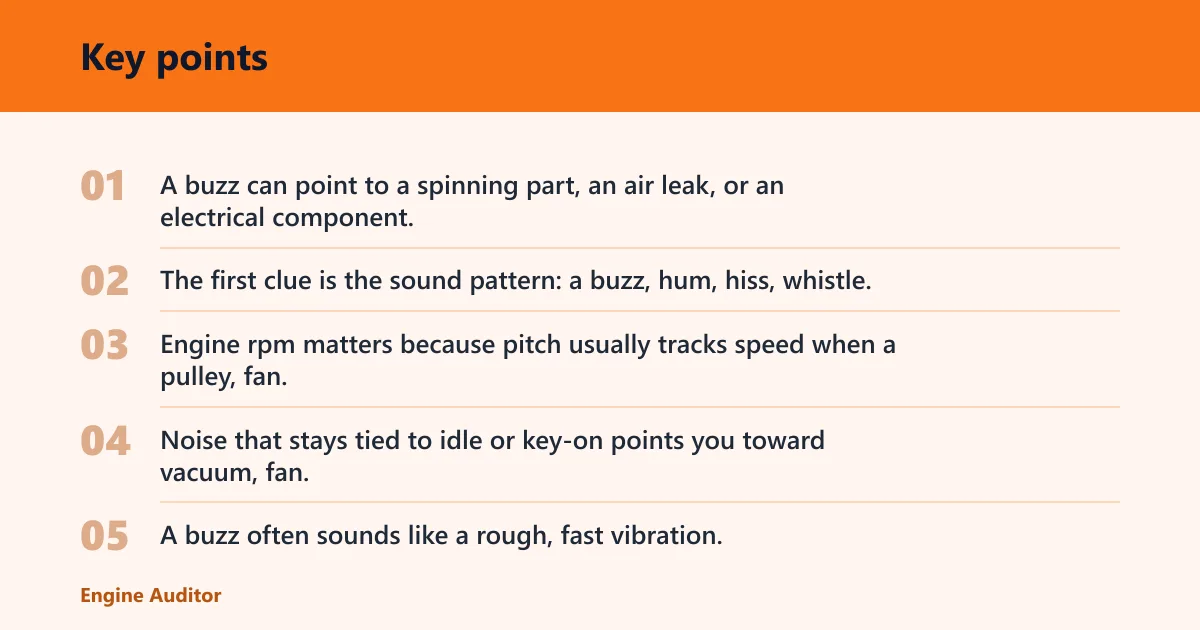

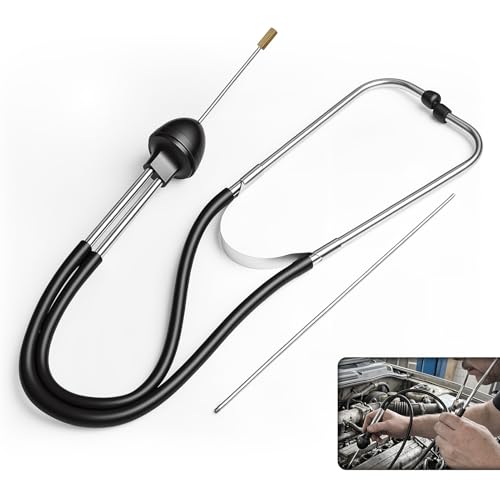

A buzz can point to a spinning part, an air leak, or an electrical component. The first clue is the sound pattern: a buzz, hum, hiss, whistle, and whine do not point to the same parts, even if they seem similar from the driver’s seat.
Engine rpm matters because pitch usually tracks speed when a pulley, fan, or alternator is involved. Noise that stays tied to idle or key-on points you toward vacuum, fan, or fuel-pump behavior instead.
Buzzing vs humming vs hissing vs whine
A buzz often sounds like a rough, fast vibration. A hum is usually smoother and lower. Hissing tends to be air moving through a small leak. Whistling is narrower and higher. Whine is a rising mechanical pitch that often follows rpm or electrical load.
That distinction matters because a belt issue, vacuum leak, and charging fault can all sound “noisy,” but they do not fail the same way. A noise that changes with A/C use, hot engine temperature, or a cold start narrows the source faster than guesswork.
Why operating condition matters
Listen for the exact moment the noise begins. Key-on buzzing can be normal fuel-pump priming. Hot-idle buzzing can come from the radiator fan. Acceleration noise often points to the belt drive, exhaust leak, or alternator load. Noise that appears only with steering input can also implicate accessory loading on some vehicles.
If the sound appears only after the engine warms up, parts that expand with heat become more likely. If it is present at cold start and fades, exhaust leaks near the manifold deserve attention.
When does the noise point to a belt or pulley?
Belt and pulley problems often create a buzz, chirp, squeal, or light grinding that rises with engine speed. If the sound changes when you switch the A/C on or off, or if it gets worse as engine speed climbs, inspect the serpentine belt, idler pulley, and accessory drive first.
Serpentine belt signs to check
The serpentine belt drives accessories such as the alternator, water pump, and power steering pump. A worn or misaligned belt can make a high-frequency buzz, especially when it is glazing, cracked, fraying, or not holding proper tension.
Look for shiny glazing on the ribs, missing chunks, edge fray, and contamination from oil or coolant. A belt that flutters, walks sideways, or sounds worse under load deserves quick attention.
Idler pulley bearing clues
The idler pulley supports belt routing and tension. A bad bearing can produce buzzing, humming, or grinding at idle and with rpm. A pulley with wobble, rough rotation, or bearing noise often gets louder as speed increases.
If the noise seems to come from one front corner of the engine and does not change with engine temperature very much, the pulley bearing is a strong suspect.
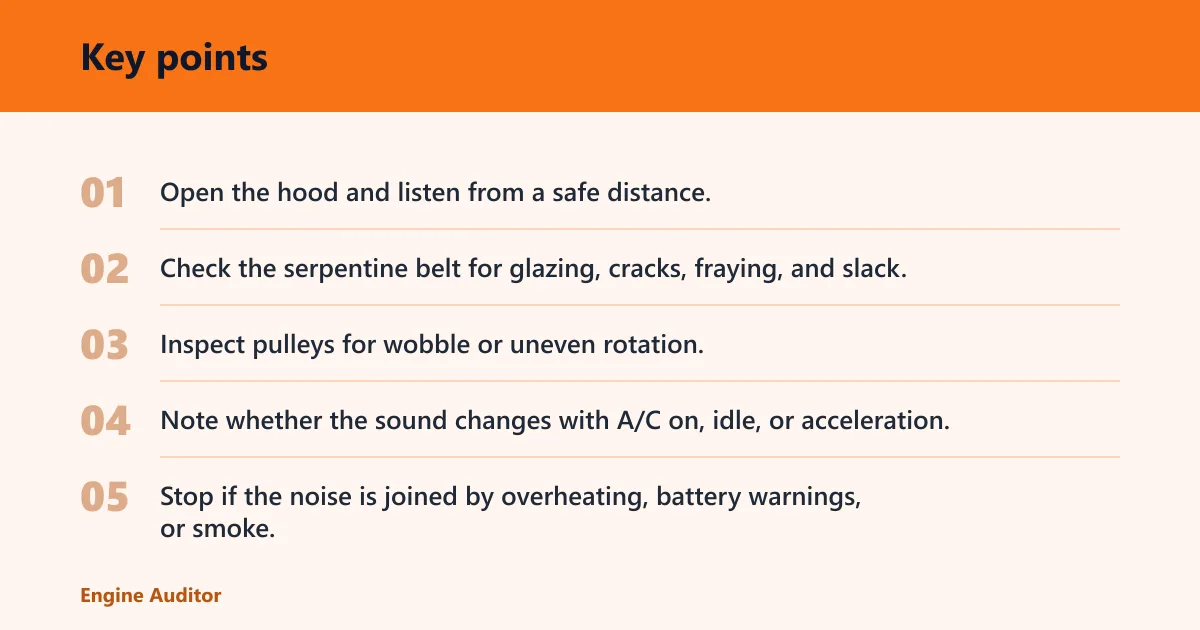
- Open the hood and listen from a safe distance.
- Check the serpentine belt for glazing, cracks, fraying, and slack.
- Inspect pulleys for wobble or uneven rotation.
- Note whether the sound changes with A/C on, idle, or acceleration.
- Stop if the noise is joined by overheating, battery warnings, or smoke.
How rpm changes help narrow it down
Noise that climbs with rpm usually points to a spinning component. If the buzz grows steadily as the engine revs, suspect the belt drive, alternator, fan, or an exhaust part vibrating under load. If the pitch stays flat, think more about a vacuum leak, relay chatter, or fuel-pump hum.
Engine noise diagnostic matrix
| Sound type | Likely component | When it appears | Severity | First check |
|---|---|---|---|---|
| Buzz | Idler pulley, serpentine belt, radiator fan, alternator | Idle, acceleration, hot engine, A/C on | Inspect soon; stop if it grows fast or brings warnings | Check belt condition, pulley wobble, fan clearance, charging light |
| Hum | Fuel pump, alternator, A/C compressor | Key-on, priming, A/C engaged, steady rpm | Monitor if brief; inspect soon if persistent | Listen for location under rear seat, tank, or engine bay |
| Hiss | Vacuum leak, exhaust leak, PCV valve | Idle, cold start, load changes | Inspect soon; urgent if idle is rough or power drops | Check hoses, intake gasket area, PCV plumbing, manifold joints |
| Whistle | Vacuum leak, PCV valve, intake leak | Idle, light throttle, hot engine | Inspect soon | Check small hoses, PCV valve, intake duct clamps |
| Whine | Alternator, belt drive, A/C compressor | Acceleration, electrical load, A/C on | Inspect soon; urgent with charging warning or loss of power | Check battery light, belt tension, accessory bearings |
Why does it change with idle, rpm, or load?
Idle, rpm, and load tell you what is being stressed. An idle-only buzz often points to a fan, vacuum leak, or pulley bearing. A noise that follows acceleration is more likely to involve the belt drive, alternator, A/C compressor, or exhaust.
Idle-only noise
Noise that is strongest at idle but fades as rpm rises often points to the radiator fan, a vacuum leak, or a PCV problem. Electric cooling fans can buzz when the motor bearings wear or the blades touch the shroud, especially when the engine is hot.
A common first-timer mistake is to blame the belt because the noise is in the front of the car, when the real issue is a hot-idle fan rubbing a shroud edge.
Noise that follows acceleration
If the buzz, whine, or hum rises with throttle, focus on spinning parts. The alternator can buzz or whine if bearings, the diode pack, or internal parts fail. Exhaust leaks can also sound louder under acceleration, especially near the manifold or flex pipe.
Picture a 2.0L turbo engine that sounds quiet at idle, then develops a thin whine as rpm climbs and the A/C is on. That pattern fits an accessory-load issue far better than a random under-hood rattle.
Noise that starts with key-on or A/C
A key-on buzzing that lasts a second or two is often the fuel pump priming. A hum from the rear seat area, tank, or filler region can be normal during that brief cycle. If it keeps going, gets louder, or comes with hard starting or hesitation, the fuel system needs a closer look.
An A/C-related hum or buzz usually points to the compressor clutch, compressor bearing, or belt loading. If the sound appears only when the A/C is switched on and disappears when it is off, that is a useful split.
What under-hood parts can buzz besides belts?
Belts are common, but they are not the whole story. Alternators, fans, vacuum leaks, PCV valves, exhaust leaks, and fuel pumps all can make a buzz, hum, hiss, whistle, or whine depending on when the noise appears.
Alternator and charging-system noise
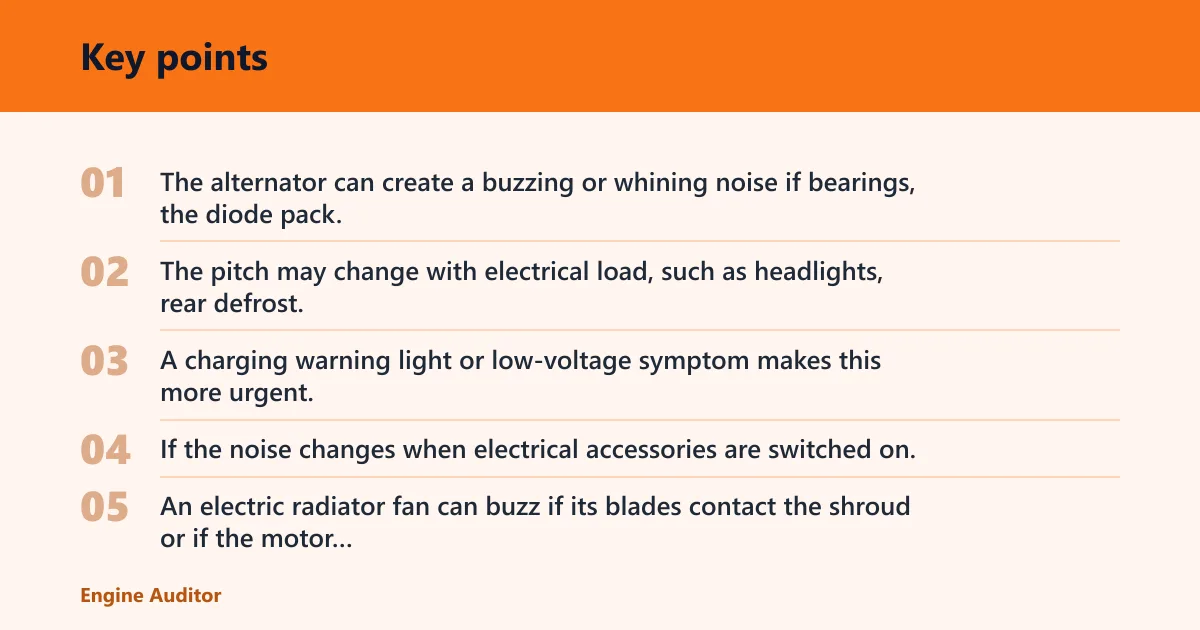
The alternator can create a buzzing or whining noise if bearings, the diode pack, or internal components fail. The pitch may change with electrical load, such as headlights, rear defrost, or blower fan use. A charging warning light or low-voltage symptom makes this more urgent.
If the noise changes when electrical accessories are switched on, think electrical-mechanical interaction, not just belt wear.
Radiator fan and cooling-system noise
An electric radiator fan can buzz if its blades contact the shroud or if the motor bearings are failing. The sound often appears at idle or when the engine is hot. Check for debris, damaged blades, and fan motor play before the blade contacts get worse.
Hybrid cooling fans can be heard more often because the engine may shut off and leave the electric fan as the most obvious moving part. That can make a normal fan sound more noticeable than expected.
Vacuum leaks, PCV valve, exhaust leak, and fuel pump
A vacuum leak can sound like a hiss, whistle, or thin buzz under the hood. It often changes with engine load and idle quality. Common sources include hoses, intake gaskets, and PCV plumbing.
The PCV valve can rattle, buzz, or whistle if it is clogged, stuck, or if the diaphragm fails. It affects crankcase ventilation and idle behavior, so it is often mistaken for an intake or belt noise.
An exhaust leak may sound like buzzing, ticking, or hissing near the manifold. It is often louder on cold start and under acceleration, and it can involve manifold gaskets, flex pipes, or cracked parts.
The electric in-tank fuel pump can hum or buzz, especially with key on or during priming. Noise location can be under the rear seat, at the tank, or near the filler area. Failure may cause hard starting, hesitation, or fuel-pressure issues.
Is it safe to keep driving?
Some engine-bay sounds are normal, especially brief fuel-pump priming or a cooling fan that comes on when the engine is hot. A new buzz that grows with rpm, changes with load, or comes with warnings is a different case and deserves quick diagnosis.
Normal sounds you can monitor
A short fuel-pump hum at key-on is usually normal. A radiator fan that runs after a hot shutdown can also be normal. Brief A/C compressor noise right after engagement is not unusual if it settles quickly and no other symptoms are present.
Signs that need a quick check
Inspect soon if the noise is persistent, new, or tied to idle quality, belt speed, or A/C use. A buzzing alternator, worn idler pulley, leaking vacuum hose, or weak PCV valve can worsen without warning and create follow-on problems.
If the sound comes with rough idle, hesitation, or a battery light, it should not wait long.
When to stop driving now
Stop driving if the noise comes with overheating, loss of power, a fuel smell, flashing warning lights, smoke, or a belt that appears damaged. These symptoms can point to a failing charging system, a belt drive problem, or a cooling fault that can strand the vehicle.
Can low fluid levels cause a buzzing or humming engine noise? Low oil, coolant, or transmission fluid can create mechanical distress, but the sound pattern usually comes with other symptoms first. Low coolant can lead to overheating and fan activity; low oil can bring valvetrain or bearing noise; low power-steering fluid can create pump noise during steering input.
Frequently asked questions
Why do I hear hissing from my engine?
Hissing usually points to air or gas escaping through a small opening. Vacuum leaks, intake leaks, PCV plumbing faults, and exhaust leaks near the manifold are the most common sources. The clue is when it happens: idle, cold start, or under acceleration.
Why do I hear buzzing?
A buzz often comes from a spinning part, an electric motor, or a vibrating component. Belt drives, idler pulleys, alternators, radiator fans, and fuel pumps are common suspects. The best next step is to note whether the sound changes with rpm, key-on, A/C use, or engine temperature.
Why is my engine humming?
A hum is often smoother than a buzz and can come from the fuel pump, alternator, or A/C compressor. Brief fuel-pump hum at key-on can be normal. A steady hum that gets louder with load, rpm, or electrical demand deserves inspection.
Why do I always hear buzzing?
Constant buzzing usually means a part is running all the time, such as a fan, bearing, alternator, or a vacuum leak that does not change much with speed. If it never changes with key-on, A/C, or acceleration, the source may be mechanical vibration or an accessory that stays loaded.
Is the buzzing from my engine dangerous to drive with?
It can be harmless, or it can be a warning. A brief fuel-pump prime or cooling fan sound is usually normal. A buzz paired with overheating, charging warnings, hard starting, loss of power, or a damaged belt should be treated as a stop-driving problem.
Could a buzzing sound mean a belt, pulley, or fan problem?
Yes. The serpentine belt can buzz when worn or misaligned, the idler pulley can buzz or grind when its bearing fails, and the radiator fan can buzz if its blades touch the shroud. If the pitch changes with rpm, those parts move higher on the list.
How can I tell if the noise is electrical rather than mechanical?
Electrical noises often change with load from lights, blower fans, rear defrost, or A/C engagement. Mechanical noises usually track rpm more directly. An alternator with a failing diode pack or bearing can blur that line, so charging warnings and voltage symptoms matter.
Can low fluid levels cause a buzzing or humming engine noise?
Yes, but usually through a specific component. Low coolant can make fans run more and can trigger overheating. Low oil can create internal engine noise. Low power-steering fluid can cause pump hum during steering input. Check the exact fluid and the symptom pattern before assuming the fluid itself is the source.
Why is the buzzing louder when I accelerate or idle?
Acceleration points toward rpm-related parts such as belts, pulleys, alternator, A/C compressor, or exhaust leaks. Idle-only noise points more toward vacuum leaks, fuel-pump priming, or radiator fan operation. That split is one of the fastest ways to narrow the source.
Why do I hear hissing from my engine: hissing from the engine usually?
Hissing from the engine usually means air or exhaust is escaping somewhere it should not. Check vacuum hoses, intake gaskets, PCV plumbing, and exhaust joints near the manifold. If the idle is rough or the hiss changes under throttle, the leak is more likely than a normal sound.
Why do I hear buzzing: buzzing usually means a belt?
Buzzing usually means a belt, pulley, fan, pump, or electrical component is vibrating or spinning under load. The key clue is when it happens. Key-on, idle, hot idle, A/C on, or acceleration each points to a different part, and that timing should drive the next check.
Products related to this article
Sponsored / affiliate links. As an Amazon Associate I earn from qualifying purchases. I may earn additional commission from eligible campaigns.