How to Remove Pet Hair From Car Upholstery Fast
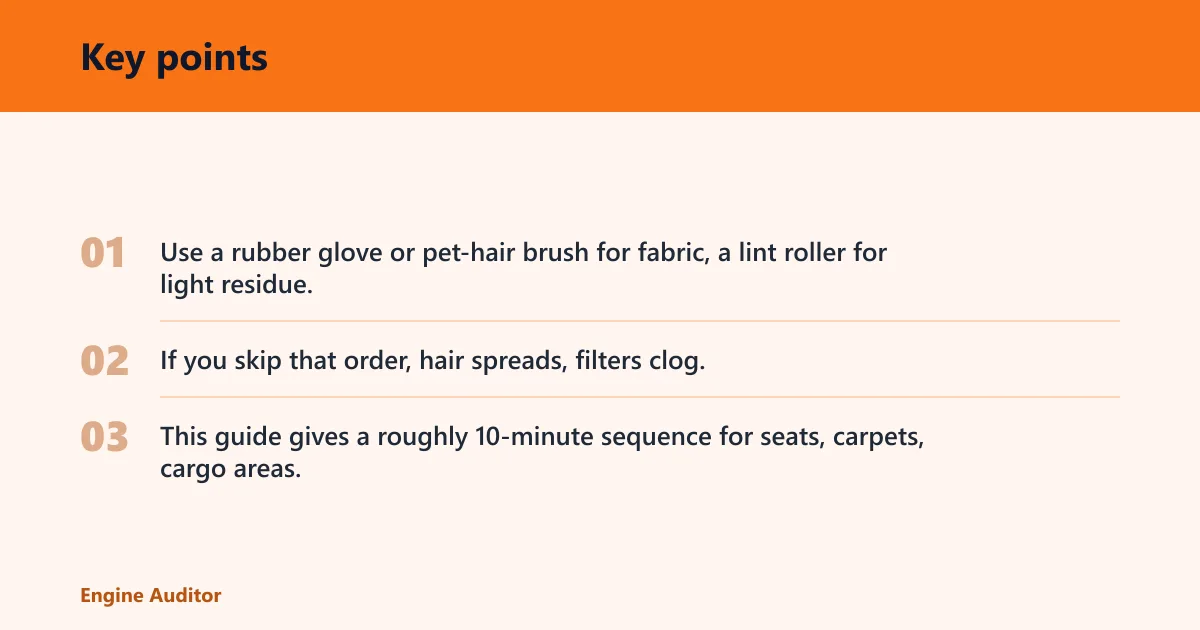
Match the tool to the surface. Use a rubber glove or pet-hair brush for fabric, a lint roller for light residue, and a vacuum with a crevice tool for seams and mats. If you skip that order, hair spreads, filters clog, and the job takes longer before a drive, sale, or detail. This guide gives a roughly 10-minute sequence for seats, carpets, cargo areas, and tight gaps.
Fast cleanup plan

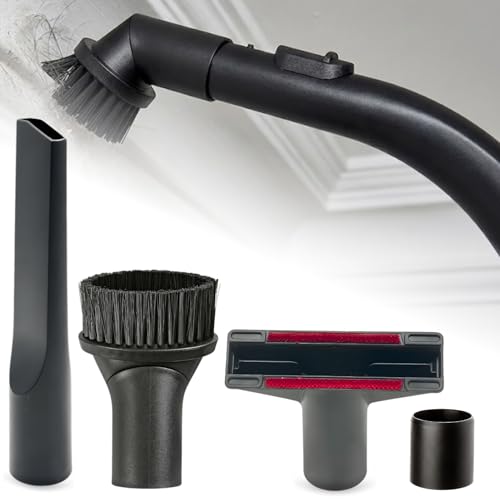

What you’ll need
- Rubber glove, slightly dampened
- Vacuum with upholstery attachment and crevice tool
- Silicone pet hair attachment
- Lint roller
- Squeegee or rubber brush
- Light fabric-softener spray mix: 1 part fabric softener to 3 parts water
- Compressed air
- Microfiber towel for wiping residue after light spraying
Pet hair decision table
| Surface | Hair depth | 2 minutes | 10 minutes | 30 minutes | What to do when it fails |
|---|---|---|---|---|---|
| Cloth seat | Surface | Lint roller, then upholstery vacuum | Slightly damp rubber glove, then short vacuum passes | Rubber glove, seat seams with crevice tool, then upholstery brush | Switch to a silicone pet hair attachment and work in short, firm strokes |
| Cloth seat | Woven-in | Rubber glove only on the worst panel, then stop | Rubber glove, light fabric-softener mist, vacuum | Silicone attachment first, then compressed air for seams, then vacuum | If clumps stay behind, use smaller sections and repeat before moving on |
| Cloth seat | Packed | Not practical | Fabric-softener spray, wait 2–3 minutes, then vacuum after loosening | Silicone attachment, crevice tool, then upholstery brush in slow passes | Use the silicone attachment again; a standard vacuum alone often misses packed hair |
| Carpet | Surface | Squeegee or rubber brush, then vacuum | Squeegee, then vacuum with upholstery head | Rubber brush, then crevice tool along edges and rails | Move to a silicone attachment if the fibers keep holding hair |
| Carpet | Woven-in | Rubber brush on flat zones only | Rubber brush, then silicone attachment, then vacuum | Light fabric-softener mist, then rubber brush, then vacuum | Work one foot-wide section at a time and repeat the loosen-and-vacuum cycle |
| Carpet | Packed | Not practical | Silicone attachment first, then vacuum with short, slow passes | Silicone attachment, compressed air for edges, then vacuum again | If hair still stays buried, spend the extra pass on the turbo or brush head |
| Cargo liner | Surface | Squeegee, then vacuum | Rubber brush or silicone attachment, then vacuum | Silicone attachment and firm strokes, then edge cleaning with crevice tool | Use compressed air only after brushing; it is not a standalone fix |
| Cargo liner | Woven-in | Rubber brush on flat areas only | Silicone attachment in short, firm strokes, then vacuum | Light spray mix, wait 2–3 minutes, then silicone attachment and vacuum | If the liner holds hair in texture lines, go back with the smallest nozzle |
| Cargo liner | Packed | Not practical | Silicone attachment first, then vacuum seams and folds | Compressed air in folds, then silicone attachment, then vacuum | Repeat in strips; packed hair usually needs more than one tool |
| Leather | Surface | Lint roller or dry rubber glove, then vacuum lightly | Dry or barely damp rubber glove, then soft vacuum pass | Dry silicone attachment on the seat face, then crevice tool for seams | Stop using wet tools; switch to dry passes and a towel wipe |
| Leather | Woven-in | Dry glove only on the seat face | Dry silicone attachment, then vacuum lightly along seams | Compressed air for gaps, then vacuum with the smallest nozzle | If residue remains, return to dry rubber tools; avoid soaking the surface |
| Leather | Packed | Not practical | Dry silicone attachment plus crevice tool | Compressed air in seams and rails, then vacuum and towel wipe | Use the most gentle dry method first; wet spray can leave a film |
What is the fastest way to remove pet hair from car upholstery?
Start on the surface, choose the loosening tool, then vacuum. That sequence is fastest because a standard vacuum alone often leaves pet hair behind, especially when strands are woven into cloth or packed into seams. For a 10-minute cleanup, clear one seat or one cargo panel at a time.
1. Check the surface and hair depth
- Look at the panel and decide whether the hair is on top, woven in, or packed in seams.
- Use a lint roller only for light surface hair on open areas.
- Skip straight to a rubber glove, squeegee, or silicone attachment if the hair stays put.
2. Loosen the hair first
- Use a slightly damp rubber glove on fabric seats and carpet.
- Use a squeegee or rubber brush on flat carpet and boot areas.
- Use a silicone pet hair attachment for heavily embedded hair on seats, carpet, floor mats, and cargo areas.
3. Vacuum with short, slow passes
- Fit the upholstery attachment first.
- Use short, slow passes after the hair has been lifted into clumps.
- Switch to the crevice tool for seams and seat rails.
4. Finish the high-miss zones
- Blow compressed air into seams, seat rails, vents, and hidden gaps.
- Vacuum immediately after, because compressed air works best as a follow-up.
- Repeat only on the missed strip, not the whole seat.
What works on cloth seats and carpet?
Cloth seats and carpet usually respond best to friction first, vacuum second. Use a damp rubber glove or rubber brush on seats, and a squeegee or silicone tool on flat carpet. If the hair is packed in, add a light spray mix before vacuuming. A common first-timer mistake is to overwork one spot and leave the seams untouched.
Cloth seats
Use a slightly damp rubber glove to gather hair into clumps, then vacuum with the upholstery attachment. For stubborn strands, mist the fabric-softener mix lightly and wait 2–3 minutes before brushing again. Do not soak the seat; the goal is to cut static cling, not wet the cushion.
Carpet and floor mats
Use a squeegee or rubber brush first, especially on flat areas and boot carpet. Then vacuum with short, slow passes so the lifted clumps do not fall back into the pile. If the first pass fails, repeat in smaller sections rather than treating the whole floor at once.
What about leather, seams, and cargo areas?
Leather needs a lighter touch than fabric. Use dry or barely damp tools, then a light vacuum pass. Seat seams and seat rails collect the most hair, so they need the crevice tool and often compressed air first. Cargo liners usually clean fastest with firm strokes from a silicone or rubber tool.
Leather
Use a dry lint roller for fresh surface hair, or a dry rubber glove for light buildup. Follow with a vacuum on low contact, then wipe any remaining residue with a microfiber towel. Keep the fabric-softener spray off leather unless the product label specifically allows it.
Seat seams and seat rails
Blow compressed air into the seam line, then vacuum with the smallest nozzle you have. Small pet-hair brush heads, roughly 2–3 in/5–8 cm, are well suited to seams and crevices. These are the highest-collecting zones in a quick clean, and they are easy to miss when time is tight.
Cargo liners and deep gaps
Use firm strokes with a silicone pet hair attachment or rubber brush, then vacuum the edges. For hidden gaps, move the crevice tool slowly through the fold or rail. Suppose a hatchback cargo liner has a layer of dog hair at the hinge side; brushing the flat panel first pulls the hair out so the vacuum can catch it.
Common mistakes
Vacuuming before loosening the hair wastes time, because strands stay trapped in the pile and in seams. Too much fabric-softener spray can leave the material damp and sticky. A lint roller is fast for fresh surface hair, but it is usually a poor choice for deep carpet or tight gaps. Skipping seat rails and vents leaves the mess half done.
Say your passenger seat has a thin layer of cat hair on cloth but the seat rail is packed with it. A lint roller may clean the visible panel in seconds and still leave the rail untouched. In that case, switch to compressed air first, then the crevice tool, then a short vacuum pass.
Frequently asked questions
What is the best tool for dog hair removal in cars?
There is no single best tool for every surface. A silicone pet hair attachment is the best starting point for heavily embedded hair, while a rubber glove is often fastest for fabric touch-ups and a lint roller is best for light fresh shedding. Use the crevice tool where the hair collects.
Does a rubber glove really remove pet hair from car seats?
Yes. A slightly dampened rubber glove creates friction and static lift, which gathers hair into clumps on most fabric seats and carpets. It is best for loose to moderate buildup. It will underperform on packed carpet and deep seams, where a crevice tool or silicone attachment works better.
How do you get embedded pet hair out of car carpets?
Use a silicone pet hair attachment or rubber brush first, then vacuum with short, slow passes. If the hair is still buried, add a light fabric-softener mist and work in smaller sections. Seat rails, edges, and folds often need compressed air before the final vacuum pass.
Products related to this article
Sponsored / affiliate links. As an Amazon Associate I earn from qualifying purchases. I may earn additional commission from eligible campaigns.