How to Remove Bird Droppings From Car Paint the Right Way
Soak fresh bird droppings with water or a paint-safe detail spray, then lift them with a damp microfiber. If the residue is dry or crusted, re-soften it first and stop rubbing. Scrubbing dry droppings can drag grit across the finish and leave stains that may need polishing or paint correction. This guide covers the safest method by surface, plus what to avoid and when the damage has already moved past cleanup.
What you’ll need

- Clean, plush microfiber cloths, folded to a clean face
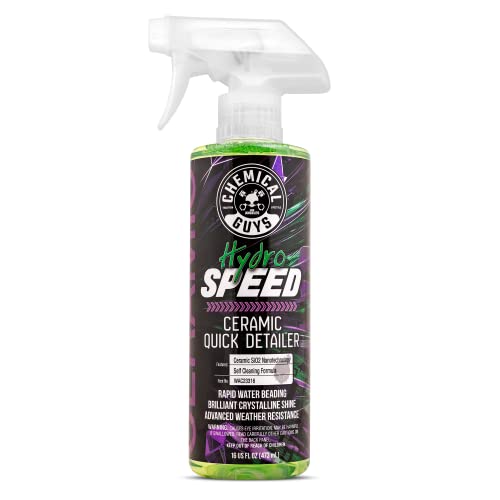
- Bird dropping remover spray or wipes
- Quick detailer as a backup lubricant
- Car shampoo mixed with water in a spray bottle
- Two clean water sources: one for soaking, one for rinsing
- Soft, paint-safe drying towel
- Wax or sealant for aftercare
- Optional: ceramic coating on protected panels
Why bird droppings need fast removal
Bird droppings can damage automotive finishes because they combine moisture, organic waste, and abrasive debris. On clear coat, that combination can stain, dull, or etch the surface if it sits long enough, especially on a hot panel. Guidance from detailing and coating manufacturers consistently treats quick removal as the safest approach, because heat and time make the stain harder to reverse.
Industry guidance from coating and detailing makers also points to the same practical rule: once contamination dries, the odds of needing polish go up. Ceramic coatings can make cleanup easier and reduce bonding, but they do not make the surface immune to etching if droppings sit there long enough.
If you notice a fresh white spot after parking, the safest move is still the same: soften it first, then lift it with a clean microfiber. For a broader overview of finish protection, see our guide to clear coat etching and what causes it.
When cleanup becomes a paint issue
If the residue will not lift after a second soak, or if the spot still looks dull after washing and drying, stop. At that point, the problem may be etched clear coat rather than leftover droppings. Cleaning removes contamination; polishing is what can reduce shallow etching.
How do you remove bird droppings from car paint without scratching it?
Soften the deposit first, then lift it with a folded microfiber using very light pressure. The safe sequence is soak, wait, lift, inspect, and repeat only if needed. Do not rub dry residue, and do not chase the spot with a towel edge or paper towel.
- Spray the spot with bird dropping remover, quick detailer, or car shampoo mixed with water.
- Wait 30 to 60 seconds so the deposit softens.
- Touch the edge of the spot with a clean microfiber folded to a fresh face.
- Lift straight off the panel instead of scrubbing side to side.
- Flip to a clean face and repeat until the residue is gone.
- Rinse the area with clean water and check for a stain in sunlight.
That wet-first approach matches the guidance commonly given by detailing product makers and car-care brands: the liquid does the loosening, not the cloth. A plush microfiber towel is usually the safer choice because it is less aggressive than paper products and easier to keep clean between passes. For towel care that helps prevent accidental grit transfer, see microfiber towel care and washing basics.
Should I use water, quick detailer, or bird dropping remover first?
Use the mildest product that gives you lubrication and soak time. Water works for very fresh droppings. Quick detailer is a backup when you need more slip. Bird dropping remover is usually the best choice for crusted residue because it is designed to loosen organic contamination, not just mask it.
What is the safest thing to use on dried bird poop on a car?
The safest first choice on dried residue is a dedicated bird dropping remover or another paint-safe cleaner that can soak the spot before you touch it. If you do not have that, use quick detailer or a car shampoo solution in a spray bottle. The goal is to re-wet the crust until it softens.
How do you handle dried or baked-on droppings?
Re-soak first. If the panel is hot, move the car into shade or wait until the surface cools, then saturate the spot again. If the residue still resists after a few minutes, stop and move to a stronger soak or professional polishing. Hard rubbing on baked-on debris is how clear coat gets marked.
- Cool the panel in shade before touching it.
- Apply bird dropping remover or quick detailer until the spot is fully wet.
- Let it sit for a few minutes, then test one edge with a microfiber.
- If it moves, lift it in short passes with a clean face of the cloth.
- If it stays stuck, reapply and wait again rather than scrubbing.
- Stop if you see haze, a dull patch, or a line that does not rinse away.
If a dried spot still leaves a dull ring after the second soak, treat that as a warning sign rather than a cleaning challenge. The contamination may be gone while the clear coat has already been marked. For related maintenance guidance, see ceramic coating maintenance and washing.
Bird droppings decision table
| Contamination stage | Safe first action | Acceptable products | Stop / next-step threshold |
|---|---|---|---|
| Fresh on paint | Soak 30 to 60 seconds, then lift with a damp microfiber | Water, bird dropping remover, quick detailer, car shampoo solution | Stop if the spot is dragging grit; re-soak before any second pass |
| Dry on paint | Re-wet until the crust softens; do not rub dry | Bird dropping remover, quick detailer, car shampoo solution | Stop if the residue resists after a few minutes; move to stronger soak or correction |
| Baked-on on paint | Cool the panel, then saturate and wait again | Bird dropping remover, quick detailer, paint-safe cleaner | Stop if the panel shows haze, a ring, or a dull patch after removal |
| Stained on paint | Wash the area and inspect in bright light | Car shampoo, wax or sealant after cleaning, polishing if needed | Stop DIY cleaning if the stain remains after washing; that is likely etching |
| Fresh, dry, or baked-on on glass | Wet fully, then wipe with a microfiber towel | Water, glass-safe cleaner, quick detailer | Stop if dry wiping would be required; re-wet instead |
| Fresh, dry, or baked-on on moonroof | Use the same wet-first method as glass, with light pressure | Water, glass-safe cleaner, quick detailer | Stop if the panel is hot or the residue is hard; wait and re-soak |
| Matte paint | Use the same soak-and-lift method, then rinse gently | Matte-safe cleaner, water, gentle detailing spray | Stop if you are tempted to polish or agitate heavily; matte finishes can change sheen if treated like gloss |
| Recently waxed panels | Use a wet-first lift and gentle rinse to preserve the finish | Water, quick detailer, bird dropping remover, paint-safe shampoo solution | Stop after 2 soak cycles if residue still drags; do not keep scrubbing a protected panel |
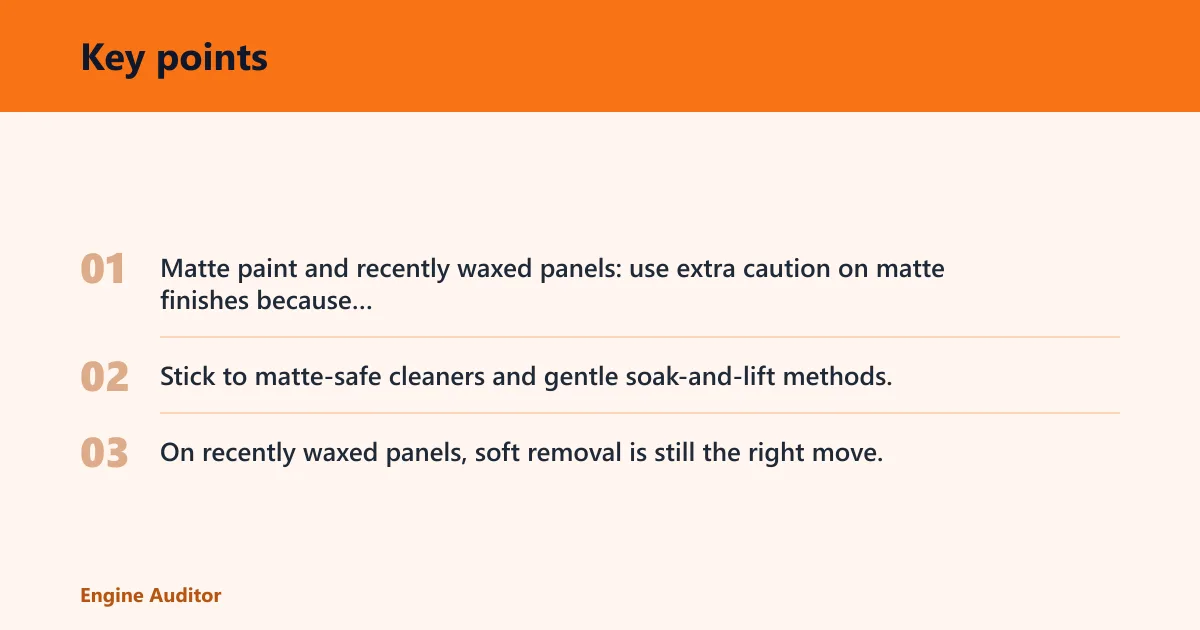
Matte paint and recently waxed panels: use extra caution on matte finishes because polishing can change the texture or sheen. Stick to matte-safe cleaners and gentle soak-and-lift methods. On recently waxed panels, soft removal is still the right move, but rinse gently so you do not strip the fresh layer more than necessary.
What if the mark stays after cleanup?
If the droppings are gone but a dull outline remains, you are likely looking at etching, not leftover residue. A stain that stays after washing, gentle rubbing, and a clean water rinse usually needs polishing. If the mark catches a fingernail or looks deeper than a haze, stop and move to paint correction.
When polishing is the next step
Use a paint-safe polish only after the surface is clean and dry. Work on the smallest area that shows the mark, then inspect again. If the outline fades, the issue was shallow etching. If nothing changes, the clear coat may be damaged enough that a detailer or body shop correction is the safer move.
Common first-timer mistake: the dropping is wiped away, the hood looks clean in the shade, and the real problem appears later in direct light as a faint ring. That is why the final inspection matters. Clean first, then check in bright sun or strong garage light.
Common mistakes
- Dry wiping with a towel or paper towel, which can grind grit into clear coat
- Scrubbing a crusted spot before it is fully softened
- Using dish soap as the main remover, which is not made for spot cleanup on paint
- Using WD-40 on paint as a first choice, which leaves residue and is not a proper paint cleaner
- Ignoring the surface after the droppings are gone and missing an etched ring
- Using the same aggressive method on matte paint, glass, and clear-coated paint
How can you protect car paint from bird dropping damage in the future?
Keep a trunk kit ready and remove droppings fast. A wax or sealant adds a sacrificial layer that can make cleanup easier and help restore gloss after the incident. Ceramic coating can improve cleanability and release, but it does not prevent etching if contamination sits long enough. Park out of trees and wires when you can.
Bird droppings from car checklist
- 2 to 4 clean microfiber cloths
- 1 bird dropping remover spray or a 10-wipe pack such as Autoglym Bird Dropping Wipes
- 1 small spray bottle with water
- 1 quick detailer bottle
- 1 small bottle of paint-safe car shampoo mixed with water
- 1 soft drying towel
Frequently asked questions
Can bird droppings permanently damage car paint?
Yes. Bird droppings can etch clear coat, especially in heat and direct sun. Manufacturer and detailing guidance consistently warns that the longer the contamination sits, the more likely it is to leave a permanent mark. Fast removal is the most reliable defense.
Is it safe to wipe bird poop off with a microfiber cloth?
Yes, but only after the spot has been softened. Use a clean, plush microfiber cloth folded to a clean face and lift gently. Dry wiping is the problem, not microfiber itself. If you feel grit, re-soak the area before another pass.
What should I do if bird droppings baked on in the sun?
Move the car into shade, cool the panel, and re-soak the spot before touching it. Spray generously and wait a few minutes if needed. If the residue still resists, stop scrubbing. A baked-on mark that leaves haze or a dull ring may need polishing.
What should I do if bird droppings are on glass or a moonroof?
Wet the area first and wipe with light pressure. Glass and moonroofs are harder than paint, but they can still scratch if wiped dry. For automotive glass and moonroofs, a safe glass cleaner is usually the best match after the initial soak. See our guide to safe glass cleaning for automotive glass and moonroofs.
How do you remove bird poop stains after the dropping is already gone?
Wash the area, dry it, and inspect in strong light. If the stain stays, the spot is likely etched into the clear coat, not dirty. Try a small test area with a paint-safe polish. If the outline remains, professional paint correction is the next step.
Can I use dish soap or WD-40 to remove bird droppings from paint?
Neither should be the primary method. Dish soap is for general washing, not spot softening, and WD-40 leaves a film that still needs proper cleanup. Use water, a quick detailer, a bird dropping remover, or a paint-safe car shampoo solution instead.
Products related to this article
Sponsored / affiliate links. As an Amazon Associate I earn from qualifying purchases. I may earn additional commission from eligible campaigns.