Can Warped Rotors Cause a Shaky Brake Pedal?
Yes. Most shaky brake pedals come from rotor thickness variation or pad deposits, not from a rotor that is literally bent. Ignore it, and vibration can worsen, stopping distance can increase, and a tire, wheel, caliper, or suspension fault can get masked. This guide shows how to tell rotor trouble from tire and caliper issues, and what to check before you drive farther.
Why brake pedal pulsation happens only under braking
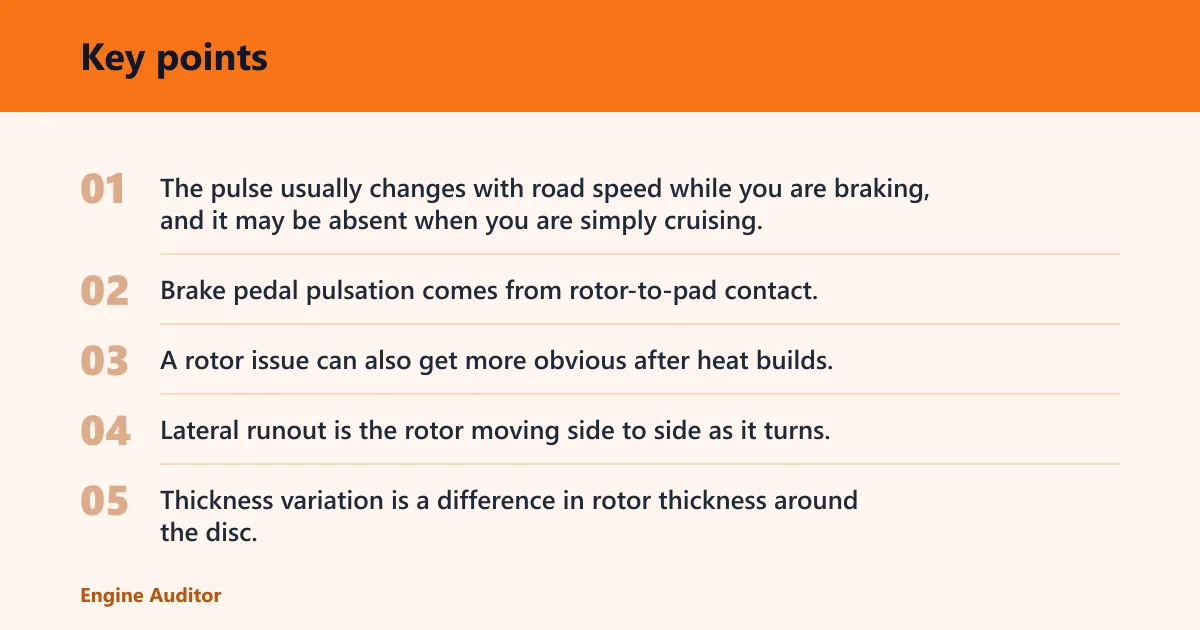


Yes. A brake pedal can feel like a soft thump or a fast flutter under braking when rotor thickness varies, pad material transfers unevenly, or heat marks the disc. The pulse usually changes with road speed while you are braking, and it may be absent when you are simply cruising.
That matters because the pedal is telling you the brake system is applying force unevenly. The driver may feel nothing on neighborhood streets, then feel it on the interstate, and one common example is a symptom that appears at 25 mph and is stronger at 65 mph.
Why the shake often appears only under braking
Brake pedal pulsation comes from rotor-to-pad contact. If the disc has thickness variation, or if pad deposits create high spots, the pads grab and release in a repeating cycle. That cycle shows up most clearly when the caliper clamps the rotor, not when the wheels are just rolling.
A rotor issue can also get more obvious after heat builds. A heavy SUV in Phoenix or Dallas can build brake heat fast in local traffic, and a pulse can show up after the brakes are hot in low-speed traffic.
Why rotors usually are not truly warped
Brake rotor problems are usually tied to lateral runout, thickness variation, pad deposits, heat spots, grooves, scoring, and blue or dark heat marks. A disc can look “warped” to the driver, yet the real issue is often uneven movement or uneven friction, not a bent brake disc.
Lateral runout is the rotor moving side to side as it turns. Thickness variation is a difference in rotor thickness around the disc. Runout can be measured with a dial indicator, and that uneven movement can lead to thickness variation over time.
Pad deposits, glazing, and heat marks
Uneven pad material transfer can mimic a warped rotor very closely. Heat imprinting leaves patches of pad material on the disc, and glazed pads can reduce bite and make the contact feel grabby. Blue or dark heat marks point to heat concentration, which often means the friction surface has been stressed unevenly.
Grooves and scoring do not always cause pulsation by themselves, but they tell you the disc and pads have not been wearing evenly. If the pads are worn unevenly too, that often fits a rotor that has been running with a deposit or runout problem.
What causes warped brake rotors?
Repeated heat loading is the usual driver. Hard stops, towing, long downhill braking, and dragging brakes all raise disc temperature. Heat from repeated heavy braking on mountain grades or in stop-and-go traffic can leave deposits, create runout-related wear, or overwork one corner of the system.
Improper bedding is another repeat offender. New pads and rotors need an even transfer layer. If that layer forms unevenly, the driver may get pulsation long before any visible damage looks dramatic.
Repeat warping and repeat shake
If the same corner keeps returning with a pulse, look harder at the hub and the install details. Hub runout, poor lug torque, dragging brakes, and repeated high-heat use can keep recreating the symptom after parts are replaced.
That is why “new rotors” is not always a final fix. If the hub face is dirty, the wheel nuts are unevenly tightened, or the caliper drags, the replacement can inherit the same problem.
Brake pedal pulsation and stopping distance
Brake pedal pulsation can make the pedal harder to modulate and may increase stopping distance. When friction is reduced by heat, deposits, or uneven pad contact, the pedal effort rises and the brakes may not clamp as consistently as they should.
That can matter even if the car still stops. A slight pulse can become a longer pedal travel, more effort at the stoplight, and less predictable braking in a panic stop.
What the driver feels
The sensation is often described as a rhythmic pulsing under your foot. Another says the vibration may rise as road speed rises during braking. Those clues fit rotor-related trouble better than a random chassis shake.
Steering-wheel shake can accompany it, but not always. Rear-brake-dominant symptoms may show up mainly in the pedal or the seat, while front brake problems are more likely to reach the steering wheel.
Rotor shake signs to look
Front and rear brake clues are not identical. A rear rotor problem may be felt more in the seat or pedal, while a front rotor problem is more likely to shake the steering wheel during braking. A pedal-only pulse does not rule out rotors; it often points to where the brake force is changing.
A visual inspection helps separate wear from a different fault. Look for grooves, scoring, blue or dark heat marks, and uneven pad wear. Those marks do not prove the disc is the only problem, but they tell you the braking surface has had an uneven load history.
When the symptom is not brake-related
Shake at speed without braking is a different clue. If the vehicle vibrates while coasting, the brake system moves lower on the list and the tires, wheels, or suspension move higher. The distinction matters because a rotor fault should usually change with brake application.
A driver may notice the pedal is smooth on a quiet road, then starts pulsing only during a stop at about 60 mph on the highway. That pattern fits rotor or pad transfer far better than a wheel balance issue, which usually shows up during cruising too.
Brake rotor troubleshooting matrix
This table helps sort a pedal pulse from tire, wheel, and caliper problems. Start with the symptom location, then check the most likely cause, then decide whether the car can be driven only a short distance or should stop right away.
| Symptom location | Likely cause | Quick driveway check | When to stop driving |
|---|---|---|---|
| Pedal pulsation | Rotor thickness variation, pad deposits, or runout | Brake from 30 to 45 mph on a safe road and note whether the pulse grows with speed during braking | Stop if braking feels weaker, the pulse gets hard, or stopping distance clearly grows |
| Steering-wheel shake | Front rotor issue, front tire imbalance, or loose wheel attachment | Check whether the shake appears mainly while braking, not while cruising | Stop if the wheel shakes violently or the car pulls during braking |
| Shake at speed without braking | Tire imbalance, bent wheel, snow, mud, or alignment-related mimic | Drive gently at steady speed and see whether the shake stays present with no brake input | Stop if the vibration is severe, the wheel is loose, or the tire looks damaged |
| One-corner drag smell | Sticking caliper or seized slide pins overheating one rotor corner | After a short drive, compare wheel heat carefully and look for one wheel that smells hot | Stop if one wheel is much hotter than the others or smoke appears |
| Post-repair vibration | Hub runout, wrong lug torque, improper bedding, or dirty mating surfaces | Recheck lug torque and inspect the hub face, rotor hat, and wheel seating surfaces | Stop if the vibration is worse than before repair or braking feels inconsistent |
How do I diagnose a warped brake rotor?
Start with the symptom pattern, then inspect the brakes, then measure runout if the visual check points that way. A dial indicator is the right tool for rotor runout, and thickness checks help confirm whether the disc varies enough to create pulsation.
Do the checks in order. That keeps you from replacing parts based on a wheel shake that is actually coming from a tire or from a dragging caliper.
-
Confirm the braking pattern.
Test whether the shake appears only when braking, then note whether it grows with speed. If the car vibrates while cruising with no brake input, the rotor moves down the list and the tire or wheel moves up it.
-
Inspect the disc surface.
Look for grooves, scoring, heat spots, blue or dark discoloration, and uneven pad wear. These marks point to heat or contact problems that can create the pulse the driver feels.
-
Check caliper movement.
Inspect the slide pins and caliper action for binding or seizure. A sticking caliper can drag one corner, overheat a rotor, and may create a one-sided brake smell or repeated pulsation.
-
Measure rotor runout.
Use a dial indicator on the rotor face to check for uneven movement as the disc turns. If runout is present, inspect the hub face and wheel mounting surfaces before deciding the rotor itself is the only cause.
-
Check thickness and seating.
Measure rotor thickness at several points around the disc and compare the readings. Large differences support thickness variation, and dirty hub surfaces or uneven lug torque can be the reason the new part still pulses.
A common first-timer mistake is replacing rotors without cleaning the hub face. If rust or dirt remains under the hat, the new disc can sit crooked enough to repeat the same symptom.
How do I fix warped brake rotors?
Fix the cause, not only the symptom. If the rotor has light runout or mild surface issues and the part is still within spec, resurfacing may be possible. If thickness is too low, heat damage is heavy, or the surface is badly marked, replacement is the safer call.
Also correct the reason it happened. That may mean cleaning the hub, replacing sticking slide pins, correcting lug torque, or bedding new pads properly so the friction layer forms evenly.
Replace or resurface
Resurface only when the rotor is thick enough after machining and the surface damage is modest. Replace when the disc is below minimum thickness, shows deep scoring, has heavy heat marks, or has repeated symptoms after prior work.
If the vehicle tows, sees mountain descents, or sits in stop-and-go heat, replacement plus a fix for the heat source is often the better long-term choice.
What else can cause brake pedal pulsation?
Brake pedal pulsation is not always a rotor problem. A sticking caliper, seized slide pins, or uneven pad contact can create the same foot-feel, and wheel and tire issues can mimic the vibration when the car is moving with no brake input.
Wheel balance problems, mud or ice packed into the rims, loose or uneven lug torque, and alignment issues can all feel similar to a brake shake. Mud-packed or ice-packed rims can send a pulse through the seat or steering wheel, too.
Why tire and wheel faults confuse the diagnosis
A tire imbalance usually shows up at speed, whether or not the brakes are used. That is the best clue. If the shake is present while coasting and does not change much when the brake pedal is pressed, the brake rotor is less likely to be the main fault.
Say a driver feels a shudder at 70 mph on the freeway, then no pulse during a gentle stop from 30 mph. That pattern fits a wheel or tire issue better than a rotor issue.
Can warped rotors cause shaking while braking?
Yes. That is the classic complaint. The shake is usually most obvious under brake application, and it may build as speed rises during the stop. A driver can feel a rhythmic pulse in the pedal, with or without a matching steering-wheel vibration.
The key is that the vibration changes with brake use. If it only happens while braking, the rotor, pads, or caliper move higher on the list than the tires and suspension.
Can alignment or tire issues feel like warped rotors?
Yes, but they usually feel different. Tire imbalance, mud, snow, or ice in the wheel can shake the car during driving and can even be mistaken for brake trouble. Alignment and suspension faults can add vibration too, but they are usually not tied specifically to brake pedal application.
That is why the braking-only versus coasting distinction matters. A brake rotor problem should track with pedal use; a tire or wheel problem usually does not.
Frequently asked questions
Can warped brake rotors cause a shaky brake pedal?
Yes. The common pattern is rhythmic pulsing under your foot during braking, often with speed dependence. In most cases the issue is rotor thickness variation or pad deposits rather than a rotor that is literally bent, and the pulse may show up before any obvious steering-wheel vibration.
Can brake rotors cause vibration?
Yes. Rotor-related vibration can appear in the pedal, steering wheel, or seat, depending on which axle is involved and how the fault develops. Front brake issues are more likely to reach the steering wheel, while rear brake problems may stay closer to the pedal or seat.
Should I replace or resurface warped rotors?
Resurface only if the rotor is thick enough and the damage is mild. Replace if the disc is near minimum thickness, has heavy heat checking or scoring, or keeps returning out of spec after proper installation and bedding.
Can warped rotors cause shaking while driving?
Usually not by themselves. If the shake happens while coasting, think tire imbalance, a bent wheel, mud or ice in the rim, loose lug torque, or suspension trouble first. A brake rotor problem should usually change most when the brakes are applied.
Products related to this article
Sponsored / affiliate links. As an Amazon Associate I earn from qualifying purchases. I may earn additional commission from eligible campaigns.