Can Worn Brake Pads Change Brake Pedal Feel?
Worn brake pads can change pedal feel, but usually only in limited ways: the pedal may sit slightly lower as the pads wear, while a soft, sinking, or spongy pedal points to air, fluid loss, or hydraulic trouble instead. Ignore the wrong feel and you can miss a brake fault that lengthens stopping distance or turns a normal pad replacement into a repeat repair. Here’s how pad wear changes pedal feel, what it does not cause, and what to inspect first after a pad job.
Can worn brake pads change pedal feel?
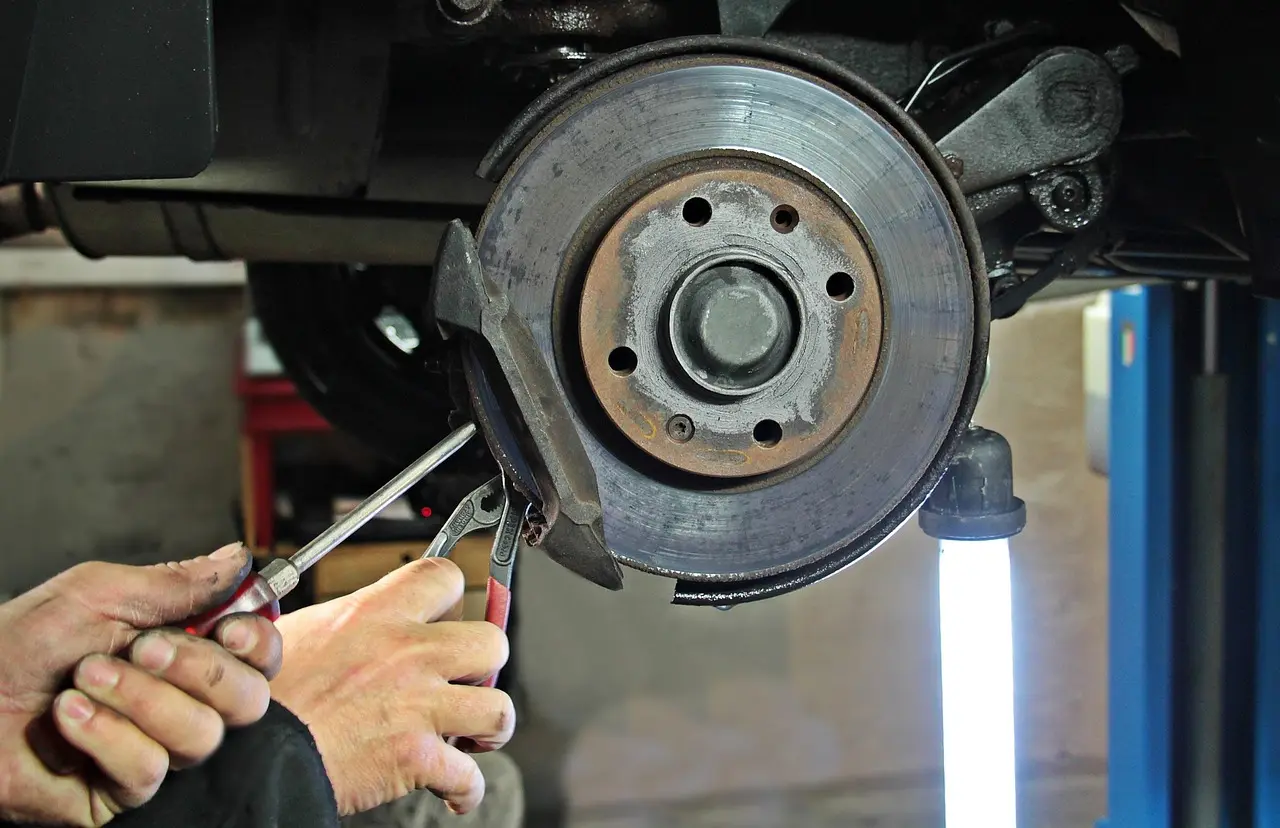


Yes, but mostly at the margins. As pad friction material gets thin, the caliper pistons sit farther out, and that extra piston travel can make the pedal feel a little different. A normal disc-brake setup should not let pad wear by itself create a deeply low, sinking, or spongy pedal.
What pad wear can change directly
Brake pads wear from their original thickness toward the replacement point, which is commonly around 3-4 mm of friction material. At that stage, the wear indicator tab may start to contact the rotor and make a squeal. Thin pads can also lengthen stopping distance, and very severe wear can let hardware and pistons operate farther than intended.
What usually points to a different brake fault
A pedal that feels soft, spongy, low, or slowly sinking is more often linked to trapped air, old fluid, a leak, a hydraulic problem, rotor issues, or caliper trouble. Brake pedal feel can change before obvious noise appears, so the symptom matters more than the assumption that pads are the only cause.
If the front pads are down to about 3 mm, the wear tab may have started squealing. That points to replacement soon. If the pedal also feels mushy after a recent fluid leak or hose replacement, the pad wear and the pedal complaint are probably separate problems.
Why the pedal may feel different after new pads
After a pad job, a changed pedal feel can come from piston reset, pad seating, or an electronic parking brake setup issue. It can also come from a mistake during the service, such as a caliper that was not retracted correctly or hardware that was left loose or mispositioned. A brake pedal should not sink closer to the floor.
Pad knockback and piston reset
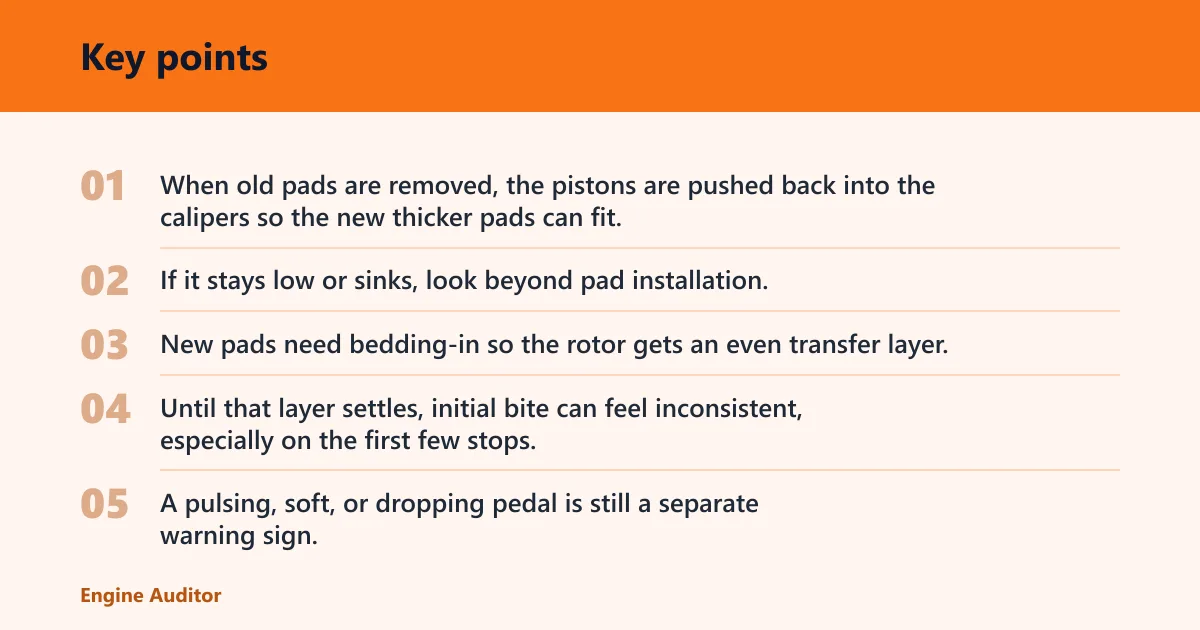
When old pads are removed, the pistons are pushed back into the calipers so the new thicker pads can fit. That is normal. The first pedal press after service may feel longer than expected until the pads move into position, but the pedal should firm up after a few pumps. If it stays low or sinks, look beyond pad installation.
Bedding-in and transfer-layer changes
New pads need bedding-in so the rotor gets an even transfer layer. Until that layer settles, initial bite can feel inconsistent, especially on the first few stops. That is a feel change, not a hydraulic fault. A pulsing, soft, or dropping pedal is still a separate warning sign.
EPB service mode and caliper retraction
Some vehicles with electronic parking brake systems need service mode before rear pads are replaced. If the EPB is not reset correctly, the caliper may not retract or release as intended. That can leave the pedal or parking brake feel odd after the job, especially on rear brake service.
Suppose the rear pads were replaced on an EPB-equipped car, but the service mode was skipped. The pedal may feel normal at first, then the rear brakes drag or retract poorly. That is a setup issue, not a sign that the new pads themselves are wrong.
What else causes a soft or low brake pedal?
A soft or low pedal usually points away from pad wear and toward hydraulic or adjustment faults. Trapped air is compressible and can create a spongy feel. Old fluid can also give poor pedal feel, and a leak or other hydraulic problem can make the pedal sink. A low or slowly sinking pedal needs inspection before more driving.
Trapped air or old brake fluid
Air in the lines is one of the most common reasons a pedal feels spongy after brake work. If the hydraulic system was opened, it may need a proper bleed. Old fluid can also degrade pedal quality and should be flushed on schedule, especially after the system has been opened for service.
Rotor runout, thickness variation, or heat spots
Rotor problems usually show up as pedal pulsing or vibration, not as a simple “thin pad” issue. Warped rotors, runout, scoring, or heat spots can transmit vibration into the pedal. A shaking steering wheel during braking is commonly linked to rotors, and if the shake happens mostly when braking, the brake system should be checked.
Sticking calipers, slide pins, or flexible hoses
A sticking caliper can cause uneven braking. Restricted slide pins can cause pull or drag, and a damaged flexible hose can affect pressure flow to one wheel. These faults can change how the pedal feels because hardware movement affects pedal response, but they are not pad wear problems.
Brake pedal feel decision table
Use this table to separate pad-related symptoms from faults that need a different fix. It is meant for quick sorting, not as a substitute for inspection.
| Symptom | Most likely cause | Pad-related or not | Quick driveway check | Urgent next step |
|---|---|---|---|---|
| Soft pedal | Air in lines, old fluid, leak, or hydraulic problem | Usually not | Check whether the pedal firms up after a few pumps; look for wet spots at hoses, calipers, and the master cylinder | Inspect the hydraulic system before driving far |
| Low pedal | Hydraulic issue, rear adjustment problem, or excessive piston travel | Usually not | See whether the pedal sinks closer to the floor or needs extra travel to stop; compare with normal pedal height | Stop driving and inspect for leaks, adjustment faults, or worn components |
| Spongy pedal | Trapped air or fluid condition | Usually not | Press the pedal steadily; a compressible, springy feel often points to air in the system | Bleed the system and check fluid condition |
| Pulsing pedal | Rotor runout, thickness variation, scoring, or heat spots | Usually not | Notice whether the pulse happens mostly during braking and whether the steering wheel shakes too | Inspect rotors and measure thickness and runout |
| Loose pedal | Excess play, caliper movement issue, hose problem, or hydraulic fault | Usually not | Check for delayed response at the first pedal press and inspect hardware movement | Inspect calipers, slides, hoses, and fluid level |
| Pedal not returning fully | Binding caliper, EPB retraction issue, or pedal/booster linkage problem | Sometimes related after a brake job | See whether the brake lights stay on or a wheel feels hot after a short drive | Check caliper release, EPB setup, and pedal linkage immediately |
What should you check first after a pad job?
Start with the parts that can change pedal feel right away: pad thickness, wear indicators, hardware placement, caliper movement, and fluid level. Then check for leaks, hose routing, and whether the vehicle needs EPB service mode. If the pedal feel is wrong after new pads, do not assume the pads themselves are the whole story.
-
Confirm pad thickness. Check that the friction material is not below the common 3-4 mm replacement range and that the wear indicator tab is not already contacting the rotor. If the pads are very thin, replace them before the metal backing plate starts damaging the rotor.
-
Inspect the hardware. Make sure anti-rattle clips, pad shims, and retaining parts are seated correctly. Check that the caliper slides move freely and that nothing is binding, because hardware movement changes how the pedal responds during the first stops.
-
Check fluid level carefully. Verify the reservoir without overfilling it. When pistons are pushed back, fluid can rise, and opening the reservoir casually can invite contamination or overflow. If the hydraulic system was opened, bleed the brakes as needed.
-
Verify EPB setup. If the vehicle uses an electronic parking brake, confirm that service mode was used and the system was reset before driving. A missed reset can affect caliper retraction and make the rear brakes feel wrong.
-
Seat the pads. Perform a proper bedding-in procedure if the manufacturer calls for it. The goal is to build a consistent transfer layer on the rotor so initial feel becomes predictable.
When should you inspect the rotors and hydraulic system?
Inspect the rotors and hydraulic system any time the pedal feels soft, low, spongy, or pulsing after pad replacement. One brake problem can hide behind another, so a complete inspection is better than guessing from one symptom. If the brake pedal feels different after new pads, the rotor, fluid, caliper, hose, and rear setup all deserve attention.
Rotor condition and minimum thickness
Check for scoring, heat spots, and visible uneven wear. Measure rotor thickness and compare it with the manufacturer’s minimum thickness limit. If the shake happens mostly when braking, the rotor deserves attention before you blame the new pads.
Brake fluid age, leaks, and bleed needs
Look for damp fittings, wet calipers, and a low reservoir. Old fluid can hurt pedal quality, and any time the hydraulic system is opened, a proper bleed may be needed. A soft pedal may point to worn pads, old fluid, air in lines, a leak, or a hydraulic problem.
Caliper and slide-pin operation
Check that calipers retract evenly and that slide pins are not seized. Restricted movement can cause pull or drag, uneven pad wear, and a pedal feel that changes from stop to stop. A dragging brake can also create a hot, sharp smell after driving.
A common first-timer mistake is replacing pads, pressing the pedal once, and assuming the job is done. If the pedal is still soft after a few pumps, or if the first drive produces pulsing, dragging, or a pedal that does not return fully, the next check should be the brake system, not the driveway.
Frequently asked questions
Can worn brake pads change brake pedal feel?
Yes, but usually only slightly. Thin pads can let the caliper pistons sit farther out and can change initial pedal response. A soft, spongy, sinking, or low pedal usually points to air, fluid, a leak, rotor issues, or another hydraulic or mechanical fault instead.
Why does my brake pedal feel soft after brake pad replacement?
A soft pedal after a pad job usually means trapped air, old fluid, or a hydraulic issue rather than pad thickness. If the hydraulic system was opened, it may need bleeding. Check for leaks, verify fluid level, and make sure the calipers were retracted and reassembled correctly.
Can worn brake pads make the brake pedal feel lower?
Only in limited cases. Normal disc-brake pad wear should not make the pedal sit much lower by itself. A truly low pedal more often points to fluid loss, air, a rear adjustment issue, or another brake fault that needs inspection before more driving.
Why does my brake pedal feel spongy after changing pads?
Spongy feel usually means air in the lines or a fluid-related problem. It can happen after brake work if the system was opened and not fully bled. It can also point to moisture-contaminated or old fluid, so the fix is usually in the hydraulic system, not the pads.
Can worn brake pads make the brake pedal pulse?
Not usually. Pedal pulsing is more often caused by rotor runout, thickness variation, scoring, or heat spots. If the pulse happens mostly during braking and the steering wheel shakes too, inspect the rotors and measure them against the minimum thickness limit.
What should I check if the brake pedal feels different after new pads?
Check pad thickness, wear indicators, caliper slides, hose routing, rotor condition, fluid level, and whether the vehicle needs EPB service mode. If the pedal still feels soft, low, or spongy after a proper check, inspect for air, leaks, or a hydraulic fault before driving much farther.
Products related to this article
Sponsored / affiliate links. As an Amazon Associate I earn from qualifying purchases. I may earn additional commission from eligible campaigns.