Can Low Brake Fluid Cause a Soft Brake Pedal?
Yes. Low brake fluid can make the pedal feel soft, but the cause matters. If the level is low because fluid escaped or air entered, the real fault is usually a leak or hydraulic problem. Ignore it and stopping distance can rise fast, or the pedal can drop near the floor. This guide shows how pedal feel points to low fluid, air, contamination, or master cylinder failure.
Brake fluid diagnostic table


| Symptom | Most likely cause | Quick check | Urgency |
|---|---|---|---|
| Reservoir low, but no puddle under the car | Pad wear or a slow external leak | Check the reservoir against the minimum mark and inspect pads through the wheel spokes | Inspect soon; do not wait for the warning lamp alone |
| Pedal pumps up after two or three quick presses | Air in the brake lines | Press the pedal repeatedly with the engine off; if feel improves briefly, air is likely | Do not drive far; bleeding is usually needed |
| Pedal slowly sinks under steady pressure | Master cylinder internal bypass | Hold firm pressure at a stop; a gradual sink points past simple low fluid | Do not drive; this can mean hydraulic failure |
| Fluid is dark or cloudy | Old or moisture-loaded fluid | Compare the color to fresh fluid in a sealed container; dark fluid needs service | Service soon, especially if braking feel has changed |
| One wheel is wet near the tire or backing plate | Leak at a caliper, wheel cylinder, hose, or fitting | Look for wet dust, dripping, or stained backing plates | Stop driving and repair the leak first |
| Pedal goes near the floor | Major fluid loss, air ingress, or master cylinder fault | Check reservoir level immediately and inspect for leaks | Do not drive |
| Recent brake service, then a spongy pedal | Air trapped during repair | Review whether lines, calipers, or fluid were opened | Bleed the system before normal driving |
| ABS light on with a changed pedal feel | ABS hydraulic assembly or modulator issue, after basic checks | Verify fluid level, leaks, and air first; then scan for faults | Inspect soon; do not assume ABS is the first cause |
What low brake fluid means
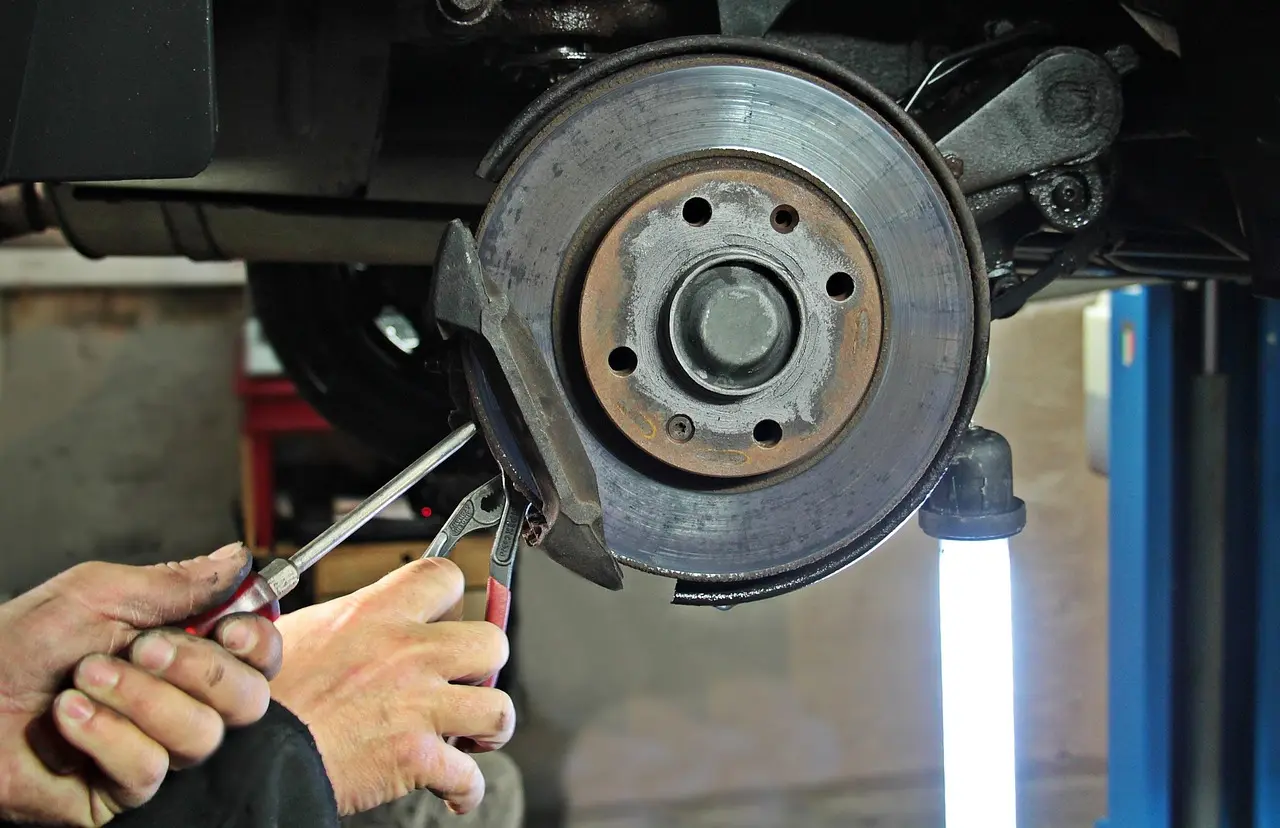
Brake fluid is the hydraulic fluid that carries pedal force to the calipers or wheel cylinders. If the reservoir sits below the minimum mark, the system has less reserve volume. That can point to pad wear, a leak, or fluid that has moved farther into the system.
Low level matters because running the reservoir dry can let air into the brake lines. Air compresses, so pedal travel feels longer and softer. A low reservoir does not prove a leak by itself, but a sudden drop should send you looking for one before driving again.
Reservoir level check
Open the hood and check the brake fluid reservoir against the minimum mark on the side of the tank. Read the level against the marks molded into the reservoir, not the cap or the color of the plastic. A low reservoir can be normal after pad wear, but it still needs an explanation.
If the fluid sits just above the minimum line and the front pads are nearly worn out, that can fit normal pad wear. If the level has fallen quickly over a few days and the pedal now feels lower, that pattern points much more strongly to a leak.
Pad wear versus a real leak
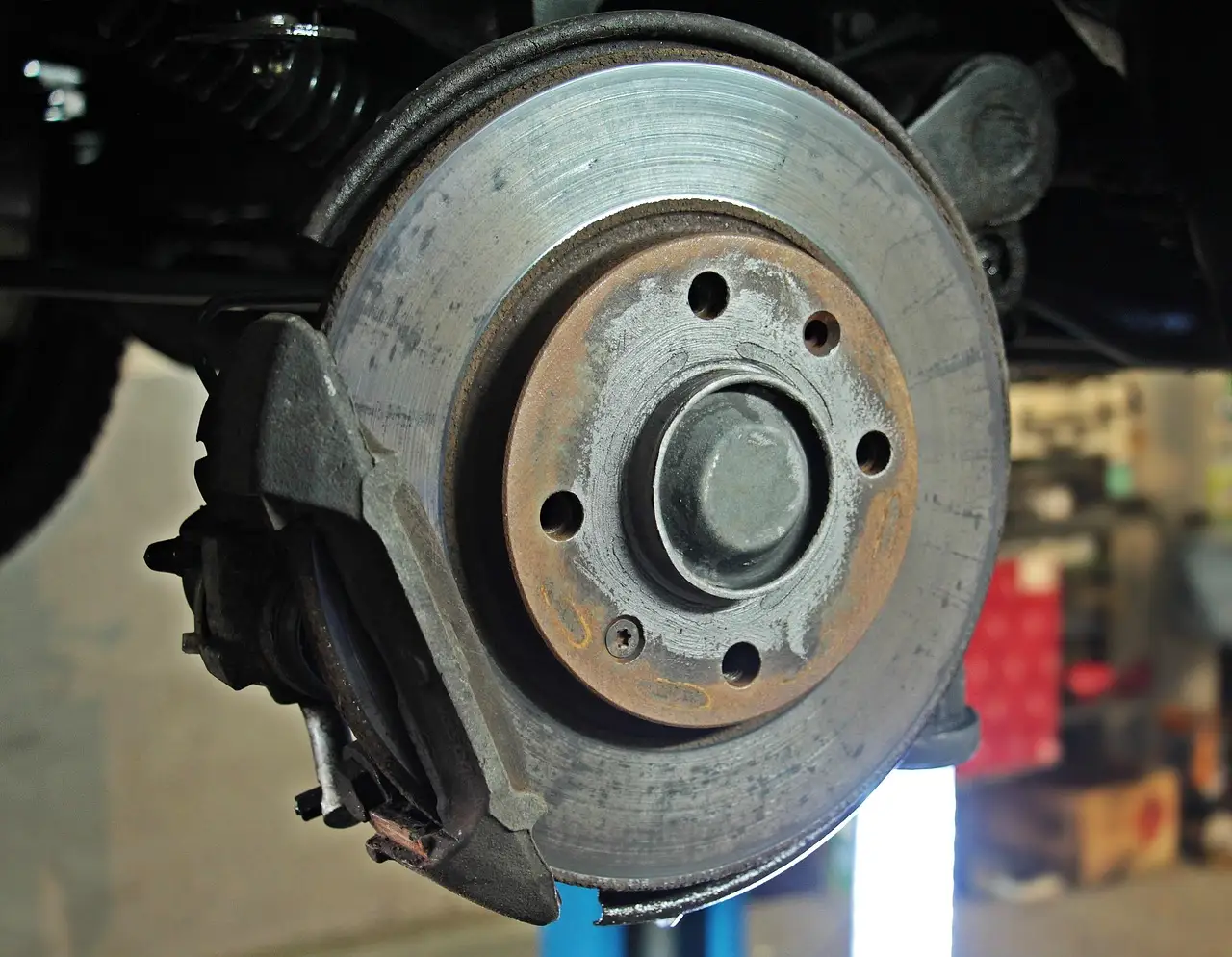
Brake pads and rotors affect pedal travel, but they do not act like a hydraulic fault. Severe pad wear can let the caliper pistons sit farther out, which lowers the reservoir level as fluid fills that extra space. That differs from a spongy pedal caused by air or a bypass inside the hydraulics.
A sudden low-fluid reading is not normal pad wear. Look for damp hoses, wet calipers, stained backing plates, or fluid on the inside edge of a tire. If any of those are present, repair the leak before bleeding the system.
Why running low can let air
When fluid falls too far, the master cylinder can draw air instead of fluid. That air compresses under pedal pressure, which is why the pedal may feel soft or springy. Once air enters, topping off the reservoir alone usually does not bring back normal feel.
- Check the reservoir level against the minimum mark.
- Inspect all four corners for wet lines, fittings, calipers, or wheel cylinders.
- Note whether the pedal firms up after pumping.
- Check whether the pedal slowly sinks under steady pressure.
- Bleed the system after the leak is repaired or after the fluid was run low.
Why brake fluid quality matters
Low fluid and bad fluid are not the same issue. Brake fluid also absorbs moisture over time, and that lowers boiling point. Fresh DOT 4 brake fluid has a dry boiling point around 446°F, while the wet boiling point can drop to around 311°F after moisture absorption. That matters more under hard braking or long downhill use than on a simple level check.
Most manufacturers recommend brake fluid replacement every 2–3 years or 30,000 miles. Old fluid can absorb moisture and reduce responsiveness. That does not always make the pedal soft by itself, but it can change pedal feel and shorten the margin before fade or vapor formation.
DOT compatibility matters
DOT 3, DOT 4, DOT 5, and DOT 5.1 are not interchangeable in all systems. Always use the type listed for the vehicle. Mixing the wrong fluid can change seal behavior and pedal feel, and it can complicate future bleeding or service.
If the reservoir looks low and the fluid also looks dark, do not assume the level problem and the fluid condition have the same cause. The level can fall because of wear or leakage, while the fluid can age from moisture absorption. Those are linked, but they are not the same diagnosis.
Can low brake fluid cause a spongy pedal?
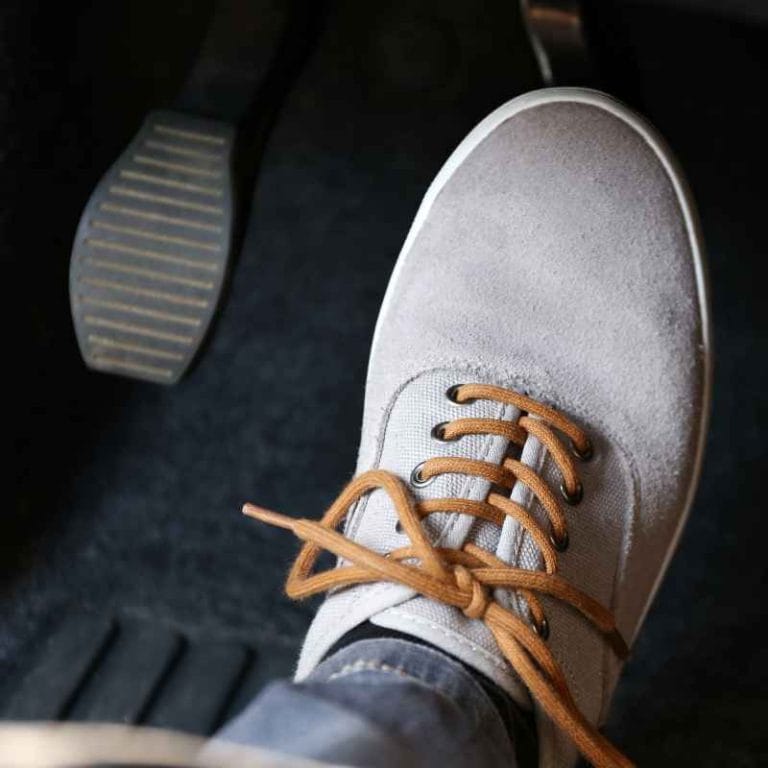
Yes. Low brake fluid can cause a spongy pedal if it allows air into the hydraulic system. A soft pedal from air usually feels compressible, not hard and sudden. It may improve briefly after pumping, but the underlying problem remains until the air is removed and the source of fluid loss is fixed.
Air in the lines
Air in the brake lines is one of the most common causes of a spongy pedal. Direct Brakes identifies it as the most common cause of a spongy pedal, and the physics are simple: gas compresses, fluid does not. That is why the pedal can feel long and vague even when the reservoir has fluid in it.
Air often enters after a brake service, a hose replacement, a caliper swap, or a leak that pulled the reservoir low. If the pedal improves after two quick pumps and then softens again, that pattern fits air in the lines more than pad wear.
Bleeding after repair or fluid loss
Brake bleeding removes trapped air and is often needed after a repair or a low-fluid event. A four-wheel bleed sequence may be required, depending on the vehicle. If the system was opened, or if the reservoir ran low enough to ingest air, bleeding is usually part of the fix rather than an optional extra step.
A common mistake is noticing the brake pedal feels spongy after a fluid leak and assuming simply adding fluid will fix the problem. That only restores fluid volume. It does not remove compressible air from the lines.
Can low brake fluid mean a leak or master cylinder issue?
Yes. Low fluid can point to an external leak, and a sinking pedal under steady pressure can point to the master cylinder. A leak lowers the reservoir and can admit air. A master cylinder fault may leave the reservoir full but still let pressure bypass the seals internally.
External leaks
Brake fluid leaks can occur at lines, hoses, calipers, wheel cylinders, or fittings. A wet wheel, a shiny hose crimp, or fluid on the inside of a rim is a strong clue. If the reservoir keeps dropping, the leak needs to be found and fixed before bleeding, or the pedal problem will return.
Older drum-brake setups can leak at a wheel cylinder and show fluid inside the drum. On rear disc cars, look at the caliper, hose connection, and parking-brake area if equipped. Front and rear leaks both matter, but the inspection point changes with the brake design.
Master cylinder bypass
A failing master cylinder can cause a pedal that sinks slowly to the floor. That is a classic internal bypass clue. The reservoir may look normal, yet the pedal still falls because pressure is escaping past the piston seals instead of staying in the hydraulic circuit.
Replacement usually requires bench bleeding before installation, because trapped air in a new master cylinder can create the same soft feel you were trying to cure. If the pedal sinks after all visible leaks are ruled out, the master cylinder deserves attention before you keep driving.
What else can cause a soft pedal?
Recent brake service, worn pads, rotor wear, drum hardware problems, and ABS hydraulic assembly faults can all change pedal feel. The order matters. Basic hydraulic checks come first, because a low reservoir, trapped air, or an external leak is more common than an ABS modulator failure.
Recent brake service
If the brakes were opened for a caliper, hose, or fluid job, trapped air is a likely cause. A soft pedal immediately after service is a bleeding issue until proven otherwise. The fix is usually to bleed the system correctly and verify that the reservoir stayed full during the process.
Worn pads, rotors, or drum hardware
Severe pad wear can lengthen pedal travel and lower the reservoir level. Worn rotor thickness or drum adjustment can also change where the pedal starts to bite. That relates to pedal height, but it is not the same thing as hydraulic softness from air or pressure loss.
ABS hydraulic assembly or modulator faults
An ABS hydraulic assembly or modulator can affect pedal feel in some vehicles, but it is not the first place to look. Check the reservoir, leaks, and air first. If the basics are sound and the ABS light is on, then an ABS fault moves higher on the list.
Can low brake fluid cause brakes to not work?
Yes, if the level drops far enough to admit air or empty part of the circuit, braking can weaken sharply or fail in part. Low fluid by itself does not automatically mean total brake loss, but it can lead there fast if a leak is active or the reservoir runs dry.
If the pedal sinks near the floor or the car needs much more force to slow down, treat it as a serious brake fault. A soft pedal can require more force to slow the vehicle, and that is not a condition to ignore.
Can low brake fluid cause brakes to stick?
Not usually. Low brake fluid is tied to softness, sinking, or loss of pressure, not sticking. A sticking brake is more often related to a seized caliper slide, collapsed hose, parking brake issue, or mechanical drag. Do not chase a sticking symptom as if it were the same as a soft pedal.
Is it safe to drive with a soft brake pedal?
No, not if the pedal is soft enough to change stopping feel, sink under pressure, or go close to the floor. That condition can point to air, a leak, or master cylinder bypass. Brake problems can worsen quickly, and the vehicle may need significantly more distance to stop.
If the pedal only feels slightly different after a recent service, you still need to inspect it before regular driving. If the reservoir is low or the pedal changed suddenly, do not treat it as a minor inconvenience.
Frequently asked questions
Can low brake fluid cause a soft brake pedal?
Yes. Low brake fluid can cause a soft brake pedal if the level drops enough to let air into the hydraulic system. It can also signal pad wear or a leak. The key is to find out why the level is low before you keep driving.
Can low brake fluid cause spongy brakes?
Yes, but low fluid is usually a clue rather than the whole cause. Spongy brakes often mean air in the system, usually after a leak or service event. If the fluid is low, check for the leak first, then bleed the brakes after the repair.
Will low brake fluid cause the pedal to go to the floor?
It can, especially if the reservoir has run low enough to pull in air or if there is a major leak. A pedal that goes to the floor is a serious hydraulic warning. Do not keep driving until the system is inspected and the fault is found.
Why does my brake pedal feel soft even though the reservoir is full?
A full reservoir does not rule out air, master cylinder bypass, or an ABS hydraulic fault. If the pedal slowly sinks, the master cylinder is a strong suspect. If it pumps up, air is more likely. A full reservoir only means the system still has fluid.
Products related to this article
Sponsored / affiliate links. As an Amazon Associate I earn from qualifying purchases. I may earn additional commission from eligible campaigns.
 Brake Fluid Liquid Tester Pen, Brake Fluid Tester with 5 LED Indicators, Brake Fluid Liquid Testing Pen for DOT 3 DOT 4 DOT 5.1 Vehicle, Auto Tester Tool, Diagnostic Testing Tool.
 4 Pack Brake Bleeder Hose Kit with One Way Check Valve, Universal Brake Fluid Bleeder Tube with Black Adapter and Metal Clips, Brake Bleeding Tool for Car Motorcycle ATV Hydraulic Brake and Clutch