What Causes a Brake Pedal to Move Up and Down While Driving?
A brake pedal that moves up and down while driving usually points to rotor runout, ABS activity, or a hydraulic fault. If the motion is strong or braking changes, treat it as unsafe. Ignoring it can lengthen stopping distances, wear pads unevenly, and spread damage to other brake parts. This guide shows how to tell pedal movement from pedal pulsation, then match the symptom to the likely cause.
Brake pedal movement explained
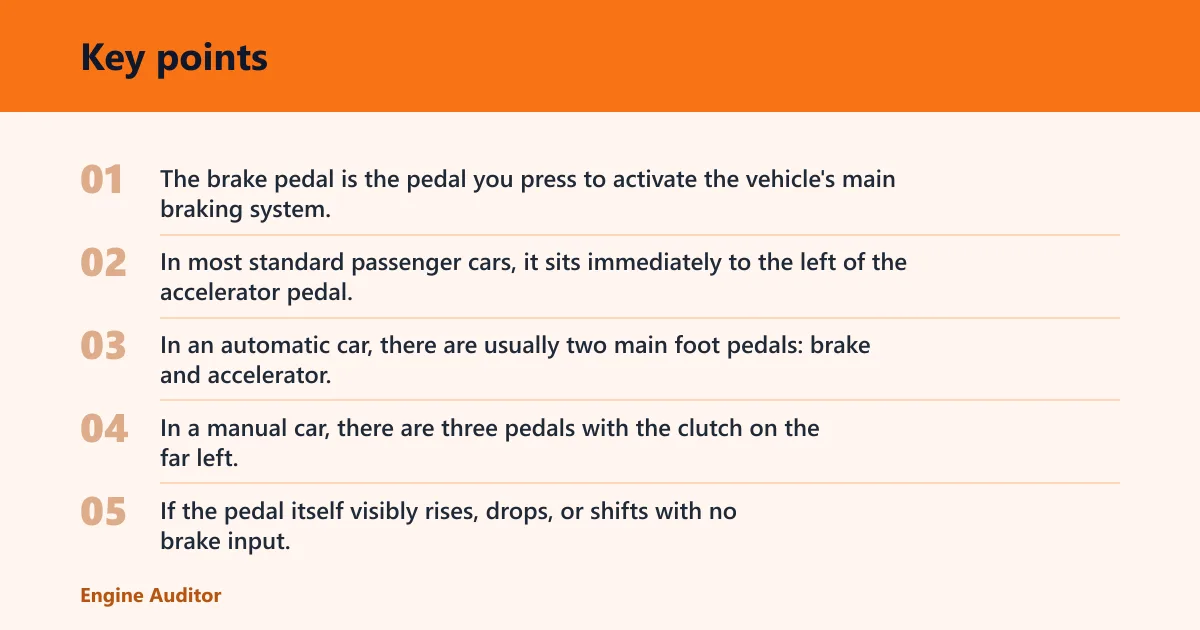


The brake pedal is the pedal you press to activate the vehicle’s main braking system. In most standard passenger cars, it sits immediately to the left of the accelerator pedal. In an automatic car, there are usually two main foot pedals: brake and accelerator. In a manual car, there are three pedals with the clutch on the far left, brake in the middle, and accelerator on the right.
True pedal movement at rest or cruise
If the pedal itself visibly rises, drops, or shifts with no brake input, the issue is more likely in the pedal box, booster, linkage, or mounting path. That kind of movement points away from normal brake operation and toward a mechanical problem under the dash or at the booster connection.
Pedal pulsation from the wheel end
If your foot feels vibration while the pedal stays in place, the source is often at the wheel end. Road input, ABS modulation, rotor runout, pad drag, or hydraulic pressure changes can all create a pulse. That pattern usually tracks braking, turning, bumps, or speed changes rather than a loose pedal assembly.
Why the distinction matters
A rough road can shake your foot. ABS can pulse under braking. A warped rotor can push back through the pedal. Those are different faults, and they need different fixes. Start by asking one question: does the pedal itself travel up and down, or does your foot feel vibration while the pedal stays in place?
If the pedal visibly lifts or drops with no braking input, it can suggest a problem beyond the wheel end, so check that area first. If the motion appears only during braking, the rotor, pad, caliper, ABS, or hydraulic path becomes more likely.
What causes a brake pedal to move up and down?
Rotor runout, uneven pad contact, a sticking caliper, ABS pressure pulsing, and a hose or fluid fault can all make the pedal feel like it is bouncing. The clue is the condition that triggers it. Steady cruising points differently than braking, turning, bumps, or a sudden change in brake force.
Rotor runout and uneven pad contact
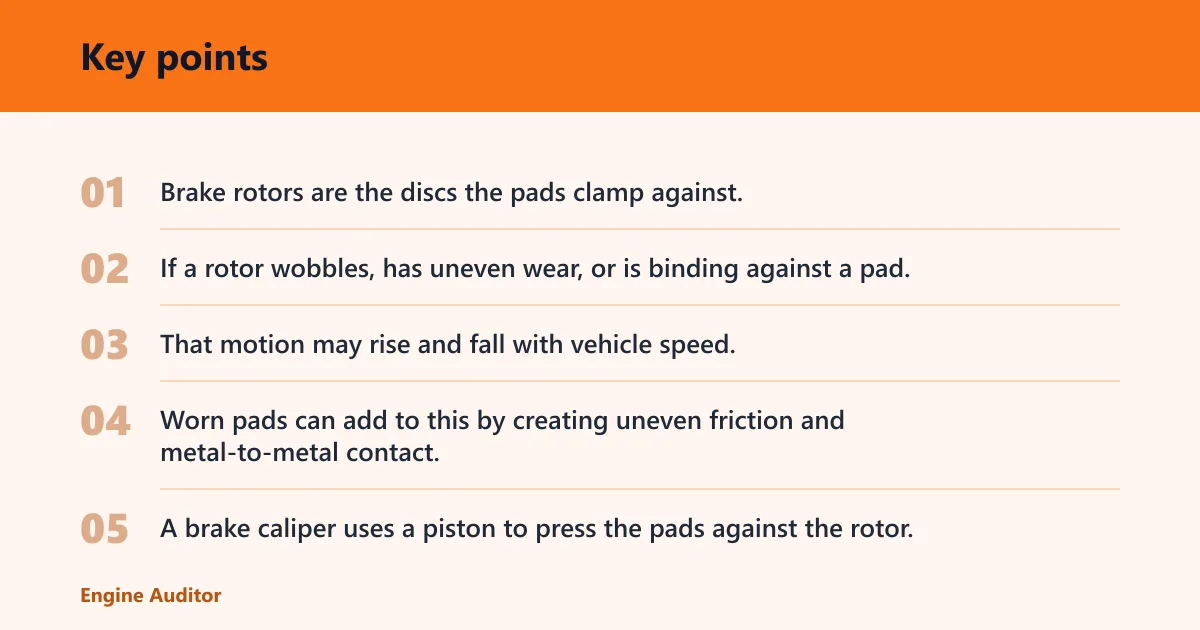
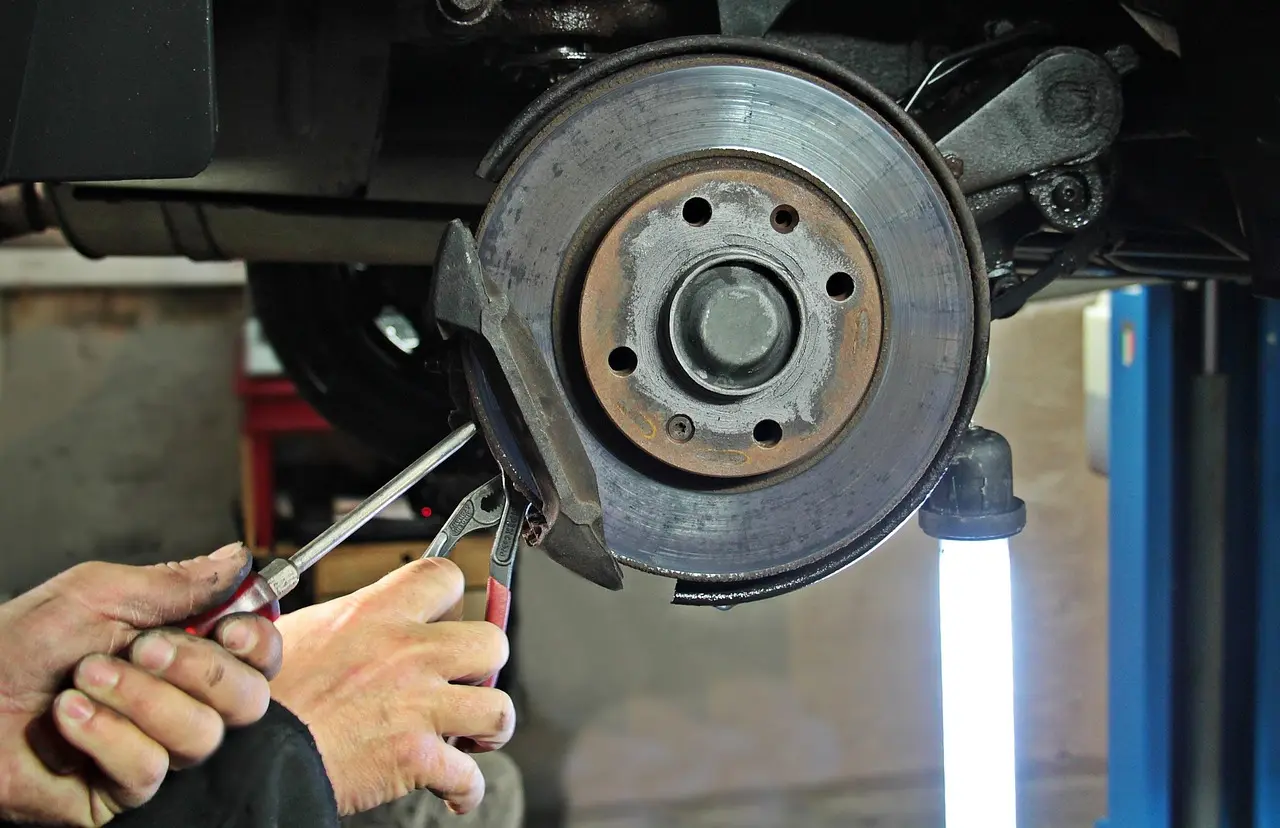
Brake rotors are the discs the pads clamp against. If a rotor wobbles, has uneven wear, or is binding against a pad, the pedal can pulse during braking. That motion may rise and fall with vehicle speed, because the pad can hit a thicker or thinner spot as the wheel turns. Worn pads can add to this by creating uneven friction and metal-to-metal contact.
Caliper sticking or dragging
A brake caliper uses a piston to press the pads against the rotor. If it sticks in the extended position, one wheel can drag, heat up, and sometimes lock. A seized brake caliper is described as the most common cause of brake lockup on one specific wheel. The pedal may feel odd, but the wheel-end clues are usually louder than the pedal clue.
ABS pulse and hydraulic pressure changes
ABS uses rapidly pulsing brake pressure to keep the tires rolling. That pulse is normal when the system is active. A faulty wheel speed sensor can disable ABS intervention, and faulty wheel speed sensors are described as the most common cause of ABS failure. If ABS activates without a hard stop, or if the warning light is on, the system needs attention.
Brake hose or fluid problems
Brake fluid can absorb moisture from the air over time because it is hygroscopic. Moisture lowers brake-fluid boiling point below its original specification, which can change pressure behavior during heavy braking. Brake hoses connect the rigid metal brake lines to each caliper, and deterioration can trap pressure. That can leave a wheel dragging or make the pedal response feel uneven.
A common mistake is assuming every rise and fall in the pedal is just the anti-lock brakes when a warped rotor or uneven brake drum could be pushing it back instead. Suppose the pedal twitches only while braking downhill, the right front wheel smells hot, and the car pulls slightly left. That pattern fits a wheel-end problem better than a normal ABS event, because the symptom follows heat and drag instead of a brief anti-lock pulse.
Brake pedal diagnostic table
| Symptom pattern | Likely cause | Inspect first | Driveability guidance |
|---|---|---|---|
| Pedal pulses only during firm braking | Rotor runout, uneven pad contact, or ABS activation | Rotor surface, pad wear, ABS warning light | Cautious driving to a shop may be possible if braking still feels normal |
| Pedal bounces while cruising with no brake input | Pedal-box movement, booster linkage issue, or road-induced vibration | Pedal mounting, under-dash movement, vacuum hose at booster | Park if the pedal movement is strong or changes braking feel |
| Pulse appears during turns, bumps, or speed changes | Wheel speed sensor debris, loose wiring, or suspension-induced movement | Sensor wire routing, debris at wheel hub, damaged connector | Drive cautiously only if braking remains predictable and no warning lights are on |
| One wheel gets much hotter than the others | Seized caliper or trapped hydraulic pressure from hose failure | Wheel heat, pad drag, hose condition, caliper slide movement | Park it. Heat and drag can lead to lockup |
| Soft, odd, or changing pedal with fluid loss | Brake fluid issue, moisture contamination, or leak | Fluid level, color, leaks at lines and calipers | Park it if fluid is low or the pedal travel changes sharply |
- Check whether the motion happens with no brake input or only while braking.
- Look for an ABS warning light, brake warning light, or a pull to one side.
- Touch each wheel carefully after a short drive; a noticeably hotter wheel can point to drag.
- Inspect pad thickness and rotor surface through the wheel opening if visible.
- Look for cracked, wet, or swollen brake hoses near the caliper.
- Do not keep driving if the pedal travel changes, the car pulls hard, or one wheel is overheating.
Can a bad brake caliper make the brake pedal bounce?
Yes. A sticking or seized caliper can make the brake pedal feel odd because it may keep one pad pressed against the rotor or release it unevenly. That can create drag, extra heat, and a wheel that feels like it is fighting the car. The pedal may seem to bounce, but the real fault is usually at the wheel.
Check for a wheel that is hotter than the others after a short drive, a burning smell, uneven pad wear, or a car that pulls when braking. A seized caliper can also lead to wheel lockup. If a wheel gets hot enough to change handling, the vehicle should be parked.
Look first at the caliper slides, the piston area, and the pad wear pattern. Uneven inner and outer pad thickness is a strong clue. If one front wheel is far hotter than the other, or if the wheel does not spin freely when lifted, the caliper path moves to the top of the list.
Can warped rotors make the brake pedal shake?
Yes. Rotor runout can send a repeated push back through the pedal when the pads contact the disc. That usually shows up during braking, not while coasting. The faster the wheel turns, the more often the pad meets the high spot, so the shake may feel speed-related.
Uneven pad wear can make the same symptom worse. If the rotor face is uneven or glazed, the pedal can feel like it is fluttering. Worn pads can also expose metal-to-metal contact, which changes braking feel and can damage the rotor further.
Brake rotors should be checked for surface scoring, blue spots from heat, and obvious thickness variation. If the steering wheel also shakes while braking, the front axle is a common place to inspect first. A rotor issue is usually more driveable than a seized caliper, but it still needs repair soon.
Can ABS cause pedal pulsing while driving?
ABS can make the pedal pulse, but the pulse should happen during braking or during a self-test type event, not during normal steady cruising. The system uses rapidly pulsing brake pressure to prevent lockup. If you feel that pulse without braking, or if the ABS light is on, treat it as a fault until proven otherwise.
Wheel speed sensor damage or road debris can confuse ABS input. Faulty wheel speed sensors are described as the most common cause of ABS failure. When that input drops out, the system may disable anti-lock protection, which leaves the brakes more likely to lock under a hard stop.
Do not assume an ABS pulse means the brakes are healthy. If the symptom is new, check the warning light first, then inspect sensor wiring at each wheel for damage or contamination. A gravel road, ice, or a damaged tone ring can change what the sensor reports.
Should I keep driving if the brake pedal is bouncing?
Maybe, but only if the motion is mild, braking still feels normal, and there is no heat, pull, leak, or warning light. If the pedal movement is strong, if the car slows unevenly, or if one wheel is overheating, park the vehicle. Brake problems can change fast.
If you must drive to a shop, keep the trip short, avoid heavy braking, and stay on familiar roads. Do not use that advice if the pedal travel changes, the vehicle pulls hard, or the brake warning light comes on. Those signs turn a cautious drive into a tow decision.
What parts should a mechanic inspect first for a moving brake pedal?
Start with the wheel-end parts that most often create pedal motion: pads, rotors, calipers, hoses, and ABS sensor inputs. Then move inward to the pedal box and booster linkage if the motion happens with no braking input. The order matters because the symptom source changes with the trigger.
A practical first pass is to compare wheel heat, pad wear, rotor condition, hose condition, and ABS warning status. Brake fluid should also be checked for age and contamination. Because brake fluid absorbs moisture, old fluid can change pressure behavior and should not be ignored. In humid climates, some service schedules call for replacement every two years.
Suppose the right rear wheel is hot after a 10-minute drive, the pedal feels normal until the first stop sign, and the ABS light stays off. That pattern points first to a dragging wheel end, not a central hydraulic fault. If the pedal bounces only on rough pavement with no braking, the pedal mounting and booster linkage deserve a closer look.
Frequently asked questions
What causes a brake pedal to move up and down while driving?
The most common causes are rotor runout, ABS pressure pulsing, a sticking caliper, or a hydraulic fault that changes pressure at the wheel. The key is whether the pedal moves during braking, on bumps, or with no input at all. That trigger usually points to the part that needs inspection first.
Is a vibrating brake pedal dangerous while driving?
It can be. A mild pulse from ABS during a hard stop is one thing. A strong vibration, a changing pedal, a pull, or a hot wheel is another. Those signs can mean loss of brake balance, dragging parts, or reduced stopping control, so the vehicle may need to be parked.
Can ABS cause the brake pedal to pulse even when I am not braking?
Normally, no. ABS pulsing should occur when the system is actively managing brake pressure, not during steady cruising. If the pedal pulses without brake input, check for an ABS fault, sensor damage, wiring issues, or a pedal-box problem. A warning light makes that concern much stronger.
Could a brake hose or fluid issue make the pedal move strangely?
Yes. A deteriorated brake hose can trap pressure, and old brake fluid can change pressure behavior because it absorbs moisture over time. That can create drag, odd pedal feel, or inconsistent braking. If the fluid is dark, low, or overdue for service, the system needs inspection.
Products related to this article
Sponsored / affiliate links. As an Amazon Associate I earn from qualifying purchases. I may earn additional commission from eligible campaigns.