Transmission Control System Limp Mode Reset: What Works
A limp-mode reset only works when the fault is gone; a battery reset or scan tool can clear stored codes, but if the code returns, the transmission problem is still there. Ignoring it can leave you with harsh shifts, no higher gears, or more damage if you keep driving. This guide covers which reset methods clear memory, which may briefly restore shifting, and which do nothing until the sensor, wiring, fluid, or internal fault is fixed.
What limp mode means

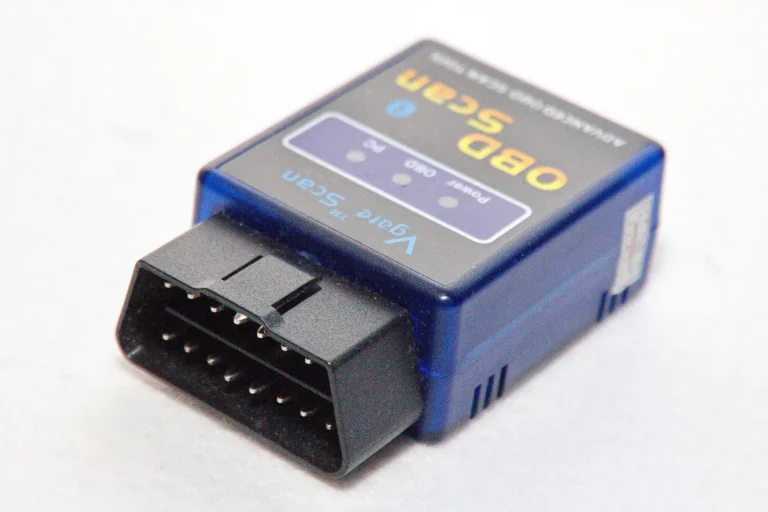
- Reads ABS, SRS, and transmission codes
- Shows live sensor data and graphs
- Plug-and-play with free software updates
Transmission limp mode is a protective failsafe. The control computer sees a problem, limits driveability, and keeps the vehicle movable so you can reach a repair shop instead of losing all forward motion. In many cases, the Check Engine Light comes on at the same time, but the light alone does not prove the transmission is still in limp mode.
On computer-controlled transmissions, the shift control computer monitors sensor inputs and can command limp-home behavior when a reading looks wrong. That bad reading may come from a sensor, wiring, a connector, fluid pressure issues, or an internal transmission fault. The point is to protect hardware while giving you enough function to exit traffic and get service.
Why the computer limits gears
When the computer no longer trusts the input data, it chooses a safe fallback. That can mean fewer gears, delayed upshifts, firm shifts, or a fixed gear ratio. The goal is control, not comfort. If the vehicle kept shifting normally with bad data, it could command the wrong clutch or pressure strategy and make damage worse.
A common first-timer mistake is treating a harsh, stuck gear as a random transmission failure with no warning. Often there was a warning first: an amber malfunction indicator, an odd shift, or a brief loss of normal acceleration before the vehicle settled into failsafe mode.
Why second gear is common
On some Chrysler-style systems, forward gears can be limited to second gear only. That leaves the vehicle slow but still usable enough to reach a shop. Reverse may still remain normal, which can make the problem feel confusing if the vehicle backs out of a space yet will not upshift on the road.
The speed limit in that state is described as around 45 to 50 MPH. That is not normal cruising. It is a restricted mode meant to reduce load and keep the transmission from doing anything the computer no longer trusts.
Why reverse may still work
Reverse can remain normal because the control strategy may be limiting forward clutch operation only. That does not mean the transmission is healthy. It means the module has chosen a narrow operating path that may still allow backing up while it blocks the higher-risk forward range commands.
Why does limp mode happen?
Limp mode usually starts with bad sensor values, wiring faults, or an internal transmission problem that the computer can no longer ignore. The transmission control computer stores trouble codes when it sees the fault, and those codes can remain in memory even after the light goes out. The vehicle may run better for a while, then return to failsafe if the bad signal comes back.
Bad sensor readings
Sensor inputs provide data on speed, throttle position, pressure, temperature, and other operating conditions. If one of those inputs goes out of range or sends bogus information, the computer may assume the transmission is at risk and command limp-home behavior. Some intermittent sensor problems still store a trouble code, even if the symptom comes and goes.
Say your transmission speed sensor drops out only when the wiring flexes on a sharp turn. The car may shift normally on the way to work, then fall into limp mode after a parking-lot maneuver. That kind of pattern points toward a signal problem, not a reason to replace parts blindly.
Wiring and connector faults
Damaged wiring, corrosion, loose connectors, or poor grounds can make a good sensor look bad. The computer only sees voltage and frequency values. If the signal is noisy or missing, it can react the same way it would to a failed component. That is why inspection and code reading come before parts replacement.
Internal transmission problems
Low pressure, worn clutches, valve body issues, and failed solenoids can also trigger limp mode. In those cases, clearing codes may remove the warning briefly, but the transmission will often re-enter failsafe once the underlying fault shows up again. A reset is not a repair if the hard fault remains present.
Check Engine light and DTCs
The Check Engine Light can appear with sensor or transmission faults, but it does not always mean the transmission is fully stuck in limp mode. Diagnostic trouble codes, or DTCs, are typically stored in memory after a fault and may still be retrievable later with a scan tool. That is why code reading matters even if the light turns off.
What stored codes tell you
Stored codes point you toward the circuit or system that triggered the fault. They do not always name the exact failed part. A code can lead to a sensor circuit, a wiring issue, or a pressure-control problem, so the next step is test data, not a parts order.
Code readout and initial diagnosis are described as free to $50 on the source page. That is a small price compared with replacing a transmission sensor that was only reporting bad data because of a rubbed-through wire.
Why the light can go out
The warning light can turn off if readings normalize, even when the code remains stored. That is why a vehicle can seem fine for a while and still keep a useful diagnostic record in memory. A scan tool may retrieve the code later, after the engine has been turned off.
Why code memory still matters
Old codes can point to an intermittent fault that no longer shows up during a quick driveway check. If the problem is intermittent, the light may be off by the time the car reaches a shop. The code history can still guide diagnosis and help avoid needless parts replacement.
Transmission control system limp decision table
| Symptom pattern | Likely cause category | Reset method that may work | Why it fails or must be avoided |
|---|---|---|---|
| Older vehicle, code stored, light may clear briefly after power loss | Older control unit with memory that can be erased | Battery disconnect reset | Only clears memory on some older systems; the fault can return as soon as the bad input comes back |
| Codes present, transmission still driving in failsafe after a fault | Stored DTCs in a module that keeps history | Scan-tool code clear | May remove the warning, but it does not fix the sensor, wiring, or internal problem that caused limp mode |
| Repair completed, shifts still need adaptation or relearn | Module adaptation after service | Module relearn | Useful only after the fault is fixed; it will not cure a live failure and may fail if the bad code returns |
| Fault fixed, codes still stored, normal shifting already restored | Repair complete, memory only | No reset needed after repair | If the module has no special relearn requirement, the vehicle may recover on its own once the cause is gone |
Can a battery disconnect reset limp mode?
A battery disconnect can reset limp mode on some older vehicles, but only by erasing stored memory. It does not fix the fault, and it may not work on newer modules that keep codes in memory until a scan tool resets them. If the bad sensor or wiring is still present, limp mode can return quickly.
When it may clear memory
Older computers may allow trouble codes to be erased by disconnecting the battery or pulling the computer fuse. That may turn off the light and restore normal shifting for a short time if the fault is no longer active. It is a memory clear, not a repair.
When it will fail
If the transmission control computer is still seeing a bad value, the system can command limp-home behavior again as soon as the vehicle is driven. Newer systems may also retain codes until a scan tool performs the reset. Battery disconnect is therefore not a universal fix.
Why it can return quickly
Suppose the vehicle has a damaged transmission speed sensor wire that opens only when the engine twists under load. You disconnect the battery, the warning disappears, and the car shifts normally in the driveway. Ten minutes later, the same open circuit returns, the code resets itself in the module, and limp mode comes back.
Will a scan tool clear limp mode?
A scan tool can clear codes on many systems, and on some newer cars it may be required to turn off the light or complete the reset. But clearing codes is only useful when you have already found and fixed the cause. If the fault remains, the transmission can re-enter limp mode as soon as the computer sees the bad input again.
Clearing codes versus fixing the fault
Code clearing removes stored information. It does not repair a failed sensor, a damaged wiring loom, or a stuck valve body. The right use of a scan tool is diagnosis first, reset second. Read the codes, confirm live data, and then clear memory only after the root cause is corrected.
When newer systems need service functions
Some newer systems keep codes in memory until a scan tool resets them, and some also need a relearn or service routine after repairs. That can include adaptation steps for the transmission control computer so it can relearn shift behavior. A simple battery pull may do nothing on those vehicles.
What to read before clearing anything
Read the DTCs, freeze-frame data if available, and live sensor data before you clear the memory. Once a code is erased, the best snapshot of the fault can disappear. That matters most with intermittent sensor failures, where the problem may not be easy to reproduce on demand.
How do you get it out after repairs?
After repairs, limp mode should disappear only if the fault has been cleared. Some vehicles need no special reset at all; others need a relearn or scan-tool service function so the control computer can re-establish normal strategy. If the code returns, the repair is not complete or the wrong fault was addressed.
When a relearn is needed
A relearn is appropriate when the fault has been fixed and the module still needs to adapt to the repaired system. That may happen after sensor replacement, transmission work, or related electrical repair. The relearn is a finishing step, not a cure for a live problem.
When no reset is needed
Some vehicles return to normal once the fault is repaired and the ignition cycle completes. In those cases, the computer no longer sees the bad input, so limp mode drops out on its own. If the car still will not shift normally, the diagnosis is not finished.
Why the fault must stay gone
The module cannot be forced into permanent normal operation if the bad signal is still present. That is why a reset that works once can still fail on the next drive. The repair has to hold under heat, vibration, and load, or the computer will protect the transmission again.
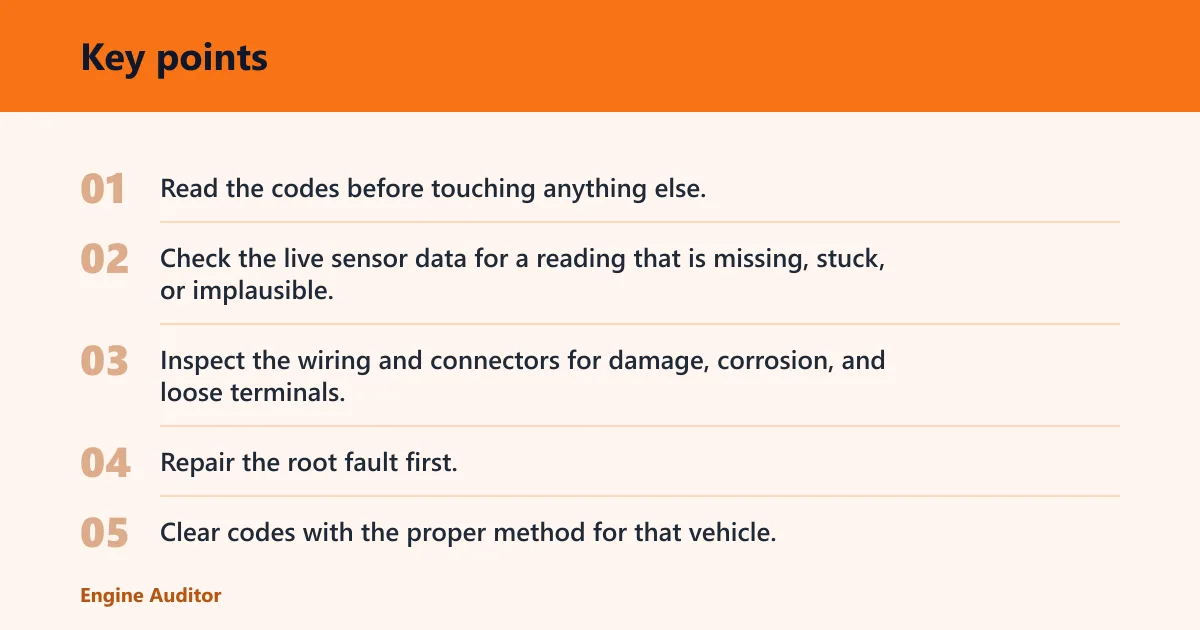
- Read the codes before touching anything else.
- Check the live sensor data for a reading that is missing, stuck, or implausible.
- Inspect the wiring and connectors for damage, corrosion, and loose terminals.
- Repair the root fault first.
- Clear codes with the proper method for that vehicle.
- Perform any relearn or service function the manufacturer requires.
- Road test only after the transmission is no longer re-entering limp mode.
Picture a car that comes out of limp mode after a battery disconnect, then shifts normally for one commute and falls back into second gear on the next start. That pattern usually means the memory clear worked, but the cause did not. The reset succeeded. The diagnosis did not.
Frequently asked questions
Why is my transmission stuck in limp mode?
Your transmission is usually in limp mode because the control computer has seen a bad sensor value, a wiring fault, or an internal transmission problem. It limits gears to protect the unit and may keep the vehicle movable. Read the DTCs first, because the code history is the fastest path to the real fault.
Can disconnecting the battery reset limp mode?
Sometimes, yes on older systems, because a battery disconnect can erase stored memory. On newer modules, it may do nothing useful. Either way, it does not fix the cause. If the bad signal is still present, limp mode can return as soon as the computer sees the problem again.
Will clearing codes make limp mode go away?
Clearing codes can make the warning disappear, but it does not repair the cause of limp mode. If the fault is still active, the module can command failsafe again right away. Use code clearing only after diagnosis and repair, not as a substitute for them.
How do you get your car out of limp mode after repairs?
After repairs, clear the codes with the correct method for the vehicle, then complete any relearn or service function the manufacturer requires. Some cars recover on their own. Others need scan-tool service functions. If limp mode returns, the repair is incomplete or the original fault remains.
Can a scan tool reset transmission limp mode?
Yes, a scan tool can reset limp mode on many vehicles, and some newer systems need it. The scan tool also reads codes and helps confirm the fault before anything is cleared. That matters because the reset usually only sticks when the sensor, wiring, or transmission problem is actually fixed.
Why does limp mode leave me with only second gear?
Some systems, especially Chrysler-style ones, limit forward gears to second gear only to reduce load and protect the transmission. Reverse may still work, and the vehicle may still move at around 45 to 50 MPH. That is a restricted operating state, not a normal drive condition.
Products related to this article
Sponsored / affiliate links. As an Amazon Associate I earn from qualifying purchases. I may earn additional commission from eligible campaigns.