Does Transmission Control Rpm in Your Vehicle? Find Out
Many drivers wonder how their vehicle’s transmission interacts with engine speed. If you’ve ever asked yourself, “Does the transmission control RPM in your vehicle?” you’re not alone. Understanding how the transmission and RPM (revolutions per minute) work together can help you drive better, save fuel, and keep your car in good health. This article explains the connection in simple language, clears up common myths, and gives you the knowledge to feel more confident behind the wheel.
What Is Transmission And Why Does It Matter?
The transmission is a critical part of your car. Its main job is to take power from the engine and deliver it to the wheels. It does this by using different gears, which change the amount of power and speed going to the wheels. Without a transmission, your car couldn’t move efficiently or even drive at all.
There are different types of transmissions, but most fall into two categories: manual and automatic. A manual transmission needs the driver to shift gears by hand, using a clutch pedal and gear stick. An automatic transmission does this work for you, choosing the right gear based on speed and load.
Why does this matter for RPM? Because the transmission decides which gear the car is in, and the gear chosen determines how fast the engine must spin (RPM) to keep the wheels turning at a certain speed. That’s why understanding transmission helps you understand RPM control.
Understanding Rpm: The Basics
RPM stands for revolutions per minute. It measures how fast the engine’s crankshaft is spinning. In simple terms, it tells you how hard your engine is working. The higher the RPM, the faster the engine is turning.
Most cars show RPM on a gauge called the tachometer. You’ll see numbers like 1,000, 2,000, or 3,000. If the engine spins too slow, the car may stall. If it spins too fast, it could get damaged. That’s why controlling RPM is important for smooth driving and engine health.
Here are some key points about RPM:
- Low RPM: Engine is running slowly, usually at idle or low speed.
- Moderate RPM: Good for regular driving, saves fuel.
- High RPM: More power, but uses more fuel and can wear out parts faster.
The Relationship Between Transmission And Rpm
The transmission and RPM are closely linked. Here’s how:
When you drive, the transmission picks a gear based on your speed and how much you press the gas pedal. Each gear changes the ratio of engine speed to wheel speed. For example, in first gear, the engine spins fast but the car moves slowly.
In higher gears, the engine spins slower for the same car speed.
This means the transmission doesn’t directly control RPM, but it sets the conditions that decide what RPM is needed for a given speed. By choosing the gear, the transmission decides how hard the engine must work.
Real-world Example
Imagine you are driving at 40 mph:
- In second gear, your engine might run at 3,500 RPM.
- In fourth gear, at the same speed, RPM drops to 2,000.
Switching to a higher gear means the engine works less hard (lower RPM) at the same road speed. That’s why shifting gears changes RPM.
Manual Vs. Automatic: How Each Controls Rpm
Both manual and automatic transmissions affect RPM, but they do it differently.
Manual Transmission
With a manual, you decide when to shift gears. Your actions control the RPM:
- Shift up early: Lower RPM, better fuel economy.
- Hold a lower gear: Higher RPM, more power for passing or climbing hills.
Drivers must listen to the engine and watch the tachometer to avoid over-revving (too high RPM) or stalling (too low RPM).
Automatic Transmission
An automatic transmission shifts gears for you. It uses sensors to pick the best gear for speed and engine load. Most automatics are designed to keep RPM in a safe, efficient range without driver input.
Some modern automatics have manual mode or paddle shifters. These let you choose gears, but the car’s computer still prevents shifts that would damage the engine.

Credit: www.normreeves.com
Transmission Types And Their Impact On Rpm
Different types of transmissions control RPM in their own way. Here’s a comparison:
| Transmission Type | RPM Control | Driver Influence |
|---|---|---|
| Manual | Direct (driver chooses gear) | High |
| Traditional Automatic | Automatic (uses sensors and computer) | Low (except manual mode) |
| CVT (Continuously Variable) | Very smooth, keeps RPM steady | Very low |
| DCT (Dual-Clutch) | Fast shifts, computer controlled | Medium (manual mode possible) |
CVT transmissions are special because they don’t use fixed gears. Instead, they adjust smoothly to keep the engine at the best RPM for power or fuel economy.
How Transmission Settings Affect Rpm
Many vehicles offer settings that change how the transmission shifts. Here are some common options and their effect on RPM:
- Eco Mode: Shifts earlier, keeps RPM lower to save fuel.
- Sport Mode: Holds gears longer, increases RPM for more power.
- Manual Mode: Lets you pick gears, giving you direct RPM control.
Changing these settings can make your car feel very different. For example, in sport mode, you’ll notice the engine runs at higher RPM for quicker response. In eco mode, shifts happen sooner, and RPM stays low.
Factors That Influence The Transmission’s Control Over Rpm
While the transmission is a big factor, it’s not the only thing that affects engine RPM. Here are some other key influences:
- Throttle Position: Pressing the gas pedal hard tells the transmission to hold lower gears for more power (higher RPM).
- Vehicle Speed: Higher speeds usually mean higher gears, lower RPM.
- Load: Carrying heavy weight or climbing hills can cause the transmission to downshift, raising RPM.
- Engine Computer (ECU): Modern cars use a computer to manage shifting and protect the engine from unsafe RPM.
Non-obvious Insight
Many people don’t realize that automatic transmissions “learn” your driving style. If you often press the gas hard, the car may hold gears longer, letting RPM climb higher. If you drive gently, it shifts sooner for lower RPM and better fuel savings.
Common Myths About Transmission And Rpm
Let’s clear up some frequent misunderstandings:
- Myth 1: “Transmission directly sets the RPM.”
The transmission controls gear selection, not engine speed. RPM depends on gear, speed, and engine load.
- Myth 2: “High RPM is always bad.”
High RPM gives more power, which is sometimes needed. Modern engines are designed to handle short bursts of high RPM.
- Myth 3: “Manuals are always better for RPM control.”
Automatics today are very smart. They can choose gears more efficiently than many drivers, keeping RPM in the best range.
- Myth 4: “You should shift as soon as possible for best fuel economy.”
Shifting too early can make the engine work harder, using more fuel or causing damage. There’s an ideal RPM range for shifting.
How Transmission Control Units (tcus) Work
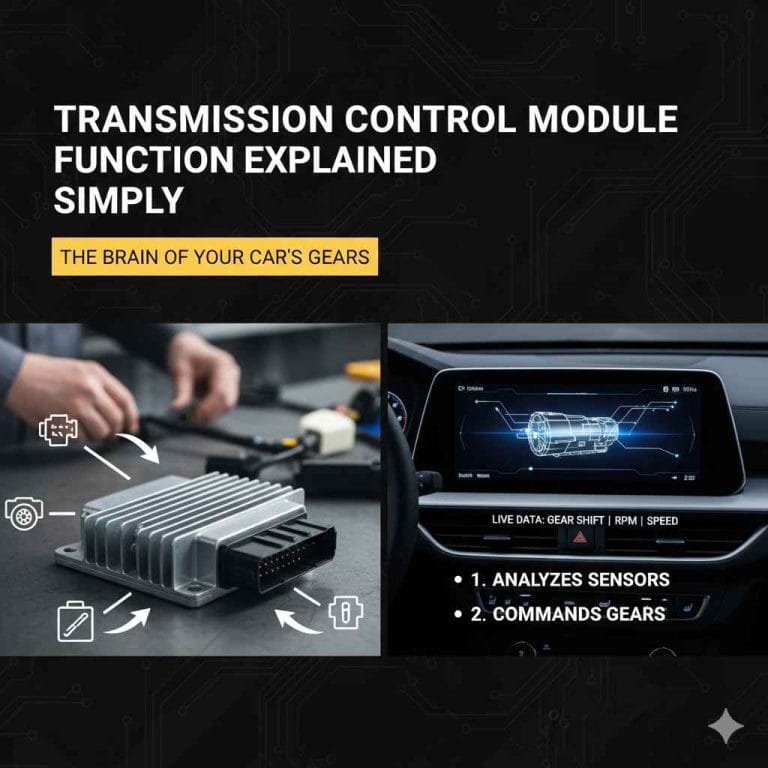
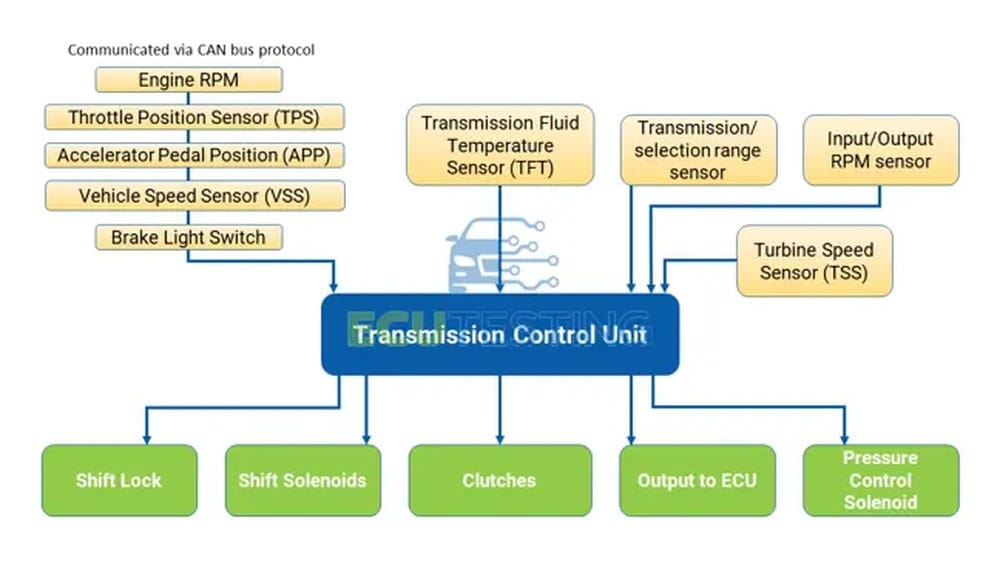
Modern cars use a Transmission Control Unit (TCU). This is a computer that manages when and how the transmission shifts. It uses data from sensors (like wheel speed, throttle position, and engine load) to pick the best gear.
The TCU’s main goals:
- Protect the engine from unsafe RPM
- Maximize fuel efficiency
- Provide smooth shifting
Sometimes, the TCU works with the Engine Control Unit (ECU). Together, they create a safe and efficient driving experience. If either system fails, you might notice strange shifting or RPM jumps.
Example: Tcu In Action
Imagine you push the gas hard to overtake a car. The TCU senses this and tells the transmission to downshift, raising RPM for more power. Once you let off the gas, it shifts back up to lower RPM for economy.
Why Rpm Matters For Fuel Economy
The gear your transmission chooses directly impacts fuel economy. Lower RPM usually means less fuel use, but it’s not always better. If the engine works too hard at low RPM, it can actually use more fuel.
Here’s a simple comparison:
| Driving Condition | Gear | Approx. RPM | Fuel Use |
|---|---|---|---|
| City Driving | 2nd or 3rd | 1,500 – 2,500 | Medium |
| Highway Cruising | 5th or 6th | 1,800 – 2,200 | Low |
| Hard Acceleration | 1st or 2nd | 3,500+ | High |
Staying in the right gear for your speed helps balance power and economy. That’s why automatic transmissions often shift quickly to higher gears during gentle driving.
Credit: www.sheehyfordgaithersburg.com
Transmission And Rpm Problems: What To Watch For
Sometimes, your transmission or RPM can show signs of trouble. Watch for these issues:
- Delayed or rough shifting: Could mean a failing transmission or sensor problem.
- Unusually high or low RPM: If your engine revs too high or stays too low for your speed, there may be a transmission or TCU issue.
- Slipping gears: The car changes gears unexpectedly, causing RPM to spike or drop.
- Check engine or transmission light: These warnings often mean the computer has detected a problem affecting RPM control.
Practical Tip
If you notice any of these issues, get your car checked by a mechanic quickly. Ignoring them can lead to expensive repairs.
How To Monitor And Control Rpm As A Driver
Even if you drive an automatic, you can help your transmission manage RPM:
- Watch the Tachometer: Know your car’s normal RPM range at different speeds.
- Use the Right Mode: Eco for savings, sport for power, manual for control.
- Don’t “Ride” the Gear: In manuals, shift at the right RPM (usually between 2,000 and 3,000 for most cars).
- Avoid Hard Acceleration: Smooth driving keeps RPM and stress on the transmission lower.
- Maintain Your Vehicle: Regular fluid changes and computer checks help the transmission and TCU work well.
Example: Best Rpm For Shifting
For many manual cars:
- Shift up around 2,500–3,000 RPM for normal driving.
- Shift up at 3,500–4,000 RPM for more power (like merging or passing).
Check your owner’s manual for your car’s best shifting RPM.
How Advanced Cars Handle Transmission And Rpm
Modern vehicles, especially hybrids and electric cars, use advanced systems to manage transmission and RPM.
- Hybrids: Some use special transmissions (like eCVT) that manage power from both the engine and electric motor. RPM can behave differently than in regular cars.
- Electric vehicles (EVs): Most have no traditional transmission. RPM is controlled by the electric motor’s speed, making gear changes unnecessary.
These systems focus on balancing power, efficiency, and smoothness. As technology advances, cars get better at managing RPM automatically.
Real Data: Transmission, Rpm, And Performance
To see how transmission affects RPM and performance, look at these real-world numbers from typical mid-size sedans:
| Speed (mph) | Manual (5th gear) | Automatic (6th gear) | CVT |
|---|---|---|---|
| 30 | 1,600 RPM | 1,400 RPM | 1,200 RPM |
| 50 | 2,400 RPM | 2,100 RPM | 1,800 RPM |
| 70 | 3,200 RPM | 2,900 RPM | 2,200 RPM |
You can see that automatics and CVTs usually keep RPM lower at the same speed, which saves fuel and reduces engine wear.

Credit: www.autozone.com
The Role Of Gear Ratios
Gear ratios are the numbers that describe how many times the engine turns for each turn of the wheels in a specific gear. A lower gear ratio means higher RPM at the same speed, while a higher gear ratio means lower RPM.
Performance cars often have shorter (lower) gear ratios for quick acceleration, which means higher RPM at normal speeds. Economy cars use taller (higher) gear ratios for lower RPM and better fuel economy.
Changing your car’s tires or wheels can also affect the gear ratio and, in turn, the RPM at a given speed. Bigger tires make the car go farther with each turn, lowering RPM for the same speed.
Practical Tips For Maximizing Transmission And Rpm Efficiency
- Keep Tires Properly Inflated: Underinflated tires make the engine and transmission work harder, increasing RPM and fuel use.
- Avoid Overloading: Carrying too much weight forces the transmission to downshift and raises RPM.
- Use Cruise Control on Highways: This keeps speed and RPM steady, saving fuel.
- Get Regular Transmission Service: Fluid changes and checks help the system shift smoothly and keep RPM in the right range.
- Pay Attention to Changes: If your car suddenly uses higher RPM for the same speed, it may need a checkup.
When To Seek Help For Transmission Or Rpm Issues
If you notice any of these signs, see a professional:
- The car won’t shift gears
- RPM “flares” (jumps up) during shifts
- Transmission feels “sluggish” or “
Products related to this article
Sponsored / affiliate links. As an Amazon Associate I earn from qualifying purchases. I may earn additional commission from eligible campaigns.