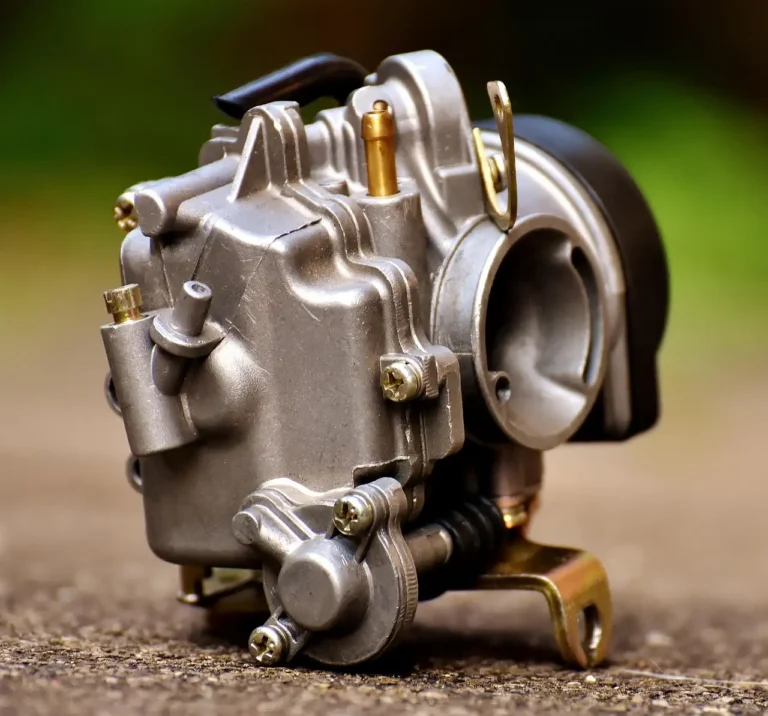
Carburetor Float Problems: Symptoms and Fixes
Float faults usually show up as fuel overflow, hard starting, black smoke, or fuel starvation after sitting. Check fuel level behavior using the wet-test method that applies to that carburetor before you tear the carb apart. That keeps you from replacing the wrong parts, and it helps avoid flooding or a lean stall. This guide separates float faults from choke hang-up, bad needle-seat sealing, restricted fuel supply, and overflow-tube leaks, then lists the fixes.
What a carburetor float does
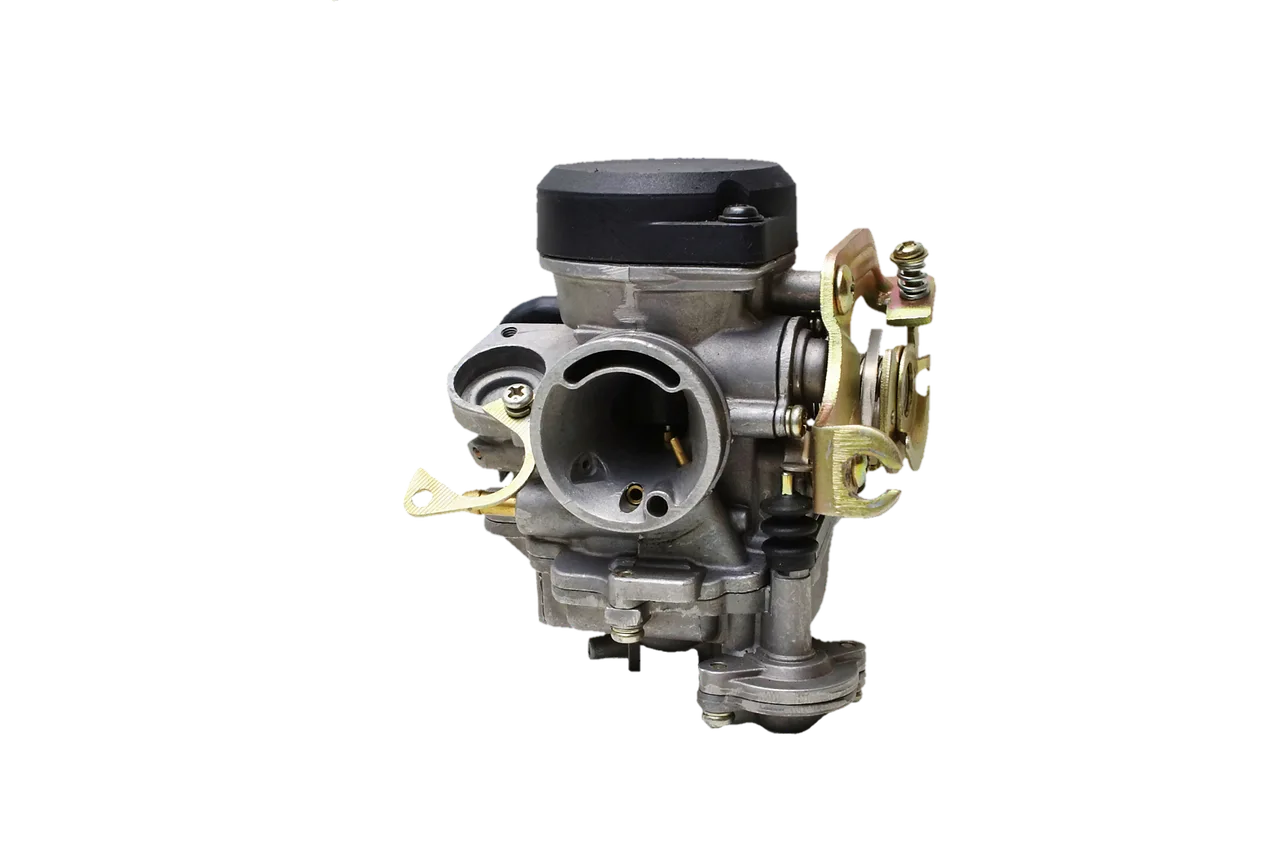


The float regulates the amount of fuel entering the float chamber. In most carburetors, that float is a hollow plastic, metal, or fuel-tolerant foam part that rises and falls with bowl level. When the level is correct, mixture stays stable. When it is too high, the engine can flood, run rich, smoke black, and leak fuel. When the level is too low, the engine may starve, hesitate, or die under load.
The float bowl is the fuel reservoir mounted on the carburetor. A float that sticks, sinks, or sits at the wrong height changes the fuel level in that bowl. The needle valve seals fuel flow as the float rises, but a worn tip or seat can leak even when the float position looks right.
How the float bowl fuel level stays stable
The float and needle work as a simple valve system. As the bowl fills, the float rises and closes the needle valve against its seat. As fuel is used, the float drops and the valve opens again. If the float does not rise freely, or if the valve does not seal, the fuel level moves away from spec.
That level matters more than the float’s appearance. A float can look intact and still be wrong if it has fuel inside, has worn hinge points, or sits at the wrong height. A sinker or a bent arm can hold the bowl too full. A float that cannot rise far enough can leave the bowl dry.
Common float types
Small-engine carburetors, motorcycle carbs, and vintage units use different float materials, but the failure logic is the same. Plastic floats can crack or soak up fuel if damaged. Metal floats can sometimes leak through a seam. Fuel-tolerant foam floats can age, deform, or become heavier over time.
That is why a float should be judged by level control, not looks alone. If the float fails a weight check during rebuild, leaks fuel, or binds on the hinge, replace it. If the needle tip or seat is worn, replace those parts too.
Which symptoms point to a float fault?
Fuel smell after shutdown, black smoke on acceleration, hard hot restart, and dry-bowl starvation all point to fuel-level trouble, but they do not all mean the same part has failed. Overflow and richness usually mean the bowl is too full. Dry-bowl symptoms point to blocked fuel flow, a stuck float, or a supply problem upstream.
Use the symptom to choose the next check. That avoids replacing a float when the choke is stuck, or replacing a needle when the petcock is not supplying fuel.
Fuel smell after shutdown
Fuel smell after shutdown usually means fuel is leaving the bowl when it should stay contained. The most likely causes are a leaking needle valve, a sinker float, a float set too high, or an overflow tube that is leaking because the bowl is overfilling. A stuck choke can also make the engine smell rich, but it will not usually drip fuel from the carb body.
Black smoke on acceleration
Black smoke on acceleration points to a rich condition. A float level that is too high can cause this, and so can a needle valve that does not seal. On some engines, a choke plate that hangs partly closed can mimic the same symptom, so check choke return before pulling the carb apart.
Hard hot restart
Hard hot restart often appears after shutdown heat soaks the carburetor. A float level that is too high can make the engine flood while parked, which then makes restarting difficult when warm. A leaking needle valve can cause the same pattern. If the engine starts with the throttle held open, look closely at overfill first.
Dry bowl or fuel starvation at high RPM
A dry bowl, hesitation at high RPM, or stalling under load often means fuel is not entering the bowl fast enough. That can come from a float stuck high, a blocked inlet, a clogged filter, a weak petcock, or a vent problem. Do not assume a float fault until upstream fuel supply checks out.
Picture a small engine that runs for 30 seconds, then dies when the throttle is opened. If the bowl is dry, the float may be closing too early, or the petcock may not be feeding fuel fast enough. That is a different fault path from an engine that leaves a wet stain under the carb after sitting overnight.
Fuel overflow or no fuel?
Overflow means the bowl is overfilling; no fuel means the bowl is not filling enough. Those are opposite failures. A float stuck low or a float that has taken on fuel can overfill the bowl and cause flooding. A float stuck high can hold the needle shut and starve the bowl. A leaking needle valve can overfill even when the float position looks normal.
How stuck-high and stuck-low floats differ
A stuck-high float does not drop enough to open the needle, so fuel flow into the bowl is restricted. The result is starvation, weak acceleration, or a dry bowl after sitting. A stuck-low float does the opposite. It leaves the needle open too long, allowing overfill and overflow.
A sinking float acts like a stuck-low float because it loses buoyancy and cannot close the valve at the correct level. That is why a float that looks straight is not enough proof. It must also float correctly and meet height specification.
What a leaking needle valve or seat can do
A needle valve can leak even if the float height is correct. The tip may be worn, the seat may be dirty, or the sealing surface may be damaged. When that happens, the bowl keeps filling, fuel may drip from the overflow tube, and the engine can flood after shutdown. UTI’s article on motorcycle carburetor issues says overflow tube leakage can be caused by a faulty float valve. (UTI)
How to rule out petcock, filter, or vent problems
Before blaming the float, check fuel flow from the tank, petcock, and filter. A weak petcock or clogged filter can starve the bowl and mimic a bad float. A blocked vent can also create a vacuum that slows filling. If fuel flow is strong up to the carb inlet but the bowl stays low, move to the float and needle.
Suppose a motorcycle idles well on the sidestand but dies at 6,000 rpm. If the tank outlet is weak or the fuel cap vent is blocked, the bowl may not refill fast enough. That is not the same as a float that is set too high.
How do you test float level?
Check float level against the manufacturer specification, then verify the fuel level by a wet test if the carb allows it. A bench measurement tells you whether the float height is within range. A sight glass or clear-tube wet test tells you whether the fuel level is actually where it should be. Use both when possible.
Bench check against manufacturer spec
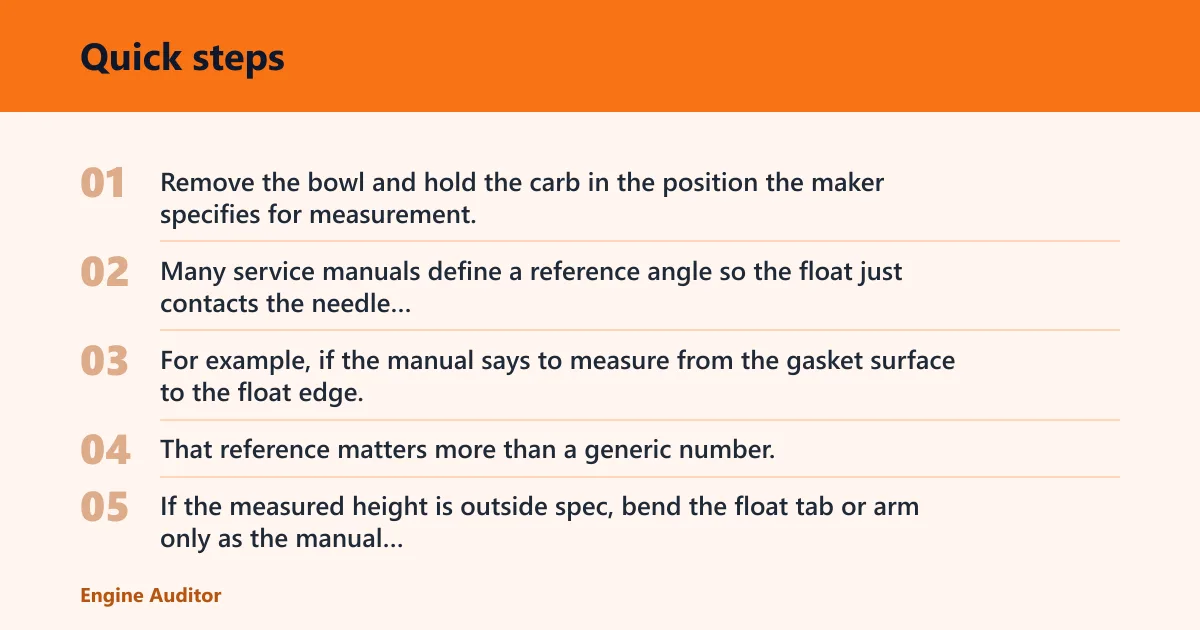
Remove the bowl and hold the carb in the position the maker specifies for measurement. Many service manuals define a reference angle so the float just contacts the needle without compressing the spring tip, if the needle uses one. For example, if the manual says to measure from the gasket surface to the float edge, hold the carb at the specified angle and measure from that gasket surface to the exact point named in the manual. That reference matters more than a generic number.
If the measured height is outside spec, bend the float tab or arm only as the manual directs. Do not force the hinge or needle tip. If the float is bent, fuel-logged, or warped, replacement is the better fix.
Wet check with a sight glass
Some carburetors allow checking fuel level through a sight glass, while others use a clear-tube wet test at the bowl drain instead. Use the method the carburetor was designed for, and consult the specific spec for that model rather than assuming a universal midpoint. Inspect only with the machine parked safely and away from hot or moving parts. A level above the specified mark points toward overfill; a level below it points toward starvation or restricted supply.
Using a tickler to reveal overflow behavior
Some carburetors have a tickler. Pressing it can help reveal overflow behavior by forcing fuel higher in the bowl for a moment. If fuel spills or the carb wets the area quickly, the needle may not be sealing or the float may not be closing at the correct point. Use the tickler only as a brief diagnostic check.
What a float scale can confirm during rebuild
A float scale is useful during a rebuild or repair check because it confirms whether the float weighs what the design expects. A float that is heavier than normal may have absorbed fuel or have a leak. A proper weight check supports the decision to reuse or replace, instead of guessing from appearance alone.
Float diagnosis matrix
This matrix helps separate float faults from choke, petcock, vent, and supply problems. Match the symptom, run the quick test, then confirm the fault before buying parts.
| Symptom | Likely cause | Quick test | Confirmed fault | Fix |
|---|---|---|---|---|
| Fuel smell after shutdown | Needle valve leak or float too high | Watch for drip at overflow after engine off | Bowl overfill | Clean or replace needle and seat; set float height |
| Black smoke on acceleration | High float level or choke hanging closed | Check choke plate return, then bowl level | Rich fuel level or choke fault | Free choke or reset float to spec |
| Hard hot restart | Overfill from leaking valve or sinking float | Crank with throttle open after short soak | Flooded bowl | Replace float if it sinks; service needle and seat |
| Dry bowl after sitting | Float stuck high or fuel supply blocked | Check inlet flow from tank and petcock | Starvation upstream or float not dropping | Clear supply fault; free float hinge |
| Engine dies at high RPM | Weak petcock, clogged filter, or vent blockage | Run fuel-flow test at carb inlet | Inadequate refill rate | Repair supply path; then recheck float level |
| Fuel dripping from overflow tube | Faulty needle valve or sinking float | Open drain and observe refill behavior | Constant overfill | Replace needle, seat, or float as needed |
| Rough idle with wet plug | Too-high float level | Compare level to spec or sight glass | Rich idle circuit | Adjust float height; inspect needle seal |
| Hesitation off idle | Too-low fuel level | Check float drop and bowl refill | Fuel starvation | Correct float adjustment; clear inlet restriction |
How do you fix a stuck carburetor float?
Start with cleaning, then inspect the hinge, needle tip, and seat, then adjust or replace the worn parts. If the float only sticks because of varnish or debris, carburetor cleaner and compressed air may free it. If the float is warped, sunk, or worn, replacement is the right fix.
Cleaning with carburetor cleaner and compressed air
Remove the bowl and clean the float area with carburetor cleaner. Blow out varnish and loose debris with compressed air. Do not scrape the seat with wire or another hard tool. That can damage the sealing surface and make the leak worse.
Inspecting the hinge, needle tip, and seat
Check that the float moves freely on the hinge pin and does not rub the bowl. Inspect the needle tip for a groove, flattening, or hardened rubber. Look at the seat for dirt, corrosion, or damage. If the needle or seat is worn, replace both rather than only one side.
Adjusting float height to spec
Set the float height to the maker’s specification, using the manual’s reference point. Many carbs measure from the gasket face to a specified point on the float while the carb is held at a slight angle. The goal is a closing point that matches the designed fuel level, not a guess from appearance.
Replacing a leaking float, needle, or seat
If the float is fuel-logged, cracked, warped, or heavier than it should be, replace it. If the needle tip is worn or the seat is damaged, replace those parts as a set when the kit supports it. On many carbs, a needle-and-seat swap is cheaper than a full rebuild kit, but a rebuild kit makes sense if gaskets, o-rings, and seals are also aged or leaking.
- Shut off fuel and drain the bowl.
- Remove the bowl and inspect for varnish, debris, and wear.
- Clean the float, needle, and seat with carburetor cleaner.
- Check float movement, float weight, and hinge condition.
- Measure float height against the service spec.
- Replace worn parts, then verify bowl level and leak behavior.
What causes float failure?

Varnish and debris are common causes, but they are not the only ones. Ethanol damage, soaked floats, warped floats, hinge wear, and previous repair damage can all change fuel level control. A carb that sat with old fuel often needs more than a quick spray; it may need a full inspection of the float circuit.
Varnish, debris, and ethanol damage
Old fuel leaves residue that can stick the float or needle. Fine debris can hold the needle off its seat. Ethanol-blended fuel can also attack aging float materials or soften seals over time. Cleaning helps, but a damaged float or seal still has to be replaced.
Warped floats and hinge wear
A warped float can sit at the wrong angle and close early or late. Hinge wear can let the float bind, which creates the same effect. If the float moves unevenly or the arm feels loose, do not keep adjusting around the problem. Replace the worn part.
Damage from prior repair work
Damage from earlier repairs is common. A bent float arm, scratched seat, or over-tightened bowl screw can create a fault that looks like a bad float. If a repair was done recently and the problem started after that, inspect the parts that were handled first.
Frequently asked questions
What are signs of a bad carburetor float?
Common signs are fuel smell after shutdown, flooding, black smoke, hard warm starts, poor fuel economy, and fuel dripping from the overflow. A bad float can also cause a dry bowl and high-RPM starvation if it sticks high. Look for the fuel level behavior that matches the symptom before replacing parts.
How do I know if the needle valve is leaking?
If fuel keeps entering the bowl after the float should have closed, the needle valve may be leaking. Signs include overflow tube drip, wet carb exterior, and a bowl level that rises above spec or the specified reference point. A worn needle tip or damaged seat can leak even when the float looks correct.
How do I check carburetor float level?
Use the manufacturer’s measurement method first, since the reference point varies by carb. Then verify fuel level with the wet test that carburetor uses; on some models that is a sight glass, and on others it is a clear-tube test at the drain. If the carb has neither, compare the float height to the specified measurement with the bowl removed.
Products related to this article
Sponsored / affiliate links. As an Amazon Associate I earn from qualifying purchases. I may earn additional commission from eligible campaigns.