Can a Tire Plug Fail After a Repair?
Yes. If a plugged tire still loses air, the plug may have failed, but the leak can also come from the valve, bead, rim, or a puncture that should have been repaired from inside. A tire that cannot hold pressure after reinflation may need a fresh diagnosis. Ignore it, and you may keep driving on an underinflated tire, which raises heat, wear, and blowout risk. This guide shows how to tell plug failure from other leak sources, and when repair or replacement is the right call.
Plug vs patch at a glance
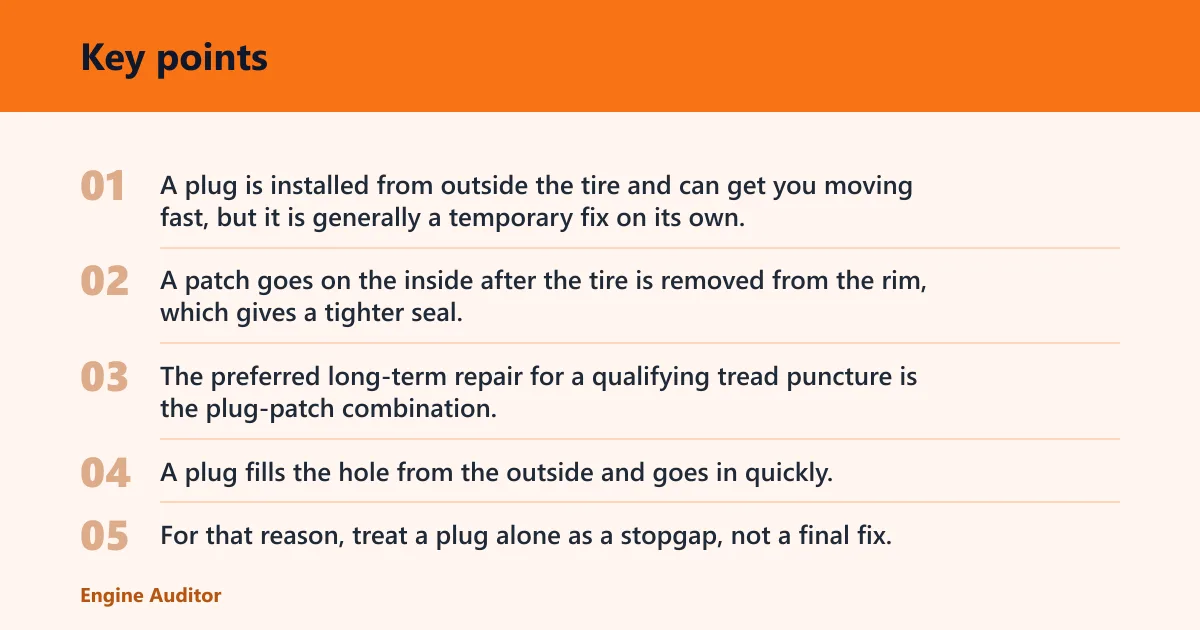


The difference is straightforward. A plug is installed from outside the tire and can get you moving fast, but it is generally a temporary fix on its own. A patch goes on the inside after the tire is removed from the rim, which gives a tighter seal. The preferred long-term repair for a qualifying tread puncture is the plug-patch combination.
| Repair type | Where it is installed | What it seals | Main use | Durability expectation |
|---|---|---|---|---|
| Plug | From the outside | Puncture channel | Quick roadside fix | Generally temporary on its own |
| Patch | Inside the tire | Inner liner | Internal sealing after removal from the rim | More secure than a plug alone |
| Plug-patch combination | Inside and through the puncture | Puncture channel and inner liner | Qualifying tread puncture | Preferred long-term repair |
What a tire plug seals
A plug fills the hole from the outside and goes in quickly. That speed helps on the shoulder of a road, but it does not inspect the inside of the tire, so hidden liner damage can remain. For that reason, treat a plug alone as a stopgap, not a final fix.
What a tire patch seals
A patch is applied after the tire is removed from the rim, so it can seal the inner liner directly. That matters because the liner is the air-retaining layer, and damage there can change whether a repair should be trusted. A patch is more secure than a plug alone for that reason.
Where a plug-patch repair fits
The plug-patch combination is the industry-recommended method for qualifying tread punctures. It fills the puncture channel and seals the inner liner at the same time. That is why it is preferred over a plug-only repair when the tire can be removed and inspected.
Can a tire plug fail after repair?
A plug can loosen, dry out, or deteriorate, and a repaired puncture can reopen if the hole was not truly repairable in the first place. A later leak does not automatically mean the plug is the only problem. The leak may be coming from the valve, bead, rim, or hidden tire damage that was never addressed.
Why a plug can loosen or deteriorate
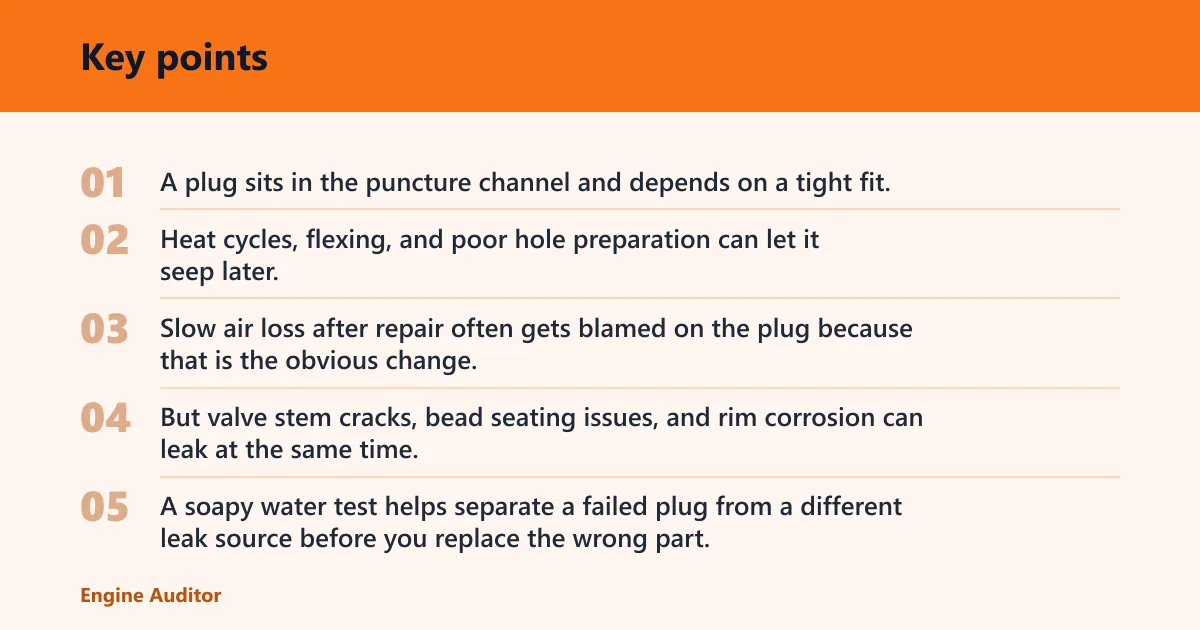
A plug sits in the puncture channel and depends on a tight fit. Heat cycles, flexing, and poor hole preparation can let it seep later. Because it is installed from outside the tire, it cannot confirm the inner liner is intact, so a plug-only repair may hold for a while and still fail later.
Why an old puncture may reopen
If the puncture was too large, too close to the shoulder, or part of a larger internal injury, the repair was never a strong candidate. Firestone says repairable punctures must be in the tread, not the sidewall or shoulder, and no larger than 1/4 inch, or 6 mm. A plug may hide that problem for a time. (Firestonecompleteautocare) (Firestonecompleteautocare)
Why a later leak is not always the plug
Slow air loss after repair often gets blamed on the plug because that is the obvious change. But valve stem cracks, bead seating issues, and rim corrosion can leak at the same time. A soapy water test helps separate a failed plug from a different leak source before you replace the wrong part.
Tire plug decision table
If a tire loses air after a repair, use the symptom pattern to decide what to inspect next. The table below separates plug failure from nearby leak sources and shows the likely fix path.
| Symptom | Likely cause | What to check next | Likely fix |
|---|---|---|---|
| Air loss at the original puncture | Plug loosened or puncture channel reopened | Soap test at the repair point, then inspect inside the tire | Plug replacement or patch-plug repair |
| Slow leak with no bubbles at the plug | Valve stem seepage | Soap test at the valve core, stem base, and cap area | Valve service |
| Air loss around the wheel edge | Bead seating problem or rim corrosion | Soap test around the bead and rim flange | Bead/rim service |
| Leak returns after a previous plug-only fix | Inner liner damage was missed | Remove tire from rim and inspect the inside | Patch-plug repair or tire replacement |
| Repair was made in the shoulder or sidewall | Unrepairable location | Check exact puncture location and tire condition | Tire replacement |
| Tire looks flat or was driven flat | Internal structural damage may be present | Stop driving and inspect for sidewall damage, heat marks, and cords | Tire replacement |
-
Inflate and soap-test.
Inflate the tire to the placard pressure and brush soapy water over the plug, valve stem, bead, and rim edge. Bubbles show the leak path. That tells you whether the plug failed or the leak is coming from a different spot. -
Mark the leak point.
Note exactly where bubbles appear and whether they repeat after a few rotations of the wheel. A leak at the valve or bead can look like a bad plug if you only check once. Marking the spot keeps the diagnosis clean. -
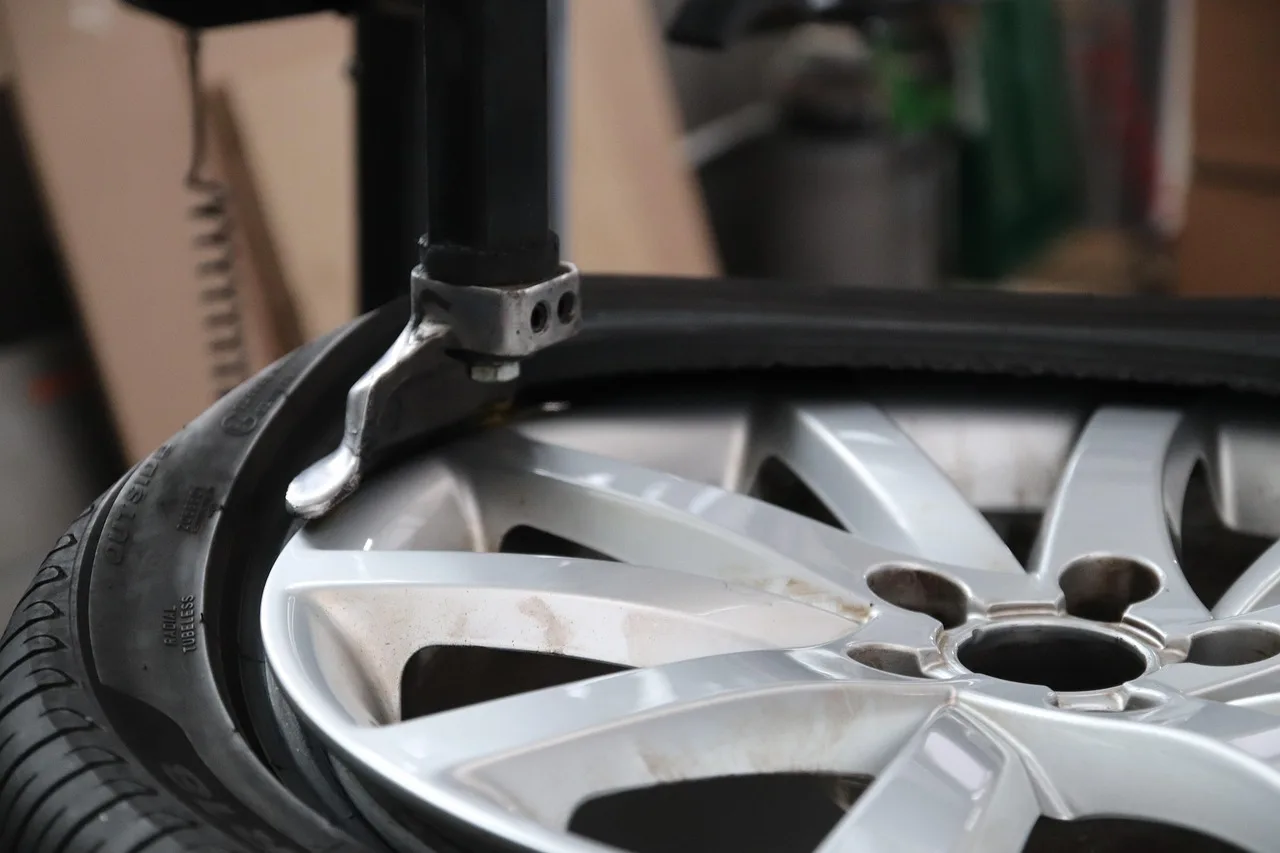
Remove the tire for inspection.
If the leak appears to come from the puncture area, the tire should come off the rim. Firestone says tire repair requires removing the tire from the wheel for inspection. That is the only way to check the inner liner and confirm whether the repair still qualifies.
What makes a repair fail later?
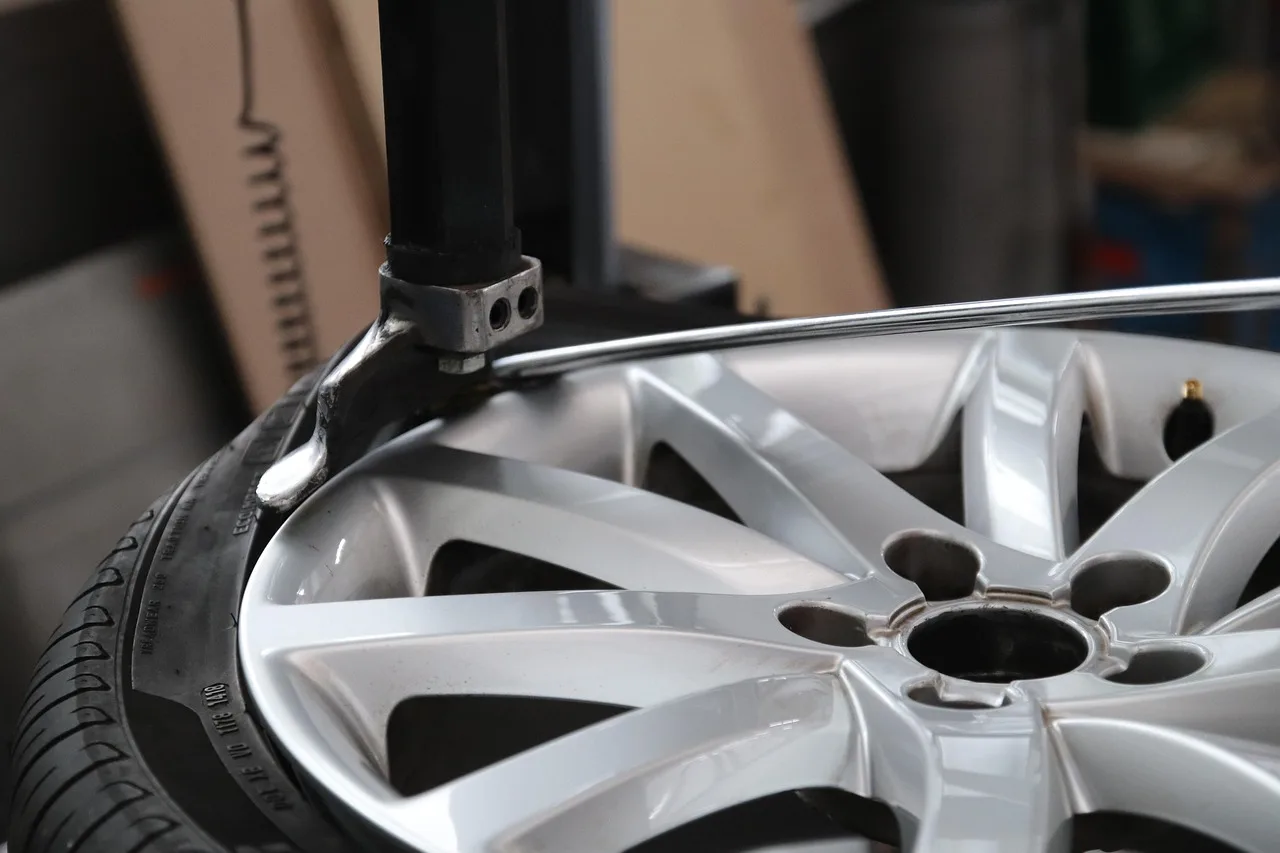
Repair failure later usually comes from one of three places: hidden liner damage, a different leak source, or a puncture that never qualified for repair. A later loss of air is a diagnosis problem first. Treating it as a plug problem alone can miss the actual fault.
Inner liner damage
The inner liner must be inspected after the tire is removed from the rim. If the liner is torn, scuffed, or heat damaged, a plug may not survive long term. That hidden injury can let air move through the tire structure even when the outside hole looks sealed.
Valve stem leaks
Valve stems can crack, corrode, or loosen. Sunsoul lists valve stem damage as a top reason for slow leaks after repair. That means a driver can blame the plug while the leak is actually at the valve core or stem base. A soap test at the valve catches that early.
Bead seating and rim damage
Firestone includes bead seating checks during repair service, and wheel problems can create the same symptom as a failed plug. The same source says some slow leaks are caused by wheel damage. Bends, dents, rust, or corrosion on the rim can stop the bead from sealing and keep the tire from holding air.
For example, if a tire was plugged after a nail puncture in the center tread, it may start losing a few psi overnight. If bubbles appear only at the valve stem, the plug is probably not the problem. The repair path changes from plug replacement to valve service.
Picture a tire with a plug that looks fine, but the wheel edge shows rust and bubbles after a soap test. That points to bead or rim leakage, not a bad plug. Replacing the plug would miss the leak source and leave the tire unreliable.
When not to plug a tire
Do not plug a tire when the damage is outside the repairable zone, when the puncture is too large, or when the repair history is unclear. Sidewall and shoulder damage do not qualify for repair, and a puncture larger than 1/4 inch, or 6 mm, should be treated as a replacement case.
Sidewall and shoulder damage
Firestone says sidewall or shoulder damage does not qualify for repair. Those areas flex too much for a safe puncture repair. A plug may seem to hold at first, but the load on that part of the tire makes later failure far more likely.
Punctures larger than 1/4 inch
Firestone states repairable punctures must be no larger than 1/4 inch, or 6 mm. Halifax Towing gives the same 6 mm limit. If the hole is larger, the tire should be replaced rather than patched with hope. A bigger hole leaves too much damage for a dependable seal.
More than one puncture or uncertain repair history
A tire with more than one puncture, or a plug that was installed without a proper internal inspection, needs extra caution. If the inner liner cannot be checked, the tire may have damage that a plug hides. That is where a proper shop inspection or replacement becomes the safer call.
Can you replace a plug with a patch?
Yes. If the tire can be removed and the puncture still qualifies, a plug can be replaced with a proper internal repair. In most cases, that means a plug-patch combination rather than a patch alone, because the puncture channel and inner liner both need to be sealed for a durable result.
When the tire can be removed and inspected
If the plug is leaking and the tire still meets tread-only repair criteria, the next step is to remove it from the rim and inspect the inside. Firestone says that inspection is part of repair service. If the liner is sound and the hole is within the size limit, a patch-plug repair is the better fix.
When the plug-patch repair is the better fix
The patch-plug combination is preferred when the tire qualifies because it seals the inner liner and the puncture path together. The same source describes that combined method as the safest way and calls plug-only repair unsafe. That is a strong reason to upgrade a weak plug repair when the tire still qualifies.
When replacement is the safer call
If the puncture is in the sidewall or shoulder, exceeds 1/4 inch, or the tire was driven flat, repair should stop and replacement should be considered. Firestone says a tire that looks flat or was driven flat may need replacement. Internal heat and flex damage can make any repair unreliable.
Choose plug-only repair if… / Choose plug-patch repair if…
Choose plug-only repair for a short-term roadside need. Choose plug-patch repair when the tire qualifies for a longer-term fix and can be inspected from the inside. The decision turns on location, size, and the condition of the inner liner, not on convenience alone.
Choose plug-only repair if…
- You need a quick roadside fix to move the vehicle a short distance.
- The puncture is in the tread and appears to be a single, small hole.
- You understand that the repair is temporary and still plan a full inspection.
Choose plug-patch repair if…
- The tire can be removed from the rim for inside inspection.
- The puncture is in the tread, single, and no larger than 1/4 inch, or 6 mm.
- You want the repair method that seals the puncture channel and inner liner together.
Frequently asked questions
Is a tire plug a permanent fix?
No. A tire plug is installed from the outside and is generally temporary on its own. It can get a driver moving quickly, but it does not inspect or seal the inner liner. For a qualifying tread puncture, the more secure long-term option is the plug-patch combination.
Is plugging a tire safe?
Plugging a tire can be acceptable as a temporary fix when the puncture is in the tread and small enough to qualify, but plug-only repair is not the preferred long-term method. The safer long-term repair is usually a plug-patch combination after the tire is removed and inspected.
Patch vs plug tire repair: which is better?
A patch is more secure than a plug alone because it is applied inside the tire and seals the inner liner. The best choice for qualifying tread punctures is usually the plug-patch combination, since it seals both the puncture channel and the liner. That is the preferred long-term repair.
Can you replug a plugged tire?
Sometimes a plugged tire can be repaired again, but only after proper inspection from the inside. If the hole still qualifies and the liner is sound, a plug-patch repair may replace the old plug. If the puncture is too large, in the wrong area, or the tire was driven flat, replacement is the better call.
Products related to this article
Sponsored / affiliate links. As an Amazon Associate I earn from qualifying purchases. I may earn additional commission from eligible campaigns.