Can a Curb Hit Damage the Tire Bead?
A curb hit can damage the tire bead if the impact pinches the sidewall, bends the rim, or drops pressure right after the hit; a bent rim, leaking valve, or bulge means you should stop driving and inspect the wheel. Keep driving and you risk air loss, shake, or a blowout. This guide explains how bead damage differs from rim and valve damage, what symptoms point to each failure, and what to check next.
Tire bead triage checklist
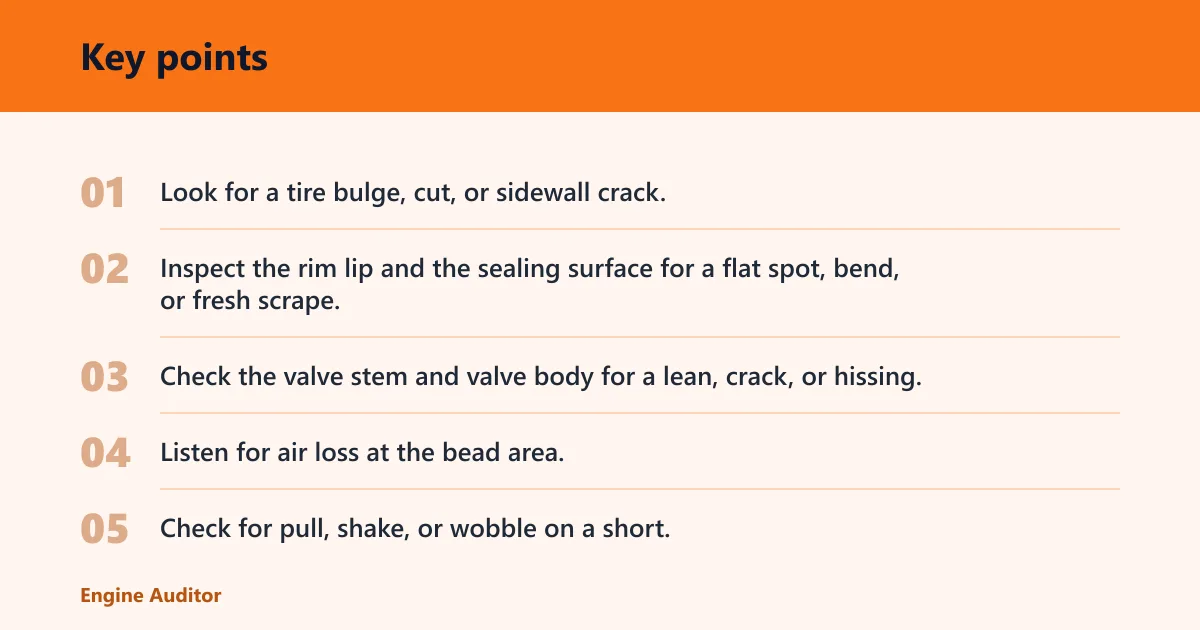


Use this order in the first 10 minutes after a curb strike: tire sidewall, rim lip and sealing surface, valve stem and valve body, then pressure and road feel. Do not skip the bead area because the leak may hide where the tire seals to the wheel.
Inspection order after a curb strike
- Look for a tire bulge, cut, or sidewall crack.
- Inspect the rim lip and the sealing surface for a flat spot, bend, or fresh scrape.
- Check the valve stem and valve body for a lean, crack, or hissing.
- Listen for air loss at the bead area.
- Check for pull, shake, or wobble on a short, low-speed move only if the tire still holds air.
| Outcome | What you are likely seeing | Drive now? | Shop action | Replace? |
|---|---|---|---|---|
| No visible damage | No bulge, no leak, no pull, no shake | Yes, with caution | Pressure check and recheck later | No |
| Bead-area leak likely | Hiss or slow pressure loss at the rim edge, bubbles at the bead | Maybe, only to reach a shop if pressure stays safe | Clean, inspect, and reseal if the rim and tire are serviceable | Sometimes |
| Rim or valve damage likely | Bent rim lip, vibration, wobble, or valve leak | No, if pressure is dropping fast or handling changes | Wheel repair or valve service, plus leak test | Sometimes |
| Tire replacement required | Bulge, sidewall crack, large cut, cords showing, or severe deformation | No | Replace the tire before further use | Yes |
Curb hit damage tire decision table
| Check | Yes | No |
|---|---|---|
| Tire still holds pressure with no bulge or cut | Can drive a short distance to a tire shop | Do not drive; repair or tow |
| Leak is at the bead area and the rim is only dirty or corroded | May be cleaned and resealed by a shop | Look for another source of the leak |
| Rim lip is bent or the valve leaks after impact | Repair or replace the wheel part, then retest | Rule out bead damage and puncture |
| Sidewall bulge, deep cut, or crack is present | Replace the tire | Do not keep driving on that tire |
Can a curb hit damage the tire bead?
Yes. A curb strike can deform the wheel surface where the tire seals, pinch the sidewall, or disturb the bead seat enough to start a leak. The tire bead seals air between the tire and rim, so any change in that contact can create a slow leak or a sudden pressure loss.
How impact load reaches the bead area
The bead sits on the wheel’s sealing surface. A hard curb hit can push the tire inward, bend the rim lip, or shift the tire enough to break the air seal. That does not mean the bead itself is always torn. It may simply be out of position or unable to seal against a damaged wheel surface.
Low pressure makes this more likely because the tire has less support at the rim seat. MotorTrend’s beadlock-wheel explainer notes that beadlocks are used when tires are aired down very low off-road, which highlights how important air pressure is to keeping a tire seated on the wheel. After a curb strike, an underinflated tire has less help holding its shape at the bead area. (Motortrend)
Why low-profile tires are more vulnerable
Low-profile tires have less sidewall to absorb a curb hit. That leaves the rim and bead area closer to the curb impact, so the wheel can deform more easily and the seal can break faster. A taller sidewall gives more cushion. A shorter one sends more force into the wheel.
A low-profile tire can clip a parking curb at low speed and still hold air at first, then start leaking after the wheel cools or the tire flexes again. The immediate damage may be subtle, but the rim or bead seat can still be bent enough to leak later.
How do I tell if a curb hit damaged the bead or just the rim?
A bent rim usually shows up as a visible flat spot, lip bend, vibration, or a slow leak that returns after inflation. Bead damage is more likely when air escapes at the tire-to-rim interface without a clear puncture. Corrosion or pitting on the sealing surface can mimic bead damage and cause the same leak pattern.
What a bent rim looks and feels like
Look closely at the rim lip where the tire meets the wheel. A curb strike can bend that edge inward or leave a flat spot. A deformed rim can create vibration, shaking, or wobble that becomes more noticeable with speed, and it may also make the tire hard to seal properly.
The key point is that a leak at the bead does not automatically mean the tire bead is ruined. The wheel may be the part that lost its shape, and a straight wheel is often required before the tire can seal again.
Corrosion and pitting at the sealing surface
Corrosion or pitting on aging wheels and rims often causes bead leaks. Air escapes between the tire and the rim, but the cause is not always impact damage. Sometimes the wheel simply cannot seal because the surface is rough. That leak can look like bead damage even when the tire bead is intact.
A tire shop may clean the rim before resealing. That matters because the sealing surface has to be clean for the tire to hold air again. If the surface is too damaged, cleaning will not be enough.
Signs the rim is the leak source, not the bead
- Leak appears at one spot on the rim edge after soapy water is applied.
- The tire sidewall looks normal, but the wheel lip has a dent or scrape.
- The valve area also looks stressed, which can happen in the same hit.
- Pressure loss is slow and returns after inflation, then reappears.
What are signs of a bead leak after impact?
A bead leak usually shows up as air escaping between the tire and rim, not from a puncture in the tread. Common signs are hissing near the wheel edge, slow pressure loss, or bubbles when soapy water is brushed around the bead. If the leak is at the bead, the wheel or tire seal area is the first suspect.
When a leak points to bead seal failure versus a puncture
A puncture usually leaks through the tread or sidewall from a visible object path. A bead leak shows up where the tire meets the rim. That difference matters because a bead leak often needs cleaning, reseating, or rim work, while a puncture repair follows a different process.
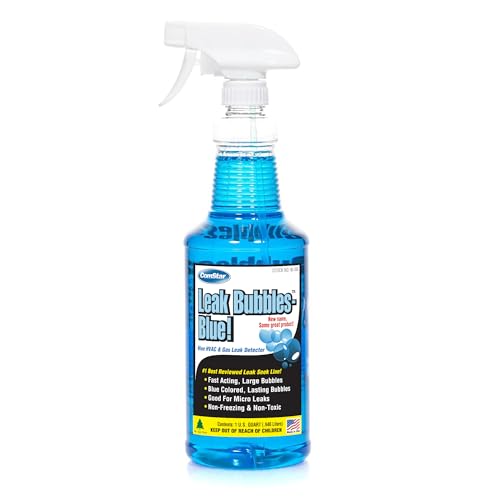
Why soap water is useful for locating the leak
Soapy water makes escaping air visible as bubbles. Apply it to the tire edge, the valve stem, and the rim lip after reinflation. If the bubbles gather at the bead line, the seal is the problem. If they form at the valve, the valve stem or valve body is the leak source.
If a tire loses pressure overnight after a curb hit, that is a strong reason to inspect the bead, rim lip, and valve separately rather than assuming the tire itself is ruined. If bubbles form only at the bottom edge of the wheel, the bead seal or rim surface is the likely culprit. If the valve bubbles, do not blame the bead.
What else to inspect after a curb strike
Check the valve stem and valve body early, then inspect the sidewall, then look for pull or shake. A curb hit can damage the tire, the wheel, or nearby suspension parts. That is why the inspection should not stop at the tire edge.
Valve stem and valve body checks
A valve can be damaged in the same impact that hits the bead area. Look for a bent stem, cracked rubber, or a slow hiss at the valve core. If the valve is damaged, the tire may lose air even if the bead is fine.
Sidewall bulges, cuts, and cracks
A bulge means the sidewall structure has been injured. That is separate from a bead leak and usually requires immediate professional inspection. Impacts can damage a tire without the driver noticing right away, so a visible bulge, deep cut, or sidewall crack generally means the tire should come out of service. For more on sidewall symptoms, see sidewall damage.
Pulling, shake, or wobble after impact
If the vehicle pulls after the strike or the steering wheel shakes, alignment or wheel balance may be involved. A bent rim can add wobble, and a damaged suspension component can change tracking. If the problem gets worse at speed, do not treat it as a simple bead issue. The wheel and suspension need attention too.
When a curb hit is followed by shake, pull, or a steering-wheel vibration, the next step is often a wheel and suspension check, including balance and alignment if the tire and rim themselves are not the only issue. That helps separate a bead leak from a larger handling problem.
Can a bead leak be repaired?
If the rim and tire are still serviceable, a leak from the bead area can sometimes be cleaned and resealed. If the tire carcass is sound, the rim is serviceable, and the leak comes from corrosion or a poor seal, cleaning and resealing may solve it. Bead sealer can be used after corrosion removal, and the process usually starts with a wire brush on the rim surface. If the bead area is torn or the wheel is badly bent, replacement is the safer route.
When cleaning and resealing may be enough
A repair is more plausible when the leak is slow, the rim lip is not badly bent, and the tire has no bulge or sidewall damage. In that case, a shop can clean the sealing surface, inspect the bead, and apply bead sealer to the rim and tire bead. That is a sealing repair, not a puncture patch.
When damage means replacement instead
Replace the tire if the sidewall is bulged, cut, or cracked, or if the bead area has been damaged enough that it will not hold air after proper cleaning and reseating. Replace or repair the wheel if the rim is bent or the sealing surface is too pitted. Do not keep trying to inflate a tire that will not hold.
Frequently asked questions
What are signs of a bead leak after hitting a curb?
Look for hissing at the wheel edge, slow pressure loss, and bubbles at the bead line when soapy water is applied. The leak is usually between the tire and the rim, not through the tread. If the valve also bubbles, the valve may be the actual leak source.
Can a tire bead leak be fixed, or does the tire need replacement?
It can sometimes be fixed if the tire is otherwise sound and the leak is caused by dirt, corrosion, or a minor seal issue. The rim may need cleaning, and a shop may use bead sealer after that. If the bead or sidewall is damaged, replace the tire.
Is it safe to drive after scraping or hitting a curb?
Only if the tire holds pressure, there is no bulge or cut, and the wheel still tracks normally. If the tire is losing air, the wheel is bent, or the vehicle pulls or shakes, stop driving and inspect it. Continued driving can worsen the damage fast.
Products related to this article
Sponsored / affiliate links. As an Amazon Associate I earn from qualifying purchases. I may earn additional commission from eligible campaigns.