How to Sync Multiple Carburetors on One Engine
Synchronize multiple carburetors by first checking that the engine is mechanically sound, then match each carb’s airflow or vacuum at idle and just off idle with the correct sync tool; If readings differ by more than about 1–2 in-Hg, or if the spread is uneven, adjust the carburetors. Poor sync causes rough idle, hesitation, hot-running cylinders, and wasted time chasing faults from worn linkages or engine issues. This guide shows how to tell whether sync is needed, set up the right tools by engine type, and verify the result before you touch mixture settings.
What carb synchronization changes

Synchronization makes multiple carburetors open together and draw the same amount of air at the same throttle position. On a clean, healthy engine, that gives smoother idle, cleaner transition off idle, and more even cylinder response. It cannot correct a dirty carb, a vacuum leak, weak compression, or bad timing.
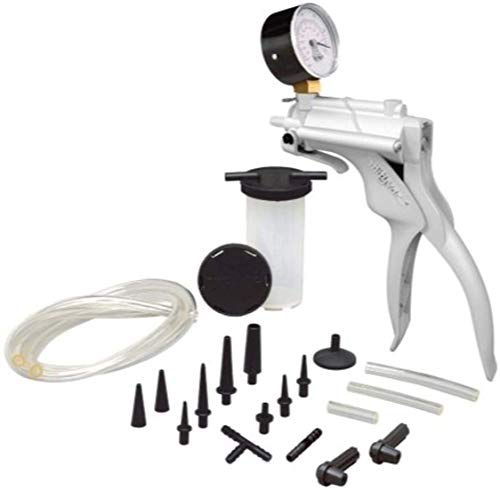
For 4-stroke engines, the usual tool is a set of vacuum gauges or a manometer. They connect to each carburetor or intake runner through a vacuum port, then show whether all cylinders are pulling evenly at idle and just off idle. On 2-stroke outboards, the service manual is the reference for throttle plates and linkage, because the adjustment path is different.
What you’ll need
- Vacuum gauges or a manometer for 4-stroke engines
- Hoses, adapters, and caps that match the vacuum ports on your carbs or intake runners
- Basic hand tools for idle screw and linkage adjustments
- A cooling fan for air-cooled engines or long idle sessions
- The service manual for your exact model, especially for 2-stroke outboards
- Clean rags and a light source for inspecting hose routing and throttle linkage
- Fuel supply arranged so the engine can run safely during the sync procedure
Tool setup details that prevent false readings
Check that all gauge hoses are the same length, routed away from hot parts, and sealed tightly at every connection. Cap any unused vacuum port before and after the test. A loose cap or a cracked hose can mimic a bad carburetor, and a sticky gauge needle can hide the real fault.
For a motorcycle or marine engine that idles for several minutes, steady airflow matters. Use a fan on air-cooled models, keep fuel flow stable, and make sure the throttle can return to the stop without drag.
Does your engine need sync work?
You need sync work when one or more cylinders show a different vacuum reading, the idle hangs or hunts, or the engine feels smooth on one throttle opening and rough on the next. If a carb cleanup, rebuild, or removal just happened, syncing usually belongs after reinstallation and before final road or water testing. If the readings are far apart, stop and fix the engine first.
Signs that point to sync trouble
Look for a shaky idle, uneven exhaust note, poor pickup, and one cylinder or pipe that runs hotter than the others. A motorcycle may feel like it surges at small throttle openings. An outboard may idle cleanly in the tank but stumble when shifted or loaded.
When to stop and repair first
Do not chase sync if ignition timing is off, compression varies widely, the carburetors are dirty, the throttle shafts are worn, or a vacuum leak is present. Those faults create false gauge readings and lead to the wrong adjustment.
Baseline checks before syncing
Start with a baseline health check. That means ignition timing, compression, and vacuum leak inspection before any adjustment. The carbs should be clean before syncing, and any sticky throttle shaft or worn linkage should be found now, not after a round of gauge work.
- Check ignition timing to the maker’s specification.
- Verify compression is even enough to support a sync.
- Inspect boots, clamps, gaskets, and vacuum caps for leaks.
- Make sure each carburetor is clean, assembled correctly, and returning to the stop.
- Confirm the throttle cable and linkage move without binding.
Carb sync checklist
| Engine type | Hookup point | Idle target behavior | Likely false-reading causes | Pass/fail verification steps |
|---|---|---|---|---|
| 2-stroke outboards | Follow the service manual for the test point; inspect throttle plates and linkage against the manual | Even idle speed and equal throttle plate opening across the bank | Worn linkage, sticky plates, air leaks at hoses or seals, dirty carbs | Idle stays steady, plates open together, snap-throttle return is even, caps restored after test |
| 4-stroke engines | Each carburetor or intake runner vacuum port | Matched vacuum at idle and a similar rise off-idle | Vacuum leak, uneven compression, ignition fault, hose length error, leaking cap | Readings stay within a narrow spread, then return to balance after a throttle snap |
| Multi-carb motorcycles | Vacuum ports on each carb or intake runner | Stable idle, crisp take-up, and equal response from all cylinders | Sticky throttle shaft, worn cable, intake boot leak, out-of-date idle stop setting | Idle is even after adjustment, off-idle response matches, no port is left open |
How do you sync the carbs?
Warm the engine, attach the sync tool correctly, and make adjustments in the order the model requires. On 4-strokes, that usually means balancing vacuum first, then linking the throttle action so all carbs open together. On 2-stroke outboards, the service manual controls the sequence because the throttle plates and linkage are the reference points.
- Warm the engine and hold a steady idle with the choke off.
- Connect the gauges or manometer to each vacuum port, or follow the outboard manual’s hookup point.
- Zero or check the gauge reading before making any adjustment.
- Choose one carburetor as the reference and leave its setting alone unless the manual says otherwise.
- Adjust the other carbs one at a time until their readings match the reference at idle.
- Set each idle mixture screw to the maker’s specification, then trim for the smoothest idle only if the manual allows it.
- Reset idle speed to spec after each round of changes, because speed changes can alter the reading.
- Check throttle linkage so the carbs start to open together, then lock it down if the design uses linkage as part of the sync.
How to handle the adjustment order
Do not assume the linkage is only a final step. On some multi-carb setups, the sync screws or linkage are the actual balancing points. Balance idle first, then confirm throttle movement and opening order at a slightly raised throttle position. That keeps you from “fixing” a carb that was already right.
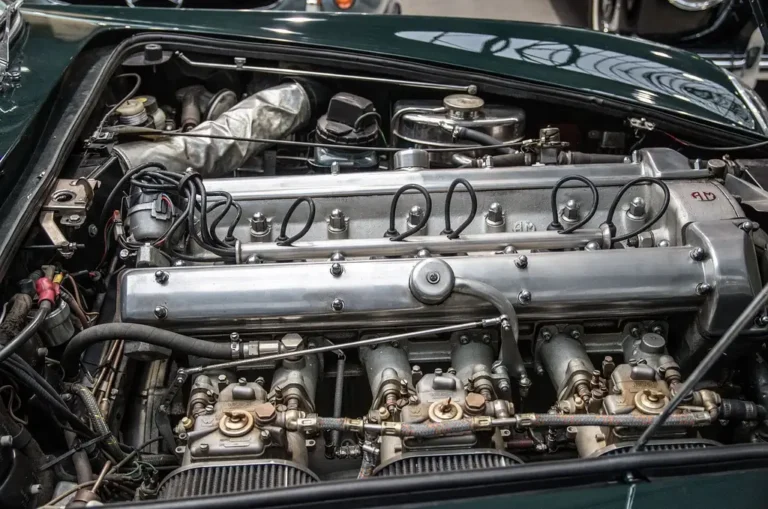
Suppose a four-carb motorcycle shows cylinder 2 pulling lower vacuum than the others at idle. If the intake boots are sealed and compression is even, adjust the sync screw for that carb, recheck the gauge, then reset idle speed before checking the next cylinder. Change one thing, then read again.
How to set idle mixture without chasing the wrong problem
Set each idle mixture screw to the maker’s specification first. If the engine still idles rough after sync, fine-tune each screw in small, equal steps, then recheck the gauges. A common first-timer mistake is turning mixture screws to mask a linkage problem. That hides the real fault and makes the next check worse.
What can give you a false sync reading?
False readings come from the engine, the hoses, or the linkage. Worn throttle shafts, uneven compression, a leak at one port, or a hose routed badly can make a healthy carb look wrong. If that happens, stop adjusting and isolate the fault before making another change.
If that didn’t work, check linkage wear first
Grab the throttle shaft and linkage by hand with the engine off. If there is play, a sticking spot, or delayed movement, the gauges may be telling the truth about worn hardware, not carb imbalance. Replace or repair the worn part before you sync again.
If that didn’t work, check engine health next
Recheck compression and ignition timing if one cylinder keeps reading differently after a clean hookup. An uneven cylinder can pull less vacuum and make the sync look wrong even when the carb setting is close. A 2-stroke outboard with a linkage issue should be compared against the service manual, not a generic motorcycle procedure.
If that didn’t work, inspect the vacuum setup
Look for loose caps, split hoses, and adapters that do not seal fully on the port. Re-route hoses so they do not vibrate against hot or moving parts, then recheck at idle. For 4-strokes, each gauge must be tied to its own carburetor or intake runner port, not a shared point.
If that didn’t work, fix the outboard setup mistake
Outboard sync problems often come from using the wrong reference point or skipping the plate check in the manual. A service-manual step may require confirming throttle plates before linkage adjustment. If the plates are not opening together, the reading is useless until that is corrected.
What is the final verification step?
The final check is commonly a throttle snap or a load test, depending on the engine. The readings should return to balance after the revs drop, and the engine should settle back into the same steady idle. Breeze Marine says final verification includes snapping the throttle, and that is the right kind of test: quick, clear, and repeatable.
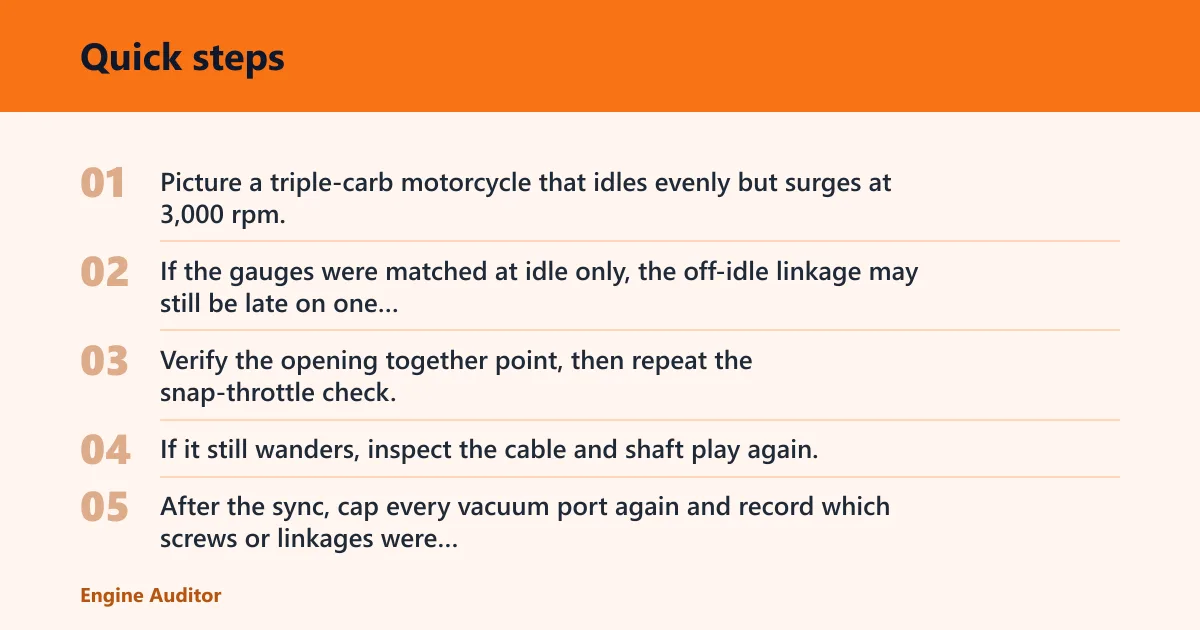
Picture a triple-carb motorcycle that idles evenly but surges at 3,000 rpm. If the gauges were matched at idle only, the off-idle linkage may still be late on one carb. Verify the opening together point, then repeat the snap-throttle check. If it still wanders, inspect the cable and shaft play again.
Prevention
After the sync, cap every vacuum port again and record which screws or linkages were changed. That makes the next service faster and keeps an open port from causing a vacuum leak on the next start.
Frequently asked questions
How to synchronize dual carburetors
Use one carb as the reference, then adjust the second until both pull the same vacuum or airflow at idle. After that, confirm that both start opening at the same time when the throttle moves off stop. If one side still lags, inspect the cable, shaft, and port seals before turning more screws.
How to synchronize motorcycle carburetors
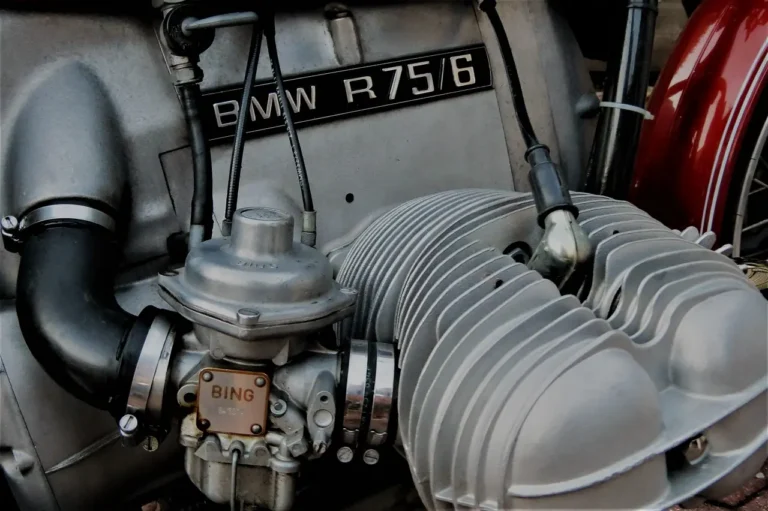
Hook the gauges to each carburetor’s vacuum port or intake runner, stabilize idle, and match all cylinders to the same reading. Then check off-idle response, because a motorcycle can read fine at idle and still be late on one carb as the throttle opens. Finish with a snap-throttle check and port caps back in place.
How to sync carbs on outboard motor
Use the service manual first. On 2-stroke outboards, the manual is the source for throttle plate position, linkage order, and any adjustment point that is not a vacuum port procedure. Check for clean idle, equal plate movement, and proper return to stop, then verify again after the throttle is snapped.
How to sync 4 carbs motorcycle
Connect four vacuum gauges or a four-channel manometer to the four vacuum ports, then choose one cylinder as the reference. Adjust the other three one at a time, resetting idle speed as needed so the readings stay valid. Recheck at a slightly raised throttle position, because a four-carb bike can drift off idle even when idle looks correct.
How to sync dual carbs
Balance the two carbs at idle first, then verify that the throttle linkage makes them open together. If the engine still runs rough after that, the problem is likely a vacuum leak, timing issue, or worn shaft rather than the sync setting itself. Do a final load or road check before closing up the ports.
Products related to this article
Sponsored / affiliate links. As an Amazon Associate I earn from qualifying purchases. I may earn additional commission from eligible campaigns.