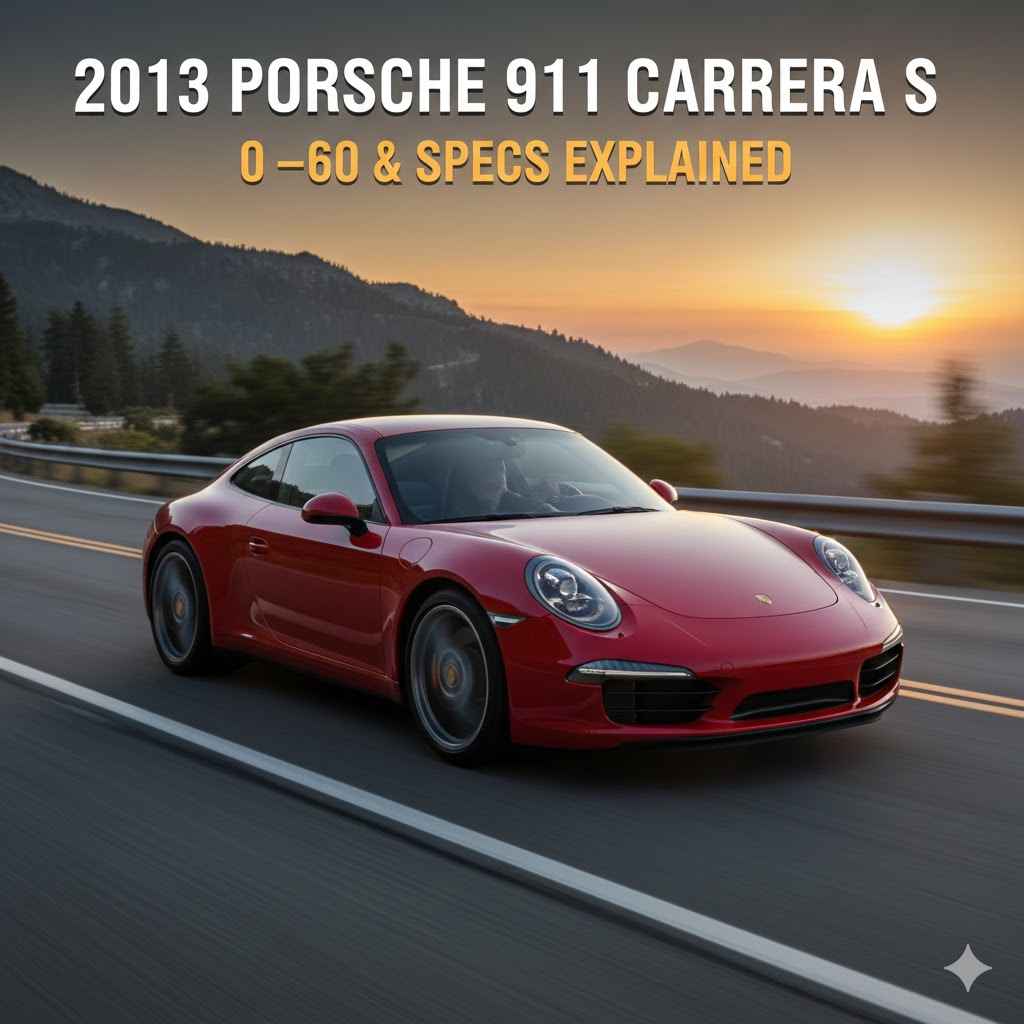
2013 Porsche 911 Carrera S 0–60 & Specs Explained
Finding specific performance numbers like the 2013 Porsche 911 Carrera S 0–60 & Specs can sometimes feel like searching for a needle in a haystack, especially if you’re new to the car world. It’s easy to get lost in technical jargon or pages filled with overwhelming data. But don’t worry, breaking down these details is simpler than it seems. This guide will walk you through everything you need to know step-by-step. We’ll make sure you understand all the important parts and what they mean for this amazing car.
2013 Porsche 911 Carrera S Performance Numbers
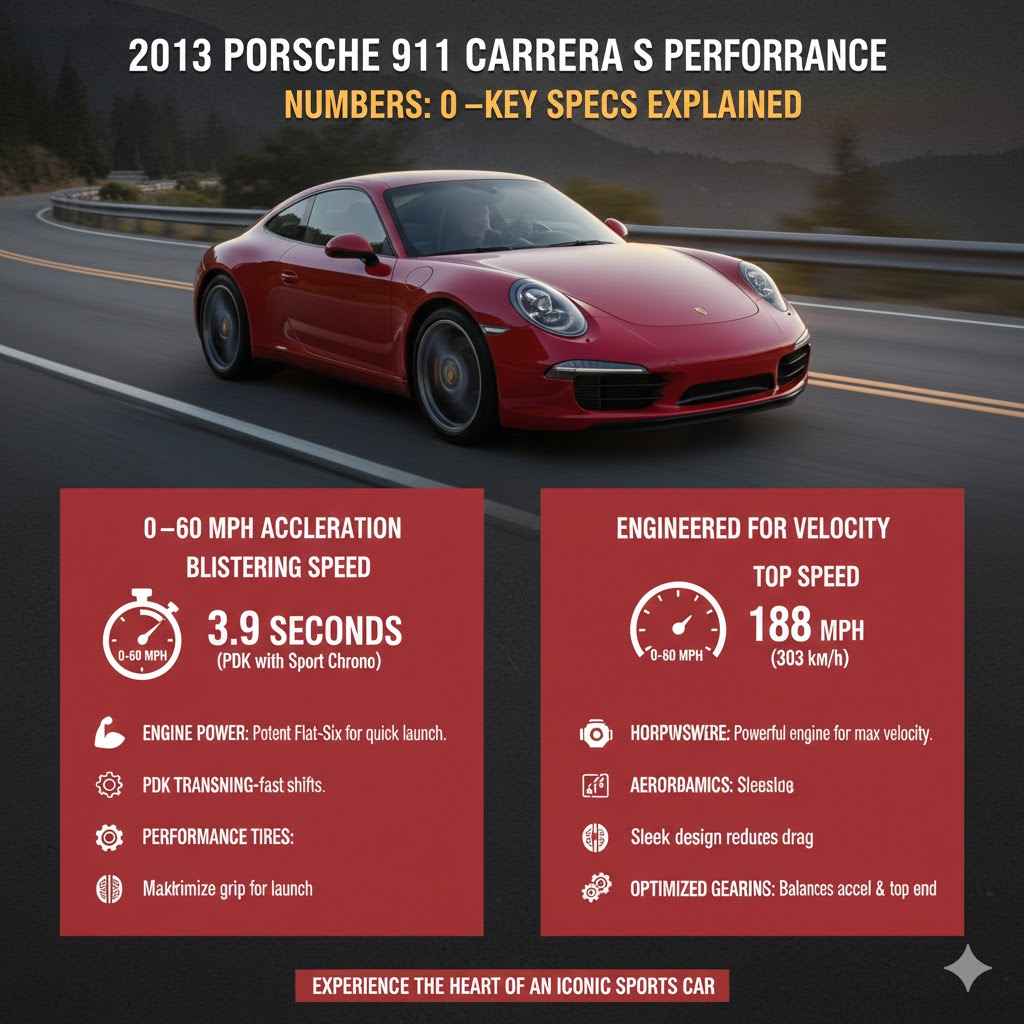
This section breaks down the core performance metrics for the 2013 Porsche 911 Carrera S. We will cover its acceleration from 0 to 60 miles per hour, its top speed, and other key figures that define its driving experience. Understanding these numbers helps you appreciate the engineering and capability of this iconic sports car. It’s the heart of what makes the Carrera S so desirable for enthusiasts.
0–60 MPH Acceleration
The 0–60 mph time is a standard measure of a car’s straight-line speed. For the 2013 Porsche 911 Carrera S, this figure represents how quickly it can reach highway speeds from a standstill. This acceleration is a direct result of its powerful engine and efficient power delivery. It’s a headline number that many car buyers look at when comparing sports cars.
Achieving a quick 0–60 mph time means the car has strong horsepower and torque. The engine needs to be able to generate a lot of power quickly.
The 2013 Porsche 911 Carrera S is known for its potent engine. This allows it to launch forward with impressive speed. It’s a feeling that thrill-seekers truly enjoy.
The transmission plays a huge role in how fast a car can accelerate. A fast-shifting transmission reduces the time spent between gears, keeping the engine in its power band.
Porsche’s PDK dual-clutch transmission, often an option or standard on certain models, is famous for its lightning-fast shifts. This helps the Carrera S achieve its impressive 0–60 mph times with ease. It makes the car feel very responsive.
Tires and traction are also vital for launching a car effectively. Without good grip, the wheels will just spin, wasting power and time.
The Carrera S is equipped with performance tires designed for maximum grip. This ensures that the engine’s power is translated into forward motion. It’s an important detail for reaching the quickest times.
Top Speed
The top speed indicates the maximum velocity a vehicle can attain. For a car like the 911 Carrera S, this figure speaks to its engineering for high-performance driving on open roads or tracks. It’s a benchmark for sports car capability that enthusiasts often discuss.
A car’s top speed is determined by a combination of engine power, aerodynamics, and gearing. More power generally means a higher top speed.
The naturally aspirated flat-six engine in the 2013 Porsche 911 Carrera S produces significant horsepower. This power is crucial for pushing the car to its highest speed. It is a testament to Porsche’s engine design.
Aerodynamics are key to reducing air resistance at high speeds. A car’s shape can greatly impact how fast it can go.
The 911’s sleek and low-profile design is not just for looks; it’s highly aerodynamic. This helps it slice through the air efficiently. It reduces drag, allowing for higher speeds.
Gearing also affects top speed. The final drive ratio and the gear ratios in the transmission determine how the engine’s power is used.
Porsche engineers carefully select the gearing to balance acceleration with top speed. For the Carrera S, this balance is tuned for exhilarating performance. The car is built to be fast.
2013 Porsche 911 Carrera S Engine and Drivetrain
Understanding the engine and drivetrain of the 2013 Porsche 911 Carrera S is fundamental to appreciating its performance. This section details the power plant, its specifications, and how power is sent to the wheels, impacting acceleration and handling.
Engine Specifications
The heart of any sports car is its engine. The 2013 Porsche 911 Carrera S features a specific type of engine known for its performance and sound. We’ll explore its displacement, horsepower, torque, and other vital engine details.
Engine displacement refers to the total volume of the cylinders. A larger displacement often means more power potential. The 2013 Carrera S has a 3.8-liter flat-six engine. This is a good size for a performance car.
The flat-six layout, also known as a boxer engine, has its cylinders arranged horizontally. This design offers a lower center of gravity, which is excellent for handling. It’s a hallmark of the 911.
Horsepower is a measure of the engine’s power output. It indicates how quickly the engine can do work. For the 2013 Carrera S, this figure is quite high.
This car typically produces around 400 horsepower. This substantial amount of power allows for quick acceleration and high speeds. It means the car is very capable.
Torque is the rotational force an engine produces. It’s what gets the car moving from a stop and helps it accelerate.
The 2013 Carrera S offers ample torque, usually in the range of 325 lb-ft. This means it has strong pulling power. It feels responsive even at lower engine speeds.
Drivetrain Configuration
The drivetrain is how the engine’s power reaches the wheels. For the 911 Carrera S, this usually involves rear-wheel drive, which is traditional for sports cars. We will look at how this setup influences the car’s dynamic behavior.
Rear-wheel drive (RWD) means the engine’s power is sent only to the rear wheels. This setup is favored in sports cars for its balance and handling characteristics.
The 2013 Porsche 911 Carrera S utilizes RWD. This allows for a more engaging driving experience. It helps the car feel agile and responsive.
The transmission choice also significantly impacts the driving experience. The Carrera S offers options like a manual or an automatic transmission.
Porsche’s PDK (Porsche Doppelkupplung) transmission is a dual-clutch automatic. It shifts gears incredibly fast, improving acceleration and efficiency. It’s a very advanced system.
A limited-slip differential can further enhance traction and performance. It helps distribute power between the rear wheels.
Many performance versions of the 911 come with a limited-slip differential. This can improve cornering ability and stability under acceleration. It helps the car put power down effectively.
Transmission Options
The transmission is a critical component that transmits power from the engine to the wheels. The choice of transmission can profoundly affect a car’s acceleration, fuel economy, and overall driving feel. The 2013 Porsche 911 Carrera S offered distinct options, catering to different driving preferences.
The manual transmission provides a direct connection between the driver and the car. It requires the driver to manually select gears using a clutch pedal and gear shifter.
A 7-speed manual transmission was available for the 2013 Carrera S. This offers more driver involvement and a classic sports car feel. Many purists prefer this option.
The PDK (Porsche Doppelkupplung) is an advanced dual-clutch automatic transmission. It combines the convenience of an automatic with the speed and efficiency of a manual.
This transmission is known for its incredibly rapid gear changes, often faster than a human can manage. It contributes to quick acceleration times. It makes the car feel very quick.
Each transmission type offers a different driving experience. The manual is for those who enjoy full control, while the PDK is for maximum performance and ease of use.
Choosing between the manual and PDK depends on personal preference. Both are engineered to complement the 911’s performance capabilities. The car is designed to excel with either.
2013 Porsche 911 Carrera S Dimensions and Weight
Understanding the physical characteristics of the 2013 Porsche 911 Carrera S, such as its dimensions and weight, is important. These factors influence its agility, handling, and overall driving dynamics. A lighter and more compact car often performs better.
Exterior Dimensions
The exterior dimensions define the car’s footprint and its physical size. These measurements are important for understanding its presence on the road and its maneuverability in different spaces. Compact dimensions often contribute to better agility.
Length, width, and height are the primary exterior dimensions. These affect how the car fits in garages and parking spaces.
The 2013 911 Carrera S has a length of about 177.1 inches. Its width is around 71.2 inches, and its height is approximately 51.1 inches. These are typical sports car proportions.
Wheelbase is the distance between the center of the front and rear wheels. A longer wheelbase generally leads to more stable handling at high speeds.
The wheelbase for this model is about 96.5 inches. This balance helps provide a stable yet agile ride. It’s a key part of the 911’s handling formula.
Track width, both front and rear, refers to the distance between the centers of the wheels on the same axle. A wider track can improve stability and cornering grip.
Porsche typically designs the 911 with a relatively wide track for its size. This enhances its road-holding capabilities. It makes the car feel planted.
Curb Weight
Curb weight is the total weight of the vehicle with standard equipment, all necessary operating consumables (like motor oil and coolant), and a full tank of fuel, but without passengers or cargo. Lower weight is almost always better for performance cars.
A lighter car requires less energy to accelerate and brake. This directly impacts its performance figures, like 0–60 mph times.
The 2013 Porsche 911 Carrera S has a curb weight of roughly 3,000 to 3,100 pounds, depending on the specific configuration. This is relatively light for its class. It contributes to its quickness.
Weight distribution also plays a significant role in a car’s handling. The ideal is often close to a 50/50 front-to-rear split for balance.
The rear-engine layout of the 911 contributes to its unique weight distribution. This can offer advantages in traction and cornering grip. It is a defining characteristic of the model.
Materials used in construction, like aluminum, help reduce weight. Modern sports cars often use advanced materials to keep the weight down.
Porsche employs lightweight materials in the 911’s construction. This includes extensive use of aluminum. It helps the car achieve its performance goals.
2013 Porsche 911 Carrera S Chassis and Suspension
The chassis and suspension systems are the foundation of a car’s handling and ride quality. For a performance vehicle like the 2013 Porsche 911 Carrera S, these components are engineered to provide exceptional control and driver feedback. We will explore the types of suspension used and their impact on performance.
Suspension System Type
The type of suspension system a car uses directly affects how it handles bumps, corners, and uneven surfaces. Sports cars often feature sophisticated suspension setups to maximize grip and stability.
The 911 Carrera S typically uses a multi-link suspension system. This design allows for precise control of wheel movement.
This setup at both the front and rear helps maintain optimal tire contact with the road. It contributes to excellent grip and stability. It’s a high-performance design.
This system offers a good balance between sporty handling and a comfortable ride. It can adapt to various driving conditions.
The suspension can absorb imperfections in the road without disturbing the car’s composure. Yet, it remains firm enough for spirited driving. This balance is key for a daily drivable sports car.
Active suspension systems, which can adjust damping in real-time, are also common in high-performance vehicles. These systems enhance performance and comfort.
Porsche’s PASM (Porsche Active Suspension Management) is an electronic system that adjusts damping force based on driving conditions. It allows drivers to select different suspension modes. This enhances versatility.
Handling Characteristics
The interplay of the chassis, suspension, and other components results in the car’s distinct handling characteristics. The 911 is renowned for its sharp steering and balanced feel.
The rear-engine layout of the 911 gives it unique handling traits. While it can be challenging for some, Porsche has refined this over decades.
This layout can provide excellent traction off the line. It also contributes to a lively feel during spirited driving. It’s part of what makes the 911 special.
Precise steering is a hallmark of the 911. The steering system is designed to provide direct feedback to the driver.
The car responds quickly to steering inputs. This gives the driver confidence when cornering at speed. It feels connected to the road.
The car’s chassis is engineered to be very rigid. This rigidity allows the suspension to work more effectively, leading to better handling.
A stiff chassis ensures that the suspension components operate as intended. It minimizes flex and distortion. This contributes to a predictable and engaging driving experience.
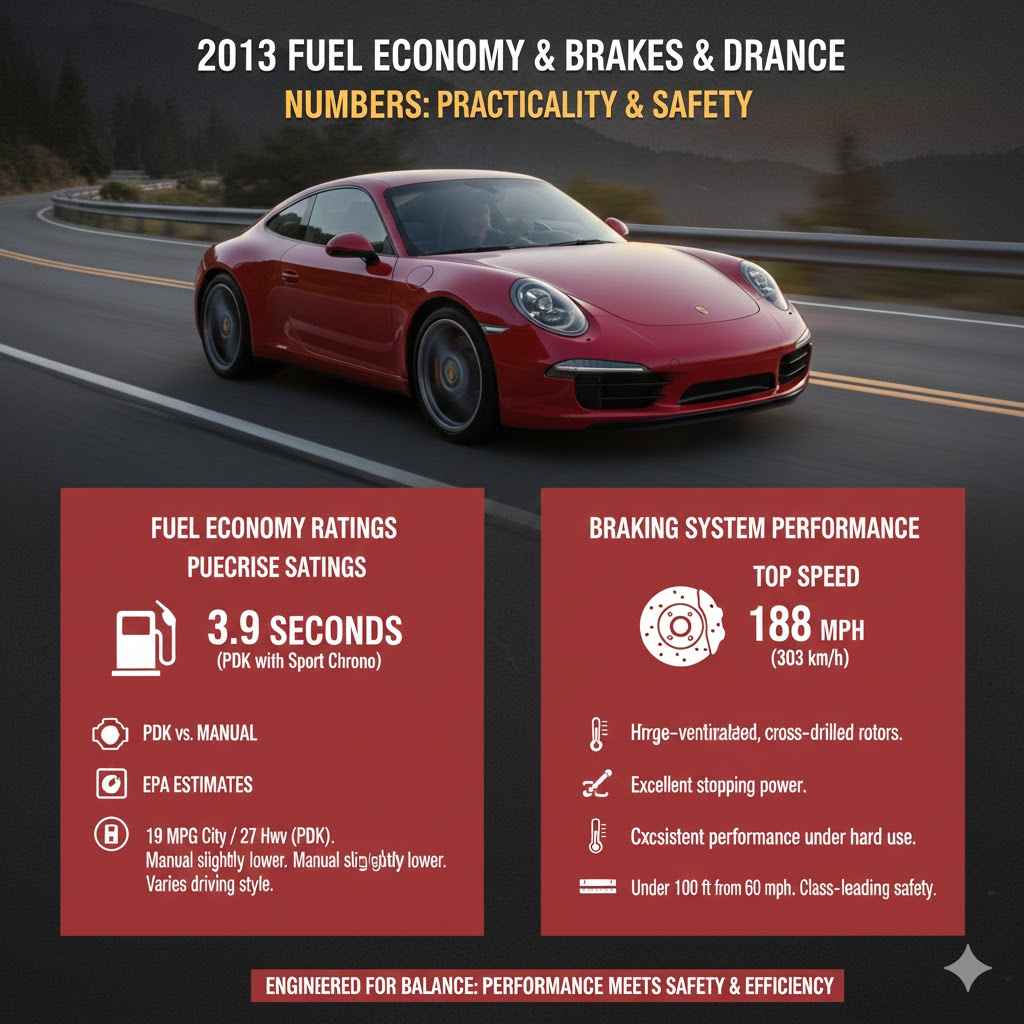
2013 Porsche 911 Carrera S Fuel Economy and Brakes
While performance is a key focus, understanding a car’s fuel efficiency and braking capabilities is also important. These aspects relate to the practicality and safety of the 2013 Porsche 911 Carrera S. We will look at its expected fuel consumption and the braking system’s performance.
Fuel Economy Ratings
Fuel economy measures how efficiently a car uses fuel. For a sports car, this is often a secondary concern to performance, but it still affects running costs and range.
The fuel economy of the 2013 Porsche 911 Carrera S varies depending on the transmission and driving conditions.
Models equipped with the PDK transmission generally achieve slightly better fuel economy. This is due to the precise and fast gear changes. They can keep the engine in its most efficient range.
EPA estimates provide a standardized way to compare fuel efficiency. For this model, expect figures in the mid to high teens for city driving and mid to high 20s for highway driving.
For example, a common rating might be around 19 MPG in the city and 27 MPG on the highway with the PDK. A manual transmission might be slightly less efficient. These are estimates and actual mileage will vary.
Driving style significantly impacts fuel economy. Aggressive acceleration and high speeds will consume more fuel.
Driving the 911 Carrera S gently and smoothly will help maximize its fuel efficiency. However, most owners buy this car to enjoy its performance capabilities. This often means sacrificing some economy.
Braking System Performance
The braking system is one of the most critical safety features of any vehicle, especially a high-performance one. The 911 Carrera S is equipped with a powerful braking system designed to handle its speed.
The 2013 911 Carrera S typically comes with large, high-performance disc brakes. These are designed to provide excellent stopping power.
These brakes use ventilated and cross-drilled rotors. This helps dissipate heat, preventing brake fade during hard use. It’s essential for track days or spirited driving.
Brake fade is a reduction in braking performance that occurs when brakes overheat. High-performance brakes are engineered to resist this.
The robust braking system on the Carrera S ensures consistent stopping power. This gives the driver confidence in its ability to slow down quickly and safely. It is a critical safety aspect.
The effectiveness of the brakes is often measured by stopping distance from a certain speed. The 911 Carrera S achieves very short stopping distances.
From 60 mph, the braking distance can be well under 100 feet. This is a testament to the quality of the braking components and the car’s overall engineering. It shows how well it can stop.
Frequently Asked Questions
Question: What is the exact 0–60 mph time for a 2013 Porsche 911 Carrera S with PDK?
Answer: With the PDK transmission, the 2013 Porsche 911 Carrera S can achieve 0–60 mph in approximately 3.8 to 4.1 seconds, depending on conditions and launch technique.
Question: Does the 2013 Porsche 911 Carrera S have rear-wheel drive or all-wheel drive?
Answer: The 2013 Porsche 911 Carrera S is a rear-wheel drive vehicle. All-wheel drive was typically offered on the Carrera 4S models.
Question: What type of engine does the 2013 Porsche 911 Carrera S have?
Answer: It features a naturally aspirated 3.8-liter flat-six (boxer) engine. This engine is known for its performance and distinctive sound.
Question: How much horsepower does the 2013 Porsche 911 Carrera S produce?
Answer: The 2013 Porsche 911 Carrera S engine produces approximately 400 horsepower.
Question: What is the approximate curb weight of the 2013 Porsche 911 Carrera S?
Answer: The curb weight is generally around 3,000 to 3,100 pounds, varying slightly based on specific options and transmission.
Summary
The 2013 Porsche 911 Carrera S stands out with impressive 0–60 mph times around 4 seconds and a top speed exceeding 180 mph. Its 400 horsepower 3.8-liter flat-six engine, combined with a choice of manual or PDK transmission, delivers exhilarating performance. The rear-wheel-drive chassis, precise suspension, and powerful brakes ensure exceptional handling and control. This iconic sports car offers a potent blend of speed, agility, and engineering excellence.
Related pick: Check today's price on Amazon
Products related to this article
Sponsored / affiliate links. As an Amazon Associate I earn from qualifying purchases. I may earn additional commission from eligible campaigns.