How to Diagnose a Clogged Carburetor Jet
A clogged carburetor jet usually shows up as a throttle-specific fuel fault. Idle jet trouble causes stalling at idle and low throttle, while main jet trouble hits under load or at wide-open throttle. Guessing wrong burns time, can trigger needless parts swaps, and can hide a float, air leak, filter, or ignition fault. This guide shows how to match symptoms to the likely jet, rule out look-alikes, and confirm the blockage before you remove anything.
Carburetor jet diagnostic matrix

| Symptom at idle | Symptom on acceleration | Symptom at wide-open throttle | Likely issue | Simplest check | Next action |
|---|---|---|---|---|---|
| Runs only with choke partly on, or dies unless the throttle is cracked | Hesitates, then recovers as rpm rises | May seem normal at high rpm | Idle jet or idle passage blockage | Choke enriches the mix; spark plug looks dry and pale after a brief run | Clean idle jet and idle passages first |
| Starts hard, then surges or stalls at idle | Flat spot when the throttle opens quickly | Runs better once fully opened | Idle jet plus transition passage issue | Cleaner spray changes the response when it reaches the idle circuit | Clean; inspect for air leak if the symptom returns |
| Idle seems normal | Stumbles under load or during snap-throttle | Falls on its face at full throttle | Main jet or emulsion tube blockage | Choke helps under load, spark plug stays dry | Clean main jet and emulsion tube; inspect bowl pickup path |
| Idle is rough, but changing mixture screws does little | Acceleration stays weak | Engine will not reach full speed | Fuel restriction, float problem, or main jet issue | Check fuel flow and bowl fuel level before pulling the carburetor apart | Inspect float, needle, and bowl gasket first; then clean jets |
| Hard starting with fuel smell and wet plug | Loads up, then clears at higher rpm | May smoke or run overly rich | Float sticking, needle not sealing, or flood condition | Fuel drips from the carb throat or bowl vent | Check float and needle before cleaning jets |
| Low-speed miss plus random stall | Stumble only after a bump or vibration | Intermittent at any throttle | Debris in bowl passage, air leak, or ignition fault | Tap test, fuel line check, and spark plug condition | Inspect for cracked hose, loose fittings, and ignition issues before jet removal |
How do you tell if a carburetor jet is clogged?
Match the symptom to throttle position first. Idle jet blockage shows up when the engine runs at a closed or near-closed throttle. Main jet blockage shows up when the engine needs more fuel under load. If the symptom changes with choke use, that is a strong clue that the mix is lean, not that the whole carburetor is bad.
Match symptoms to throttle position
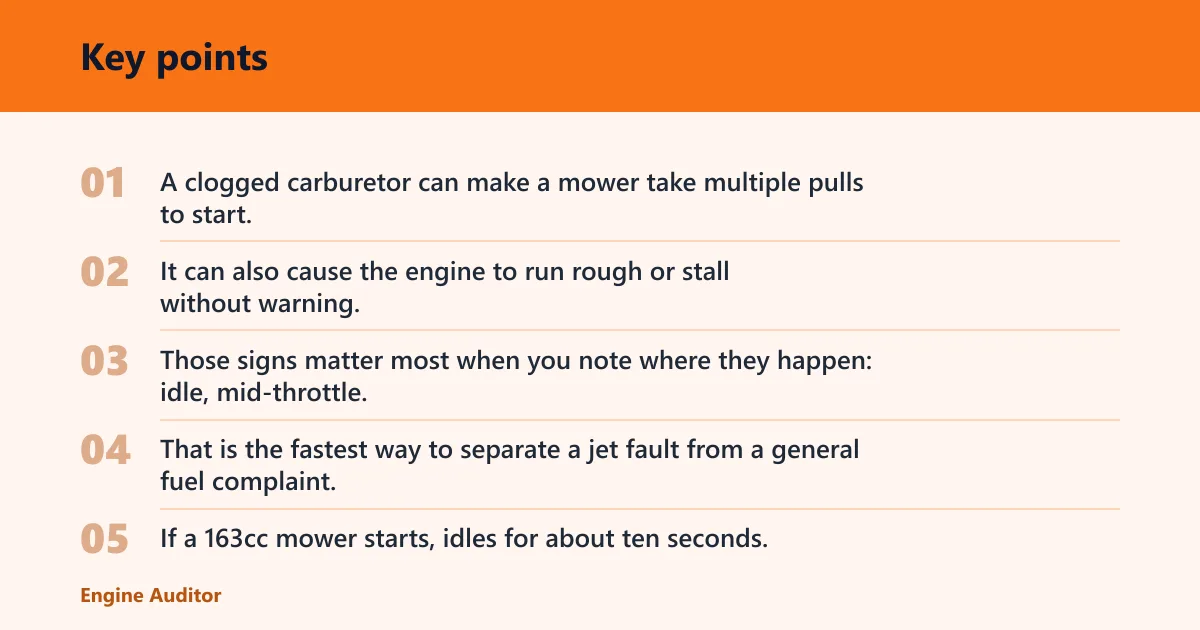
A clogged carburetor can make a mower take multiple pulls to start. It can also cause the engine to run rough or stall without warning. Those signs matter most when you note where they happen: idle, mid-throttle, or wide-open throttle. That is the fastest way to separate a jet fault from a general fuel complaint.
If a 163cc mower starts, idles for about ten seconds, then dies as soon as you let go of the handle, that can point toward the idle jet or idle passage. That pattern points more toward the idle jet or idle passage than the main jet, because the main circuit is not carrying the load yet.
Separate jet blockage from air leak or ignition fault
A blocked jet is only one likely cause of hard starting or rough running. A dirty air filter, cracked intake boot, bad gasket, or weak ignition can mimic the same symptoms. A clogged carburetor may create a strong fuel odor after starting, but a fuel smell alone does not prove the jet is blocked.
Check whether the engine briefly improves with choke. If it does, the engine is usually running lean. A lean-running engine burns hotter than other conditions, so do not ignore heat or surge symptoms on chainsaws and similar small engines. A blocked spark arrestor screen can also raise engine temperatures.
Use spark plug condition as a clue
The spark plug helps separate fuel starvation from other faults. A dry, light spark plug after a brief run can suggest a lean condition. A wet spark plug can point toward flooding, a float problem, or an overly rich condition. Plug color alone is not final proof, but it is a useful reference before disassembly.
Picture a generator that starts on the second pull, then sags badly when a load is switched on. If the plug is dry and the engine improves with partial choke, the main jet or emulsion tube is a better suspect than the ignition system.
Which jet is likely blocked?
Idle jet problems show up at closed throttle and low speed. Main jet problems show up when the engine needs sustained fuel flow. If the symptom follows a transition from idle to acceleration, the blockage may be in the emulsion tube or the passage between the bowl and the main circuit.
Idle jet problems
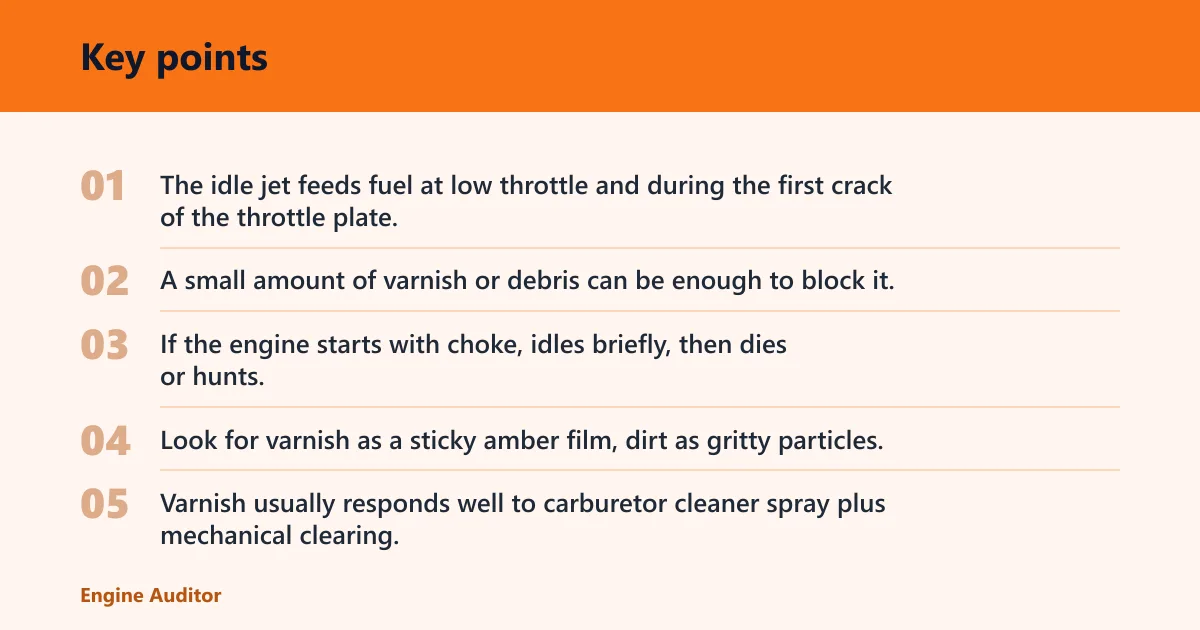
The idle jet feeds fuel at low throttle and during the first crack of the throttle plate. A small amount of varnish or debris can be enough to block it. If the engine starts with choke, idles briefly, then dies or hunts, the idle circuit is the first place to inspect.
Look for varnish as a sticky amber film, dirt as gritty particles, and ethanol residue as a chalky or gummy film that can bridge tiny fuel passages. Varnish usually responds well to carburetor cleaner spray plus mechanical clearing. Grit often means the bowl and passages need a full flush. Ethanol residue can leave both deposits behind.
Main jet problems
The main jet carries fuel at higher airflow, so a blockage may show up only under load or at wide-open throttle. The engine may idle acceptably, then bog, sag, or die when the governor opens the throttle. That pattern points away from the idle jet and toward the main circuit.
Use the choke test carefully. If pulling choke partly on improves power at full throttle, fuel delivery is weak. That does not prove the main jet is the only restriction, but it makes it a top suspect before the carburetor comes off the engine.
Emulsion tube and passage blockage
The emulsion tube mixes fuel and air before the main jet flow reaches the engine. When tiny side holes in that tube are blocked, the symptom can look like a main jet problem even if the jet itself is clear. The result is often a flat spot, weak acceleration, or poor pull under load.
Cleaning the jet alone may not fix that fault. You need to clear the tube and the connected passages too, or the engine can keep acting lean even after the visible jet looks clean.
What should you check before removing anything?
Check the air filter, fuel delivery, and float action before you remove a jet. Those checks take less time than full disassembly and they often explain the same symptom pattern. They also help avoid stripping brass parts or replacing the wrong piece.
Air filter inspection
A clogged air filter can mimic carburetor symptoms by changing airflow and mixture. A chainsaw can get hot if the air filter is clogged. Inspect the filter before jet diagnosis, especially if the engine feels rich, loads up, or bogs after a few seconds of running.
Fuel line and fuel delivery check
Fuel lines connected to the carburetor are usually rubber hoses. Disconnect the spark plug wire before working, and shut off fuel if the engine has a valve. When you remove the fuel line, be ready for drips. Pulling too hard on fuel hoses can cause them to crack or tear.
Use needle-nose pliers for clips and small springs during removal. If the engine starves, pinches, or only runs for a few seconds after priming, confirm fuel reaches the carburetor before you blame the jet.
Float and bowl check
A float that sticks high or low can create a rich or lean fault that looks like jet trouble. If the bowl is empty, the needle may be stuck closed or the inlet may be blocked. If the bowl overfills, the needle may not seal. Either fault changes the symptom pattern at the throttle.
To test the float, remove the bowl and move it gently by hand. It should move smoothly without binding. A torn or hard bowl gasket is also worth replacing, because a leak around the bowl can cause bad fuel metering and make diagnosis confusing.
How do you clean a clogged carburetor jet?
Use carburetor cleaner spray to dissolve varnish and debris, then use compressed air to blow out tiny passages. Spray alone is not enough if the blockage is solid. Mechanical clearing may be needed, but the brass orifice must stay the same size.
Carburetor cleaner spray use
Spray cleaner into metal passages only. It is useful for varnish and loose debris, and it can loosen residue inside the jet and bowl channels. Do not rely on spray alone if fuel will not pass through the opening. That usually means the passage still has a blockage.
Wear eye protection before using compressed air. Blow out passages after solvent use, and keep the pressure low enough for delicate parts. Too much air can splash cleaner back at you or damage small components.
Small wire limits and cautions
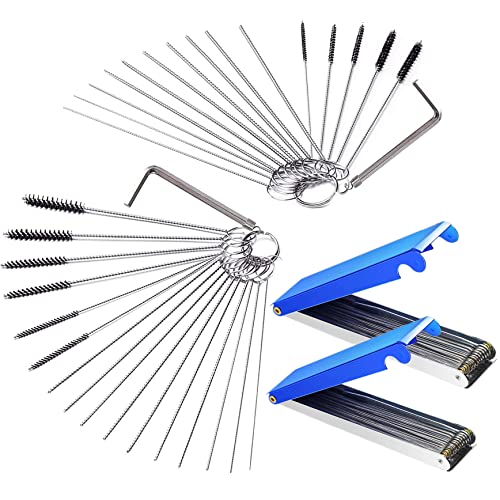
A small wire or jet cleaning wire can clear a blocked passage, but it must match the jet orifice size closely. Do not gouge brass jets. Do not drill them. If the hole is enlarged, the carburetor will meter too much fuel and the repair turns into a tuning problem.
If a jet is stuck, do not force it with a screwdriver or oversized tool. A stuck carburetor jet can shear, round off, or crack. In that case, replacement is safer than forcing it out and damaging the body.
- Remove the air filter housing for access.
- Disconnect the spark plug wire.
- Shut off fuel if the engine has a valve.
- Disconnect the fuel line and catch any drip.
- Remove the bowl and inspect the gasket, float, and needle.
- Spray cleaner through the jet and passage.
- Blow out the passage with compressed air.
- Recheck that fuel moves freely through the circuit.
When should you clean, replace, or rebuild?
Clean when the jet is clearable, the brass is intact, and the symptom lines up with a blocked passage. Replace a jet or needle when the part is damaged, stuck, or worn. Use a rebuild kit when seals, diaphragms, or gaskets are hard, torn, or leaking.
When cleaning is enough
If the jet is only coated with varnish or loose residue, cleaning is often enough. A carburetor rebuild kit may include gaskets, diaphragms, and other small components, and those parts should be replaced if they are already brittle or swollen. Cleaning a worn seal will not stop an air leak.
When a jet or needle should be replaced
Replace the part if the orifice is damaged, the threads are stripped, or the needle no longer seats cleanly. If the jet has been overtightened before, it may not seal again even after cleaning. Replacing one damaged brass piece is better than chasing a recurring lean fault.
When a bowl gasket or rebuild kit is needed
A hard or torn bowl gasket can cause leaks, poor fuel metering, and repeat stalling after service. If the carburetor body has multiple aged seals, a rebuild kit is the better choice because it resets the soft parts together. That is often the cleanest fix when debris and wear show up at the same time.
What changes on mowers, chainsaws, and generators?
Access and symptoms differ by machine, even when the carburetor principle is the same. Mowers are usually easiest to reach. Chainsaws are tighter to service and can overheat quickly if fuel or airflow is wrong. Generators often show the fault under electrical load, where a blocked main circuit becomes obvious.
Access differences
Mowers often allow air filter removal and carburetor access with basic hand tools. Chainsaws may require more careful disassembly around the recoil cover, linkage, and fuel line routing. Generators can hide the carburetor behind shrouds, and the fuel line may be shorter and more brittle.
Symptom differences
A mower with an idle jet issue may die at the first throttle release. A chainsaw with a main jet problem may start, idle, and then sag as bar load increases. A generator may idle but stumble as soon as a load is applied, which points toward the main circuit rather than the idle circuit.
Removal differences
Use needle-nose pliers for clips and springs, and label linkage positions before removal. On small engines, it is easy to misplace a spring or bend a linkage arm. Reconnect the fuel line carefully, because a cracked hose will create a new fault that looks like the original one.
How to check carburetor health after cleaning
After reassembly, check for fuel leaks, stable idle, and clean throttle response. Run the engine long enough to see whether the symptom returns under the same throttle condition that exposed it before. Then read the spark plug again. Wet or dry fouling tells you whether the fix moved the mixture in the right direction.
Use a small, steady test. Start the engine, let it idle, then move through the throttle range in the same order that showed the fault. If the symptom is gone at idle but returns at full throttle, the main circuit still needs attention. If the plug stays dry and the engine still bogs, look again at fuel flow and air leaks.
Frequently asked questions
How to test carburetor float
Remove the bowl and move the float by hand. It should pivot freely and not bind. Check the needle seat for wear and the float for fuel inside it if the design allows that inspection. A float problem can make the engine run rich, flood, or starve, so do not assume every fuel fault is a clogged jet.
Products related to this article
Sponsored / affiliate links. As an Amazon Associate I earn from qualifying purchases. I may earn additional commission from eligible campaigns.
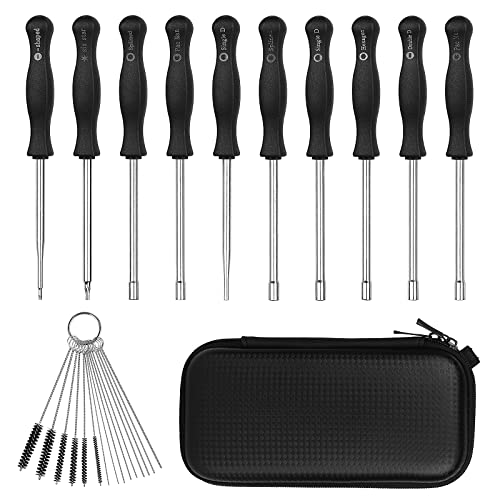 10 Pcs Carburetor Cleaning Tool Screwdriver Kit for Common 2 Cycle Carburator Adjustment Small Engine Carb Tune up Adjusting Tool- Carb Kit
 QAZAKY Pack of 5 Carburetor Rebuild Repair Kit Compatible with K10-WAT WA WT 2-Cycle Carb String Trimmer Leaf Blower Chainsaw Poulan Weedeater Ryobi Ryan IDC Homelite Lawnboy Toro McCulloch Craftsman