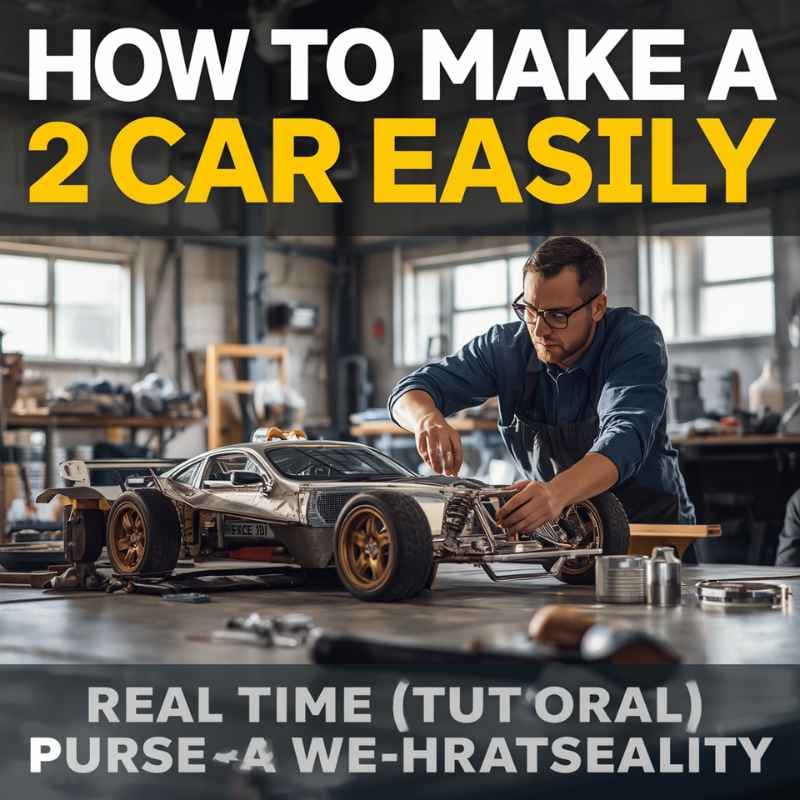
How To Make A Car Easily: Step-By-Step Basics
This guide breaks down the basics. We’ll look at the main parts. We’ll talk about how they join up.
You will learn about the big picture of car making. It’s not as scary as it sounds. Think of it like building with really complex LEGOs.
But these LEGOs are metal, plastic, and wires.
Making a car involves several key stages. It starts with designing the vehicle. Then, raw materials are shaped into parts.
These parts are assembled on a production line. Finally, the car is tested and sent out. Each step requires precision and many skilled workers.
The Big What Goes Into Making a Car
So, how do you start building a car? It’s a huge project. Many different things must happen.
Think of it like cooking a very complex meal. You need the right ingredients. You need the right tools.
And you need a good recipe. The car industry has refined this process over many decades.
At its heart, making a car is about taking raw materials and turning them into a functional machine. This machine needs to move, be safe, and be useful for people. It’s a combination of art, science, and hard work.
The process is very organized. It has to be for things to work well.
From Idea to Assembly Line
Everything begins with an idea. Designers and engineers dream up what the car will look like. They think about how it will perform.
They consider who will buy it. This is a long process. It involves many sketches and computer models.
Safety rules are very important here too.
Once the design is set, the factory gears start turning. Factories are huge places. They are filled with machines.
Workers operate these machines. They follow strict plans. Each part of the car is made in a specific way.
The goal is to make many identical parts.
The Main Stages of Car Production
Car making has a few main parts. We can call them stages. First, there’s stamping.
This is where flat metal sheets get shaped. They become the car’s body panels. Think of doors, hoods, and roofs.
These start as simple metal sheets.
Next is welding. This is how the stamped parts are joined. Robots often do this work.
They use heat to fuse the metal together. This creates the car’s basic frame. It needs to be strong.
This frame is like the car’s skeleton.
Then comes painting. The car body needs protection. It also needs to look good.
Cars get painted in many bright colors. The paint also stops rust. This step is done in clean rooms.
Dust can ruin the paint job.
After painting, it’s time for assembly. This is a major part. Many different components are added.
The engine, wheels, seats, and electronics all go in. This happens on a moving assembly line. Workers add parts as the car moves along.
Finally, there’s quality control. Every car is checked. They make sure everything works.
Brakes are tested. Lights are checked. The engine is run.
This makes sure the car is safe and ready for the road.
My Own “Car Building” Moment (Sort Of!)
I remember one time, I was trying to fix an old bicycle. It wasn’t a car, but it felt like a giant puzzle. I had a pile of parts.
I had tools that looked confusing. My goal was simple: make the bike ride again. But it was harder than I thought!
I laid out all the pieces. There were wheels, pedals, chains, and brakes. I looked at pictures online.
I watched a few videos. Still, putting the chain on right was tricky. It kept slipping off.
The brakes felt loose. I felt a bit frustrated. It took me almost a whole afternoon.
But when I finally rode it, even just a little bit, it felt like a real win. I made something work again.
Making a car on a factory scale is way more complex. But that feeling of taking separate pieces and making them work together? That’s the core idea.
It’s about making parts fit. It’s about making systems function. It requires patience and following the right steps.
The bicycle taught me that.
Key Car Components: The Building Blocks
Body Shell: This is the outer skin of the car. It includes the doors, hood, roof, and trunk. It’s made from strong metal.
This protects you inside.
Chassis/Frame: This is the car’s skeleton. It holds everything together. It supports the engine, body, and wheels.
Engine: This is the car’s power source. It burns fuel to create motion. It’s a very complex machine itself.
Transmission: This sends power from the engine to the wheels. It helps control speed and power.
Suspension: These parts connect the wheels to the car’s body. They absorb bumps and keep the ride smooth.
Brakes: These stop the car. They use friction to slow the wheels down.
Wheels and Tires: These are what the car rolls on. Tires give grip to the road.
The Heart of the Car: The Engine and Powertrain
Let’s talk about the car’s engine. This is what makes the car move. It’s a marvel of engineering.
Most car engines burn gasoline. They turn that fuel into power. This power then goes to the wheels.
How does an engine work? It has many small explosions. These happen inside cylinders.
Pistons move up and down. This up-and-down motion turns a spinning shaft. This shaft is connected to the transmission.
The Role of the Transmission
The transmission is like the car’s gearbox. It helps the engine’s power get to the wheels. It has different gears.
Each gear helps the car move in a certain way. Low gears help the car start moving. Higher gears help the car go faster on the highway.
Think of riding a bicycle. When you start on a hill, you use an easy gear. When you are going fast on a flat road, you use a harder gear.
The car’s transmission does something similar. It changes gears automatically or you can change them yourself.
Putting It All Together: The Powertrain
The engine and transmission are part of a bigger system. This is called the powertrain. It also includes other parts like the driveshaft.
The driveshaft is a long rod. It sends power from the transmission to the wheels. This whole system works to make the car move forward.
Electric cars have a different kind of powertrain. They use electric motors. These motors get power from large batteries.
They don’t have as many moving parts as gas engines. But the basic idea of sending power to the wheels is the same.
Powertrain Components Explained
- Engine: Creates the power.
- Transmission: Controls how power goes to the wheels.
- Driveshaft: Connects transmission to wheels.
- Differential: Helps wheels turn at different speeds (like when turning).
- Axles: Connect wheels to the differential.
The Car’s “Nervous System”: Electronics and Wiring
Modern cars are full of technology. They have computers. They have lots of wires.
This is like the car’s nervous system. It helps everything communicate and work together.
Think about your phone. It has circuits and chips. Cars have similar things.
These control the engine, the radio, the lights, and even the windows. They help the car run smoothly and safely.
How Wiring Works
All these electronic parts need to talk to each other. They do this through a maze of wires. These wires carry electrical signals.
These signals tell different parts what to do. For example, when you turn the key, a signal goes to the starter.
Factories use special machines to install wiring harnesses. A wiring harness is a bundle of many wires. It’s like a pre-made nervous system for the car.
This makes the assembly process faster and more accurate.
The Role of Computers
Cars have multiple computer modules. One might control the engine. Another might manage the airbags.
These computers receive information. They then send out commands. This is how things like anti-lock brakes work.
They use sensors and computers to help stop the car safely.
It’s amazing how much technology is packed into a car today. These electronic systems make cars more efficient and safer. But they also add complexity to how a car is made and repaired.
Electronics Checklist
Engine Control Unit (ECU)
Manages engine performance and fuel use.
Transmission Control Unit (TCU)
Controls gear changes in automatic transmissions.
Body Control Module (BCM)
Handles lights, windows, locks, and interior features.
Infotainment System
Controls radio, navigation, and connectivity.
Safety Systems
Includes airbags, ABS, and stability control.
The Art of Assembly: Bringing it All Together
The assembly line is where the magic happens. It’s a carefully choreographed dance. Thousands of parts come together.
Workers and robots work side-by-side. The car moves slowly down the line.
At each station, a specific task is done. One worker might install a seat. The next might attach a door.
Another might connect wires. It’s a very efficient process.
From the Body Shop to the Trim Line
After the car body is welded and painted, it moves to the trim line. This is where the interior starts to take shape. The dashboard is installed.
Seats are bolted in. The headliner is put in place.
This stage requires careful handling. The interior needs to look good. It needs to be comfortable.
Workers install carpets. They fit door panels. They also install all the glass.
Adding the Powertrain
A key moment is when the engine and transmission are installed. This is often done from underneath the car. The entire powertrain unit is lifted into place.
It’s then bolted securely to the chassis.
This is a critical step. The engine needs to be perfectly aligned. All the connections must be made correctly.
This is where a lot of the car’s functionality is installed.
The Final Touches
Once the main parts are in, the car gets its wheels. The tires are mounted and balanced. The car is then lowered to the ground.
It’s almost ready!
Final inspections happen. Small parts are added. Things like badges and trim pieces.
The car gets a final cleaning. It’s then ready for testing.
Assembly Line Flow
Body Shop: Stamping and welding create the car’s shell.
Paint Shop: The body is cleaned, prepped, and painted.
Trim Line: Interior parts, wiring, and glass are installed.
Chassis Line: Engine, transmission, suspension, and axles are added.
Final Line: Wheels, doors, bumpers, and final details are fitted.
Quality Control: The Last Check
No car leaves the factory without checks. This is the quality control stage. It’s super important.
It ensures the car is safe and works right.
Workers test many things. They check the brakes. They make sure the steering is smooth.
They test all the lights. The engine is started. It’s run at different speeds.
Test Drives and Inspections
Some cars get a short test drive. This is usually on a track. It’s to check how the car feels and sounds.
Any issues are noted. Workers then fix them.
Visual checks are also done. Inspectors look for any scratches or dents. They check that all panels fit evenly.
They make sure the interior is perfect.
This stage prevents problems for drivers. It also helps the car company’s reputation. It shows they care about making good cars.
Quality Checks at a Glance
- Mechanical Checks: Engine, brakes, steering, suspension.
- Electrical Checks: Lights, signals, dashboard displays, audio.
- Body and Paint Checks: Panel gaps, paint finish, no damage.
- Interior Checks: Seats, carpets, trim, safety belts.
- Performance Test: Short drive to check overall function.
Real-World Context: What Makes Car Factories Work
Car factories are marvels of organization. They operate on tight schedules. Every minute counts.
The goal is to produce thousands of cars each week.
The layout of the factory is key. Parts move smoothly from one area to the next. Robots handle dangerous or repetitive tasks.
Humans do tasks that need more skill or judgment.
Lean Manufacturing Principles
Many car factories use something called lean manufacturing. This means they try to reduce waste. Waste can be extra parts, too much time spent, or mistakes.
The idea is to make things as efficient as possible. Parts arrive just when they are needed. This is called “just-in-time” delivery.
It saves space and money.
Automation and Robotics
Robots are a big part of car making today. They are very good at doing the same task over and over. They can lift heavy parts.
They can weld with great precision. They can paint consistently.
This automation helps make cars faster and cheaper. It also makes factories safer for human workers. Robots handle the dangerous jobs.
What This Means For You
Understanding how cars are made gives you a better appreciation for the vehicles you use. It explains why cars cost what they do.
When is it normal to have questions about car making? Anytime you’re curious! When to worry?
If you see something odd about how a car is put together. For example, if panel gaps are huge or paint is peeling on a new car.
Simple checks you can do when looking at a car include looking at the paint. Make sure it looks even. Check that the doors line up well.
Open and close them to see how they fit. This gives you clues about the quality of the build.
Quick Tips for Car Enthusiasts
If you’re interested in how cars are made, here are some ideas:
- Watch documentaries about car factories.
- Visit car museums.
- Read books about automotive history and engineering.
- If possible, take a factory tour (many are offered!).
- Learn about the different parts of a car.
Frequently Asked Questions
How long does it take to build one car?
It varies by factory and car model. On average, it can take between 12 to 30 hours of work to assemble one car from start to finish.
Are cars still made by hand?
While many complex tasks are done by robots, humans are still very much involved. Skilled workers install many parts and perform checks that robots can’t do.
What is the most expensive part of a car to make?
The engine and transmission are typically the most complex and expensive components to design and manufacture due to their intricate moving parts and engineering.
How do they ensure cars are safe?
Safety is built in from the design stage. Factories use strong materials, advanced welding, and rigorous testing of safety features like airbags and brakes.
Can I build a car at home?
Building a full car from scratch at home is extremely difficult and often illegal without proper certifications. However, people do build custom vehicles or restore old cars.
What are LSI keywords in car manufacturing?
LSI (Latent Semantic Indexing) keywords are related terms that help search engines understand the topic. For car manufacturing, these could include ‘automotive production,’ ‘vehicle assembly,’ ‘chassis design,’ ‘engine assembly,’ ‘robotics in auto,’ and ‘quality assurance.’
Final Thoughts on Car Creation
Making a car is a huge, coordinated effort. It combines many steps and many people. From the first design sketch to the final quality check, it’s a process built on precision.
It’s a world where metal, plastic, and technology merge. All to create something that moves us. Understanding these basics helps us see the amazing work behind every vehicle.
Related pick: Check today's price on Amazon
Products related to this article
Sponsored / affiliate links. As an Amazon Associate I earn from qualifying purchases. I may earn additional commission from eligible campaigns.