How to Know If a Carburetor Is Too Rich or Lean
Too rich usually leaves black, sooty plugs and a fuel smell; too lean usually shows white or blistered plugs, surging, popping, or a hanging idle, especially when the choke opens or the throttle snaps shut. Guess wrong and you can wash cylinders with fuel, overheat valves, or chase the wrong jet, screw, or float problem. This guide gives a quick grid for rich versus lean by symptom, plug color, vacuum behavior, and when the problem appears.
Rich vs lean diagnosis matrix

- Wideband AFR readout helps diagnose rich or lean conditions
- Dual calibration modes support setup flexibility
- Includes the LSU 4.9 sensor for installation
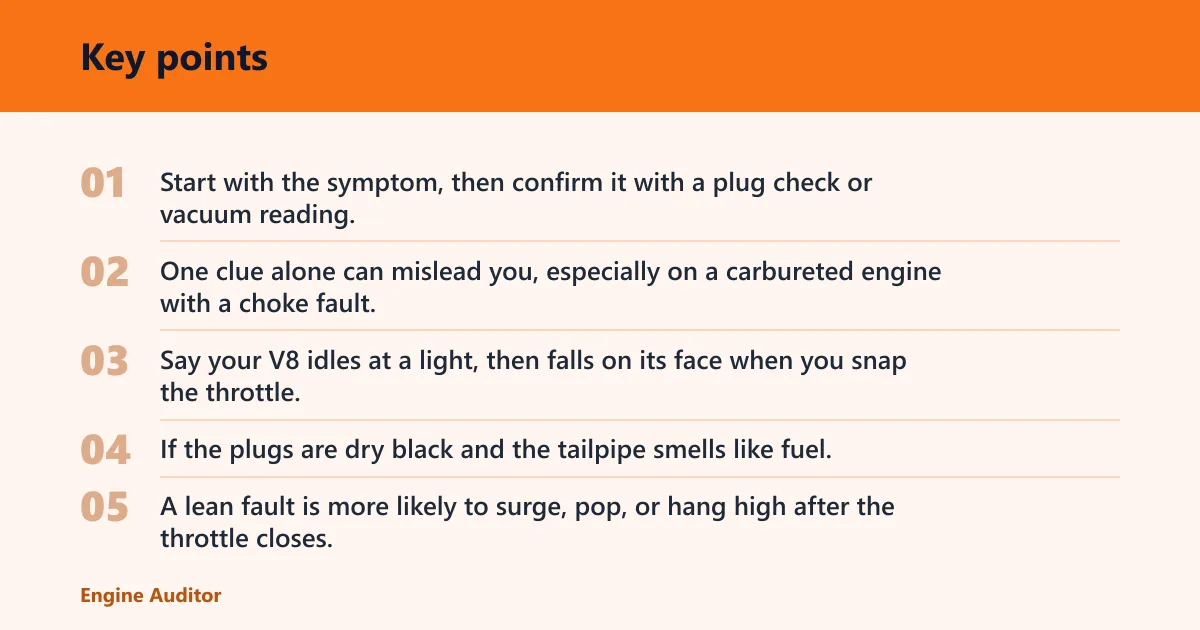
Start with the symptom, then confirm it with a plug check or vacuum reading. One clue alone can mislead you, especially on a carbureted engine with a choke fault, a vacuum leak, dirty passages, or low fuel pressure.
| Symptom | Likely rich | Likely lean | First confirmation test |
|---|---|---|---|
| Idle | Lazy, loaded-up idle, fuel smell, black smoke or soot | Hunting idle, surging, stalling, or a hanging idle after blip | Check vacuum gauge steadiness and inspect plugs after a warm idle run |
| Cruise | Soft response, dull exhaust note, higher fuel use | Surge, light bucking, flat pull, or steady-speed hesitation | Hold a steady road speed and compare vacuum behavior with throttle position |
| Acceleration | Blubbering, stumble that clears slowly, heavy fuel odor | Flat spot, ping under load, backfire through intake on snap throttle | Snap the throttle after warm-up and watch for stumble timing plus plug color |
| Hot restart | Long crank, flooded smell, rough catch | Fast start but unstable idle, may need throttle to stay running | Compare restart behavior after a heat soak and then check mixture clues again |
| Spark plugs | Black, sooty, wet, or carbon-fouled | White, light gray, blistered, or very clean at the tip | Pull plugs after a normal test run, then compare all cylinders |
| Exhaust smell | Strong raw-fuel odor, sometimes eye-watering | Sharp, hot, acrid smell or occasional pop in the exhaust | Check smell at idle and on quick throttle lifts |
| Vacuum gauge behavior | Lower-than-expected reading, often steadier than lean but depressed | Needle flutter, lower reading, or a rise and fall with misfire | Observe at warm idle, then compare needle stability with a known-good idle |
Say your V8 idles at a light, then falls on its face when you snap the throttle. If the plugs are dry black and the tailpipe smells like fuel, the first suspect is rich running, not a lean miss. A lean fault is more likely to surge, pop, or hang high after the throttle closes.
What a rich or lean carb feels like
Rich and lean faults often feel different at idle, cruise, acceleration, and hot restart. The timing of the symptom matters because a choke issue can look rich only on cold start, while a vacuum leak may show up most clearly at idle and light throttle.
Idle symptoms
A rich carb at idle often feels soggy, uneven, or loaded up, with a smell of fuel and a tendency to foul plugs. A lean carb at idle usually hunts, surges, or stalls when the throttle closes, and it may leave a hanging idle after a blip.
Cruise symptoms
At steady cruise, rich running can feel lazy and dull, with more fuel use than expected. Lean running often shows as a light surge or a small bucking motion at a constant road speed, which points toward air leaks, dirty passages, or low fuel delivery before you touch the screws.
Acceleration symptoms
On throttle tip-in, rich running usually blubbers or hesitates with a heavy exhaust note. Lean running tends to stumble hard, pop through the intake, or ping under load. A quick snap test is useful, but only after the engine is warm and the choke is fully open.
Hot restart symptoms
A rich carb may crank longer after heat soak, then catch with a fuel smell and a rough first few seconds. A lean carb often starts quickly but will not settle, or it may need the throttle held open. That difference helps separate flooding from a lean idle circuit.
What spark plugs and exhaust smell tell you
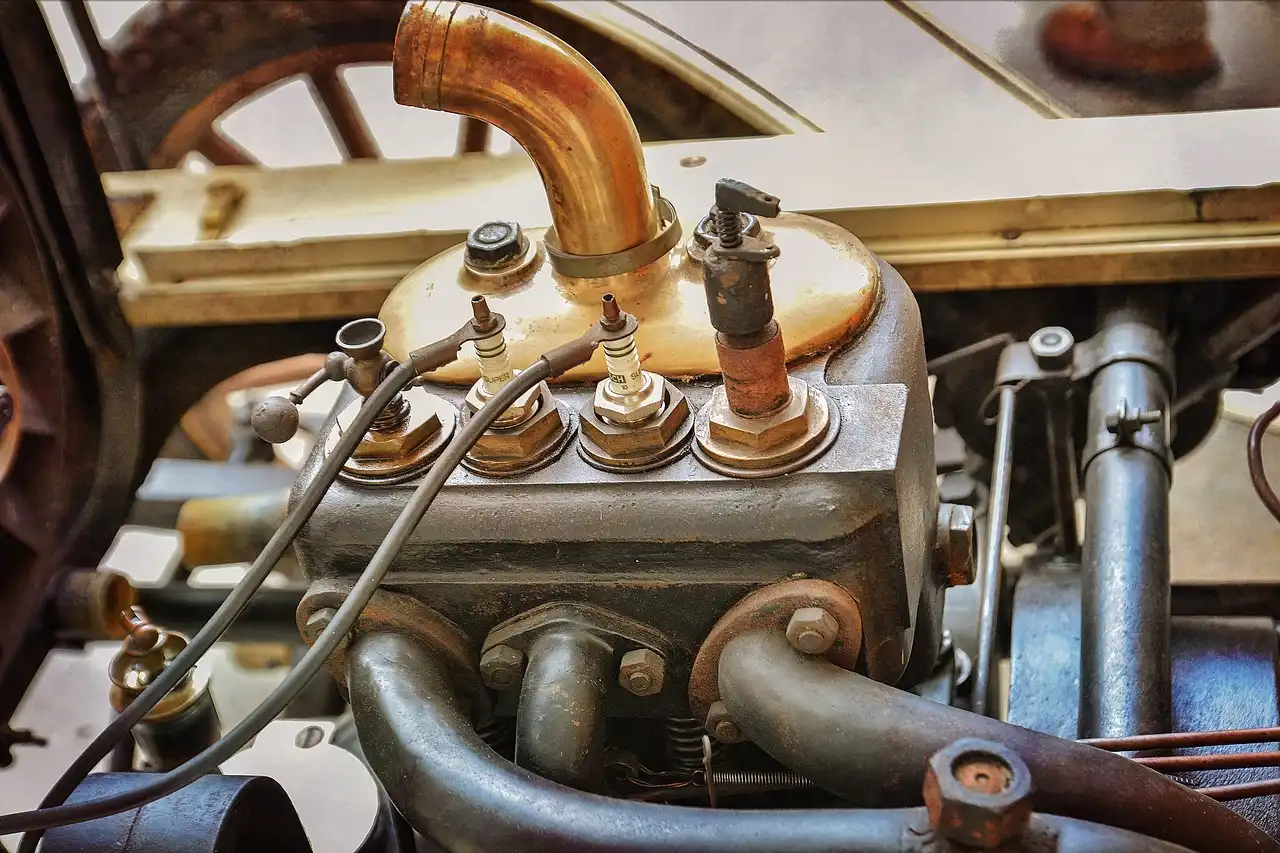
Spark plugs are one of the best checks because they record mixture condition after a normal run. Exhaust smell helps too, but neither clue should stand alone; use them with symptom timing and a vacuum reading before you adjust a single screw.
Spark plug color and deposits
Black, dry soot points toward richness. Wet black deposits can also mean oil, so do not stop at color alone. White, light gray, blistered, or very clean plugs can point toward a lean condition, especially when the engine also surges, pings, or idles high after the throttle closes.
What should spark plugs look like on a rich or lean carb? Rich plugs usually look dark and carboned up, sometimes with a fuel-wet tip after a short run. Lean plugs often look pale, clean, or overheated at the firing end. Compare all cylinders, because one bad cylinder can come from a plug wire, gasket leak, or intake leak rather than the main mixture setting.
Fuel smell from the tailpipe
A strong raw-fuel smell usually points rich, especially if idle is lumpy and plugs are black. A hot, sharp exhaust smell with popping on decel leans the other way. If the smell changes only during choke warm-up, the choke circuit may be staying closed too long instead of the main mixture being off.
What confirms the clue
Confirm plug and smell clues with a vacuum gauge and a second symptom. If the plugs look rich but the engine only acts up cold, the choke is a better suspect than the idle mixture screws. If the plugs look lean and vacuum is unstable, check for leaks, a clogged jet, or weak fuel supply first.
Can a vacuum gauge tell if your carb is rich or lean?
Yes, a vacuum gauge can help tell whether the carburetor is too rich or too lean, but only as part of a larger diagnosis. It measures intake manifold vacuum, so it is useful for spotting idle quality, misfire, and the effect of mixture changes during classic tuning and calibration workflows.
Normal vacuum behavior at idle
On a warm engine, a steady needle usually means the engine is close to stable at idle. The exact number depends on the engine, cam, and setup, so the needle pattern matters more than chasing a universal reading. Use a tachometer at the same time so you can keep idle speed stable while you read the gauge.
Rich-condition clues
Rich running can give a lower reading than expected, but the needle may stay fairly steady. The engine may sound soft or muffled, with a smell of fuel and soot on the plugs. If turning the mixture screws leaner raises vacuum and smooths the idle, that supports a rich diagnosis.
Lean-condition clues
Lean running is often reported to show a needle that wanders, drops, or flutters as the engine misfires. The idle may surge with the vacuum trace, then settle and rise again. If a small enrichening change steadies the needle and improves idle quality, the mixture was likely on the lean side.
When vacuum points to another fault
A vacuum gauge can also point to valve timing problems, ignition faults, or an intake leak. A low, shaky needle that does not respond much to mixture screw changes often suggests the problem is bigger than jetting. In that case, inspect leaks, choke operation, ignition health, and fuel delivery before touching the carb further.
Check these before adjusting anything
Do the precheck first. Cold enrichment can mimic richness, and a dirty air filter, stuck choke, or fuel delivery fault can look like a carb adjustment problem when the mixture screws are fine.
- Warm the engine to operating temperature before any diagnosis or adjustment.
- Check that the air filter is clean and not restricting airflow.
- Move the throttle linkage by hand and confirm it travels freely without binding.
- Verify fuel delivery with a fuel pressure gauge if supply trouble is possible.
- Inspect for vacuum leaks, clogged jets, dirty passages, and a choke that does not open fully.
- Keep safety glasses on and avoid sparks around fuel vapors.
Engine operating temperature matters because a cold engine is commonly run richer on purpose. If you tune before it is warm, you can misread normal enrichment as a fault and back the carb into a bad setting. The same warning applies to a choke that is partly closed after warm-up.
Throttle linkage should move freely and return cleanly. If it binds, idle speed can hang or fall unpredictably, which makes the tachometer reading and the mixture adjustment less reliable. A sticky linkage can look like a lean stall or a bad idle circuit when it is really a mechanical issue.
A fuel pressure gauge helps rule out supply problems before you chase mixture screws. Low pressure or inconsistent supply can mimic lean symptoms under load, while flooding can look like a rich carb even when the screw setting is close. If pressure is off, fix that first.
How to confirm the mixture at idle
Warm the engine, set a stable base idle, and use the tachometer and vacuum gauge together. The idle speed screw controls throttle plate position at idle, clockwise increases idle speed, and counterclockwise decreases it. Make mixture changes only in small, incremental steps on a warmed engine.
Use the tachometer to hold target idle
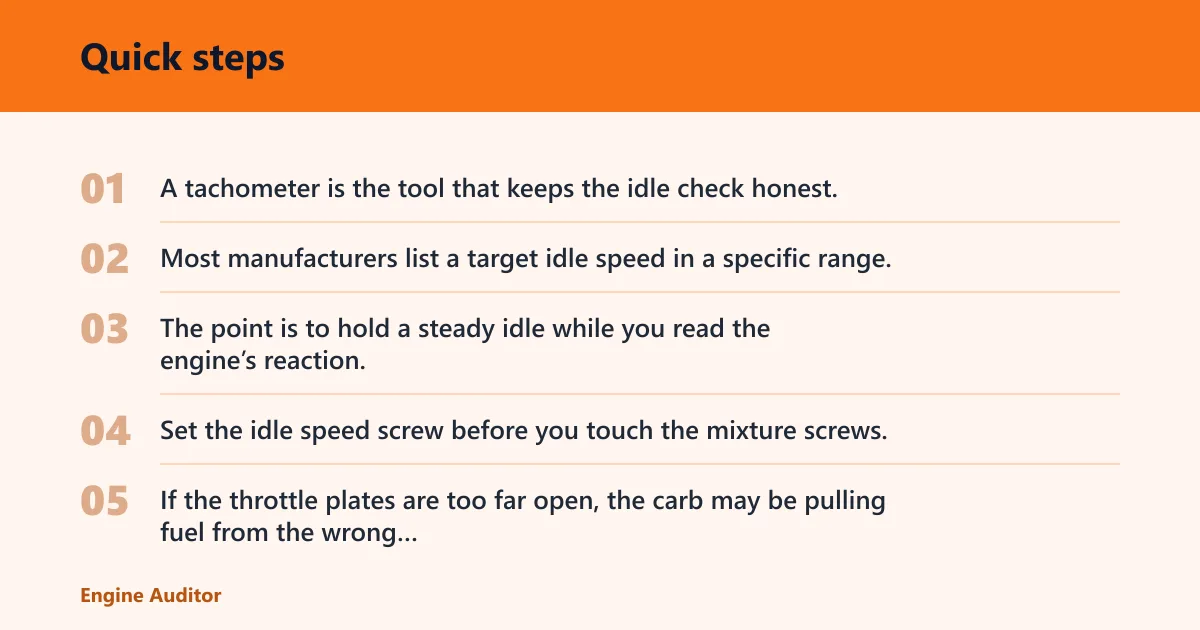
A tachometer is the tool that keeps the idle check honest. Most manufacturers list a target idle speed in a specific range; a common range for many carbureted setups is 600 to 900 RPM, but you should follow the vehicle’s own specification when it is known. The point is to hold a steady idle while you read the engine’s reaction.
Set the idle speed screw first
Set the idle speed screw before you touch the mixture screws. If the throttle plates are too far open, the carb may be pulling fuel from the wrong circuit and the mixture screws will not give a clean reading. Adjust speed first, then fine-tune mixture, then return to speed if needed.
Adjust idle mixture screws in small steps
Turn each idle mixture screw a small amount, then wait a few seconds for the engine to settle. If idle speed rises and vacuum steadies, keep moving in that direction until the reading stops improving. If the engine gets rougher, reverse direction a little and recheck.
Proper idle adjustment helps prevent stalling and improves fuel efficiency, but the change should be small enough to keep the engine from wandering into another circuit. Suppose the engine idles rough and smells rich after warm-up, yet the plugs are only slightly dark. A small lean adjustment that raises vacuum and smooths idle is a better move than a large turn that forces the engine lean.
Recheck vacuum and idle quality
After each change, compare the vacuum needle, exhaust note, and tachometer reading. A cleaner idle with steadier vacuum is a better sign than a single plug check. If the mixture screws have little effect, suspect a vacuum leak, a dirty passage, an incorrect float level, or a choke issue.
What to do after you identify rich or lean
Once you know the direction, fix the cause before making more carb changes. Mixture screws can only correct so much, and the wrong diagnosis can hide the real fault under a temporary idle improvement.
If the carb is rich
Start by checking the choke for full opening, the air filter for restriction, and the fuel level or fuel pressure for excess supply. Then make small lean adjustments at idle only after the engine is hot. If the plugs stay black, inspect float level, clogged return passages, or a sticking needle and seat before going farther.
If the carb is lean
Look first for vacuum leaks, restricted fuel delivery, clogged jets, or a choke that opens too soon. A lean idle or off-idle stumble may improve with a small enrichening adjustment, but only after the warm-engine check and the airflow and fuel checks are done. If the engine still surges, the fault is likely upstream of the screws.
When to stop and inspect jets, float level, or leaks
Stop adjusting if the screw changes do little, the vacuum needle stays erratic, or the symptom appears only under load. That pattern often means the carb needs inspection, not more tuning. Dirty passages, float level errors, and intake leaks should be found before the next adjustment.
Frequently asked questions
How to know if carburetor is too rich or too lean
Use timing, plugs, and vacuum together. Rich usually means black soot, fuel smell, and a lazy idle. Lean usually means surging, popping, a hanging idle, or white and blistered plugs. Warm the engine first, then confirm with a vacuum gauge before you move the mixture screws.
Can a vacuum gauge tell if my carb is rich or lean?
Yes, it can help, but it is not the only check. A rich carb often shows lower but steadier vacuum, while a lean carb often shows a wandering or fluttering needle. Use the gauge with plug reading and drivability symptoms so you do not mistake another fault for mixture trouble.
What should spark plugs look like on a rich or lean carb?
Rich plugs usually look black, sooty, or wet with carbon. Lean plugs often look white, pale gray, or blistered at the firing end. Check them after a normal test run, and compare all cylinders. One odd plug can point to a cylinder fault rather than the whole carb.
What are the signs a carburetor is running rich?
Common rich signs are fuel smell, black plugs, rough idle, slow throttle response, and poor fuel use. It may also load up when hot or leave soot at the tailpipe. Do not rely on one clue. Confirm with a vacuum reading and a warm-engine idle check.
What are the signs a carburetor is running lean?
Lean signs include surge, stumble, popping, pinging under load, a hanging idle, and white or very clean plugs. The vacuum gauge may flutter or drop. Before changing mixture screws, check for vacuum leaks, a dirty air filter, choke problems, and weak fuel pressure.
How do I adjust carb mixture after diagnosing rich or lean?
Warm the engine, set idle speed first, then turn the idle mixture screws in small steps. Wait a few seconds after each change, watch the tachometer, and compare vacuum and idle quality. If the screws do not respond well, stop and inspect the float level, jets, choke, and leaks.
Products related to this article
Sponsored / affiliate links. As an Amazon Associate I earn from qualifying purchases. I may earn additional commission from eligible campaigns.
 10 Pcs Carburetor Adjustment Tool Kit for Common 2 Cycle Small Engine, Carb Adjusting Tool, Carburetor Adjuster Tool for Echo Poulan Homelite String Trimmer
 Ferilter 12 PCS Carburetor Adjustment Tool Carb Adjusting Tool Kit for Husqvarna Stihl Ryobi Troy Bilt Echo Poulan Trimmer Weedeater Chainsaw Blower 2 Cycle Small Engine Fuel line Primer Bulb