Vehicle Types for Uber Drivers: Which Cars Are Best?
Hybrid compact sedans usually deliver the highest Uber profit per mile for most drivers, with small gas cars next and EVs strongest only where charging is cheap and downtime is low. Choosing a thirsty SUV or full-size sedan for city work can wipe out fares with fuel, tire, and brake costs. This guide ranks vehicle types by profit per mile and compares comfort, fuel cost, and downtime for city trips, airport runs, and high-mileage driving.
Uber vehicle rules and fit
Uber rideshare work starts with a simple filter: the car has to fit the platform’s local rules, the driver’s market, and the trip type. A car usually seats 1–8 people, but Uber eligibility depends on more than seat count alone. Four doors matter because they improve entry, exit, and rider flow, especially for back-seat passengers with bags.
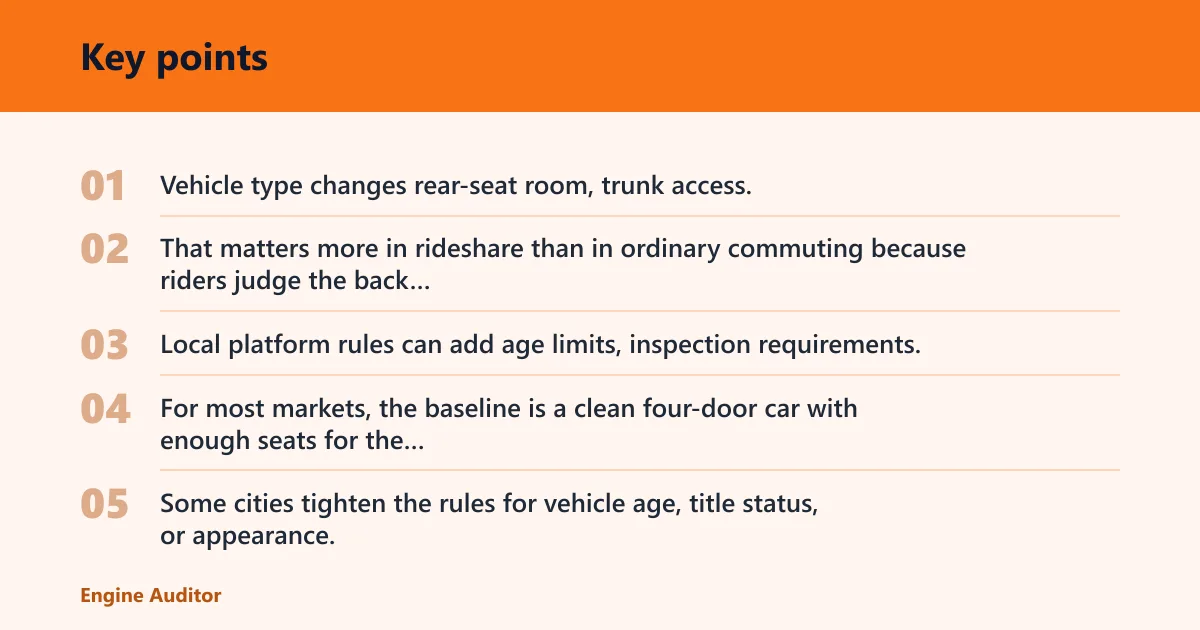
Vehicle type changes rear-seat room, trunk access, and how easily passengers get in and out. That matters more in rideshare than in ordinary commuting because riders judge the back seat, luggage space, and ride quality on every trip. Local platform rules can add age limits, inspection requirements, and category-specific standards, so a car that works in one city may miss the mark in another.
What Uber usually requires
For most markets, the baseline is a clean four-door car with enough seats for the service you want to drive, plus acceptable condition and local age compliance. Some cities tighten the rules for vehicle age, title status, or appearance. If the car misses any one of those checks, it may be a poor rideshare buy even if the sticker price looks right.
Why four doors matter
Four doors reduce boarding time and make rear-seat access easier for adults, children, and riders carrying bags. That lowers friction at pickup and drop-off. It also helps when a passenger needs the curb-side rear seat, which is a common request in busy city areas.
📊 A car usually seats 1–8 people. Source: Car.
Which vehicle type earns the most per mile?
Hybrid compact sedans often earn strong profit per mile because they tend to balance purchase price, fuel cost, and passenger comfort. Gas compact cars can be close behind if purchase price is low. EVs can win in dense urban use, especially when charging is relatively cheap, charging access is easy, and the car spends little time waiting for power.
Profit per mile is not the same as fare per mile. A car that brings in slightly higher fares can still lose if it burns more fuel, wears tires faster, or keeps the driver off the road for charging or repairs. Comfort also affects earnings because better rear-seat space and smoother rides can support stronger ratings and repeat requests.
What fuel and downtime do to earnings
Fuel or energy cost is the first drag on profit. Downtime is the second. A vehicle that needs longer fueling stops, more frequent brake work, or more shop visits earns less even if the trip price looks good on paper. Full-time drivers feel that loss fastest because every unworked hour cuts total weekly revenue.
Where comfort affects ratings and repeat rides
Passenger comfort is not a luxury item in rideshare. Rear legroom, seat padding, door opening width, and trunk access all shape the trip. Riders with luggage may remember a cramped back seat more than a low fare, and that affects ratings, tips, and whether they request a similar car again.
Vehicle comparison table
| Vehicle type | Upfront price band | Estimated fuel or energy cost per mile | Passenger comfort | Cargo usefulness | Likely break-even profile for full-time Uber driving |
|---|---|---|---|---|---|
| Compact car | Low | Low for gas, very low for efficient models | Fair in front, tight in rear | Limited trunk space | Best when purchase price matters most and trips are short, dense, and city-focused |
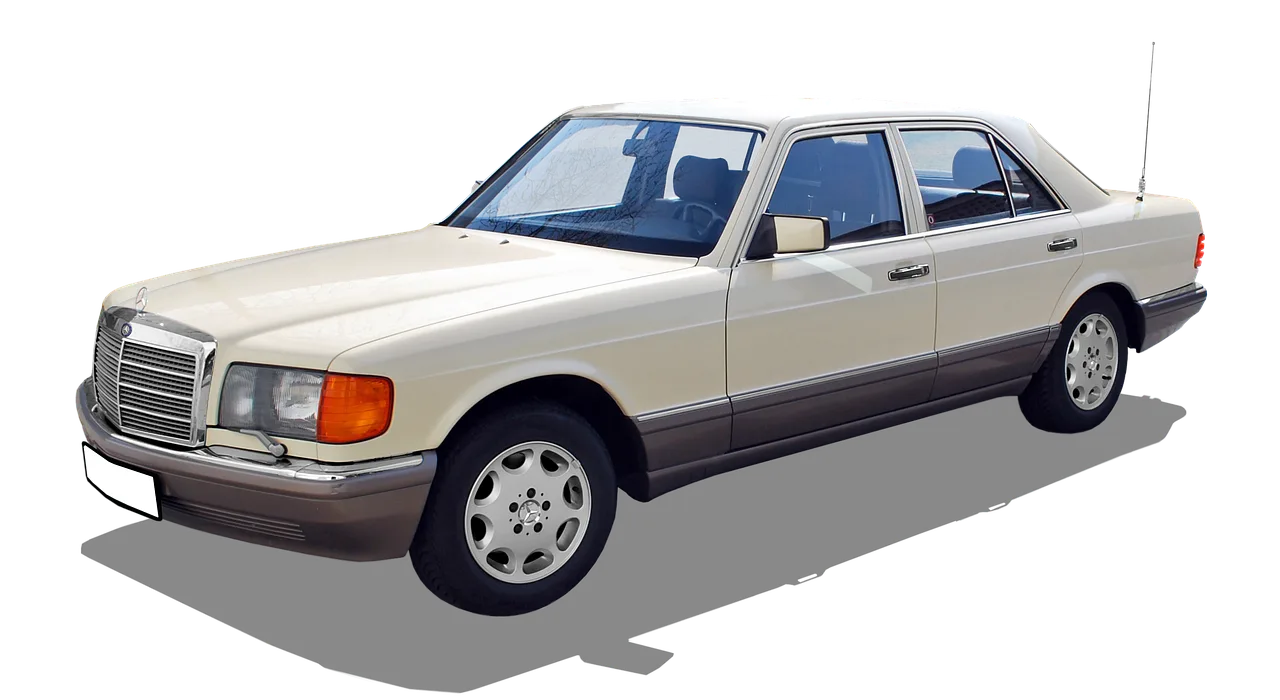
| Sedan | Low to moderate | Low to moderate | Good balance for most riders | Moderate trunk space | Often the quickest path to solid profit per mile for mixed Uber use |
| Midsize car | Moderate | Low to moderate | Very good rear-seat room | Moderate to good | Strong when airport runs, longer trips, and rider comfort matter more than the lowest purchase price |
| Hybrid | Moderate to high | Very low | Good to very good | Moderate | Best for high-mileage drivers who can spread the higher buy-in across heavy weekly use |
| Electric vehicle | High | Very low | Good to very good | Moderate, varies by battery layout | Best where charging is easy, trips are dense, and daily mileage is high enough to matter |
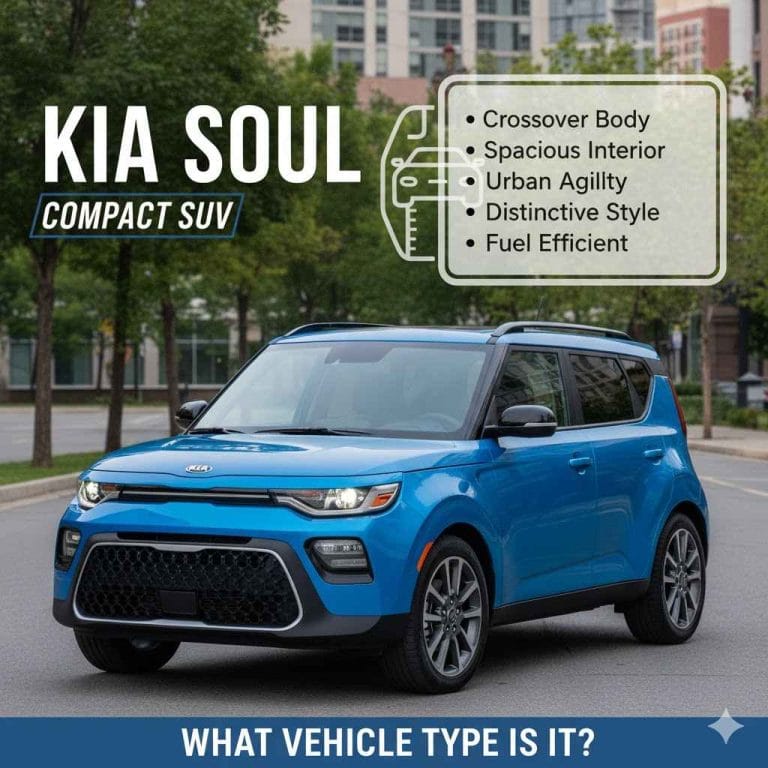
| SUV | High | High | Very good for headroom and step-in height | High | Can work for airport and group demand, but fuel and maintenance can weaken profit per mile |
Which cars are best for Uber drivers?

For most drivers, the best all-around choice is a hybrid sedan or an efficient midsize sedan. A compact car can be the best low-cost starting point if the budget is tight. EVs are the best city-only choice when charging is easy, because their energy cost per mile can be very low.
Best all-around choice
A hybrid sedan fits the middle of the market well. It usually gives a better balance than a compact car because the rear seat and trunk are less cramped, and it often costs less to run than a larger gas car. That balance is why many full-time drivers favor it over flashier options.
Best low-cost choice
A compact car works when the main goal is low entry cost and strong fuel economy. The tradeoff is clear: rear-seat space is tight, the trunk is smaller, and longer riders may feel squeezed. That makes compact cars better for city trips than for luggage-heavy airport work.
Best high-mileage choice
A hybrid is often the strongest high-mileage buy. Higher purchase price can be offset over time by lower fuel spend and less strain from constant stop-and-go driving. For a driver covering long weekly distances, that math often matters more than the showroom price.
Best city-only choice
An EV can be ideal in a city with plentiful charging, short trip lengths, and predictable downtime. Energy cost per mile is usually the main advantage. The weak point is scheduling: if charging takes too long or stations are unreliable, the profit edge shrinks fast.
Suppose a driver picks a roomy SUV for downtown rides because the cabin feels comfortable. The first week brings a lot of short trips, but the higher fuel bill and slower parking turn each mile into thinner profit than a hybrid sedan would have produced.
When does an SUV make sense?
An SUV makes sense when passenger groups, airport luggage, or rougher pickup conditions are common enough to earn back the extra running cost. It is usually not the best choice for pure city work. The higher seating position and cargo area help, but fuel and maintenance can eat into profit per mile fast.
Airport and group-trip use
Airport trips reward cargo space more than many drivers expect. Two travelers with checked bags, carry-ons, and tight pickup timing may value an SUV’s loading space and roomier second row. Group rides also benefit from easier step-in height and less seat conflict in the back.
Where SUVs lose money
SUVs lose ground when most trips are short and frequent. They usually cost more to fuel, tires wear sooner, and suspension parts can take more abuse from heavy use. If the market is mostly solo riders and quick downtown hops, the SUV premium rarely pays back cleanly.
How do mileage and maintenance costs change the choice?
High mileage changes everything. A car that looks affordable at purchase can become expensive once fuel, tires, brakes, oil, and suspension wear are counted. Rideshare driving puts more stop-and-go stress on the car than ordinary commuting, so total cost of ownership matters more than the monthly payment alone.
Fuel or energy cost per mile
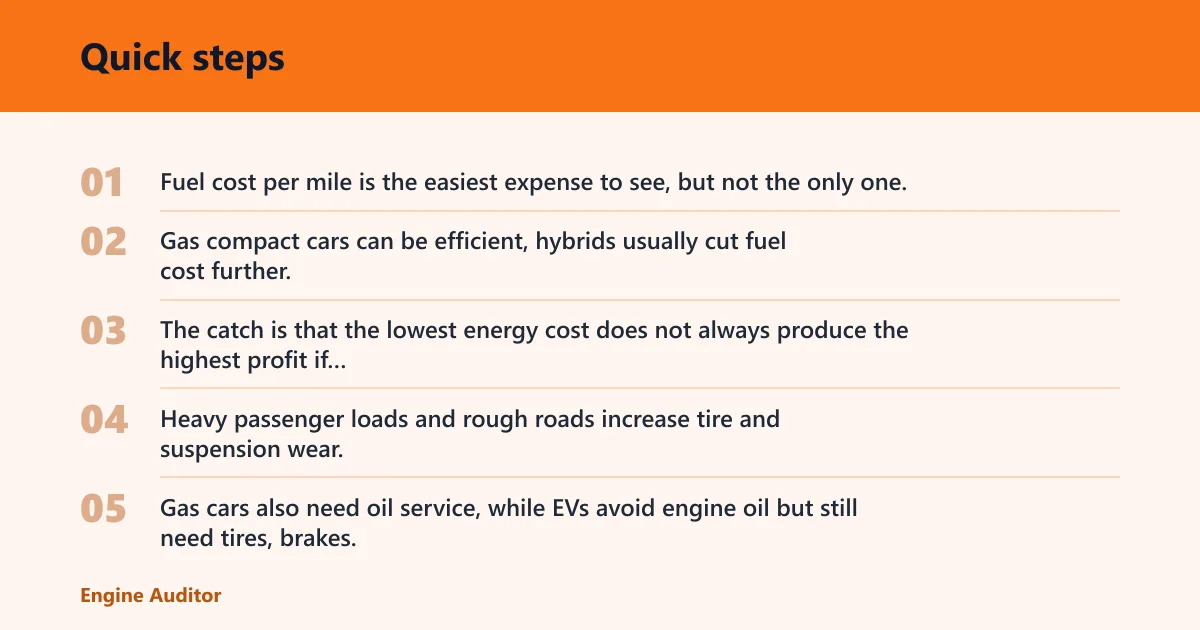
Fuel cost per mile is the easiest expense to see, but not the only one. Gas compact cars can be efficient, hybrids usually cut fuel cost further, and EVs can be the cheapest to energize when charging is convenient. The catch is that the lowest energy cost does not always produce the highest profit if charging or repair downtime is high.
Tires, brakes, oil, and suspension wear
Rideshare driving wears consumables quickly. Stop-and-go traffic increases brake wear. Heavy passenger loads and rough roads increase tire and suspension wear. Gas cars also need oil service, while EVs avoid engine oil but still need tires, brakes, and suspension attention. Those costs matter at full-time mileage.
A common first-timer mistake is choosing a large, comfortable SUV for short urban trips because the cabin feels premium. That choice can look sensible on day one, then turn expensive once tire replacement, fuel stops, and parking delays stack up over months of full-time driving.
Why downtime matters for full-time drivers
Downtime cuts income directly. A car that needs longer service intervals, rare parts, or frequent charging stops can reduce total weekly rides even if its trip cost seems low. The best Uber car is not the one with the most features. It is the one that stays earning.
What should you buy for your driving pattern?
Choose the car around where and how you drive. City-only drivers usually want the lowest cost per mile and the easiest parking. Airport-heavy drivers need space and comfort. Late-night and mixed-demand drivers need a balance that avoids both high fuel bills and cramped passenger space.
City-only driving
City-only work favors a hybrid compact sedan or efficient EV, depending on charging access. If charging is easy and cheap, the EV can be the cheapest to run. If charging is uncertain, a hybrid sedan is usually safer because it avoids charging delays while still keeping fuel cost down.
Airport-heavy driving
Airport-heavy drivers should lean toward midsize sedans, hybrids with useful trunks, or SUVs if luggage demand is consistently strong. Rear-seat comfort and trunk opening matter more here than in quick downtown rides. The right car should load bags without slowing the pickup.
Late-night and mixed-demand driving
Late-night and mixed-demand driving often favors sedans because they are easier to park and cheaper to run. A midsize car is a strong compromise if riders frequently travel in pairs or with luggage. The goal is steady earnings without the operating cost of a larger vehicle.
Frequently asked questions
Which vehicle type qualifies for Uber rides?
Qualification depends on local platform rules, but the common baseline is a four-door vehicle in acceptable condition with enough seats for the service level. Many markets also use age limits and inspection standards. Seat count alone is not enough if the car misses local requirements or category rules.
Is an SUV better than a sedan for Uber?
An SUV is better only when your trips regularly involve multiple riders, luggage, or airport pickups. For most city driving, a sedan is cheaper to fuel, cheaper to maintain, and easier to park. That usually gives the sedan the stronger profit per mile, even if the SUV feels roomier.
What car should I buy for Uber driver work?
Start with your route pattern and budget. If you drive mostly city trips, a hybrid sedan is often the safest buy. If you need the lowest entry cost, a compact car can work. If your market is airport-heavy, a midsize car usually gives the best comfort-to-cost balance.
Do I need a 4-door car for Uber?
In most markets, yes. Four doors make boarding and exit faster and easier for passengers, especially in the rear seat. They also fit the practical side of rideshare work, where luggage, curbside pickup, and quick drop-offs matter. Always check the local Uber category rules before buying.
What vehicle type is cheapest to run for Uber?
In pure operating cost, efficient hybrids and some EVs are usually cheapest to run. Hybrids are often the safer choice when you want low fuel cost without charging planning. EVs can be cheaper still per mile, but only when electricity access, route length, and downtime all fit the job.
Products related to this article
Sponsored / affiliate links. As an Amazon Associate I earn from qualifying purchases. I may earn additional commission from eligible campaigns.