Can a Floor Mat Cause a Stuck Pedal?
A loose, stacked, or incorrect floor mat can sometimes hold the accelerator down. If the pedal still does not return freely after the mat is removed, the mat is unlikely to be the cause. A pedal that hangs up can cause sudden throttle input or a loss of throttle control. This guide shows the quickest way to prove whether the mat is the problem before you replace parts or keep driving.
Pedal symptoms and inspection steps for a driver footwell

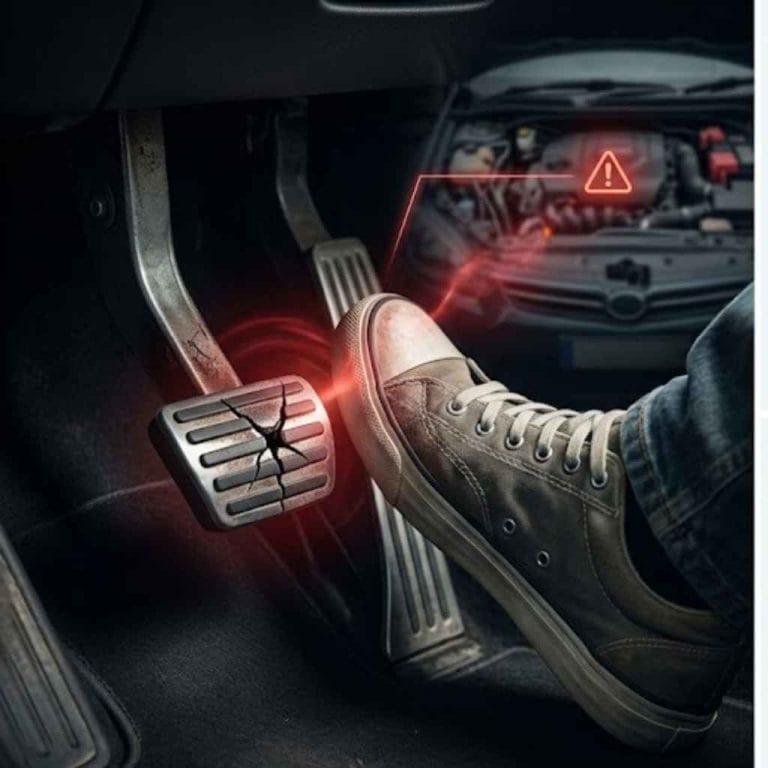
Yes. A driver-side floor mat can block the accelerator, and in some vehicles it can also interfere with the brake or clutch if it shifts into the pedal sweep area. The pedal should move through its full travel and return smoothly when released. If that motion is interrupted, stop treating it as a minor annoyance.
The accelerator pedal is commonly on the right side in most vehicles, so that is a good first place to inspect. Do not stop there. A mat that rides up on the left side can affect the brake or clutch, and a pedal that feels wrong underfoot needs prompt attention.
What pedal interference feels like
Pedal interference often feels like a pedal that drags, catches near the floor, fails to return fully, or changes feel as it moves. The pedal may also feel normal one moment and then bind after a turn, stop, or seat adjustment that shifts the mat.
Which pedals can be affected?
The accelerator is the most common problem because it sits where a loose mat can slide forward. The brake pedal can also be affected, which is a higher-risk condition because it may confuse the driver’s response in traffic. In manuals, the clutch can be involved too if the mat bunches near the left footwell.
Check the driver footwell first
-
Park and secure the vehicle. Shift to park or neutral, apply the parking brake, and keep the engine off if the vehicle is already safe to stop. If the pedal feels unsafe while driving, shift to neutral, brake firmly, and pull over as soon as it is safe.
-
Remove loose items. Take out bottles, coins, rocks, trim pieces, and any debris that sits under or beside the mat. Debris under the mat can wedge between the mat, carpet, and pedal and mimic a pedal fault.
-
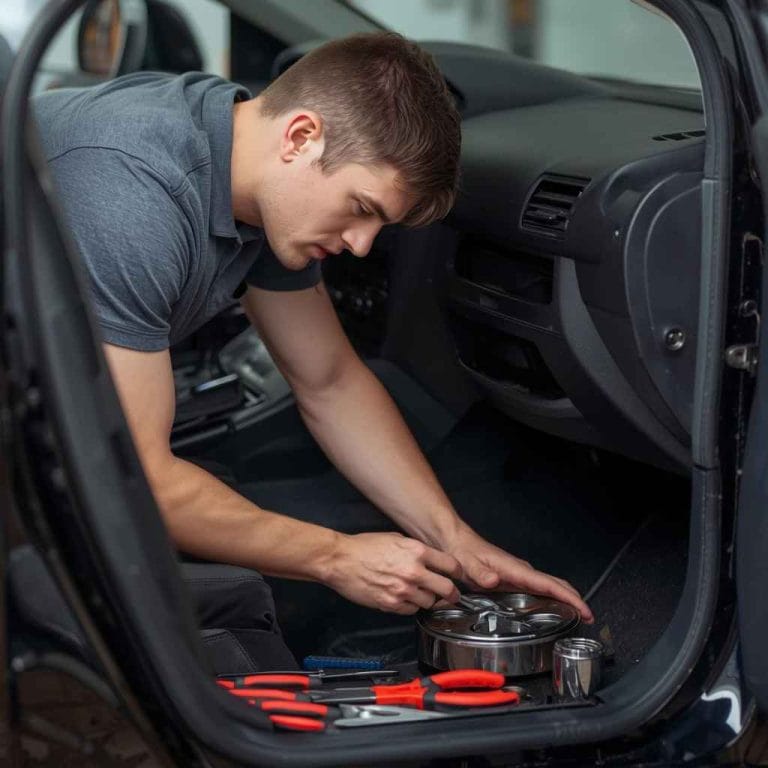
Lift the mat fully. Pull the driver-side floor mat out of the footwell and inspect the carpet beneath it. Look for bunching, curled edges, or trapped debris that could push the mat forward into the pedal sweep area.
-
Test pedal travel carefully. With the mat removed, press each pedal by hand or foot only far enough to confirm free movement and full return. If the pedal still sticks, the mat is not the only suspect.
Say your all-weather mat has a curled front edge and a coin wedged under the heel pad. That setup can push the mat forward just enough to reach the accelerator pedal during a right-foot roll. Removing the coin and reseating the mat may stop the interference, but only if the mat still fits the vehicle’s anchor points.
Pedal interference decision checklist
| Symptom | Likely cause | Immediate action |
|---|---|---|
| Accelerator pedal catches or stays down | Floor mat out of place, curled edge, or debris under the mat | Pull over safely, shift to neutral if needed, remove the mat, and inspect the pedal sweep area |
| Brake pedal feels blocked or slow to return | Mat has migrated left, or carpet bunching is touching the pedal area | Stop driving when safe, remove loose items, and verify the brake pedal moves freely with the mat out |
| Clutch pedal binds or does not fully release | Mat overlap near the left footwell or debris trapped under the mat | Do not continue driving; remove the mat and confirm full pedal travel before starting again |
| Mat has shifted forward near the pedals | Missing anchor clip, wrong fit, or poor backing grip | Remove the mat, match it to the retention points, and do not drive until it stays clear of the pedals |
| Loose debris is visible under the mat | Coins, mud, snow, ice, or a small object wedged in the footwell | Remove the debris before retesting any pedal movement |
| Pedal still sticks after mat removal | Debris still trapped, carpet bunching, or a true pedal or throttle fault | Stop driving and arrange inspection; do not assume the mat was the only problem |
Why mats cause pedal problems
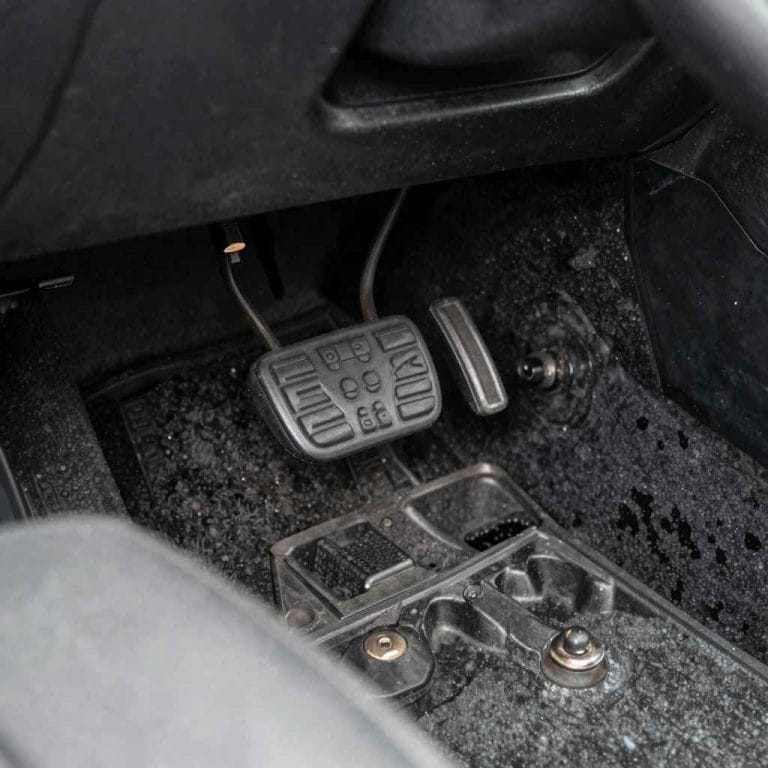
A mat causes trouble when it enters the pedal sweep area, which is the full range of pedal travel and the clearance needed for both press and release. A corner, curl, or thick edge in that space can block the pedal or change the way it returns.
Most of the time, the problem is not the mat material alone. Fit, anchor compatibility, edge height, and backing grip matter more than whether the mat is labeled all-weather or carpeted.
Mat out of place
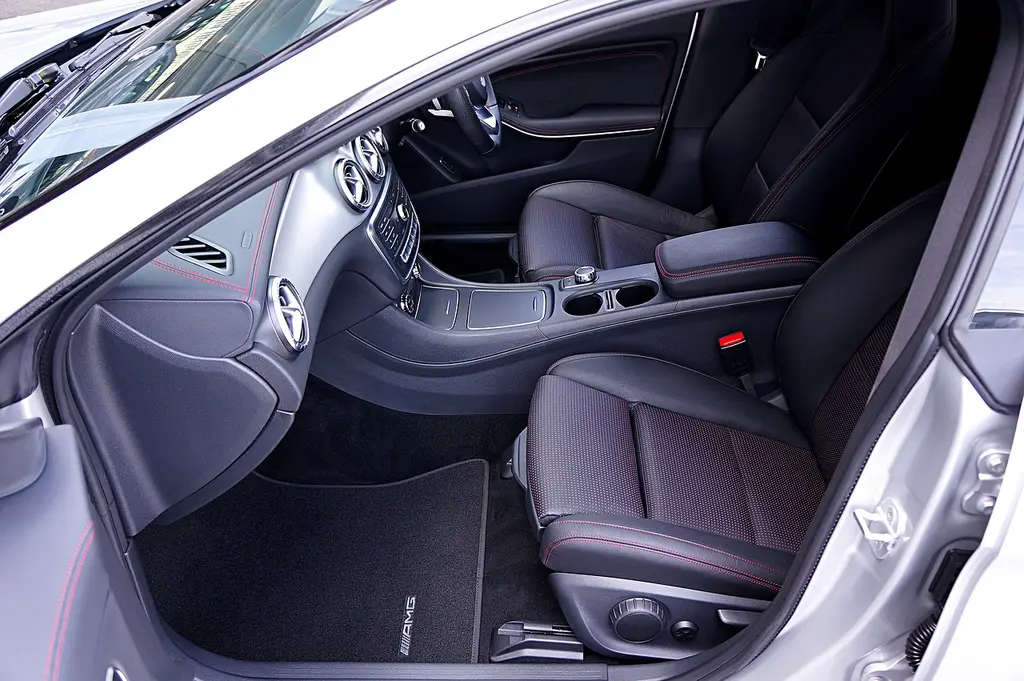
A mat that slides forward can cover the accelerator or crowd the brake. Even a small shift matters if the mat reaches the area where the pedal pivots or the foot presses down. Vehicle-specific floor mats reduce this risk because they are shaped for the exact floor pan and anchor layout.
Debris under the mat
Debris under the pedals includes coins, bottles, rocks, trim pieces, mud, snow, and ice. Any of these can wedge between the mat, carpet, and pedal and create a false stuck-pedal feel. Clear the footwell first, then retest movement.
Curled edges and missing anchors
A curled mat edge can act like a ramp and push the mat into the pedal sweep area. A missing anchor clip is just as important, because the floor mat retention system is meant to stop forward migration. Factory hooks or anchors, aftermarket clips, or grommets must match the vehicle’s attachment points exactly.
Are all-weather mats more likely to interfere?
Not by material alone. All-weather mats are safer when they fit the vehicle tightly, use the correct anchor points, and stay flat under the pedals. A poorly matched universal mat can interfere more easily than a well-made vehicle-specific mat, regardless of whether it is rubber, vinyl, or carpet.
The key details are fit and retention. A vehicle-specific floor mat usually includes molded contours and anchor points that follow the floor pan and reduce the chance of migration. A universal mat may need trimming or extra clips, and that is where problems start if the pedal sweep area is not protected.
Vehicle-specific fit versus universal fit
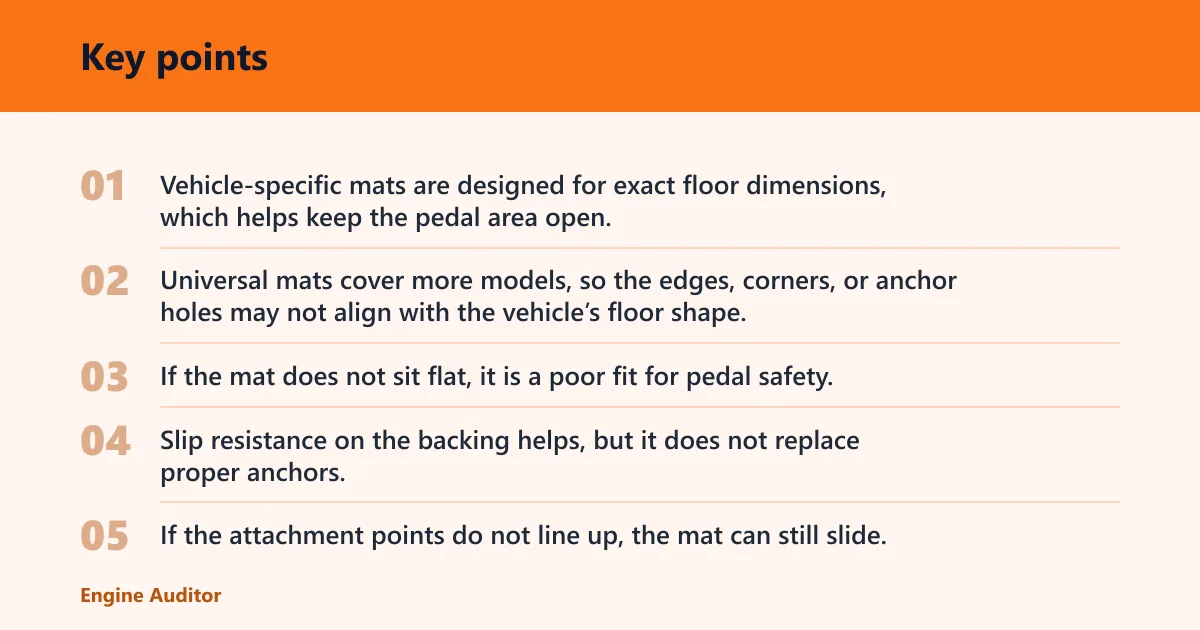
Vehicle-specific mats are designed for exact floor dimensions, which helps keep the pedal area open. Universal mats cover more models, so the edges, corners, or anchor holes may not align with the vehicle’s floor shape. If the mat does not sit flat, it is a poor fit for pedal safety.
Backing grip and retention hardware
Slip resistance on the backing helps, but it does not replace proper anchors. A good floor mat retention system uses factory hooks or anchors, or matched aftermarket clips and grommets, to prevent forward movement. If the attachment points do not line up, the mat can still slide.
Picture a universal front mat trimmed to fit a compact sedan, but the driver seat is set all the way back and the mat has no rear anchor. The mat may stay put during short trips, then creep forward on a rainy day when wet soles reduce friction. That is a fit and retention problem, not a weather problem alone.
What should you do if the pedal still sticks after removing the mat?
If the pedal still sticks after the mat is removed, the problem may be debris, carpet bunching, a damaged pedal assembly, or a throttle-by-wire fault. An electronic accelerator system can still feel like a stuck pedal if something physically obstructs it, and warning lights may appear if pedal movement is inconsistent.
Do not keep driving to see whether it clears. If the pedal hangs up with the footwell clear, the issue needs further diagnosis before the vehicle returns to normal use.
When to suspect a throttle-by-wire fault
A throttle-by-wire system uses an electronic accelerator signal instead of a mechanical cable. If the pedal moves normally with the mat removed but the engine response is erratic, warning lights come on, or the pedal feel changes without any visible obstruction, the fault may be electrical or sensor-related rather than mat-related.
When to stop driving and get help
Stop driving if the pedal remains sticky, if the brake feels abnormal, or if the accelerator does not return smoothly after the footwell is cleared. Keep the vehicle off until the footwell is inspected again, because forcing the pedal can make the problem worse or create a sudden surge.
How to prevent pedal interference
Choose a mat that matches the vehicle’s floor pan and anchor layout, then keep the pedal sweep area clear. The safest setup is a vehicle-specific mat with the correct retention points, a flat profile near the pedals, and backing that resists sliding without bunching.
Inspect the mat after installation and after any interior cleaning. A mat that looked fine yesterday can shift after vacuuming, seat movement, or heavy foot traffic.
-
Match the attachment points. Use a mat with the correct factory retention hooks, anchors, clips, or grommets for the vehicle. If the holes do not line up exactly, the mat can migrate toward the pedals.
-
Keep edges flat. Check the front edge, corners, and heel area for curl or lift. Thick edges near the pedal sweep area can change how the pedal moves, especially on short-travel accelerator pedals.
-
Inspect after cleaning. After vacuuming or washing, reinstall the mat and confirm that it lies flat and stays clear of the accelerator, brake, and clutch pedals. Wet mats and wet shoes can change how a mat shifts.
Frequently asked questions
Can a floor mat cause a stuck pedal?
Yes. A floor mat can block the accelerator, and in some vehicles it can also interfere with the brake or clutch if it moves into the pedal sweep area. If the pedal still sticks after the mat is removed, the cause is likely something else and needs more diagnosis.
How do I know if my floor mat is blocking the accelerator?
Remove loose debris, lift out the mat, and check whether the accelerator moves freely and returns smoothly with the mat gone. Then inspect the mat for curled edges, missing anchors, or a shape that reaches into the pedal sweep area. Any contact there is a hazard.
What should I do if my gas pedal feels stuck after installing new mats?
Stop driving when safe, shift to neutral if needed, and remove the driver-side mat for inspection. Confirm that the mat matches the vehicle’s retention system and does not overlap the accelerator path. If the pedal still feels wrong with the mat out, seek further diagnosis.
Are all-weather floor mats more likely to cause pedal interference?
Not by themselves. A good all-weather mat with the right fit and anchors can be safe. Interference is more likely when the mat is universal, too thick near the pedals, missing an anchor clip, or shaped poorly for the vehicle’s floor contour.
Can a floor mat cause the brake pedal to get stuck too?
Yes. A shifted mat can crowd the brake pedal, especially if it migrates left or bunches under the driver’s heel. Because the brake pedal is a safety-critical control, any unusual feel should be treated as an immediate problem, not something to monitor later.
Do universal mats cause more problems than vehicle-specific mats?
Often, yes. Universal mats are more likely to miss the exact anchor points, sit with lifted edges, or overlap the pedal sweep area. Vehicle-specific floor mats are shaped for the floor pan and usually fit the retention system more accurately, which lowers the risk of migration.
Products related to this article
Sponsored / affiliate links. As an Amazon Associate I earn from qualifying purchases. I may earn additional commission from eligible campaigns.