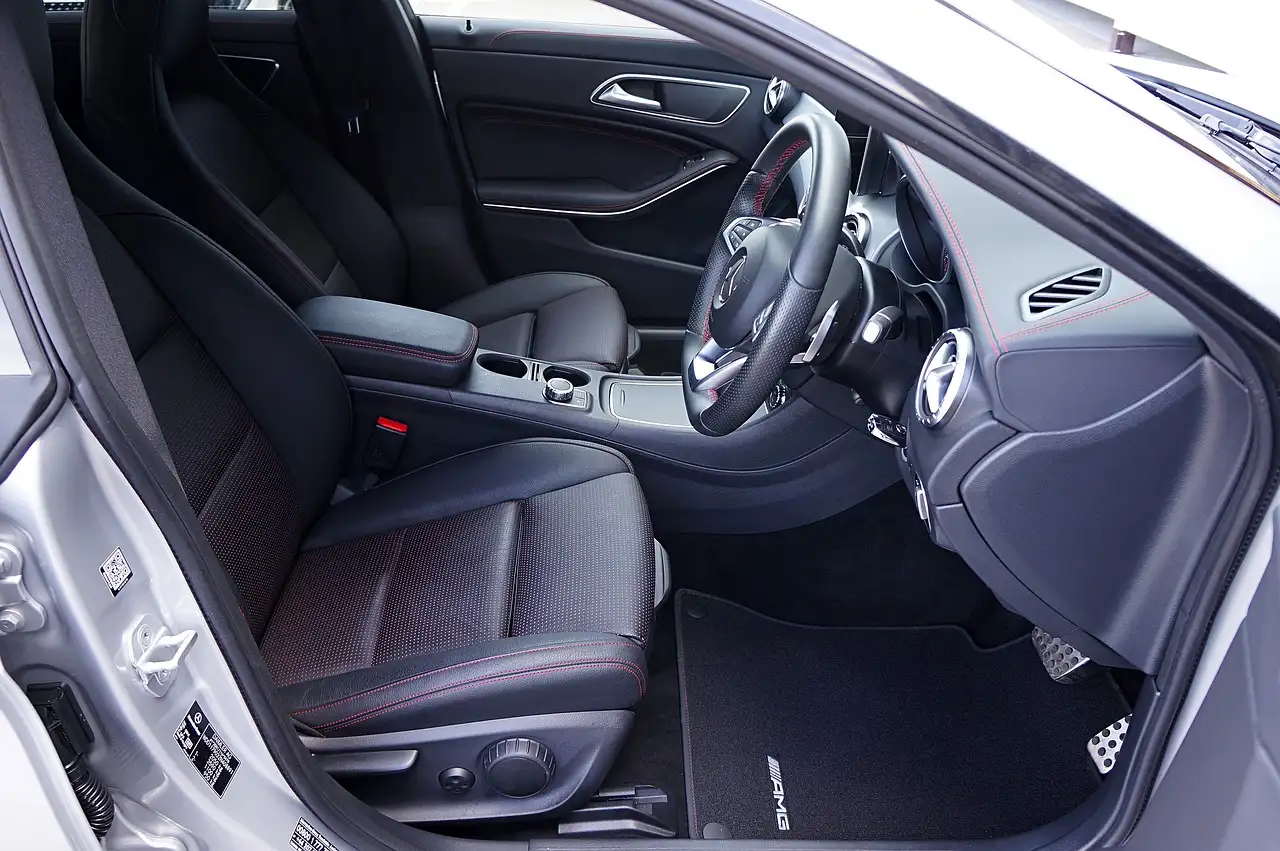
Can Floor Mats Affect Car Pedals? Real Risks Explained
Yes, floor mats can trap a pedal or slow its return, especially if they are the wrong size, lack retention clips, bunch near the accelerator, are oversized, or are stacked on another mat; aim for enough clearance at full pedal travel to keep the mat out of the pedal path. A blocked throttle or slow brake release can make low-speed maneuvers dangerous and can trigger unwanted acceleration or brake drag. This guide covers the failure modes by vehicle and mat type, then gives a repeatable clearance check you can do after cleaning, seasonal swaps, or replacement.
Why floor mats can hit pedals


Floor mats interfere with pedals in three main ways: they slide forward, curl or bunch at the edges, and take up too much room in a tight footwell. The hazard is not the same in every vehicle. Fit, anchor use, mat thickness, and pedal layout decide whether a mat stays clear or moves into the pedal arc.
Loose mats can slide into the pedal area and block braking or cause unintended acceleration. That risk is highest when the driver-side footwell has little spare space, the mat is trimmed poorly, or the retention hardware is left disengaged. A mat does not need to cover the whole pedal to create trouble; partial contact can still change pedal return or shorten travel.
Forward slide under the accelerator
When a mat migrates forward, the front edge can catch the accelerator pedal or sit under it. That can hold the throttle partly down or stop it from returning fully. Even a small shift matters if the pedal is hinged low and the mat can move into the same zone the pedal sweeps through.
Edge curl and bunching at the pedal arc
Curling, folding, or bunching often starts at a corner or around a heel-rest area. Once an edge lifts, repeated foot movement can push the mat into a ridge near the pedal path. The brake pedal is the concern in a hard stop because the mat must not stop full travel or slow release.
Thickness in tight footwells
Heavy all-weather mats can crowd tight footwells. That matters most where the accelerator, brake, and clutch sit close together or where the floor rises sharply under the pedals. A mat can fit on the floor and still be unsafe if its height or stiff wall touches the pedal arm or pad at full travel.
Which mats are most likely to interfere?
Vehicle-specific mats usually fit better than universal mats because they are molded to the footwell and cut for anchor hooks. Universal trim-to-fit mats often need trimming, and that extra fitting step can leave too much material near the pedals. All-weather liners can be safe, but thick edges and rigid sides matter more in small footwells.
OEM carpet mats
OEM carpet mats are usually the easiest to fit correctly because they are made for a specific footwell shape and include anchor cutouts. Their lower profile often gives more space around the pedal sweep. That said, worn carpet, curled corners, or missing clips can still create interference.
All-weather liners
All-weather liners are typically thicker and more structured. Some are made with rigid tray-like construction and standing walls, while others are softer and more flexible. Those differences matter because rigid walls can hold shape, while softer mats may conform but also shift if not secured. (Caranddriver)
Universal trim-to-fit mats
Universal mats often need trimming to fit, and that is where many problems start. A cut too long can leave extra edge near the accelerator, while a cut too short can expose the floor and encourage migration. They are more likely to interfere because they are not molded to the vehicle’s footwell and may not line up with anchors.
| Mat type | Main fit issue | Common failure mode | Risk level in small footwells |
|---|---|---|---|
| OEM carpet mat | Worn edges or missed anchors | Curling, sliding, partial pedal contact | Green to yellow |
| All-weather liner | Thickness and stiff sidewalls | Edge contact, reduced clearance | Yellow to red |
| Universal trim-to-fit mat | Trim error or poor contour match | Forward migration, pedal overlap | Yellow to red |
Pedal clearance checklist
Use a measurable check, not a quick glance. You want clear space at full pedal travel, no mat movement during pedal cycling, and no contact at the mat’s front edge or sidewall. The mat should not move, bunch, or touch pedals during a full-range test. That is the standard to beat at home.
- Park on level ground and turn the vehicle off.
- Remove loose debris that could hide an edge lift.
- Confirm the mat is seated on the floor, not stacked on another mat.
- Check that every anchor point is engaged.
- Press each pedal through full travel with your hand.
- Watch for contact, rubbing, or mat shift.
- Measure the smallest gap between the mat and the pedal path.
Pass/fail thresholds are simple. At full pedal travel, keep enough clearance between the mat and any moving part of the pedal. Any contact, mat movement, or any reduction in pedal return is a fail. If the mat cannot stay put after cleaning, replacement, or a seat adjustment, treat that as a fail.
The green, yellow, and red labels used here are this article’s own shorthand: green means the mat stays fixed and clears all pedals with comfortable margin at full travel; yellow means clearance is tight, but no contact yet; red means the mat touches, traps, bunches, or shifts into the pedal arc. The brake and clutch use the same standard, but the brake gets the strictest attention because it must move freely in a hard stop.
Say your sedan has an OEM carpet mat and the accelerator sits close to the tunnel side. If the mat edge is 10 mm from the pedal at rest, that is already yellow. If pressing the pedal by hand makes the mat edge touch the pedal arm, it is red and needs repositioning or replacement.
Suppose your crossover uses a rigid all-weather liner and the floor rises under the pedals. A liner that clears the accelerator by 30 mm at rest can still fail if the raised wall touches the pedal at full stroke. Measure at the point of full pedal travel, not only at rest.
What should you inspect on the mat and anchors?
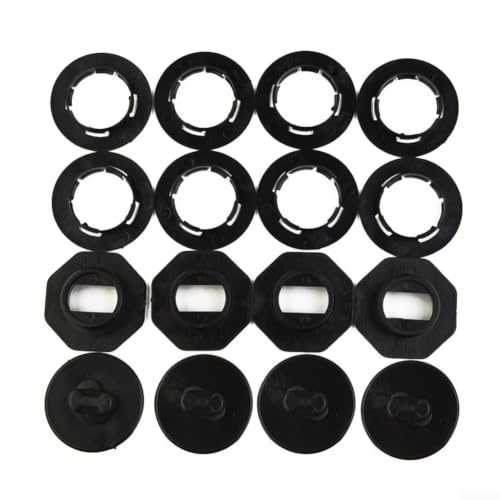
Inspect the retention hardware first. Factory floor-mat anchors, hooks, clips, and grommets should be engaged whenever the mat has them. If the mat has cutouts, they need to sit squarely on the hooks or twist-in locks, not hang beside them. A mat that cannot use its anchors is a warning sign.
Factory hooks, clips, and grommets
Look for broken clips, torn grommets, or hooks that no longer line up with the mat. If a clip pops loose during normal entry and exit, the mat can migrate forward later. That is especially important on the driver side, where repeated heel pressure can pull the mat ahead a few millimeters at a time.
Cutouts, trim edges, and wear
Check the front edge, corners, and any cut line from a trim-to-fit mat. Jagged cuts can catch the pedal arm, while soft edges can curl upward after heat, cold, or cleaning. Replace mats with split grommets, curled corners, or a front lip that no longer lies flat.
Signs of migration after driving
After a drive, look for fresh heel marks, shifted anchor holes, or a mat that sits closer to the pedals than it did before. Recheck after winter slush, a deep clean, or seat-track movement. Those changes can alter how the mat lays in the footwell and can expose a problem that was not obvious before.
How do you test pedal travel at home?
Test all three pedals with the vehicle parked and off. The goal is to verify full travel, return, and clearance without relying on feel alone. A mat passes only if it stays fixed and never touches the accelerator, brake, or clutch through the full range of motion. Do the check again after any mat swap.
Accelerator full-travel check
Press the accelerator by hand or with your foot until it reaches the floor stop. Watch the front edge of the mat. It should not move, lift, or press into the pedal path. If the pedal cannot return freely when released, or if the mat ends up under the pedal, the setup fails.
Brake pedal clearance check
Press the brake all the way through its travel. The mat should not touch the pedal face, pedal arm, or floor hinge area. The brake must move through full travel in an emergency without mat contact. Any sign of drag, limited travel, or slow return is a fail.
Clutch pedal check for manual cars
On manual-transmission vehicles, press the clutch to the floor and release it several times. The mat should not ride up under the pedal or interfere with the pedal’s return spring. Manual cars can be more sensitive because the clutch pedal often sits closer to the mat edge, and a tight footwell leaves less room for error.
Why some vehicle layouts are higher risk
Small footwells, manual transmissions, and power-adjustable pedals can all raise risk. Small spaces leave less margin for thick mats. Manual cars add a third pedal and usually a tighter left-side area. Power-adjustable pedals can change the pedal-to-floor relationship, so a mat that fit yesterday may sit too close after a seat or pedal setting change.
Vehicles with low-mounted accelerator pedals can be more vulnerable to forward slide because the mat only needs a short shift to interfere. Trucks and SUVs with deep, flat footwells may hide a loose mat longer, but the problem can still appear once the mat bunches near the pedal arc. Vehicle layout matters as much as mat type.
Picture a compact hatchback with a rubber liner trimmed one notch too long. It looks fine at the door opening, but the accelerator sits close to the tunnel wall. One hard stop pushes the liner edge into the pedal zone, and the next check shows the mat no longer sits on its anchor.
Universal mats often need trimming to fit, and that is where small-footwell vehicles lose the most margin. If the trim line is wrong by even a little, the mat can press into the pedal arc or ride up at the edges. Vehicle-specific mats are molded to the footwell, with cutouts for anchor hooks.
Frequently asked questions
Can floor mats interfere with pedals?
Yes. Floor mats can interfere with pedals when they slide, curl, bunch, or overlap the pedal path. The biggest risks are a trapped accelerator, reduced brake travel, or a mat that blocks clutch movement in a manual car. Proper fit and engaged anchors are what keep that from happening.
How do I know if my floor mat is too close to the pedals?
Measure the smallest gap at full pedal travel. If you have tight clearance, treat it as a warning sign. Any contact, rubbing, or reduced return is red risk. Also check whether the mat shifts during the test or after a few pedal presses.
What causes a floor mat to slide under the accelerator or brake pedal?
Common causes are missing anchors, a mat that is not the right size for the footwell, worn backing, or a trim cut that leaves the mat free to move. Moisture, dirt, and repeated heel pressure can also let the mat creep forward over time. A loose driver-side mat is the usual starting point.
Are universal floor mats more likely to interfere with pedals?
Yes, because universal mats often need trimming to fit, and they are not molded to the footwell shape. That makes edge placement and anchor alignment less predictable. They can work, but they need a stricter clearance check than vehicle-specific mats, especially in compact or manual-transmission vehicles.
Do thick all-weather mats reduce pedal clearance?
They can. Heavy all-weather mats can crowd tight footwells, and thick sidewalls or rigid edges can reach into the pedal sweep. They are often safe when matched to the vehicle and anchored correctly, but they deserve a full travel check after installation and after seasonal changes.
What floor mat features help prevent pedal entrapment?
Look for vehicle-specific fit, molded anchor cutouts, secure hooks or clips, and edges that stay flat. Low-curl materials help too. Vehicle-specific mats are molded to the footwell with cutouts for anchor hooks, and secure anchor points matter most. Those are the features that matter most.
Products related to this article
Sponsored / affiliate links. As an Amazon Associate I earn from qualifying purchases. I may earn additional commission from eligible campaigns.