Why Does My Brake Pedal Sink to the Floor? Causes
A brake pedal that sinks to the floor usually points to a hydraulic fault, often low fluid, an external leak, air in the lines, or a master cylinder bypass. A worn adjustment problem can also cause low pedal, but a booster fault usually changes effort, not pedal travel. If you keep driving, you can end up with little braking force left. This guide separates immediate floor-drop, slow sink, and intermittent sink so you can narrow the fault fast.
What the pedal is telling you
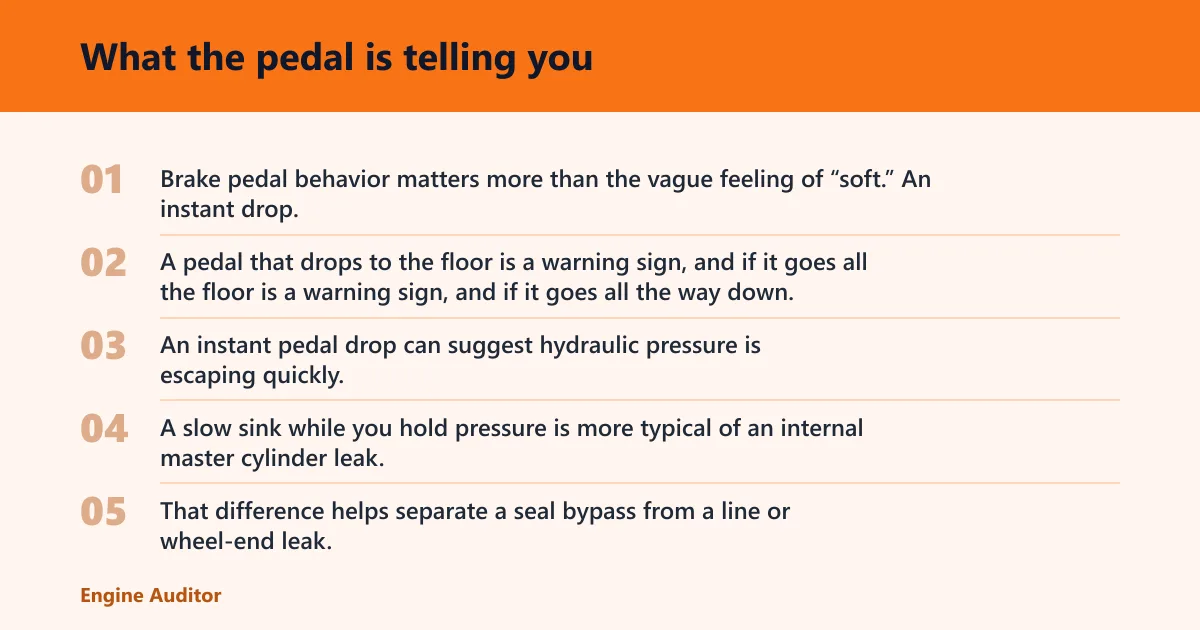
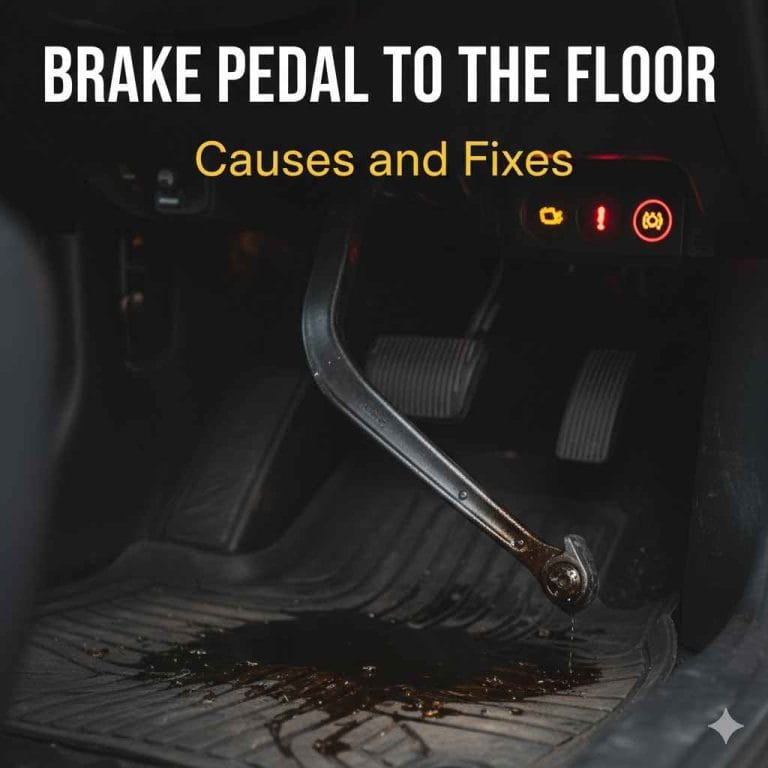
Brake pedal behavior matters more than the vague feeling of “soft.” An instant drop, a slow sink under steady pressure, and a long pedal after pumping point to different failure paths. A pedal that drops to the floor is a warning sign, and if it goes all the way down, the brakes can fail if you ignore it.
Instant drop versus slow sink under steady pressure
An instant pedal drop can suggest hydraulic pressure is escaping quickly. A slow sink while you hold pressure is more typical of an internal master cylinder leak, where fluid bypasses the seals inside the cylinder instead of holding pressure. That difference helps separate a seal bypass from a line or wheel-end leak.
Long travel after pumping
If pumping the pedal briefly raises it, then the pedal still has long travel before the brakes bite, think clearance and fluid displacement. Worn brake pads or shoes increase pedal travel before the brakes engage, and a sticking drum brake self-adjuster can leave excess space between shoes and drum. The result is travel, not necessarily immediate hydraulic loss.
Why engine-off and engine-running checks matter
The brake booster changes assist, so engine state changes the feel. With the engine off, the pedal should usually feel firmer after a few presses as stored vacuum is used up. With the engine running, assist returns. That check helps separate a booster problem from hydraulic sinking, because booster faults usually change effort more than they change pedal travel.
why does my brake pedal sinking to the floor
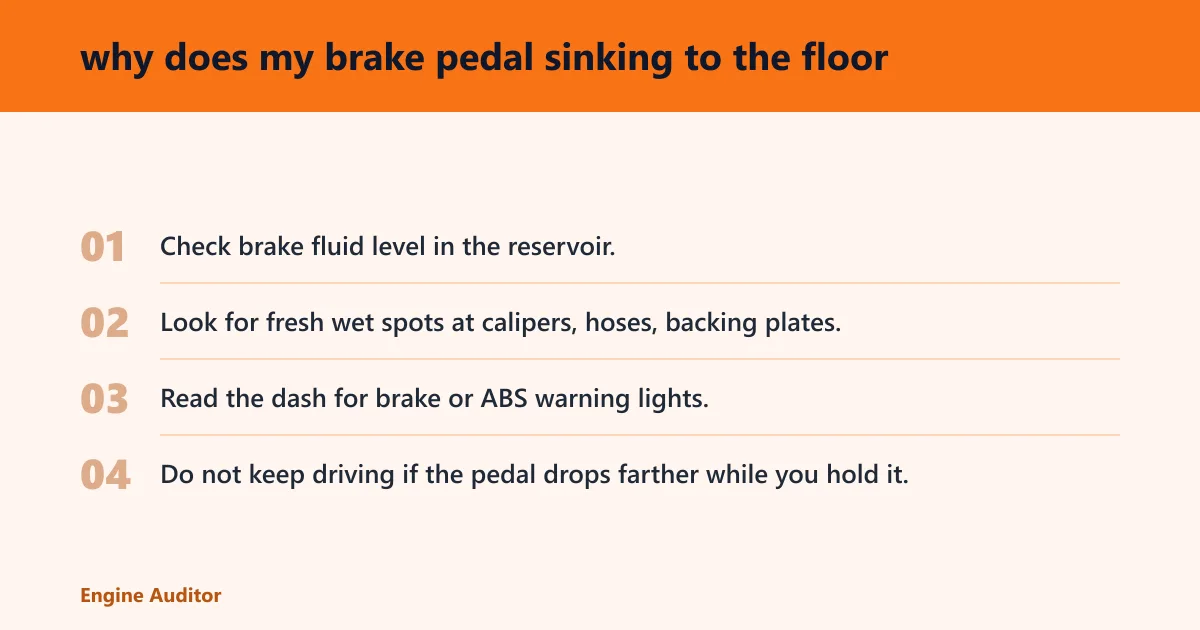
A pedal that sinks to the floor often suggests the hydraulic system is not holding pressure. Common causes include low fluid from a leak, air in the brake lines, an internal master cylinder bypass, or a leak at a caliper piston seal or wheel cylinder. A booster fault can change feel, but it rarely causes true hydraulic sinking by itself.
Start with the safest checks
- Check brake fluid level in the reservoir.
- Look for fresh wet spots at calipers, hoses, backing plates, and under the master cylinder.
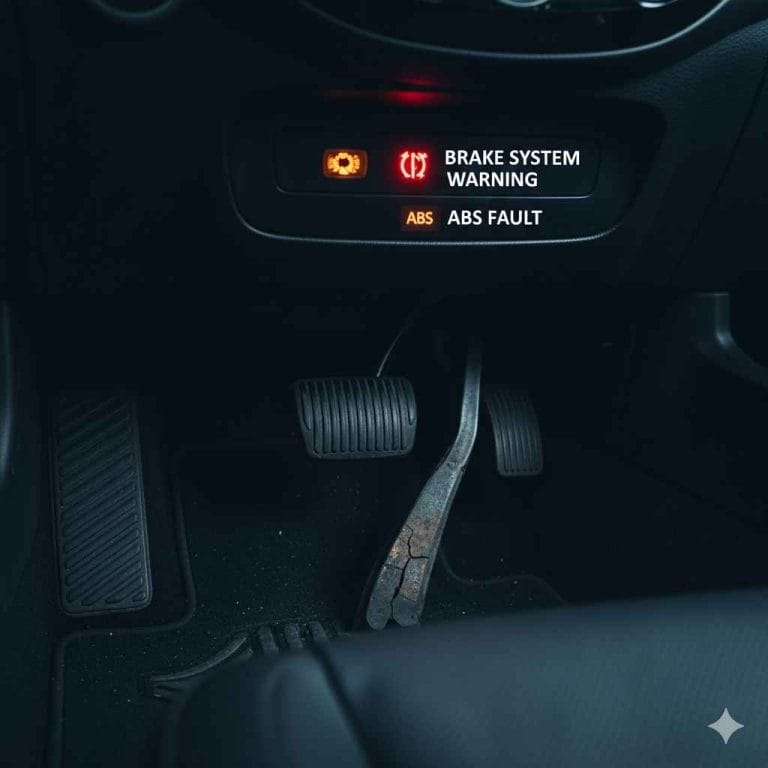
- Read the dash for brake or ABS warning lights.
- Do not keep driving if the pedal drops farther while you hold it.
If the reservoir is low, that can point to a leak or worn linings that have pushed pistons outward. If the warning light is on, treat it as a clue, not reassurance. Longer stopping distances mean the system is not moving fluid and pressure the way it should.
| Pedal behavior | Most likely fault | First test to run | Safe to drive? |
|---|---|---|---|
| Instant drop to the floor | Major external leak, failed hose, or severe hydraulic loss | Check fluid level and inspect visible wet spots at each wheel and under the master cylinder | No. Tow the vehicle. |
| Slow sink under steady pressure | Master cylinder internal bypass leak | Hold steady pressure with the engine running and then engine off, watching for continued sink | No. Tow or repair before driving. |
| Long travel after pumping | Worn pads or shoes, rear drum adjustment issue, or air in the system | Check pad and shoe thickness, then inspect rear drum adjustment and bleeding history | Usually not advised until inspected. |
| Intermittent sink | Air intrusion, heat-related fluid issue, or an intermittent leak | Recheck fluid level, hose condition, and warning lamps after a short drive or heat soak | No if the symptom repeats. |
What is causing the hydraulic loss?
Hydraulic loss means pressure is not being held where it should. The source may be inside the master cylinder, at a wheel-end seal, along a line, or from air in the system after poor bleeding. Brake fluid level, contamination, and where the pedal changes behavior are the fastest clues.
Brake master cylinder: internal bypass or external leak
The brake master cylinder is the primary hydraulic pressure source. If its internal seals bypass, the pedal can sink while held, because fluid slips past the piston instead of staying pressurized. External leaks are easier to spot, with wetness at the booster face, reservoir area, or line connections.
How can you tell if the master cylinder is failing? A pedal that slowly sinks under steady pressure is often a sign of internal bypass. If the pedal improves after pumping but then drifts down again, the master cylinder is high on the list. The key clue is pressure loss without obvious fluid dripping at a wheel.
Caliper piston seals and wheel cylinders
Caliper piston seals can leak fluid and lower pressure while also increasing pedal travel. At the rear, wheel cylinders on drum brakes are common leak points, and a leak there can leave the pedal low or sinking. Because these parts sit at the wheel ends, they often leave damp backing plates, dust buildup, or fluid trails.
Brake lines, hose cracks, and air in the system
Brake lines and hoses can fail in several ways. Steel lines corrode and can seep or burst. Flexible hoses can crack externally or balloon under pressure. Air intrusion from an improper bleed or a leak makes the pedal soft, and air in the brake lines is listed as a common cause of a soft pedal.
Can air in the brake lines make the pedal sink? Yes, but the feel is usually spongy rather than a clean hydraulic hold-and-drop pattern. Air compresses, so the pedal may travel farther and feel less firm. A proper bleed should be done after any line opening, caliper replacement, or wheel-cylinder repair.
Low fluid, contamination, and moisture effects
Can low brake fluid cause the pedal to go to the floor? Yes. Low fluid often points to a leak, though heavy pad or shoe wear can also lower the reservoir level as the pistons move outward. Old brake fluid absorbing moisture is said to lower its boiling point, and water turning to steam can cause vapor lock.
Contaminated fluid can worsen pedal feel and heat resistance. If the fluid looks dark, cloudy, or has not been serviced in a long time, the boiling margin may be reduced. That matters on long downhill grades or after repeated hard stops, where steam in the fluid can mimic a fading brake problem.
Could worn pads, shoes, or drum adjustment be the reason?
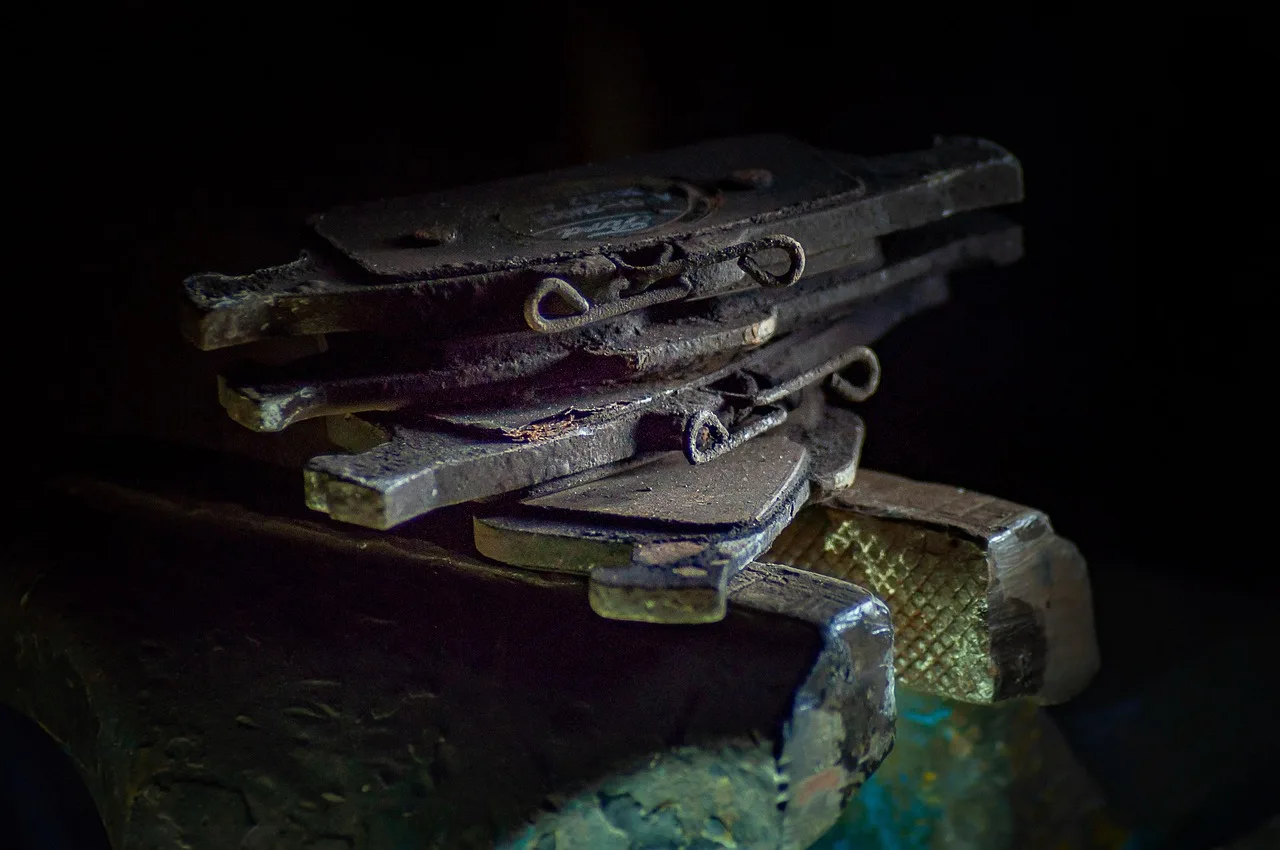
Yes. Worn pads and shoes increase the space the hydraulic system must fill before the friction material contacts the rotor or drum. That creates extra pedal travel. On vehicles with rear drums, a sticking self-adjuster can leave too much clearance, and the pedal may feel low even when the hydraulic parts are intact.
How pad and shoe wear changes pedal height
As pads and shoes thin, caliper pistons and wheel-cylinder components sit farther out. The reservoir level falls to match that movement. That is normal up to a point. Once wear gets excessive, the first part of pedal travel is spent moving parts into contact instead of slowing the vehicle.
How a sticking drum brake adjuster affects travel
Drum brake adjuster problems matter more than many guides admit. The self-adjuster is supposed to keep shoe-to-drum clearance small. When it sticks, the rear shoes sit too far from the drum, and the pedal travels farther before the rear brakes engage. ties that adjuster problem to excess space between shoes and drum.
Picture a compact sedan with rear drums and a pedal that feels low only after backing out of a driveway. The hydraulic system may be fine, but the shoes may be sitting too far from the drum after the adjuster stops working. That is a different repair path from a master cylinder bypass.
why does my brake pedal slowly sink to the floor
A slow sink under steady pressure most often points to a master cylinder internal bypass leak. Fluid slips past the internal seals instead of staying trapped under pressure. If the pedal sinks without an obvious external leak, and the problem is repeatable with steady foot pressure, the master cylinder should move near the top of the suspect list.
Why the pedal sinks while held
When you hold the pedal, the system should keep pressure. If it does not, the master cylinder seals may be bypassing internally, or a wheel-end leak may be bleeding pressure away. The difference is that a bypass often shows no visible fluid loss, while an external leak usually leaves a trace somewhere.
What if the sink is intermittent?
Intermittent sink is harder to pin down. It can come from a small leak, temperature-related hose expansion, air moving through the system, or a drum brake that adjusts only sometimes. If the pedal is fine one stop and low the next, do not assume the problem is gone; intermittent hydraulic faults often get worse.
Why does the booster matter, and when does it not?
The brake booster helps you press the pedal with less effort. It does not create hydraulic pressure, so it is usually not the cause of a true pedal-to-the-floor condition. A booster problem is more likely to change the pedal’s effort or initial feel than to make the pedal sink under steady pressure.
Booster assist versus hydraulic sinking
notes that booster symptoms may include a pedal that feels hard at first but then sinks. That can confuse diagnosis, but the clue is in the pattern. A weak booster changes assist. A hydraulic fault changes how the pedal holds pressure. Those are related only at the driver’s foot, not inside the fluid circuit.
Pushrod adjustment and pedal feel clues
Incorrect pushrod adjustment can affect pedal height and free play. Too little free play can make the brakes drag. Too much can create a long first stroke before anything happens. That can feel like a low pedal, but it does not usually produce a steady sink after the pedal is already set.
Engine-off checks that separate assist faults from pressure loss
With the engine off, press the pedal several times. It should get firm as vacuum assist is used up. Then start the engine and note whether the pedal drops slightly as the booster engages. If the pedal still sinks when held, the fault is hydraulic, not just assist-related.
What should I check first if the pedal suddenly drops?
Check fluid level first, then inspect for fresh leaks at each wheel, the hose junctions, and the master cylinder. Look at the dashboard for brake or ABS warnings. If the pedal suddenly drops or continues moving down under pressure, do not drive farther than needed to move the vehicle out of traffic.
A common first-timer mistake is assuming a low pedal only means “air needs bleeding.” Air is one possibility, but a sudden drop can also mean a leaking hose, a failed caliper seal, or a master cylinder bypass. The safest first step is always to find the reason the fluid circuit is losing pressure.
Is it safe to drive if the brake pedal sinks?
No, if the pedal keeps sinking, reaches the floor, or needs repeated pumping to stop the vehicle, it is not safe to drive. describes a pedal that goes all the way to the floor as a warning sign, and warns the issue can lead to complete brake failure if ignored. Treat it as a tow situation.
If the pedal is only slightly low but stable, the vehicle still needs prompt inspection. Longer stopping distances are a symptom of hydraulic delivery problems, and warning lights can mean low fluid or a pressure imbalance. A stable pedal is better than a sinking one, but it is not a reason to keep driving casually.
Frequently asked questions
why does my brake pedal sinking to the floor
This usually points to a hydraulic problem: low brake fluid, an external leak, air in the lines, or a master cylinder that is bypassing internally. A booster issue changes assist, but it usually does not make the pedal sink under steady pressure. The safest response is to inspect before driving.
why does my brake pedal slowly sink to the floor
A slow sink while you hold pressure is a classic sign of an internal master cylinder leak. Fluid slips past the seals instead of staying trapped. If there is no obvious wet spot at a wheel or hose, the master cylinder becomes one of the first parts to test or replace.
What causes a brake pedal to go to the floor?
Common causes include low fluid from a leak, air in the brake lines, a failed master cylinder, leaking caliper piston seals, or wheel cylinder leakage on drum-brake vehicles. Worn pads or shoes and a stuck drum adjuster can also create a very long pedal before the brakes bite.
Can air in the brake lines make the pedal sink?
Yes. Air compresses, so it can create a soft pedal with extra travel and poor brake response. It more often feels spongy than like a clean, steady sink. If the system was opened for repair, a proper bleed is necessary before the pedal feel can be trusted again.
Can low brake fluid cause the pedal to go to the floor?
Yes. Low fluid can leave the master cylinder short of hydraulic volume, and it often points to a leak or heavily worn pads or shoes. If the reservoir is low, check for wet lines, calipers, wheel cylinders, and the master cylinder area before adding fluid and driving.
Is it safe to drive if the brake pedal sinks?
No. A sinking pedal means pressure is not being held reliably, and that can leave you with very little stopping power. If the pedal continues to drop, or if warning lights are on, the safer choice is to stop driving and arrange a tow or repair first.
Products related to this article
Sponsored / affiliate links. As an Amazon Associate I earn from qualifying purchases. I may earn additional commission from eligible campaigns.