Brake Pedal Goes to the Floor with Engine Running
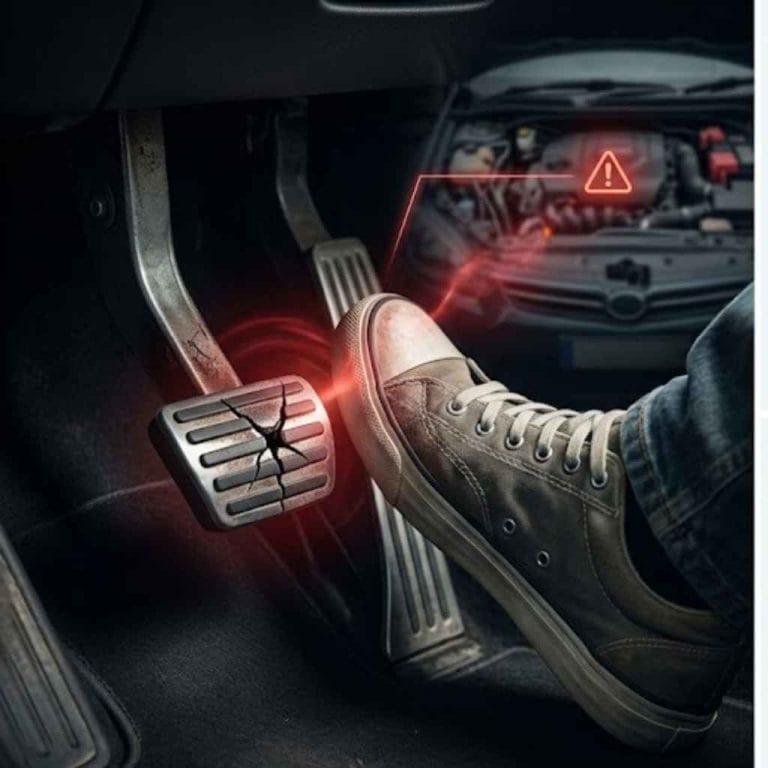
If the brake pedal sinks to the floor with the engine running, stop driving, hold pressure, and if it still sinks or stopping distance changes, treat it as a hydraulic fault and get the car towed. Ignoring it can lead to brake loss, a crash, or damage that may turn the repair into master-cylinder, line, or caliper replacement. This guide shows the first checks, the booster test, and the fault clues that separate normal assist from a true failure.
What to do right now


A brake pedal that sinks to the floor is an immediate safety emergency and means hydraulic pressure has been lost. Pull off the road at the first safe opening, switch on the hazard lights after you stop, and do not keep driving to “see if it gets better.”
Use the remaining brake carefully if needed
If the pedal still gives some braking, keep speeds low and leave extra room. Use steady, firm pedal pressure rather than repeated hard pumping as a long-term response. Repeated pumping can hide the fault for a moment, but it does not repair a leak, air in the lines, or master-cylinder bypass.
Suppose you are at a stoplight and the pedal drops farther with each press. A short, controlled roll to the shoulder may be safer than freezing in traffic, but only if braking still responds enough to move the car out of the lane. Once stopped, shut it down and do not continue the trip.
Call for a tow truck instead of driving
When braking is compromised significantly, a tow truck is the right call. Driving to a shop on a sinking pedal can turn a repairable leak into a larger failure, especially if fluid loss exposes more air to the system or the master cylinder runs dry.
Brake pedal emergency table
This table separates the pedal feel itself from the likely fault. Start with the symptom, then match it to the next check. The engine-running condition matters because vacuum assist can change feel without restoring hydraulic pressure.
| Symptom | Likely cause | Immediate roadside action | Next shop test |
|---|---|---|---|
| Pedal sinks slowly while held | Master cylinder internal seal failure or a leak that is bleeding pressure away | Stop driving, hold the car still, and arrange a tow | Pedal hold test and master cylinder pressure bypass check |
| Pedal goes straight to the floor | Major brake fluid leak, severe air entry, or failed master cylinder | Use the remaining brake carefully only long enough to pull over safely | Inspect calipers, wheel cylinders, brake lines, and reservoir level |
| Pedal firms up after pumping | Air in the brake lines, low fluid, or a master cylinder that is bypassing | Do not assume the brakes are safe; stop driving | Bleed the system and confirm the source of fluid loss |
| Pedal changes when the engine starts | Brake booster assist is changing effort, but a hydraulic fault may still be present | Do not use the change as proof the system is healthy | Compare engine-off and engine-running pedal behavior, then inspect hydraulics |
What should you check first?
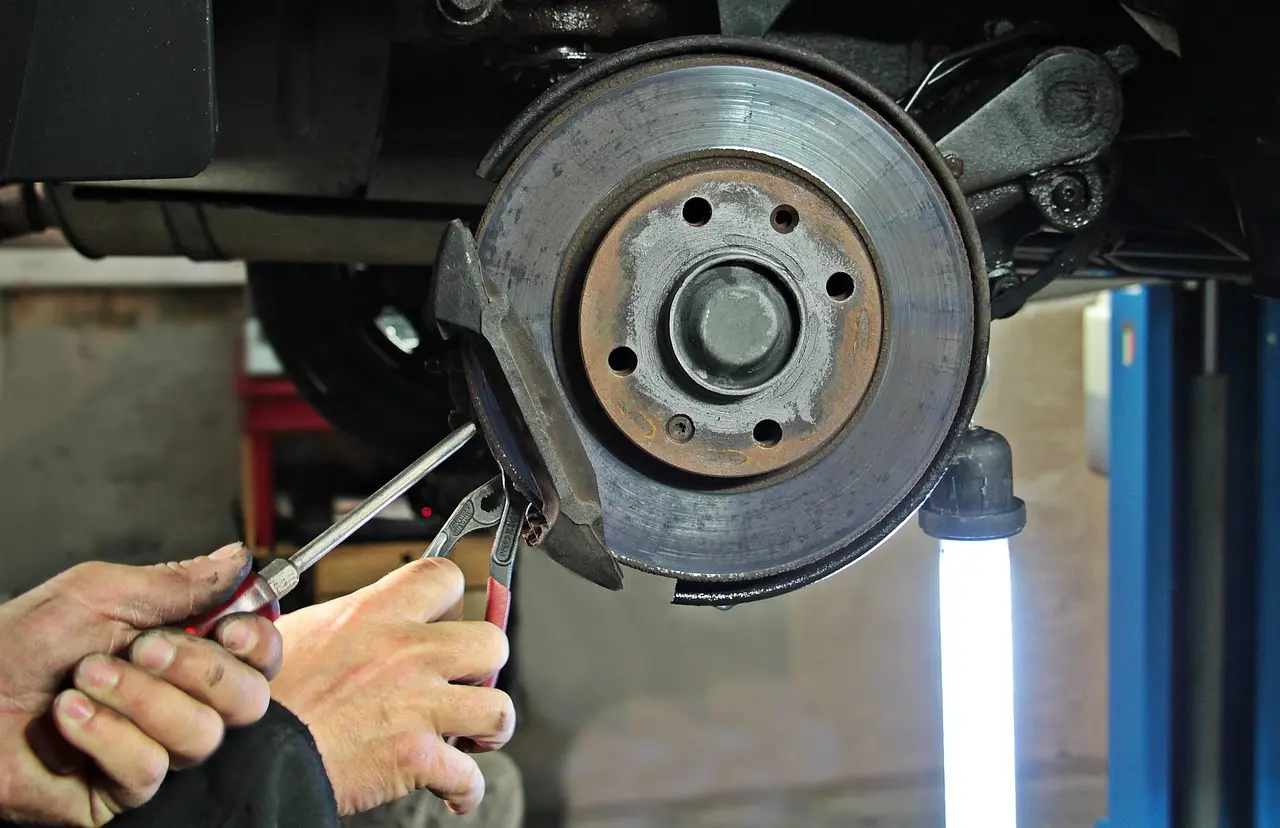
Check the brake fluid reservoir under the hood first, then look under the vehicle for wet spots. Low fluid usually points to a leak rather than a normal condition. After that, inspect the common leak points: calipers, wheel cylinders, and steel brake lines.
Brake fluid reservoir level
The reservoir is the hydraulic system supply. If the level is low, a leak is the first suspicion because fluid does not disappear on its own. Do not treat a top-up as a repair. It only replaces what the system has already lost.
Wet spots under the vehicle
Brake fluid often appears as a wet patch under one wheel area or near the center of the car. Corrosion-prone steel lines can develop pinhole leaks over time, and fluid may drip or mist onto suspension parts before it reaches the ground.
Leaks at calipers, wheel cylinders, and brake lines
Four-wheel disc brakes often leak at a caliper seal or at a flex-hose connection. Drum brake systems add another common point: the wheel cylinder. A leaking wheel cylinder can cut fluid level enough to cause pedal sink. Severe worn brake pads can also allow calipers to extend far, which may change pedal travel, but that does not explain a true hydraulic drop by itself.
Picture a sedan with a rear drum brake leak on the passenger side. The pedal may feel normal for the first press, then travel farther as fluid shifts and air enters the line. That pattern points you away from the booster and toward the leaking wheel cylinder or nearby line.
Can low brake fluid make the pedal go all the way down?
Yes. Low brake fluid can let the pedal go all the way down because the system has lost hydraulic pressure. Low fluid usually means there is a leak somewhere, and as fluid drops, air can enter the brake lines. That air creates a spongy pedal and can let the pedal sink farther with each press.
Why topping off fluid is not the fix
Topping off fluid may bring the reservoir back to the mark, but it does not seal the leak or remove air from the system. If the system has opened to the air, proper brake bleeding is required after repairs. Without that step, pedal feel can stay soft or sink again.
How air enters the brake lines
Once fluid escapes, air takes its place in the lines. Even small air bubbles in brake lines cause a spongy pedal feel. That is why a car can still stop poorly after a leak is patched but not bled. The fault is still in the system, even if the reservoir looks full.
How do you tell if the master cylinder failed?
A failed master cylinder can no longer maintain proper hydraulic pressure. The pedal may sink slowly under steady pressure, or it may go to the floor with little resistance. Internal seal failure lets fluid bypass pistons inside the master cylinder, so the pedal feels like it has no solid stop.
Internal seal bypass
Internal bypass often looks different from an external leak. Fluid may not be dripping outside the cylinder, but pressure still bleeds away inside the bore. A slow sinking pedal with a full reservoir is a classic clue, especially if the brake lines and wheels are dry.
External leaks at the rear of the cylinder body
Check the rear of the master cylinder body where it meets the brake booster. Fluid there points to an external master-cylinder leak and can also contaminate the booster area. The booster is located behind the master cylinder, so leaks in that area can be mistaken for a booster fault when the real issue is hydraulic.
Why replacement needs bench bleeding
A replacement master cylinder should be bench bled before installation or before final system bleeding, because trapped air inside the new unit can produce a soft pedal from the start. After any replacement, the system needs proper bleeding, a fluid level check, and a pedal hold test to confirm that pressure stays up.
Brake booster and engine-running feel
The brake booster can change pedal effort when the engine starts, which is why engine-running diagnosis matters. The booster helps reduce leg effort, but it does not create hydraulic pressure. A change in feel at startup can point back to the booster area, yet it does not rule out a master-cylinder, line, or wheel-end fault.
Why the booster can change pedal feel
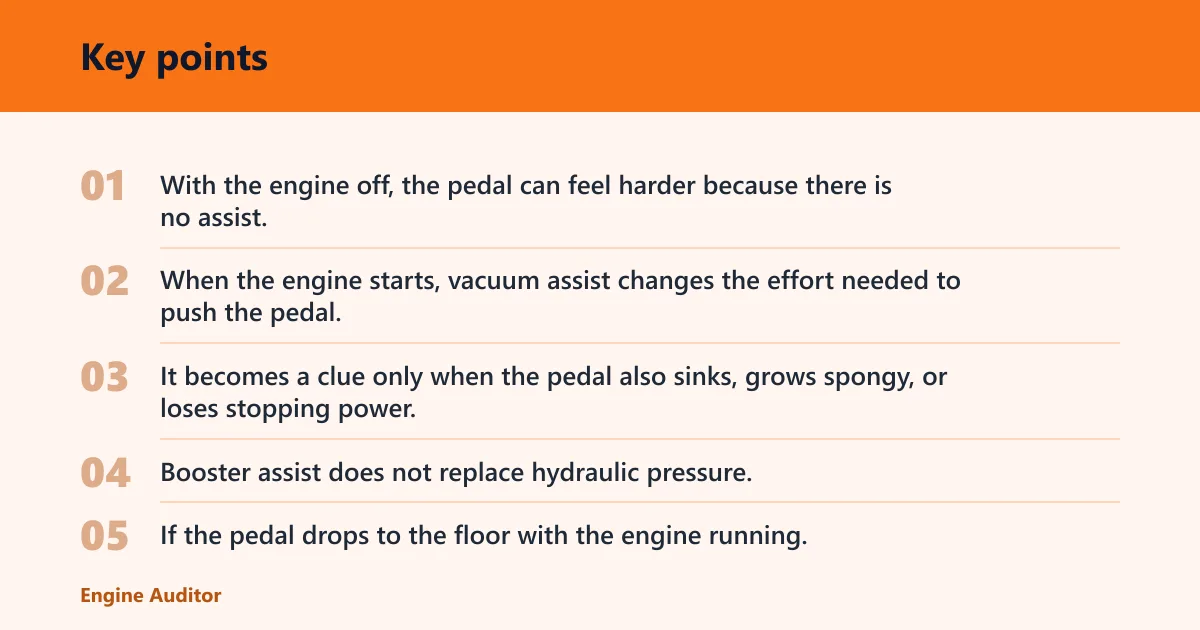
With the engine off, the pedal can feel harder because there is no assist. When the engine starts, vacuum assist changes the effort needed to push the pedal. That change is normal by itself. It becomes a clue only when the pedal also sinks, grows spongy, or loses stopping power.
What booster assist does not do
Booster assist does not replace hydraulic pressure. If the pedal drops to the floor with the engine running, the booster is not the source of the pressure loss. It may make the change more noticeable, but the underlying problem is usually fluid loss, air in the system, or master-cylinder bypass.
When a change at startup points back to hydraulics
If the pedal feels different only because the engine starts, then assist is likely doing its job. If it changes from firm to sinking, or from high to low travel, the hydraulic side needs inspection. The engine-running condition is a diagnostic clue, not a pass/fail result on its own.
Brake bleeding after repairs
Brake bleeding removes air from the lines and is required after repairs that open the hydraulic system. If air stays in the system, the pedal can remain spongy, sink under pressure, or feel inconsistent from one press to the next. That is why a good repair is not finished until the pedal is verified firm.
When bleeding is required
Bleeding is commonly required after line replacement, caliper replacement, wheel-cylinder replacement, master-cylinder replacement, or any repair that allows air to enter the system. It is also needed after a leak repair if the reservoir dropped enough to pull in air.
How to verify the pedal is firm again
- Confirm the reservoir is at the correct level.
- Press the pedal and hold steady pressure for several seconds.
- Check that the pedal does not creep toward the floor.
- Inspect the repaired area and all nearby fittings for fresh wetness.
- Recheck fluid level after bleeding and after a short road verification in a safe area.
A common first-timer mistake is to top off the reservoir, pump the pedal twice, and assume the problem is gone. That can hide a leak for a moment, but the pedal may sink again as soon as pressure is held. The correct next step is to find the fault, repair it, and bleed the system.
Frequently asked questions
What should I do if my brake pedal goes to the floor while driving?
Hold steady pressure, slow the car as safely as possible, and pull over without delay. Turn on the hazard lights after stopping. If the pedal still sinks or the stopping distance changes, do not keep driving; treat it as a hydraulic fault and arrange a tow truck.
Is it safe to keep driving when the brake pedal sinks to the floor?
No. A sinking brake pedal is described as an immediate safety emergency requiring professional attention. It can mean hydraulic pressure has been lost, so braking may fail without warning. Driving further risks complete brake loss and can create more damage inside the master cylinder, lines, or calipers.
What causes a brake pedal to go to the floor with the engine running?
The main causes are a brake fluid leak, air in the brake lines, or a master cylinder that can no longer hold pressure. The engine-running condition matters because the brake booster changes effort, which can make a hydraulic problem easier to notice but does not create pressure itself.
Can low brake fluid make the brake pedal go all the way down?
Yes. Low fluid can let the pedal sink completely to the floor with no resistance. That usually means fluid has escaped somewhere and air has entered the system. Topping off the reservoir is not a fix unless the leak is found and the system is properly bled afterward.
How do I tell if my master cylinder has failed?
A failed master cylinder often shows a pedal that slowly creeps downward under steady pressure, even when the reservoir is full and the outside of the system looks dry. Internal seal failure lets fluid bypass pistons inside the master cylinder, so pressure cannot stay up.
Can air in the brake lines make the pedal sink?
Yes. Even small air bubbles in brake lines cause a spongy pedal feel, and enough air can let the pedal sink. Air usually enters after a fluid leak or after repairs that were not bled correctly. The fix is to repair the fault and bleed the system properly.
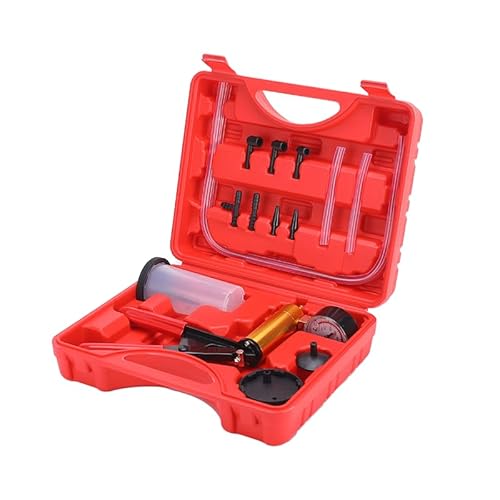
Products related to this article
Sponsored / affiliate links. As an Amazon Associate I earn from qualifying purchases. I may earn additional commission from eligible campaigns.