Engine Block vs Cylinder Head: What’s the Difference?
The engine block is the lower casting that carries the cylinder bores, crankshaft saddles, coolant and oil passages, and usually the oil pan flange. The cylinder head bolts on top, closes each cylinder with a machined face, and houses the valves and combustion chambers; if the failure pattern is limited to one area, I usually look at the head or head gasket first. Misreading the part sends you after the wrong repair and burns time and money. This guide shows how to identify each part and match common symptoms to head-gasket, head, or block damage.
This guide is part of our Car engine components: parts, functions and diagrams series.
What is the difference between an engine block and a cylinder head?
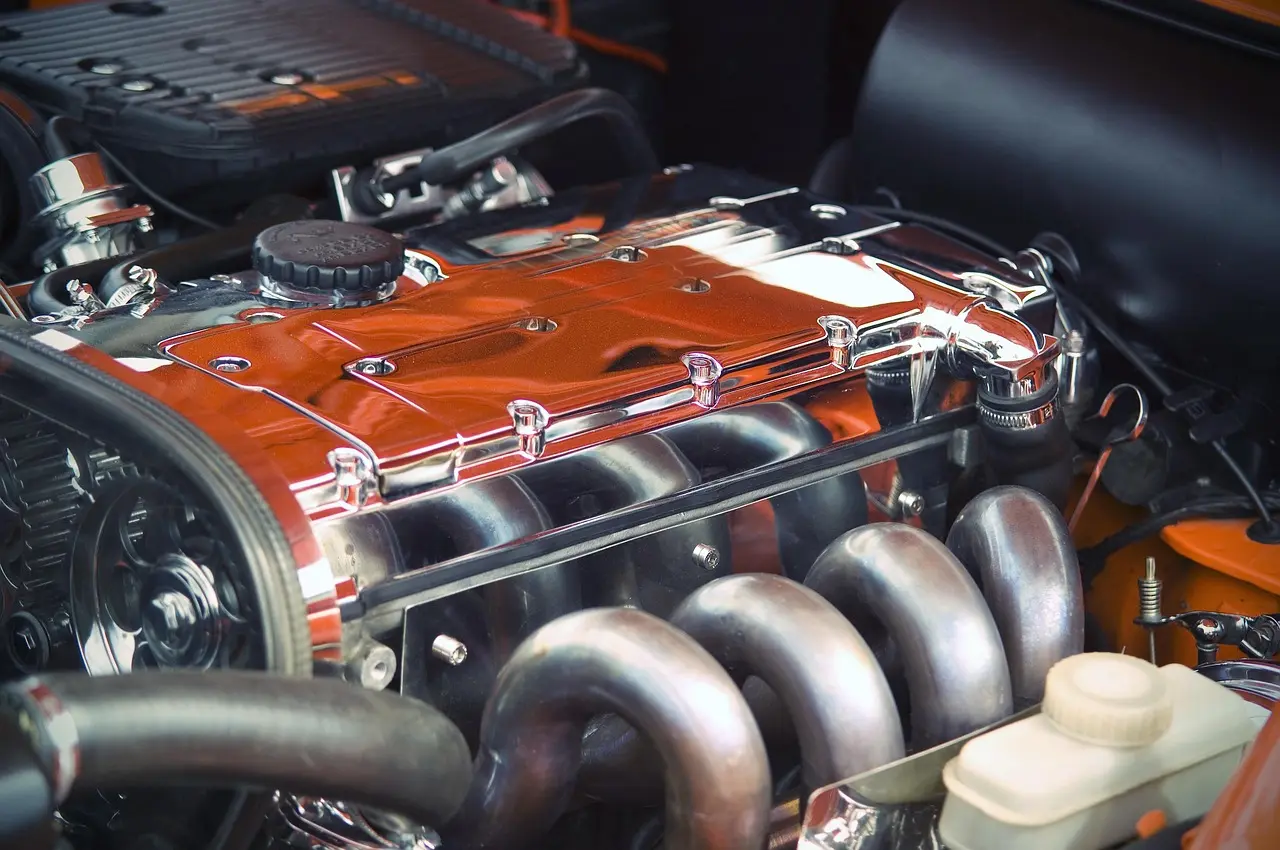
The engine block is the lower casting. It holds the cylinder bores, crankshaft area, and coolant and oil passages. The cylinder head sits on top, closes the cylinders, and contains the valves and combustion chambers. Between them sits the head gasket, which seals pressure, coolant, and oil paths. (en.wikipedia.org)
That split matters because failures usually follow the part. A block problem tends to affect the lower casting, cylinder bores, or multiple sealing paths. A head problem usually shows up at the top of the cylinders, around valves, ports, spark plug wells, or a warped sealing face.
According to Engine Block Vs. Cylinder Head: What’s The Difference? — Ford’s 6.7L Power Stroke uses a compacted-graphite-iron block.
Which part is which on a real engine?
The block is the big lower casting you see when the head is removed. The head is the upper casting with the intake and exhaust ports, valve hardware, and the machined face that bolts to the block. Together they form the combustion chamber at the top of the cylinder.
How to spot the block from the outside
Look low on the engine. The block carries the cylinder bores, the crankshaft area, and usually the engine mounts. On many engines, the oil pan bolts to the bottom of the block, which makes the block feel like the engine’s main body.
How to spot the cylinder head from the outside
Look above the block-to-head seam. The head often has valve cover hardware on top, intake and exhaust ports on the sides, and spark plugs or glow plugs threaded into it. On overhead-cam engines, the camshaft sits in the head, so the top end looks busier.
Where the combustion chamber starts and ends
The combustion chamber is formed by the top of the cylinder bore in the block plus the shaped cavity in the head. The piston comes up from below and compresses the air-fuel charge in that shared space. The head gasket seals that joint so pressure stays in the cylinder.
What is inside the engine block?
The engine block contains the cylinder bores and the crankshaft area, and it works with the connecting rods and pistons. It also carries coolant channels and oil galleries that move heat and oil through the engine. In some designs, the camshaft lives in the block; in others, it does not.
Cylinder bores, pistons, and crankshaft area
The cylinder bores are machined openings in the block. They guide piston movement and define the engine’s cylinder count. The pistons move in those bores, while the crankshaft converts that up-and-down motion into rotation.
Coolant channels and oil galleries
Coolant channels run through the block to pull heat away from combustion. Oil galleries feed moving parts and keep them separated by a film of oil. When those passages crack or block, the engine can overheat, lose lubrication, or contaminate one fluid with the other.
Why camshaft location changes by engine design
In cam-in-block engines, the camshaft sits in the block and works through pushrods and rocker arms. In SOHC and DOHC layouts, the camshaft components are in the cylinder head. That changes what you inspect first when valve timing or top-end noise becomes a problem.
What is inside the cylinder head?
The cylinder head contains the valves, ports, spark plug wells, and often the camshaft on overhead-cam engines. It forms the top of the combustion chamber and must seal tightly to the block. Its machined surface has to stay flat or the gasket cannot hold compression and fluids apart.
Valves, ports, and spark plug wells
Modern cylinder heads commonly house the intake and exhaust valves. Those valves open and close the ports so the engine can breathe and expel exhaust. Spark plug wells or glow plug bores are often part of the head layout too, especially on overhead-cam engines.
Camshaft location in SOHC and DOHC engines
SOHC and DOHC layouts place the camshaft in the cylinder head. That means valve timing hardware sits above the cylinders rather than down in the block. On many repairs, that changes access, cost, and the risk of damaging the head’s sealing face during service.
How the head seals the top of the combustion chamber
The head closes the top of the cylinder and helps form the combustion chamber. Its mating surface presses against the gasket and block so compression stays inside the cylinder. If that surface warps or cracks, the engine can lose pressure, coolant, or both.
Block, head, and gasket: how they work together
The block, head, and gasket are one sealing system. Compression must stay in the cylinder, coolant must stay in its passages, and oil must stay in its galleries. When the surfaces stay flat and the gasket is intact, the engine can run hot and pressurized without mixing fluids.
How compression, coolant, and oil passages line up
Coolant channels run through both the block and head, and they have to match across the gasket surface. Oil passages must line up the same way. When the gasket shifts, burns, or loses clamp load, those paths can cross and create smoke, sludge, or overheating.
Why sealing surfaces must stay flat
A head can warp from heat more often than a block because it sits closer to combustion heat and usually uses thinner casting walls. A block can warp too, but it is often a worse sign because the repair path narrows fast. Flatness matters because even a small gap can let pressure leak.
What happens when the gasket fails
A blown head gasket can let coolant enter a cylinder, oil mix with coolant, or compression leak between cylinders. That is why a gasket failure can look like several different problems at once. It often causes overheating first, then white smoke, then rough running if the engine is kept in service.
Diagnostic comparison: symptoms that point to the block, head, or gasket
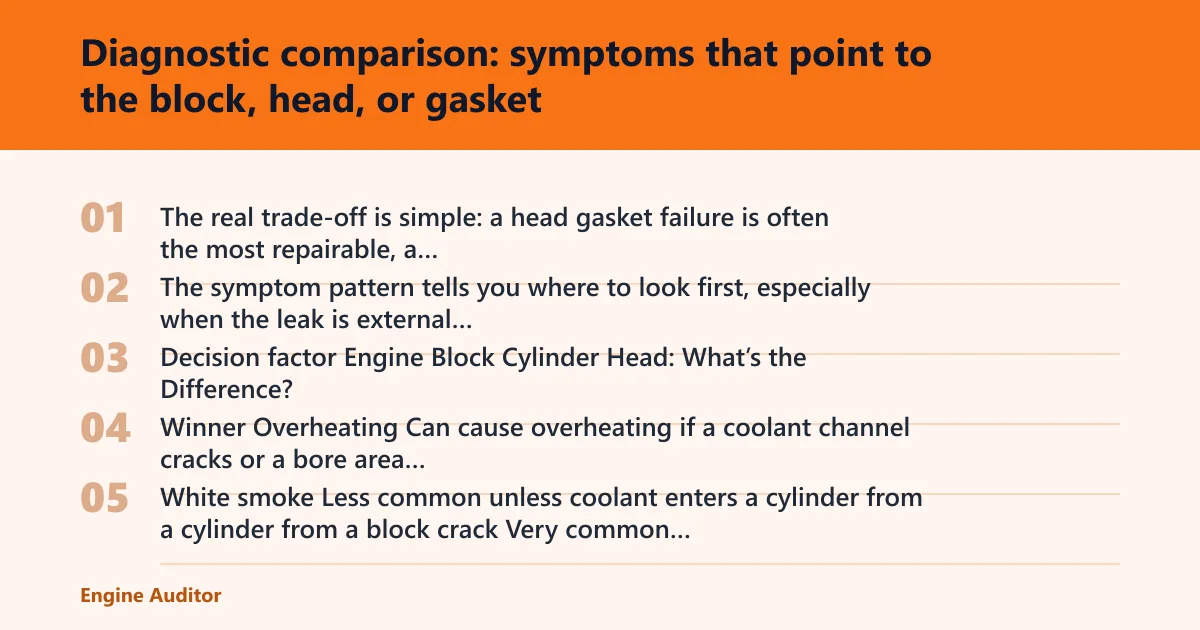
The real trade-off is simple: a head gasket failure is often the most repairable, a cylinder head failure is often machined if the damage is limited, and a cracked block is usually the worst-case outcome. The symptom pattern tells you where to look first, especially when the leak is external versus internal.
| Decision factor | Engine Block | Cylinder Head: What’s the Difference? | Winner |
|---|---|---|---|
| Overheating | Can cause overheating if a coolant channel cracks or a bore area loses sealing | Common when the head warps or cracks near coolant passages | Cylinder Head: What’s the Difference? |
| White smoke | Less common unless coolant enters a cylinder from a block crack | Very common with a gasket leak, head crack, or warped head | Cylinder Head: What’s the Difference? |
| Coolant loss | Can happen with an external block crack or internal seep | Can happen through the head, but gasket failure is usually the first suspect | Head gasket |
| Oil contamination | Possible if an oil gallery cracks or mixes with coolant | Common when oil and coolant passages leak across the head gasket | Head gasket |
| Compression loss | Can happen with a cracked cylinder wall or bore damage | Very common with valve sealing issues, cracks, or a warped face | Cylinder Head: What’s the Difference? |
| External cracks | Serious when found in the block; often replacement territory | Can sometimes be repaired or machined if localized | Cylinder Head: What’s the Difference? |
| Warp risk | Lower than the head in many layouts, but damage is harder to forgive | Higher because the head sees more heat cycling and thinner sections | Cylinder Head: What’s the Difference? |
Overheating, white smoke, coolant loss, and oil contamination
Overheating with white smoke usually points first to the head or head gasket. Coolant loss with no external drip can still be a gasket leak, but a block crack becomes more likely if the engine also pressurizes the cooling system fast or leaves coolant in the oil. Milky oil is the warning sign that should stop a driver from guessing.
Compression loss and misfire patterns
If one cylinder misfires, a valve issue or local head damage is common. If two adjacent cylinders lose compression together, the head gasket jumps higher on the list. A block problem is more likely when the compression loss lines up with a damaged bore or a crack in the lower casting.
External cracks, internal leaks, and warp risk
External cracks are easier to spot on a cleaned engine, but internal leaks often need pressure testing or teardown. Heads warp more often and are sometimes machinable if the damage stays within limits. A cracked block usually changes the repair decision fast, because the lower casting is harder to trust after a major failure.
Choose engine block repair if… / choose cylinder head repair if…
Choose block repair when the damage is limited, localized, and the engine has a reasonable machining path. Choose cylinder head repair when the issue is a warped face, a cracked port area, or valve sealing trouble that can be corrected without chasing deeper damage. The wrong choice here wastes time.
When machining may work
A head can sometimes be resurfaced if the warp is small and the casting is sound. Valve work, seat work, and pressure testing can restore a head that still has good material around the damage. Machining only makes sense when the head still has enough thickness left after cleanup.
When replacement is the safer call
A block with a cracked cylinder wall, major deck damage, or a serious coolant-to-oil leak is often a replace-or-rebuild problem. A head with deep cracks between valves or into coolant passages can land in the same category. When the casting itself is compromised, surface work alone is a gamble.
When not to keep driving
Do not keep driving if the engine overheats repeatedly, pushes coolant out, or shows milky oil. Stop driving if white smoke is heavy, the misfire is severe, or compression is clearly gone in one or more cylinders. Continued running can turn a head gasket job into a block replacement.
Frequently asked questions
What is the difference between an engine block and a cylinder head?
The engine block is the lower engine casting that holds the cylinders, crankshaft area, and main passages for oil and coolant. The cylinder head bolts on top and closes the cylinders with valves, ports, and combustion chambers. The head gasket sits between them and keeps pressure and fluids separated.
Which part is the engine block and which part is the cylinder head?
The block is the larger lower piece, usually tied to the oil pan and engine mounts. The head is the upper piece with valve cover hardware, intake and exhaust ports, and spark plug or glow plug openings. If you are staring at the engine from the side, the seam between them is the giveaway.
What does the engine block do in a car engine?
The engine block forms the base structure of the engine and houses the cylinder bores where pistons move up and down. It also contains the crankshaft area, coolant channels, and oil galleries. In many engines, it is the main structural casting that keeps the rotating assembly aligned.
What does the cylinder head do in a car engine?
The cylinder head seals the top of the cylinders and helps form the combustion chamber. It houses the valves, ports, and, on overhead-cam engines, the camshaft components. Its sealing face must stay flat so compression stays in the cylinder and fluids stay in their own passages.
Can you drive with a damaged cylinder head or engine block?
Short answer: usually no, or only a very short distance to a safe repair spot. A damaged head can overheat, lose compression, or contaminate oil and coolant. A damaged block is usually more serious, and continued driving can turn a repairable fault into a full engine loss.
Is a cracked engine block worse than a blown head gasket?
Yes, a cracked block is usually a more serious problem. A blown head gasket may still allow a repair with resurfacing, gasket replacement, and careful inspection of the head. A cracked block often means the engine has structural damage, and that can push the repair toward replacement or a full rebuild.
What parts are inside the engine block?
Inside the block are the cylinder bores, pistons, connecting rods, crankshaft area, coolant channels, and oil galleries. Depending on engine design, the camshaft may also be in the block. The block is the lower housing that keeps the moving parts aligned and supported.
What parts are inside the cylinder head?
Inside the cylinder head are the intake and exhaust valves, valve springs, ports, spark plug wells or glow plug bores, and on many engines the camshaft. The head also contains the machined sealing face that meets the gasket. That face is what keeps compression and fluids where they belong.
Why are engine blocks and cylinder heads made from different materials?
Engine blocks are commonly made from cast aluminum or cast iron, and some diesel blocks use compacted-graphite-iron for added strength. Cylinder heads are often aluminum-alloy or cast iron. Material choice changes heat behavior, weight, warp risk, and how much machining room is left after a failure.
How do engine block and cylinder head failures usually show up?
Block failures often show up as major coolant loss, oil contamination, or cracks that do not make sense from the outside. Head failures often show up as overheating, white smoke, compression loss, or a misfire tied to one cylinder or one bank. A gasket failure sits between those two and can mimic both.
Products related to this article
Sponsored / affiliate links. As an Amazon Associate I earn from qualifying purchases. I may earn additional commission from eligible campaigns.