Can-Am Defender Wheel Torque Specs You Should Never Ignore
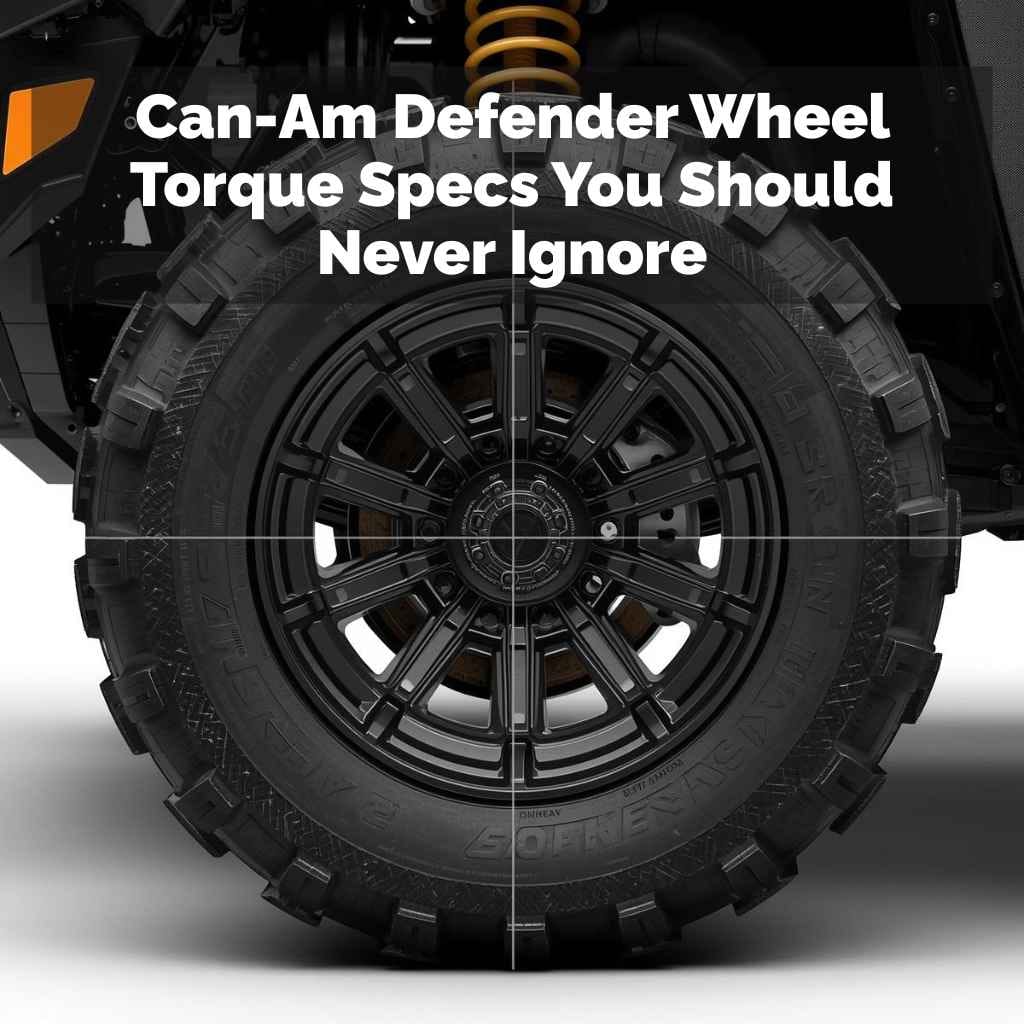
For your Can-Am Defender, the wheel torque specs are crucial for safe operation and preventing damage. Always consult your owner’s manual for the precise value, but typically, they are around 90-100 ft-lbs (122-136 Nm) for most models. Using a torque wrench is the only way to ensure accuracy.
What Are Wheel Torque Specs and Why Do They Matter?
So, what exactly are wheel torque specs? Think of it like this: when you tighten a bolt, you’re not just making it snug. You’re twisting it with a specific amount of force.

National
National LM501310 Automatic Transmission Differential Race
- PREMIUM MATERIALS -- Precision manufactured using premium-grade steel for outstanding durability and performance
- SMOOTH ROTATION -- Crowned raceways for even load distribution
- OE-STYLE DESIGN -- Engineered to meet OE specifications
As an Amazon Associate I earn from qualifying purchases.
This force is measured in foot-pounds (ft-lbs) or Newton-meters (Nm). The torque spec is the exact amount of twist recommended by the manufacturer. It’s like a recipe for how tight those lug nuts should be.
Why is this so important? Well, wheels are what connect your Defender to the ground. They handle all the weight and the bumps.
If your Wheel Bolt Pattern: Complete Guide” href=”https://engineauditor.com/can-am-maverick-x3-wheel-bolt-pattern/” target=”_blank” rel=”noopener” data-wpil-monitor-id=”5698″>wheel bolts aren’t torqued right, it can lead to a few serious issues. Your wheels could actually loosen up while you’re riding. This is super dangerous.
It can also damage your wheel studs, the bolts themselves. Too much torque can snap them.
Getting it just right helps your wheels stay on securely. It also makes sure your tires wear evenly. This means better performance and a smoother ride.
It’s a small step with a big impact on your safety and your vehicle’s health.
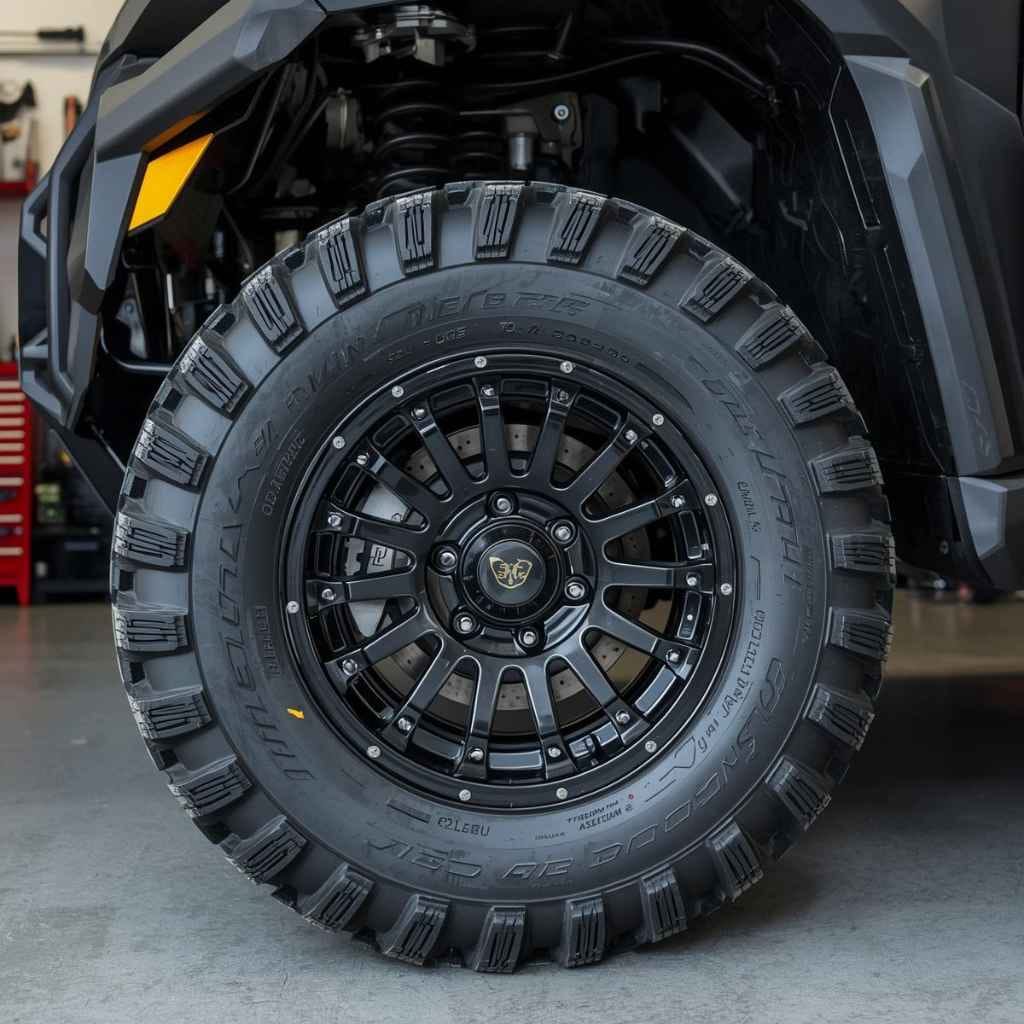
My Own Wheel Wobble Scare
I remember a time, years ago, when I thought I was being super efficient. I had a flat tire on my old UTV. I swapped it out quickly, thinking I’d just “feel” when the lug nuts were tight enough.
I was in a bit of a hurry, I admit. I spun them on by hand as far as they would go. Then I used the wrench, giving them what felt like a good, strong turn.
I figured I was done.
Later that day, I was cruising down a dirt trail. I started to notice a weird little wobble. It wasn’t too bad at first, just a slight shimmy.
But it got worse. It felt like the whole front end was a little loose. My stomach dropped.
I pulled over immediately and checked the wheel. Sure enough, the lug nuts were loose. One had even backed off quite a bit.
I was lucky I didn’t lose the wheel. That feeling of panic was intense. I learned a hard lesson about torque wrenches that day.
Since then, I’ve never skipped that step.
The Mechanics of Wheel Attachment
Let’s break down how your wheels stay attached. It’s a system designed for strength. You have wheel studs, which are threaded bolts that stick out from your hub.
Then you have lug nuts, which are essentially nuts with threads inside. When you tighten a lug nut onto a stud, it pulls the wheel firmly against the hub. This creates a clamping force.
The torque spec is the target for this clamping force. It’s calibrated to be strong enough to hold the wheel under all sorts of stress. This includes bumps, turns, and heavy loads.
But it’s also designed not to over-stress the studs or the wheel itself. Imagine a spring. You can stretch it a bit, and it will return.
You can stretch it too far, and it breaks. Torque is like stretching that spring just right.
When torque is too low, the clamping force is weak. Vibrations from driving can cause the lug nuts to loosen over time. This is how a wheel can eventually start to wobble or even come off.
When torque is too high, you’re stretching the stud too much. This can weaken it permanently or even snap it during tightening or later on. It can also damage the wheel where the lug nut seats.
Can-Am Defender Wheel Torque Chart (General)
Note: Always refer to your specific Can-Am Defender model’s owner’s manual for exact specifications. This is a general guide.
| Can-Am Defender Model | Typical Wheel Torque (ft-lbs) | Typical Wheel Torque (Nm) |
|---|---|---|
| Defender Base/DPS | 90 – 100 | 122 – 136 |
| Defender MAX (4-seater) | 90 – 100 | 122 – 136 |
| Defender PRO (6-seater) | 90 – 100 | 122 – 136 |
| Defender XMR (Mud Edition) | 90 – 100 | 122 – 136 |
This table provides common ranges. Your manual is the final word.
What Happens When Torque is Wrong?
Let’s talk about the actual problems that pop up. They are not pretty, and they can be costly. It’s important to understand the risks.
Under-Torquing (Too Loose): This is the most common cause of wheel detachment. When lug nuts aren’t tight enough, the wheel can shift slightly. This movement causes wear.
The studs and nuts can develop a chamfered or tapered shape. This makes them fit loosely even if you try to tighten them later. This is called “nut elongation.” The wheel can then wobble.
Eventually, it might even separate from the vehicle. You might hear clicking or knocking sounds before this happens. A loose wheel can also cause uneven tire wear and braking issues.
Over-Torquing (Too Tight): Many people think tighter is always better. This is a dangerous myth. Over-torquing puts immense stress on the wheel studs.
They can stretch beyond their elastic limit. This weakens them. They might break while you’re tightening them, or they could fail later while you’re driving.
Over-torquing can also damage the wheel itself. It can warp or crack the wheel, especially if it’s made of alloy. The lug nuts can also strip their threads.
This makes them impossible to tighten properly again. Damaged studs and nuts mean expensive replacements.
Myth vs. Reality: Wheel Torque
Myth: Tighter is Always Better
Many people believe that making lug nuts as tight as possible ensures safety. This is incorrect and dangerous.
Reality: Precise Torque is Key
Manufacturers specify a torque value to achieve the optimal clamping force. Deviating too much risks damage and failure.
Myth: “Feeling” Tight Enough is Sufficient
Relying on feel without a torque wrench is inaccurate and inconsistent, leading to potential under or over-tightening.
Reality: A Torque Wrench is Essential
A calibrated torque wrench is the only tool that guarantees you meet the exact specification required for safe wheel mounting.
Finding Your Can-Am Defender’s Specific Torque Value
This is the most crucial part. You can’t just guess or use a generic number. Every vehicle is different.
Even within the Can-Am Defender line, there can be variations depending on the model year and specific trim level. The absolute best place to find the correct wheel torque specification is your owner’s manual.
Your owner’s manual is written by the engineers who designed your Defender. It contains all the precise details for maintenance and care. Look for a section on wheels, tires, or general maintenance.
It will clearly state the recommended torque in both foot-pounds (ft-lbs) and Newton-meters (Nm).
If you don’t have your physical manual, don’t worry. Most manufacturers offer digital versions on their official websites. Search for “Can-Am Defender owner’s manual ” online.
You should be able to download a PDF.
If you’re still having trouble, you can always contact a Can-Am dealership. They can look up the exact specifications for your VIN (Vehicle Identification Number). It’s worth the small effort to ensure you’re using the correct number.
The Right Tool for the Job: Using a Torque Wrench
Now that you know why it’s important and what the spec is, let’s talk about how to achieve it. This is where a torque wrench comes in. This tool is designed to measure and apply a specific amount of rotational force.
It’s not just a wrench; it’s a precision instrument for this task.
There are a few types of torque wrenches:
- Click-Type Torque Wrench: This is the most common and generally recommended for DIY users. You set the desired torque. When you reach that amount of force, the wrench will click audibly and often feel like it “breaks” or slips slightly.
- Beam-Type Torque Wrench: This is a simpler type. It has a needle that moves along a scale as you apply force. You watch the needle to hit the target number. They are less precise than click-types.
- Digital Torque Wrench: These are electronic and provide a digital readout. They often have audible and visual alerts when the set torque is reached. They are very accurate but can be more expensive.
For most Can-Am Defender owners, a good quality click-type torque wrench is perfect. Make sure it has a range that includes the torque spec for your Defender. Most Defender specs fall in the 80-120 ft-lbs range, so a wrench covering that is ideal.
How to use a click-type torque wrench:
- Set the Torque: Rotate the handle of the wrench to set the desired value found in your owner’s manual.
- Attach the Socket: Place the correct size socket onto the wrench’s drive.
- Apply Steady Force: Place the socket onto the lug nut. Apply slow, steady pressure to the handle. Don’t jerk or pull quickly.
- Listen for the Click: Continue pulling until the wrench clicks. This means you’ve reached the set torque.
- Stop: Do not try to tighten further after the click. This is the precise point of correct torque.
It’s also good practice to “re-torque” your wheels. This means checking the torque again after a short period of driving. More on that later.
Quick-Scan: Torque Wrench Essentials
Tool: Click-type torque wrench is best for most users.
Range: Ensure it covers your Defender’s spec (e.g., 80-120 ft-lbs).
Setting: Dial in the exact ft-lbs or Nm from your owner’s manual.
Technique: Pull slowly and steadily until the wrench clicks. Do not over-pull.
Maintenance: Store torque wrenches at their lowest setting to preserve calibration.
The Star Pattern is Your Friend
When you’re tightening lug nuts on your Can-Am Defender, it’s not just about the force. It’s also about the order. Tightening them randomly can cause the wheel to sit unevenly.
This can lead to stress on the studs and the wheel itself. This is where the “star pattern” or “criss-cross pattern” comes into play.
Here’s how it works:
- Start with one lug nut. Tighten it just a little to snug it up.
- Move to the lug nut directly across from it. Tighten that one a little.
- Skip one and go to the next. Tighten it a bit.
- Go across from that one. Tighten it.
- Continue this pattern until all lug nuts have been snugged up.
This pattern ensures that the wheel is pulled evenly against the hub. It helps prevent the wheel from becoming slightly cocked or off-center. Once all nuts are snugged in the star pattern, you can then go around again in the same star pattern, this time using your torque wrench.
Go around at least twice to make sure every nut is at the correct torque.
For example, if you have 5 lug nuts, the pattern is 1-3-5-2-4. If you have 6 lug nuts, it’s 1-3-5-2-4-6 (or simply opposite pairs). Your Defender likely has 4 or 6 lug nuts per wheel.
The star pattern is crucial for even pressure distribution. It’s a simple habit that makes a big difference in how well your wheel is seated.
When to Check Your Wheel Torque
Torque isn’t a one-and-done deal. Things can shift. It’s wise to check your wheel torque at specific intervals.
This is often called “re-torquing” or a “post-install check.”
After Installing a Wheel: This is the most critical time. After you’ve installed a wheel (either after a tire rotation, changing a flat, or putting on new wheels), you should re-check the torque after driving about 50-100 miles. Yes, it sounds like a pain, but it’s so important.
This is when any slight settling or vibration might cause a nut to loosen a tiny bit.
Regular Maintenance Checks: It’s also good practice to include a wheel torque check in your regular maintenance schedule. Perhaps every few thousand miles or at the start of each riding season. Think of it like checking your tire pressure.
It’s a preventative measure.
After Heavy Use: If you’ve been on a particularly rough trail, encountered a lot of jarring bumps, or hauled a very heavy load, it’s not a bad idea to give your wheel torque a quick check. Extreme conditions can put extra stress on the fasteners.
Having a routine for checking your wheel torque can save you from potential disaster. It’s a small amount of time for a lot of peace of mind.
Post-Install Torque Check: A Step-by-Step
- Step 1: After driving 50-100 miles on a newly installed or re-installed wheel.
- Step 2: Ensure your vehicle is parked on a level surface. Engage the parking brake firmly.
- Step 3: Use your torque wrench set to the manufacturer’s specification.
- Step 4: Check each lug nut in the star pattern.
- Step 5: If a nut turns even slightly before the torque wrench clicks, it was loose. Torque it to spec and move on.
- Step 6: If multiple nuts feel loose, it might indicate a deeper issue or that the wheel wasn’t seated properly. If concerned, consult a professional.
Can-Am Defender Wheel Torque Specs: What to Expect
While you absolutely must check your owner’s manual, we can talk about common ranges. For most modern Can-Am Defender models, including the base models, MAX versions (4-seaters), and PRO versions (6-seaters), the wheel torque specification usually falls between 90 to 100 foot-pounds (ft-lbs).
In Newton-meters (Nm), this typically converts to a range of 122 to 136 Nm.
It’s important to remember that this is a general guideline. Some specific off-road trims or older models might have slightly different requirements. For instance, models designed for extreme mudding might have different wheel setups or stud sizes, which could affect torque.
However, the 90-100 ft-lbs range is a very safe bet for the majority of Can-Am Defenders you’ll see on the trails.
Always use the value listed in your manual. It’s better to be precise than to rely on a typical number. The engineers have done the math for your specific vehicle.
Factors Affecting Torque
Several things can influence how torque is applied or interpreted. Understanding these can help you be even more careful.
- Cleanliness: Make sure the wheel studs and the mounting surface of the lug nuts are clean and free of dirt, grease, or rust. Any debris can create a false torque reading. It might feel tight, but the clamping force is less than it should be.
- Lubrication: Generally, lug nuts and studs should be installed dry. Some manufacturers may specify a tiny amount of lubricant on the threads (like an anti-seize compound), but this changes the friction. Lubricated threads require less torque to achieve the same clamping force. If you use lubricant when it’s not specified, you risk over-stretching the studs. Always follow the manual’s advice on lubrication.
- Wheel Material: Alloy wheels can be more sensitive to over-torquing than steel wheels. The way the lug nut seats against the wheel is different. Some alloys can deform or crack if too much force is applied.
- Temperature: While not a huge factor for typical driving, extreme temperature changes can slightly affect metal properties. However, the torque spec is designed to account for normal operating temperatures.
These factors highlight why precision with a torque wrench is so important. It takes out the guesswork and ensures you’re applying the force consistently and correctly.
What If My Defender Has Aftermarket Wheels?
This is a common situation for many off-road enthusiasts. If you’ve upgraded your Can-Am Defender with aftermarket wheels, the torque specifications might change. Here’s what you need to know:
- Consult the Wheel Manufacturer: The most reliable source for torque specs on aftermarket wheels is the manufacturer of those wheels. They know the materials and construction best. Many wheel companies will provide this information on their website or with their product documentation.
- Lug Nut Type: Aftermarket wheels often require specific types of lug nuts (e.g., acorn, bulge, spline drive). These different styles can have slightly different seating surfaces, which can affect how torque is applied.
- Stud Compatibility: Ensure the lug nuts you use are compatible with your Defender’s studs. If you switched to longer studs or different diameter studs, the torque requirement might be different.
- When in Doubt, Err on the Side of Caution: If you cannot find clear specifications from the aftermarket wheel manufacturer, it’s often best to start with the OEM (Original Equipment Manufacturer) torque spec. However, if the aftermarket wheels have a different stud pattern, hole size, or material composition, this might not be appropriate. In such cases, contacting a reputable tire shop or wheel specialist is wise.
Aftermarket wheels are a great way to customize your ride, but they do add another layer of consideration for proper installation and maintenance. Always prioritize safety and accurate specifications.
Aftermarket Wheels: Key Considerations
Manufacturer Specs: Always get torque values from the wheel maker first.
Lug Nut Style: Use the correct style of lug nut for your wheels.
Stud Size: Ensure compatibility with your vehicle’s studs.
Professional Advice: If unsure, ask an expert tire shop.
When to Seek Professional Help
While changing a tire and torquing wheels is a skill many Can-Am Defender owners can learn, there are times when it’s best to let the experts handle it.
- Damaged Studs or Nuts: If you notice that your wheel studs are damaged, stripped, or corroded, do not attempt to reuse them. These need to be replaced by a professional.
- Warped Wheels: If you suspect your wheels are warped or damaged from previous issues, a professional can inspect and advise on replacement.
- Persistent Issues: If you’ve torqued your wheels correctly, but they continue to loosen, or you hear unusual noises, there might be a more serious problem with your hub, bearings, or suspension.
- Lack of Confidence: If you’re not comfortable using a torque wrench or performing this task, it’s always better to have a qualified mechanic do it for you. Mistakes with wheel torque can have severe consequences.
- New to This: If this is your first time performing this task, consider having an experienced friend or a shop show you the proper technique.
Your safety is the top priority. Don’t hesitate to get professional help when you need it.
Frequently Asked Questions
What is the most common Can-Am Defender wheel torque spec?
For most Can-Am Defender models, the wheel torque specification is typically between 90 and 100 ft-lbs (122-136 Nm). However, you must always confirm this with your specific owner’s manual.
Can I use an impact wrench to tighten my Defender’s lug nuts?
It’s generally not recommended to use an impact wrench for final tightening. Impact wrenches can easily over-torque fasteners and damage studs or wheels. You can use them to quickly run the nuts on initially, but always finish with a torque wrench to the specified value.
How often should I check my wheel torque on my Can-Am Defender?
You should check your wheel torque after driving 50-100 miles on newly installed wheels. It’s also a good practice to check them periodically as part of your regular maintenance, perhaps every few thousand miles or seasonally.
What happens if I over-tighten my lug nuts?
Over-tightening can stretch or break the wheel studs, damage the wheel, or strip the threads on the lug nuts. This weakens the entire wheel mounting system and can lead to failure.
My owner’s manual doesn’t mention wheel torque. What should I do?
If your manual is missing this information, first try downloading a digital version from the Can-Am website for your model year. If it’s still unavailable, contact a Can-Am dealership for the precise specification.
Do I need to torque aftermarket wheels differently?
Yes, potentially. Always consult the manufacturer of your aftermarket wheels for their recommended torque specifications, as they may differ from the original equipment manufacturer (OEM) specs.
Conclusion
Getting the wheel torque right on your Can-Am Defender is a simple step that offers enormous benefits. It directly impacts your safety, the longevity of your vehicle, and the performance you can expect on the trails. Always refer to your owner’s manual for the exact specification and use a calibrated torque wrench.
It’s a small investment of time that pays off with peace of mind and a safer ride.
Related pick: Check today's price on Amazon See also can low power steering fluid cause check engine light .