Why Does My Temperature Gauge Go Up and Down?
A temperature gauge that rises and falls usually means coolant flow is changing with engine load, a thermostat or fan fault is creating real temperature swings, or the sender or gauge is reporting the wrong value. If the needle reaches hot, treat it as overheating until proven otherwise. Most OEM owner manuals and service guides treat a hot gauge, coolant warning light, steam, or loss of heat as a stop-driving condition because overheating can warp cylinder heads, damage gaskets, and seize an engine. This guide shows how to separate a cooling-system fault from a bad gauge or sensor using simple checks.
This guide is part of our Car Cooling System Problems: Overheating, Coolant Leaks, Fan and Gauge Faults Explained series.
Why a temperature gauge swings

- Measures surface temperature without contact
- Useful for automotive, HVAC, and cooking checks
- Easy trigger use with °C/°F switching
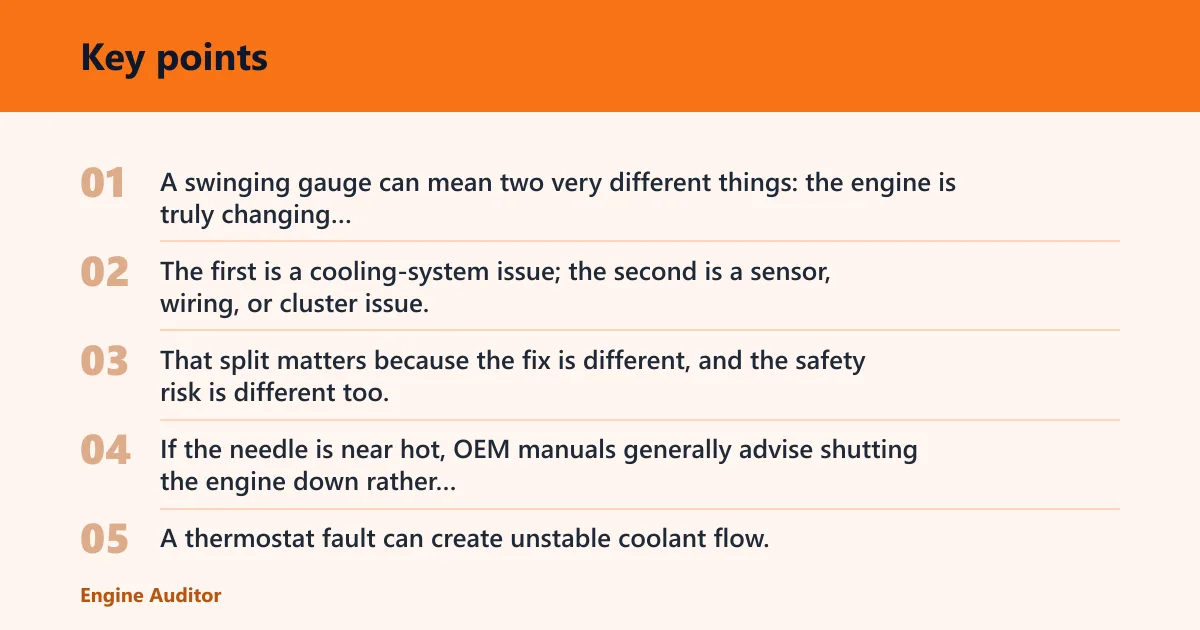
A swinging gauge can mean two very different things: the engine is truly changing temperature, or the dash reading is wrong. The first is a cooling-system issue; the second is a sensor, wiring, or cluster issue. That split matters because the fix is different, and the safety risk is different too. If the needle is near hot, OEM manuals generally advise shutting the engine down rather than “watching it.”
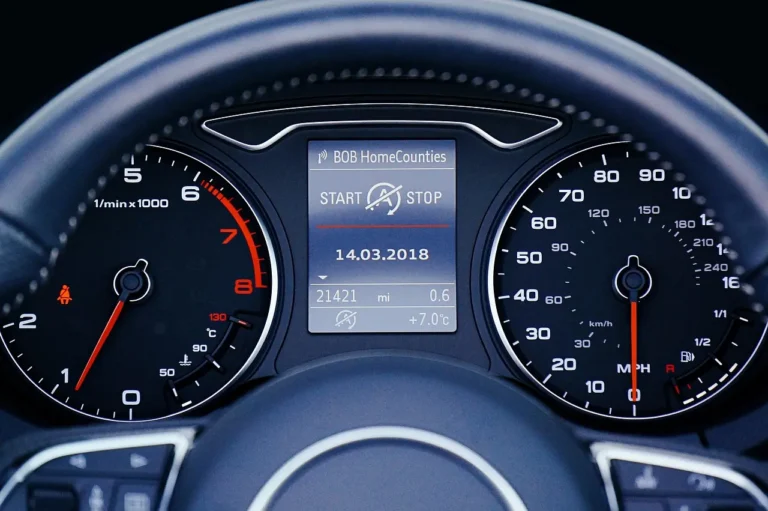
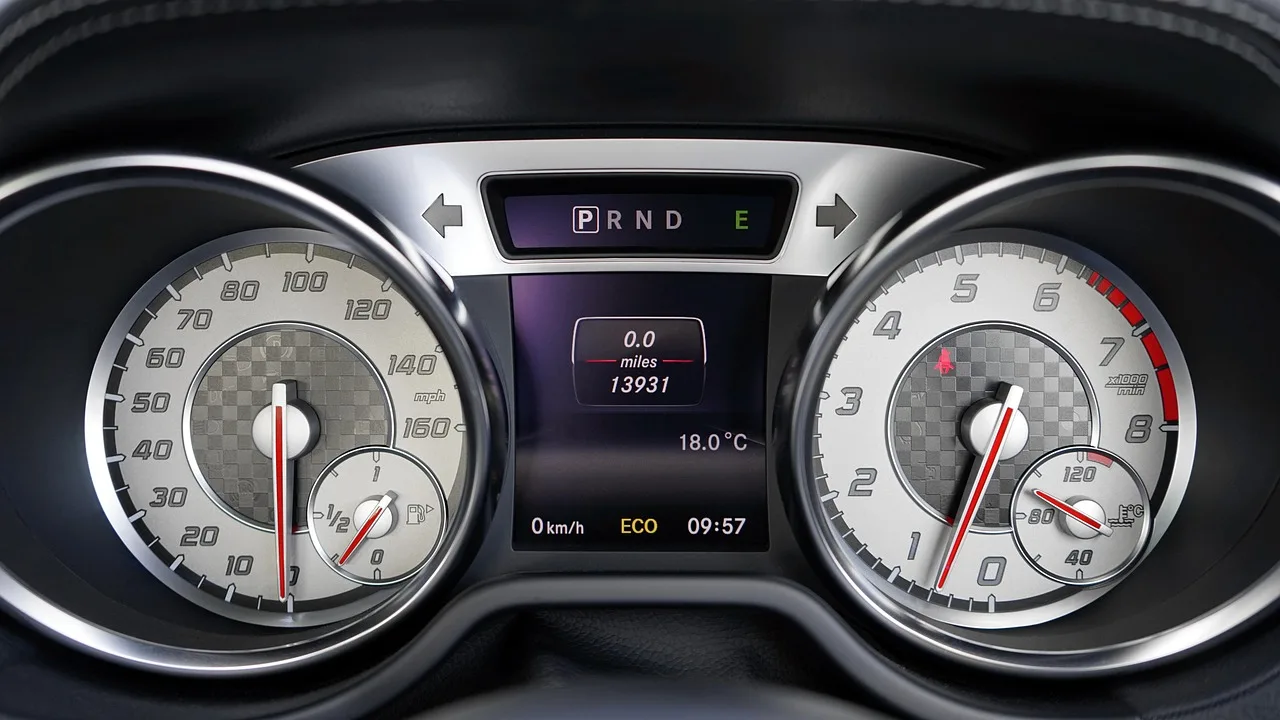
Symptom pattern matters because it narrows the path before you buy parts. A thermostat fault can create unstable coolant flow, but a faulty coolant temperature sensor, corroded connector, or failed gauge can copy the same behavior. Some vehicles also use separate sensors for the engine computer and the dash, so a scan tool reading may not match the needle. In practice, a stable OBD2 coolant reading around normal operating range while the gauge swings points away from true overheating and toward the cluster or signal circuit.
Temperature gauge diagnostic table
| Symptom pattern | Most likely cause | Next check | Safe to drive? |
|---|---|---|---|
| Idle-only rise, then normal at speed | Radiator fan not moving enough air, or a fan relay/electrical fault | Check fan operation with the engine warm and A/C on; confirm the fan cycles on | Only short distance if the needle stays below hot and no warning light/steam is present |
| Highway-only fluctuation | Thermostat sticking closed or opening erratically; trapped air can also interrupt flow | Compare upper radiator hose temperature and OBD2 coolant data at steady cruise | No if the gauge reaches hot; yes only if the reading stays in range and the scan data is stable |
| Rapid needle cycling | Bad coolant temperature sensor, wiring fault, or cluster issue | Read live coolant temperature with an OBD2 scanner and inspect the connector | Usually yes if scan data is steady and there is no actual overheating symptom |
| Cold-to-hot-to-cold swings | Air pocket in the cooling system or an intermittent sender signal | Check coolant level, then perform a proper bleed or burp procedure if service was recent | Not recommended until the air is bled and the cause is confirmed |
| Gauge movement with no actual overheating | Instrument cluster fault, wiring corrosion, or a sensor that is sending a false signal | Compare dash reading with scanner data; if they disagree, test the circuit and cluster | Yes, if the engine is not truly overheating and the gauge error is confirmed |
| Stop driving now | Needle at hot, coolant warning light, steam, loss of heat, or coolant loss | Shut the engine down, let it cool, and inspect for leaks before restarting | No |
| Safe to monitor | Small movement around normal after warm-up, with steady heat from the vents and no warning light | Check coolant level when cold and keep watching for repeated rises under the same condition | Yes, with monitoring |
Say your gauge climbs in a long traffic line, then drops as soon as you get moving. That pattern points first to fan performance, not the thermostat. Picture the opposite: the needle bounces while cruising at 55 mph, yet the heater still blows hot and the fan is running. That points away from airflow and toward a thermostat, air pocket, or sender fault. A quick scan-tool check is useful here: if the PCM shows roughly 190 to 220 degrees Fahrenheit while the dash needle swings, the engine is probably not truly overheating.
Could the thermostat be the cause?
Yes. A malfunctioning thermostat can make the temperature gauge go up and down while driving. In most OEM service info, the thermostat’s job is to regulate coolant flow so the engine reaches and holds normal operating temperature; many gasoline engines stabilize somewhere around 180 to 220 degrees Fahrenheit depending on design, load, and ambient conditions. If it sticks closed, coolant cannot reach the radiator properly. If it sticks open, the engine may run too cool and the gauge may drift or hover low. Either fault can create noticeable swings, especially under load (OEM service manuals; parts databases such as Gates/Delphi/Haynes data for thermostat operating ranges).
Stuck closed or stuck open
A stuck-closed thermostat usually causes a fast rise, especially under load or at highway speed, because heat cannot leave the engine quickly enough. A stuck-open thermostat does the opposite: warm-up takes too long, the gauge may sit low, and then drift as the engine changes load. Either fault can make the problem look random, but a true stuck-closed condition carries a safety risk because engine temperature can move into the red quickly. Most owner manuals say to stop driving if the hot light comes on or the needle enters the hot zone.
Look for consistency. If the gauge starts low, creeps up in traffic, then falls after a few minutes on the road, the thermostat is still a strong suspect, but it is not the only one. A low coolant level or trapped air can create the same pattern, so check the basics before replacing the thermostat. A mechanic-style clue: if the upper radiator hose stays cool too long and then suddenly gets hot as the thermostat opens, that thermal “step” can be normal; if it never gets fully warm or surges repeatedly, the thermostat or air pocket moves higher on the list.
What if air is trapped in the cooling system?
Air bubbles in the cooling system are a main culprit. Trapped air can break coolant circulation, make the gauge go up and down, and cause intermittent cold readings from the heater core or sender area. It often shows up after coolant service or after a leak has let the system draw in air. If the heater output changes with engine speed or the gauge drops when you crack the bleed point, that is a strong sign of air in the system.
Bleed procedure basics
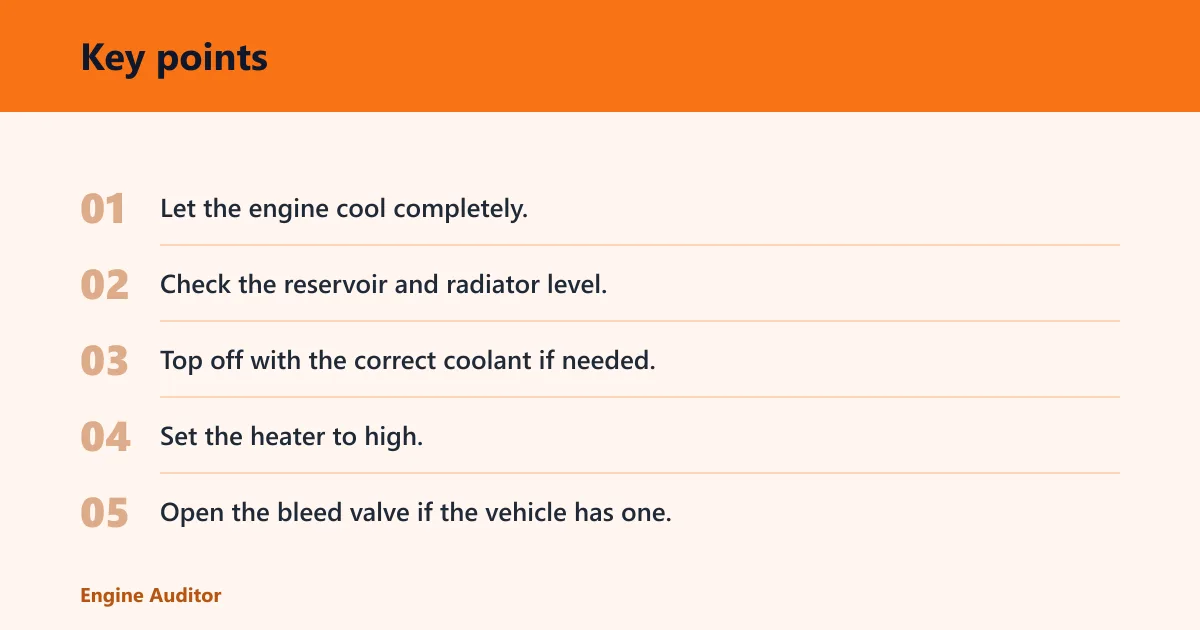
A cooling system bleed procedure removes trapped air after service. Many vehicles use bleed valves; others call for the heater to be set on high while the system is topped off. The article guidance also includes burping the system by removing the radiator cap and elevating the vehicle’s front section, but only when the engine is safely cool and the coolant level is correct. OEM procedures vary by model, and many automakers require a specific fill and bleed sequence to avoid hot spots, false gauge readings, and heater-core air pockets.
- Let the engine cool completely.
- Check the reservoir and radiator level.
- Top off with the correct coolant if needed.
- Set the heater to high.
- Open the bleed valve if the vehicle has one.
- Run the engine and watch for bubbles or a change in level.
- Close up the system only after the level stabilizes.
If the gauge behaved normally before a coolant change, hose replacement, or leak repair, air is worth checking early. A fresh service that is followed by cold spikes, heater output changes, or rapid gauge movement is a strong clue that the system was not fully bled. A short OBD2 note can help too: if coolant temp rises and falls while the heater air goes from hot to cool, that back-and-forth often tracks trapped air more than a bad gauge.
Can the fan or sensor be at fault?
Yes. A misbehaving radiator fan can let temperature rise at idle or low speed, where airflow is weak. A bad coolant temperature sensor can send the wrong signal to the ECU or the gauge, especially if the sensor is contaminated or its connector is corroded. An OBD2 scanner is one of the fastest ways to separate those faults. If the scan data is steady but the dash swings, the problem is more likely electrical or in the cluster than in the cooling system itself.
Radiator fan problems at idle
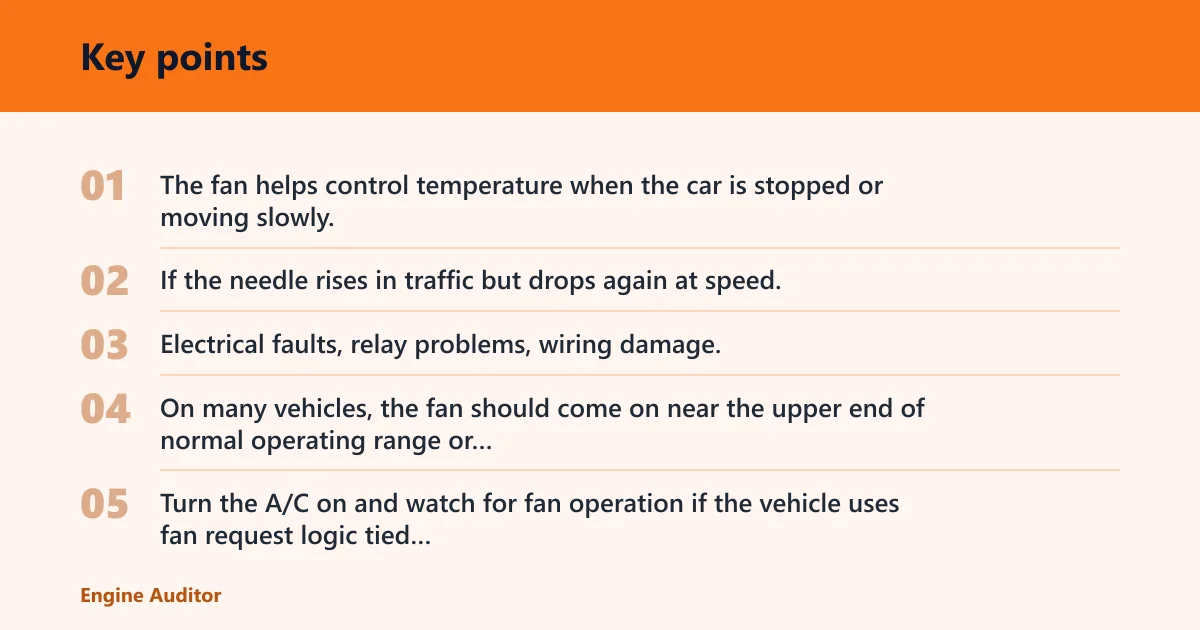
The fan helps control temperature when the car is stopped or moving slowly. If the needle rises in traffic but drops again at speed, fan performance moves to the top of the list. Electrical faults, relay problems, wiring damage, or a seized fan motor can all make cooling inconsistent. On many vehicles, the fan should come on near the upper end of normal operating range or when the A/C is requested; if it never cycles, idle heat rise is a safety clue rather than a mystery.
Turn the A/C on and watch for fan operation if the vehicle uses fan request logic tied to the air-conditioning system. If the fan never comes on, the cooling system may still look fine at road speed while the gauge climbs in a line of traffic. That is a useful pattern, not a contradiction. A real-world diagnostic habit: if the fan starts only after the temp gauge has climbed too far, that is weaker control strategy than a fan that comes on before the gauge moves much at all.
Coolant temperature sensor errors
A coolant temperature sensor sends temperature data to the ECU or the gauge. On some vehicles, the dash and the engine computer use different sensors. That means the cluster can show one story while the OBD2 data shows another. A sensor may read incorrectly because of contamination, corrosion, or a weak connector fit. Many service databases note that an out-of-range sensor can trigger fuel-trim changes, hard starting, poor idle quality, or a cooling-fan command that does not match actual temperature.
An OBD2 scanner gives live coolant temperature data and fault codes. If the scanner shows a steady, normal temperature while the needle swings wildly, the sensor signal path, wiring, or cluster becomes more likely than a true cooling fault. A multimeter can help confirm resistance or voltage changes at the sensor and connector. Example pattern: a stable 195 to 210 degrees Fahrenheit on the scanner with a bouncing dash needle usually means the engine is fine and the gauge path is not.
Could the gauge or cluster be lying?
Yes. The instrument cluster and temperature gauge can fail independently of actual engine temperature. Bad solder joints, internal faults, wiring damage, and corrosion can all make the needle move when the engine itself is stable. That is why comparing dash data with scanner data matters so much. If the ECM data is normal, the safety concern shifts away from overheating and toward an inaccurate display.
Wiring and cluster checks
Start with the connector at the sender or sensor. Look for green corrosion, loose pins, damaged insulation, or water intrusion. Then compare the scanner reading with the dash indication. If the scanner shows a stable about 195 degrees Fahrenheit and the needle is wandering, the gauge or cluster may be at fault. A connector that changes reading when wiggled is a strong sign the problem is in the circuit, not the cooling system.
Some cars have two temperature sensors while others have one, so do not assume a single bad sender explains every symptom. A cluster fault can mimic overheating, cold running, or random spikes. If the wiring checks out and the scanner data is steady, the dash hardware deserves attention. That matters for safety because you do not want to ignore a real hot condition, but you also should not replace cooling parts just because the needle is lying.
When coolant loss points to a head gasket
A leaking cylinder head gasket belongs on the list when coolant keeps disappearing and no external leak is easy to find. That kind of fault can let coolant enter combustion chambers, which may trigger overheating, repeated gauge swings, or a drop in coolant level that seems to have no outside source. OEM repair guidance and reputable diagnostics references also treat unexplained coolant loss, combustion-gas pressurizing the cooling system, and repeated overheating as head-gasket warning signs that should not be ignored.
Internal coolant loss clues
White smoke from the tailpipe is a sign of head gasket trouble. Other clues include unexplained coolant loss, bubbly overflow tank behavior, and overheating that returns after top-offs. A bad head gasket is not the first thing to assume, but it becomes more likely when the level keeps dropping and there is no visible leak on hoses, radiator, or water pump. If the heater output weakens and the system keeps pushing coolant out of the reservoir, that can indicate combustion pressure entering the cooling system.
Suppose the gauge climbs, the reservoir keeps getting low, and the exhaust leaves a sweet-smelling white plume after warm-up. That is not a “watch it for now” situation. Shut the engine down and have the cooling system pressure-tested before more driving. Repeated overheating is itself a safety issue because it can warp the head and worsen the gasket failure.
What should you check first?
Begin with coolant level, then confirm whether the engine is truly overheating or only the gauge is lying. After that, check fan operation, scan live coolant data, and inspect the sensor wiring. This order matters because it separates real heat problems from false readings before parts are replaced. It also matches how a tech would triage the complaint in the bay: safety first, then data, then parts.
Use this order when the needle starts moving:
- Check for steam, warning lights, or coolant loss.
- Look at coolant level only when the engine is cold.
- Notice when the symptom appears: idle, highway, after service, or at startup.
- Verify radiator fan operation.
- Read live coolant temperature with an OBD2 scanner.
- Inspect the sensor connector, wiring, and cluster if the scan data does not match the gauge.
Frequently asked questions
Why does my temperature gauge go up and down while driving?
While driving, a moving gauge usually points to a changing cooling condition or a false signal. A sticking thermostat, trapped air, fan trouble, or a sensor and wiring fault can all do it. The key is whether the engine truly gets hotter or whether only the needle moves. If the scanner shows a steady coolant temperature and the car is not losing heat, the gauge side of the system becomes more suspect.
Why is my temperature gauge going up and down but not overheating?
If the engine does not show steam, warning lights, or coolant loss, the gauge or sensor path becomes more likely. A bad coolant temperature sensor, corroded connector, faulty wiring, or cluster problem can create movement even when actual engine temperature stays normal. Compare live scan data with the dash. When the scan tool stays in the normal operating range but the needle wanders, the display is misleading rather than the engine being in danger.
Why is my temperature gauge going up and down rapidly?
Rapid cycling often points to an electrical or signal issue rather than a slow mechanical one. A loose connector, corroded pins, damaged wiring, or a failing sensor can make the reading jump. If the scanner shows a steady temperature, the instrument cluster itself may be the problem. A fast needle swing without steam or warning light is less consistent with true overheating and more consistent with an unstable signal.
Why does my temperature gauge go up when I stop?
A rise at a stop usually means airflow dropped and the fan cannot keep up, or the fan is not running when it should. That pattern fits radiator fan trouble, relay issues, or wiring faults. If the gauge falls again once the car moves, the fan path deserves priority. From a safety standpoint, an idle-only rise is still a real overheat warning if it reaches the hot zone.
What does it mean when my temperature gauge goes up and down?
It means you need to decide whether the cooling system is unstable or the dash reading is wrong. The pattern tells you where to look first. Idle-only rises, highway fluctuation, and cold-to-hot-to-cold swings point to different causes, so the symptom pattern is part of the diagnosis, not a side note. The most useful test is still the same: compare the gauge to live coolant data and judge whether the engine is actually overheating.
Why does my water temp gauge go up and down?
“Water temp” gauge is another way of describing the engine coolant temperature reading, so the same causes apply. Thermostat problems, trapped air, sensor faults, fan issues, and gauge failure can all affect it. The next step is to compare the dash reading with live OBD2 temperature data. If both readings track each other, suspect the cooling system; if they disagree, suspect the sensing or display circuit.
Author note: This article was prepared with automotive diagnostic and cooling-system repair experience in mind, using the same first-pass checks technicians rely on in the shop: coolant level, fan command, live OBD2 temperature, connector condition, and whether the symptom changes at idle, cruise, or after service. The goal is to separate a real overheat from a false reading before parts are replaced.
Products related to this article
Sponsored / affiliate links. As an Amazon Associate I earn from qualifying purchases. I may earn additional commission from eligible campaigns.