Chevy Traverse vs Tahoe: Which Family SUV Wins Today?
For most families, the Chevy Traverse wins. It costs less, fits tighter spaces, and usually uses less fuel, while the Tahoe only makes sense if you tow heavy loads or carry big cargo often. Pick the wrong one and you pay for unused size, extra fuel, or a cargo hold that comes up short. This guide compares price, seats, cargo, towing, mileage, and daily use for school runs and road trips.
Chevy Traverse vs Tahoe: which family SUV wins?


| Decision factor | Chevy Traverse | Tahoe: which family SUV wins? | Winner |
|---|---|---|---|
| Starting price | Starts at $34,520; Chevrolet.com lists from $41,100 | Base price is $54,200; Chevrolet.com lists from $60,700 | Traverse |
| Max cargo capacity | 98.2 cubic feet | 122.9 cubic feet | Tahoe |
| Behind-third-row cargo | 23 cubic feet | 25.5 cubic feet | Tahoe |
| Predicted reliability score | 83 | 80 | Traverse |
| Standard infotainment screen | 7-inch touchscreen | 8-inch touchscreen | Tahoe |
| Best fit for daily use | Lower cost, easier parking, better all-around family fit | Big cargo, towing, hauling, and frequent large-load use | Traverse |
The quick answer for families who never tow
The Traverse is the better default choice for most families because it handles school runs, grocery trips, airport runs, and road trips without forcing the owner to live with full-size-SUV bulk every day. It costs less to buy, slips into garages more easily, and leaves more money for insurance, fuel, and maintenance.
That matters more than cargo bragging rights. If a family rarely hauls home-improvement loads or trailer gear, the Traverse usually delivers more useful ownership.
The quick answer for families who tow or haul often
The Tahoe wins when towing, heavy cargo, or repeated large-load use is part of normal family life. Its body-on-frame setup, larger cargo hold, and towing focus make it the right tool for boats, campers, trailers, and frequent bulk hauling.
If those jobs happen only once in a while, the Tahoe’s size can become a daily penalty. The extra length and mass help when loaded, but they become a headache in parking lots and tight neighborhood streets.
According to Traverse vs. Tahoe: Which Chevy Family SUV Is Better? — The Traverse starts at $34,520.
Price and trim structure: what the gap really buys you
The price gap is big enough to change the buying decision. The Traverse starts at $34,520, and Chevrolet.com lists it from $41,100. The Tahoe’s base price is $54,200, and Chevrolet.com lists it from $60,700, so the Tahoe asks for a much larger first check before options.
Starting MSRP and entry-price gap
That gap is not small. A family moving from Traverse to Tahoe is paying for the Tahoe’s larger body, heavier-duty structure, and stronger hauling intent, not just extra inches of sheetmetal.
The Traverse also tops out in the mid-$50,000 range, while the Tahoe’s top trim approaches $80,000. That matters because trim ladders widen the gap fast once buyers move past base models.
How trim ladders change the value picture
On lower trims, the Traverse is the value play because it gets the family basics without forcing a jump into full-size-SUV pricing. On the Tahoe, even well-equipped versions can move deep into premium territory quickly.
That is where many shoppers get surprised. They start by comparing entry prices, then discover that the features they want push the Tahoe much farther from the Traverse than the first sticker on the dealer lot suggests.
What you give up by moving from Traverse to Tahoe
Choosing the Tahoe means paying more to carry a bigger vehicle every day. If the family does not tow, does not haul large items often, and does not need the extra cargo depth, the added cost needs real use to justify it, not size or image alone.
Which Chevy SUV is easier to live with every day?
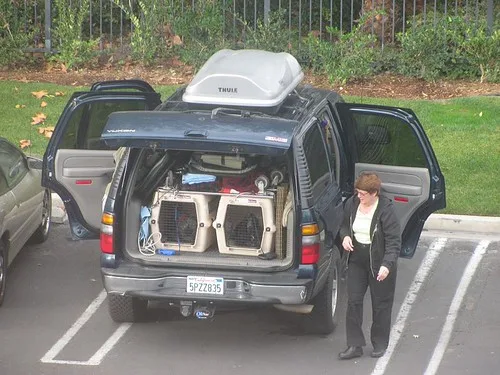
The Traverse is easier to live with every day. It fits garages, crowded school lanes, curbside pickup, and city parking better because it asks less room from the driver and from the driveway. The Tahoe is more demanding, and that shows up every time the family parks or turns around.
Length, garage fit, and parking stress
A Tahoe is a full-size SUV, and that bigger footprint shows up in daily use long before anyone opens the cargo hatch. In tighter garages and older suburban driveways, the Traverse is simply less stressful to place.
That difference shows up in the little moments. Backing into a space, squeezing past another car at the grocery store, or threading through a busy school pickup line all feel easier in the Traverse.
School-run use and low-speed drivability
For school runs, the Traverse usually feels like the calmer vehicle. It is big enough for family duty without turning every stop into a three-point maneuver, and that helps when doors are opening and closing in a cramped lot.
The Tahoe can do the job, but it asks for more attention. Families who drive it daily need to accept that its size is part of the ownership job, not a one-time adjustment.
Visibility and curb-side convenience
Both vehicles are built for family duty, but the Traverse is easier to place near curbs, around cones, and beside other parked cars. The Tahoe’s size becomes most annoying in places where a family makes repeated stops, not on the open road.
For suburban families, that is often the deciding point. If a vehicle feels tiring to park, it loses usefulness fast.
Cargo space and seating: what fits in real family life
The Tahoe wins cargo volume, but the Traverse often wins usability. Behind the third row, the Tahoe offers 25.5 cubic feet and the Traverse offers 23 cubic feet. That difference matters, but it is not always the difference between “fits” and “doesn’t fit” for family bags, strollers, or groceries.
Behind-the-third-row cargo room
Behind the third row, both SUVs can carry day-trip gear, a few school bags, or a medium stroller. The Tahoe’s extra space helps when the third row stays up and the family still wants room for luggage.
The Traverse’s 23 cubic feet behind the third row is enough for many households that do not travel with large checked bags plus a full cabin of passengers. It is the more efficient answer for families whose third row gets used often.
Second-row fold-flat space
When the second row folds, the Tahoe’s 122.9 cubic feet of max cargo capacity gives it a clear edge for bulk items, moving boxes, sports equipment, and large luggage stacks. The Traverse’s 98.2 cubic feet is still useful, but it runs out sooner when the load gets long or tall.
That is the split between occasional convenience and true haul duty. If the vehicle needs to swallow bulky items every week, the Tahoe earns its place.
Strollers, luggage, and sports gear
For stroller duty, the Traverse usually makes more sense because many families need only one folded stroller, a diaper bag, and a few soft bags. Airport trips with four or five suitcases, though, start to favor the Tahoe, especially if the third row stays in use.
Sports families see the same split. Soccer bags, bats, folding chairs, and a cooler are easy in either SUV, but the Tahoe leaves more room when everything comes at once.
Third-row kid and adult comfort
The third row in both SUVs is usable for children, and the Tahoe is the better choice for adult passengers who will sit there often. The Traverse can carry adults in the third row, but it is more comfortable as a short-trip seat than as a place for long rides.
That is the part shoppers miss when they compare only cargo numbers. Third-row usability is about seat padding, legroom, and how long a person can stay there before complaints start.
Interior features and tech families will actually notice

The family-friendly equipment is similar enough that neither SUV wins on gadget count alone. The Tahoe’s standard infotainment includes an 8-inch touchscreen, while the Traverse uses a 7-inch touchscreen. Both are built for family use, not luxury theater.
Infotainment screen size and interface
An extra inch of screen size helps, but it does not change the buying decision by itself. What matters more is whether the interface is easy for a parent to use while stopped for school pickup or while managing navigation on a road trip.
The Tahoe’s larger screen is nice. The Traverse’s smaller screen is still fine for the job.
Wireless Apple CarPlay and wireless Android Auto
Families should look for wireless phone integration because it keeps cables out of the center console and makes quick starts simpler. That convenience matters on mornings when everyone is late and the second-row seats are already full.
In practice, this feature cuts down on friction. It is not glamorous, but families feel it every day.
Tri-zone climate control and power outlets
Tri-zone climate control matters because kids in the back rarely agree with the driver on cabin temperature. Household power outlets matter on road trips, charging tablets, powering coolers, or keeping devices alive during long waits.
These features matter equally in both vehicles. They are part of why either SUV works as a family hauler, even if one is the better fit.
Seat comfort and support up front and in row two
Front-row comfort matters on long school commutes and weekend drives. Row-two comfort matters more because that is where many car seats, booster seats, and adult passengers will spend most of their time.
The Traverse usually makes more sense for families that want an easier step-in and step-out routine. The Tahoe can be roomier inside, but the added size does not automatically make every seat better for daily family duty.
Which Chevy SUV gets better gas mileage, Traverse or Tahoe?
The Traverse is the better bet for fuel budget impact because it is the smaller, lighter family SUV and usually costs less to run day to day. The Tahoe’s larger body and towing focus make it the thirstier choice, especially in mixed suburban driving and stop-and-go school traffic.
For families who rack up miles on errands, sports practice, and road trips, the fuel difference matters over time. That ongoing cost often matters more than the first purchase price once ownership starts.
Which has more cargo space, Traverse or Tahoe?
The Tahoe has more cargo space. It offers 25.5 cubic feet behind the third row and 122.9 cubic feet of max cargo capacity, while the Traverse offers 23 cubic feet behind the third row and 98.2 cubic feet of max cargo capacity. The Tahoe wins when the family routinely hauls large loads.
But the real question is how often that space gets used. If the third row stays upright most days and cargo is usually strollers, groceries, or backpacks, the Traverse’s space is often enough.
Does the Traverse have enough room for adults in the third row?
The Traverse can fit adults in the third row, but it is better treated as occasional adult seating than all-day seating for long trips. It works well for kids and shorter rides, and that is enough for many families that only use the back row when visiting relatives or carpooling.
If adults will sit there often, the Tahoe is the more comfortable choice. That is where the larger cabin earns real value instead of just showing a bigger number on paper.
Which Chevy SUV is better for towing and hauling?
The Tahoe is the better towing and hauling SUV. It is the one to buy when trailers, campers, boats, or regular heavy loads are part of normal life, not occasional outliers. The Traverse is the family crossover; the Tahoe is the heavier-duty tool.
That body-on-frame setup matters when the vehicle is asked to do work repeatedly. If towing is rare, the Tahoe’s extra capability may sit unused while the family pays for bigger size and worse daily efficiency.
Decision table: five family scenarios, one clear winner
This table ties the choice to real family use, not brochure language. If a shopper can match most of these scenarios to one column, the right answer usually becomes obvious fast.
| Family scenario | Chevy Traverse | Tahoe: which family SUV wins? | Winner |
|---|---|---|---|
| Garage fit | Easier to fit in tighter garages and driveways | Bigger footprint can be awkward in tight spaces | Traverse |
| Third-row kid/adult use | Good for kids, acceptable for adults on shorter trips | Better for adults and frequent third-row use | Tahoe |
| Road-trip cargo | Works for moderate luggage and stroller loads | Better for full-family luggage, coolers, and bulky gear | Tahoe |
| Towing | Not the choice for frequent towing duty | Better fit for towing and hauling | Tahoe |
| Fuel-budget impact | Lower running cost in normal family use | Higher running cost from size and towing intent | Traverse |
Garage fit
Traverse. It is the easier SUV to park, store, and move around in crowded places. Families with a narrow garage or a busy neighborhood will feel that benefit every week.
Third-row kid/adult use
Tahoe. If the back row gets used often by adults, the Tahoe is the more comfortable choice. The Traverse can do the job, but it is not the better long-haul third-row SUV.
Road-trip cargo
Tahoe. When the family packs for a week away, extra cargo room matters. The Tahoe has the deeper reserve for suitcases, folded gear, and the items that usually create packing stress.
Towing
Tahoe. This is the clear split between the two. If towing is frequent, the Tahoe justifies its size; if towing is rare, the Traverse keeps life simpler.
Fuel-budget impact
Traverse. For commuting, school runs, and ordinary errands, the smaller SUV is easier on the budget because it does not ask families to feed a full-size body-on-frame rig all year.
Choose Traverse if… / Choose Tahoe if…
Choose the Traverse if you want the better daily driver, plan to skip towing, care about garage fit, and want a lower starting price with a stronger value story. It is also the safer pick for families whose third row is mostly for kids or short rides.
Choose the Tahoe if towing, hauling, or maximum cargo space matter enough to justify the higher price and the larger footprint. It is the right answer for families that regularly use the third row with adults, pull trailers, or carry big loads often.
Frequently asked questions
Is the Chevy Traverse or Tahoe better for a family?
The Traverse is better for most families because it costs less, parks more easily, and fits daily life without asking the driver to manage full-size SUV bulk all the time. The Tahoe is better only when the family needs more cargo room, more third-row comfort, or regular towing.
Which Chevy SUV gets better gas mileage, Traverse or Tahoe?
The Traverse is the better pick for fuel budget impact. The Tahoe is larger and built for heavier work, so it is usually the more expensive SUV to run in ordinary suburban driving, especially when the family spends a lot of time in traffic or on short trips.
How much more does the Tahoe cost than the Traverse?
The Tahoe starts higher. The Traverse starts at $34,520, while the Tahoe’s base price is $54,200. Chevrolet.com lists them from $41,100 and $60,700, respectively, so the entry gap is substantial before options and trim upgrades widen it further.
Which has more cargo space, Traverse or Tahoe?
The Tahoe has more cargo space. It offers 25.5 cubic feet behind the third row and 122.9 cubic feet of max cargo capacity, compared with 23 cubic feet behind the third row and 98.2 cubic feet max cargo capacity for the Traverse.
Is the Tahoe worth it if I don’t tow?
Usually not, unless the family regularly needs the extra cargo room or a more comfortable third row for adults. If towing is not part of the plan, the Tahoe’s size can become more burden than benefit, especially in parking, garage fit, and fuel cost.
Which is easier to park and drive every day?
The Traverse is easier to park and drive every day. It is the more manageable SUV for school drop-off lines, grocery-store lots, and narrow driveways. The Tahoe can do daily duty, but the larger footprint makes ordinary errands more annoying.
Does the Traverse have enough room for adults in the third row?
Yes, but with limits. The Traverse can carry adults in the third row, yet it is a better fit for kids or shorter trips. Adults who sit there often will usually be happier in the Tahoe, which is the more comfortable long-haul choice.
Which Chevy SUV is better for towing and hauling?
The Tahoe is better for towing and hauling. That is the role it was built to cover, and it makes sense when those jobs happen regularly. The Traverse is more of a family crossover, and it should not be treated as a substitute for frequent trailer duty.
Products related to this article
Sponsored / affiliate links. As an Amazon Associate I earn from qualifying purchases. I may earn additional commission from eligible campaigns.