Chevy Tahoe vs Suburban: size, space, and value compared
Choose the Tahoe if you want easier parking and almost the same family usefulness in a shorter body. Choose the Suburban if you need the extra 15 inches and 16 cubic feet behind the third row for road trips, gear, or three-row cargo. Pick the wrong one and you live with tight-garage headaches, awkward parking, or empty space you paid for but never use. This guide compares size, passenger and cargo room, towing, parking, and value so you can buy the right full-size Chevy.
This guide is part of our Chevy vehicles guide: models, issues, and buying tips series.
Chevy Tahoe vs Suburban: the core trade-off
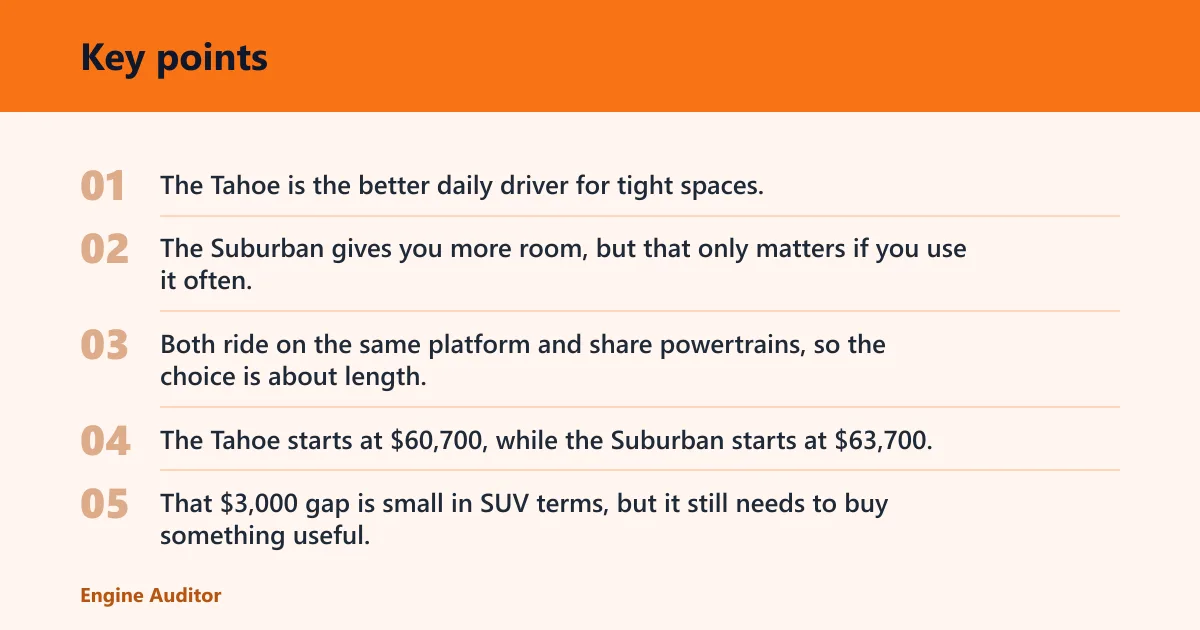


The Tahoe is the better daily driver for tight spaces. The Suburban gives you more room, but that only matters if you use it often. Both ride on the same platform and share powertrains, so the choice is about length, parking, and how much interior space you need every day.
| Decision factor | Chevy Tahoe | Suburban | Winner |
|---|---|---|---|
| Starting price | $60,700 | $63,700 | Tahoe |
| Exterior size | Shorter body | Roughly 15 inches longer | Tahoe for fit, Suburban for space |
| Passenger capacity | Seating for eight people | Seating for nine people | Suburban |
| Cargo and third-row room | Less room behind the third row | More third-row legroom and cargo space | Suburban |
| Maneuverability and parking | Greater maneuverability in tighter spaces | More length to manage in garages and lots | Tahoe |
| Engine and towing setup | Same platform and powertrains | Same platform and powertrains | Tie |
Starting price and daily value
The Tahoe starts at $60,700, while the Suburban starts at $63,700. That $3,000 gap is small in SUV terms, but it still needs to buy something useful, not just extra body length.
For most buyers, the Tahoe makes more sense. It gives you the full-size Chevy formula without paying for room you may leave unused.
Size and parking reality
The Suburban is roughly 15 inches longer than the Tahoe. That sounds modest on paper, but it matters when you are backing into a short garage, squeezing into a curbside spot, or threading through a cramped parking deck.
The Tahoe gives up less ease in daily use. It is the easier one to place by eye, and Chevrolet says it offers greater maneuverability in tighter spaces.
📊 The Tahoe starts at $60,700. Source: Chevrolet Cars, Trucks, SUVs, Crossovers and Vans.
What is the difference between a Chevy Tahoe and Suburban in size?
The Suburban is roughly 15 inches longer than the Tahoe, and that extra length is the biggest physical difference between them. The Tahoe is the shorter, easier-to-live-with SUV; the Suburban trades convenience for more interior room and a larger footprint.
That extra body length changes more than the parking number. It affects garage fit, rear overhang, and how comfortable you feel in tight turns and close quarters.
What the longer body changes day to day
For commuting and school runs, the Tahoe is the easier pick. For wide driveways, oversized parking spaces, and families that fill every seat and every corner of the cargo area, the Suburban’s size starts to earn its keep.
Picture a two-car garage with shelves on one side and bicycles on the other. The Tahoe leaves more room to walk around the front bumper and open the liftgate, while the Suburban can turn that same garage into a careful, one-shot park every time.
Which has more passenger room and cargo space?
The Suburban has the advantage here. It gives you more third-row legroom and more cargo space, which is the reason for the extra length and the main reason to pay more for it. The Tahoe still works well for families, but it asks for more compromise once the third row is in use.
Third-row comfort
If adults or bigger kids ride in the third row often, the Suburban is the better pick. The extra length creates more usable space back there, so the third row feels less like a penalty seat and more like a place people can sit for a long trip.
If the third row is mostly for short rides, the Tahoe is usually enough. It can seat eight people, and that covers most family duty without stepping up to the longer body.
Cargo with seats up
This is where the Suburban earns its premium. Chevrolet says it offers more cargo space, which matters most when the third row stays in place and you still need room for groceries, sports bags, folding chairs, or a travel cooler.
A common mistake is judging cargo space only with the rear seats folded. That misses the real test for a family SUV: what fits behind the third row with people still sitting in it.
Family loading and car seats
The Tahoe can handle family duty well, but the Suburban reduces the squeeze once rear-facing car seats, a stroller, and luggage all enter the picture. More length means less juggling every time someone needs the back row. (caranddriver.com)
Suppose your routine includes three kids, one third-row booster, and a stroller that never seems to fold down small enough. The Tahoe can still work, but the Suburban leaves more room for cargo without making you unload half the rear compartment first.
Do the Tahoe and Suburban have the same engines and towing setup?
Yes. The Tahoe and Suburban share the same platform and powertrains, so their engine choices line up closely. Both SUVs offer a 5.3L V8 engine option, a 6.2L V8 engine option, and a 3.0L Duramax turbodiesel engine option.
That means towing differences come more from body length, wheelbase feel, and how much space you want around the trailer than from engine choice alone. Higher trims can include Super Cruise driver-assistance technology, and both SUVs can be equipped with wireless Apple CarPlay and wireless Android Auto.
What towing parity means in practice
Because the powertrains match, towing is not the clean separator many shoppers expect. If your trailer needs are modest for a full-size SUV, the Tahoe is often enough. If you want the longer body for stability and you also need the added interior room, the Suburban makes sense.
The Suburban’s longer wheelbase can help the tow rig feel more settled, especially with a long trailer. But that benefit matters most when you tow often enough for the extra size to be part of the job, not just part of the brochure.
Decision matrix: Tahoe vs Suburban by use case
| Use case | Chevy Tahoe | Suburban | Best for |
|---|---|---|---|
| Garage fit and parking ease | Easier to fit, turn, and park | Longer body takes more room | Tahoe |
| Third-row comfort | Good for occasional use | More third-row legroom | Suburban |
| Cargo with seats up | Less space behind the third row | More space behind the third row | Suburban |
| Towing stability | Strong, with less size penalty | Longer body can feel steadier with a trailer | Suburban |
| Value per dollar | Lower starting price and easier daily use | Higher price, more space | Tahoe |
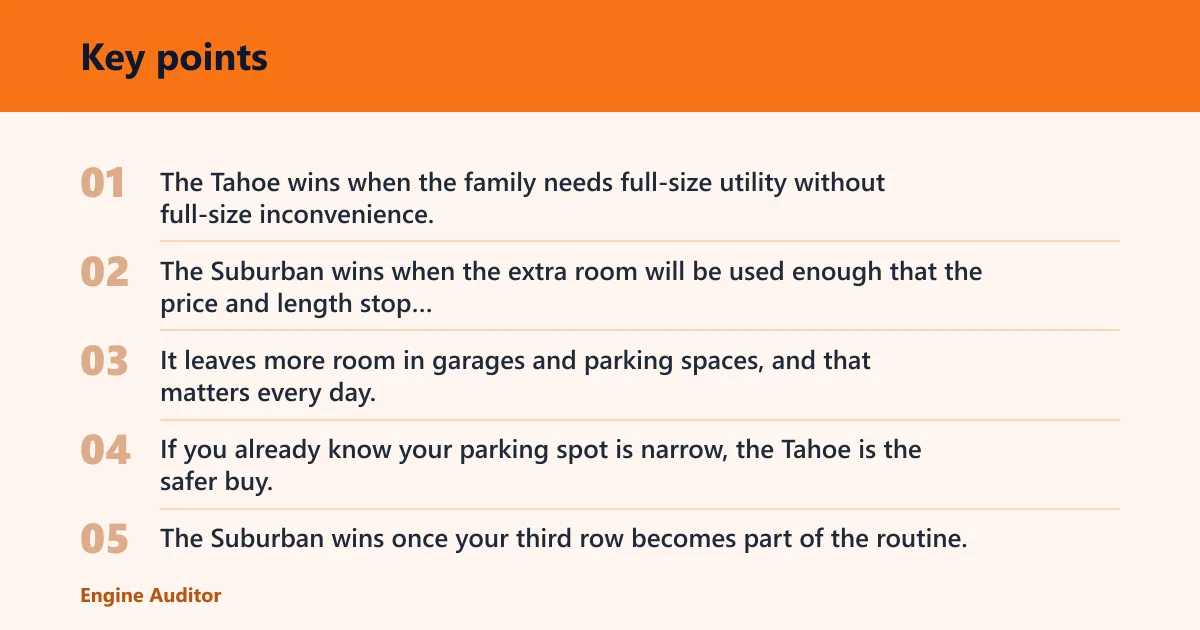
The matrix points to a simple split. The Tahoe wins when the family needs full-size utility without full-size inconvenience. The Suburban wins when the extra room will be used enough that the price and length stop feeling like penalties.
Garage fit and parking ease
The Tahoe is the better city and suburb fit. It leaves more room in garages and parking spaces, and that matters every day, not only on road trips.
If you already know your parking spot is narrow, the Tahoe is the safer buy.
Third-row comfort and cargo
The Suburban wins once your third row becomes part of the routine. It gives passengers more room and keeps more cargo space available when all the seats are in use.
That matters on airport runs, holiday trips, and long weekends when every inch of space gets claimed.
Towing stability and trip use
The Suburban is the stronger choice for frequent towing and long-distance travel with a full load of people and gear. The Tahoe is still a serious tow vehicle, but the Suburban’s size advantage is more useful when the trailer, passengers, and cargo all show up at once.
Value per dollar
The Tahoe has the cleaner value case because it starts at $60,700 and avoids the Suburban’s size penalty. The Suburban starts at $63,700, so it needs to justify itself with actual room use, not just habit.
If that extra space stays empty, it is expensive emptiness.
Are the Tahoe and Suburban worth their price difference?
The Suburban is worth the extra money only if you will use the added length for real passenger or cargo gains. With a starting gap of $3,000, the question is not whether the Suburban is better in the abstract. The question is whether the extra room solves a problem you have now.
If you do not regularly need more third-row legroom or more cargo behind the seats, the Tahoe is the better value. It costs less, fits more easily, and delivers nearly the same family utility for many buyers.
When the Suburban earns its premium
Choose the Suburban if you often carry nine people, keep the third row upright, or travel with a full load of luggage and gear. It is also the better answer when the vehicle doubles as a road-trip hauler and the third row needs to be comfortable enough for real use.
When the Tahoe is the smarter buy
Choose the Tahoe if most trips are school runs, errands, commuting, and weekend family use with only occasional third-row demand. Its smaller size reduces daily friction, and its lower starting price leaves more budget for the trim or engine you actually want.
Choose Chevy Tahoe if… / Choose Suburban if…
Choose Chevy Tahoe if you want easier parking, simpler garage fit, and strong family utility without paying for extra length you may not need. It is also the better fit if you value maneuverability in tight spaces, commute in crowded areas, or want the lower starting price of $60,700.
Choose Suburban if you need maximum third-row room, more cargo space behind the seats, or seating for up to nine people. It is the right call if road trips are common, the third row is used often, or the extra 15 inches will be filled with people and gear instead of wasted.
Frequently asked questions
What is the difference between a Chevy Tahoe and Suburban in size?
The Suburban is roughly 15 inches longer than the Tahoe. That extra length gives the Suburban more interior room, especially in the third row and cargo area, while the Tahoe stays easier to fit in garages, parking spaces, and tighter driving situations.
Which has more cargo space, Tahoe or Suburban?
The Suburban has more cargo space. Chevrolet also says it provides more third-row legroom and more room behind the seats, so it is the better pick if you often carry luggage, strollers, sports gear, or road-trip supplies with the third row still in use.
Is the Suburban worth the extra money over the Tahoe?
It is worth the extra money only if you will use the added room often. The Suburban starts at $63,700, versus $60,700 for the Tahoe, so the premium makes sense when extra third-row comfort or cargo space solves a real need. Otherwise, the Tahoe is the better value.
Which Chevy SUV is easier to park and drive every day?
The Tahoe is easier to park and drive every day. Chevrolet says it offers greater maneuverability in tighter spaces, and its shorter body makes a difference in garages, lots, and urban traffic. The Suburban is manageable, but it asks for more space from the driver.
Do Tahoe and Suburban have the same engine options?
Yes. Both SUVs share the same platform and powertrains, including a 5.3L V8 engine option, a 6.2L V8 engine option, and a 3.0L Duramax turbodiesel engine option. That means the decision is mostly about size, space, and daily convenience.
How many people can the Tahoe and Suburban seat?
The Tahoe can seat eight people, and the Suburban can seat nine people. That extra seat may matter for larger families or carpools, but many buyers will care more about how comfortable the third row feels and how much cargo room remains behind it.
Products related to this article
Sponsored / affiliate links. As an Amazon Associate I earn from qualifying purchases. I may earn additional commission from eligible campaigns.