Car Lights Work But Won’t Start? Try the Headlight Dim Test
Yes, your car lights can turn on even when the battery is too weak or “dead” to start the engine. This happens because accessories like lights require very little power compared to the massive amount of energy needed to turn over an engine. This creates a hidden danger: you might think your battery is fine, only to get stranded.
You hop in your car, turn the key, and… nothing. Or maybe just a sad little click. But wait, the dome light is on. The dashboard is faintly lit. This can be confusing. If the lights work, shouldn’t the car start? It’s a frustrating moment that happens to almost every driver.
Don’t worry, you’re not alone in this puzzle. It’s one of the most common car problems, and it often points to your battery. But the fact that some electronics work can throw you for a loop.
In this guide, I’ll walk you through why this happens, what it means for your car, and exactly what to do next. We’ll break it down into simple, clear steps. You’ll learn how to diagnose the problem and what the real danger is when you see lights but get no engine life. Let’s get you back on the road with confidence.
Why Your Car Lights Work But Your Engine Won’t Start
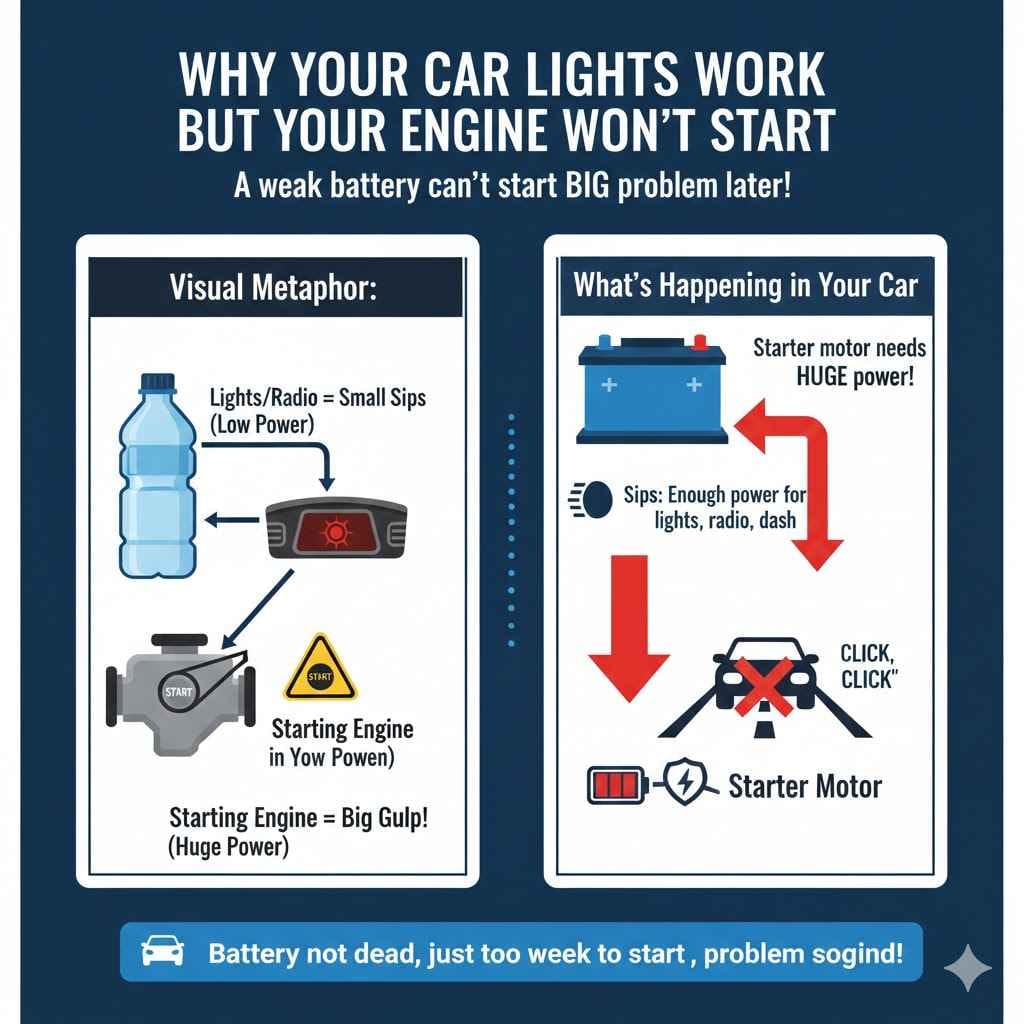
Think of your car battery like a water bottle. Starting your engine is like trying to chug the entire bottle in one gulp—it takes a huge amount of energy all at once. On the other hand, turning on your headlights or radio is like taking a tiny sip. They need a steady, but very small, amount of power to work.
GOOLOO A3 3000A Portable Jump Starter — $79.99
If the dim test in this guide confirms a weak battery, this pack starts your car without waiting on a second vehicle or a tow truck.
- Best for: Drivers who confirmed weak-battery symptoms and want a fix that does not need a second car
- Why picked: 3000A handles most gas and diesel engines; built-in air compressor is a bonus for the tire-pressure check this site also covers
- Main drawback: Needs its own charge — keep it topped up so it is ready when your battery is not
When your battery is weak or “dying,” it doesn’t have enough “water” left for that big gulp. It might have just enough power for a few sips, which is why your lights, radio, or dashboard can still come to life. The battery isn’t completely empty, but it’s far too weak to perform its biggest job: cranking the engine.
The starter motor, which is responsible for getting your engine running, is the most power-hungry component in your car’s electrical system. A weak battery simply can’t provide the massive surge of amperage it demands. This is why you often hear a clicking sound—that’s the starter trying to engage but failing due to lack of power.
Is Your Battery Weak or Truly Dead? How to Tell the Difference
It’s helpful to understand the difference between a weak battery and one that is completely dead. A weak battery still holds a small charge, allowing some electronics to function. A completely dead battery has no charge left at all, and nothing will work.
Knowing which you have can help you decide what to do next. A weak battery can often be revived with a jump-start, while a completely dead one might need replacement. Here’s a simple table to help you spot the difference.
| Symptom | Weak Battery | Completely Dead Battery |
|---|---|---|
| Headlights | Dim or flickering | No light at all |
| Interior Lights | Faintly lit or flickering | No light at all |
| Dashboard | Lights may flicker or be very dim | Completely dark |
| Sound When Turning Key | A rapid clicking sound or a slow, struggling crank | Complete silence |
| Key Fob / Remote | May work intermittently or not at all | Will not work |
Signs of a Weak Battery (When Lights Still Work)
If your battery is just weak, you are likely to see some signs of life. Pay close attention to these clues, as they are your car’s way of telling you the battery needs help soon.
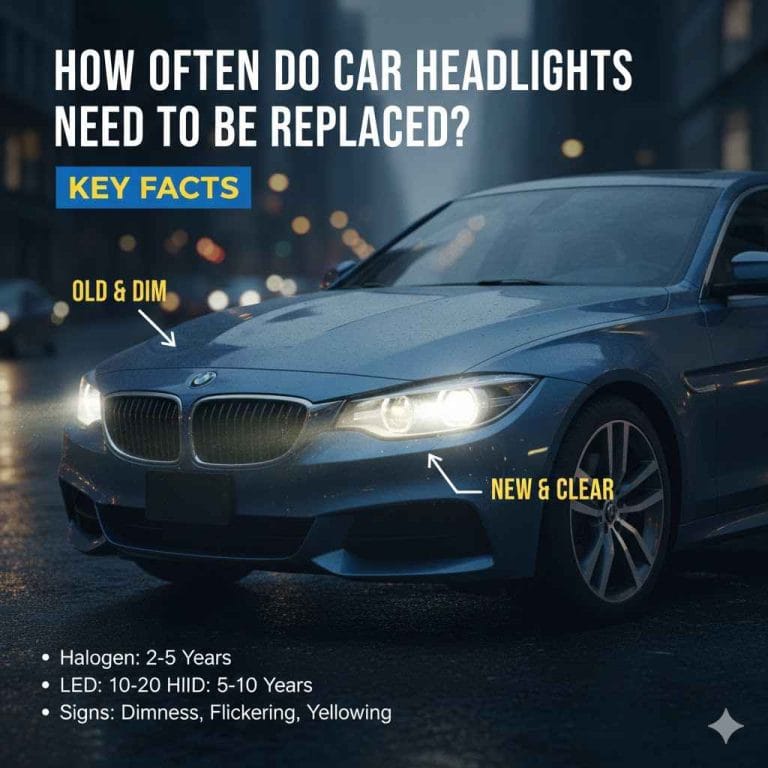
- Dimming Lights: Your headlights and interior lights may look much dimmer than usual. They might also flicker when you try to start the car.
- Slow Engine Crank: You might hear the engine trying to turn over, but it sounds slow, lazy, or strained. It sounds like a “rur-rur-rur” instead of a quick, clean start.
- Clicking Noise: A series of rapid clicks when you turn the key is a classic sign of a weak battery. This is the starter solenoid engaging and disengaging because it doesn’t have enough power to turn the engine.
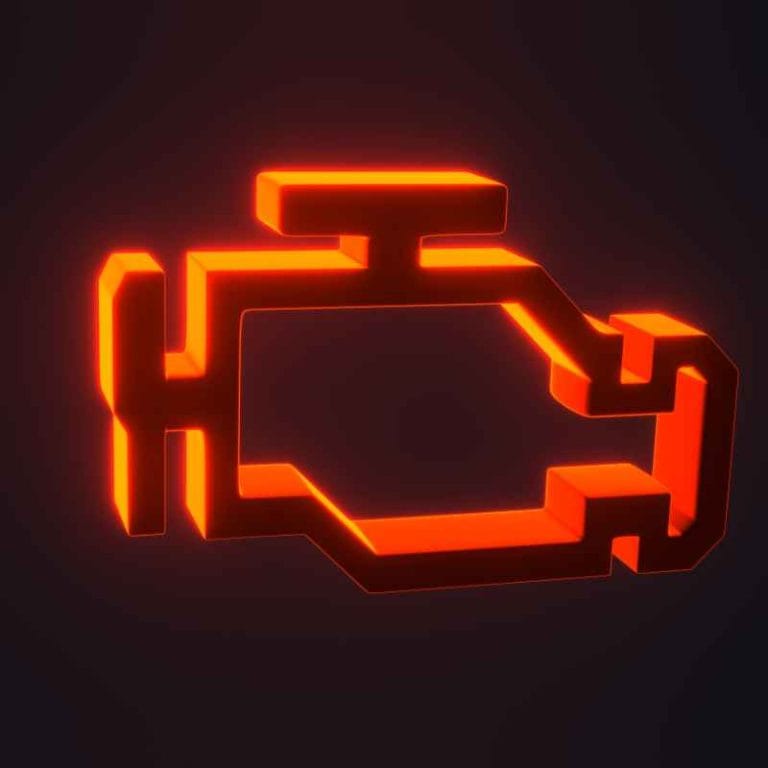
- Warning Lights: Your battery or check engine light might pop up on the dashboard.
- Electrical Issues: The radio might not turn on, or the power windows may move very slowly.
Signs of a Completely Dead Battery
A completely dead battery is much more straightforward—nothing works. It has no power to give.
- No Lights, No Sound: When you turn the key, there is absolute silence. No clicks, no cranking, nothing.
- Dark Dashboard: The entire dashboard remains dark. No warning lights, no odometer, no clock.
- Key Fob Fails: Your remote keyless entry will not work to lock or unlock the doors.
- No Electronics: Nothing electrical in the car will function, from the horn to the radio.
The “Key Danger”: The False Security of Working Lights
Here is the most important takeaway: the biggest danger of seeing your lights turn on with a dead battery is the false sense of security it gives you. It’s easy to think, “Well, the lights are on, so the battery must be okay. The problem must be something else, maybe something more serious and expensive.”
This simple misunderstanding can lead to a lot of trouble. You might ignore the early warning signs of a failing battery, like a slow start, because the dome light still works perfectly. You might even manage to get the car started and drive off, thinking the issue is resolved.
But here’s a common scenario: you drive to the store, turn off your car, and when you come back out, it won’t start again. The short trip wasn’t long enough for the alternator to recharge the weak battery. Now, you’re stranded in a parking lot. This is the hidden danger—a weak battery that gives just enough power to fool you into thinking everything is fine, right before it leaves you stuck.
Always treat a car that struggles to start as a serious warning, even if the lights seem to work fine. It’s a clear signal that your battery, or charging system, needs immediate attention.
What to Do When Your Lights Turn On But Your Car Won’t Start: A 5-Step Guide
Okay, so you’re in this situation. Your lights are on, but the engine is silent. Don’t panic! Here is a simple, step-by-step guide to figure out what’s wrong and what to do next.
Step 1: Stop and Observe the Signs
Before you do anything else, take a moment to listen and look. What exactly happens when you turn the key?
- A fast clicking sound? This almost certainly means you have a weak battery.
- A single, loud click? This could point to a bad starter motor.
- A slow, sluggish crank? This is another strong sign of a weak battery.
- Complete silence? Your battery could be completely dead, or there could be an issue with your ignition switch or a main fuse.
Also, check your headlights. Turn them on. Are they bright or dim? If they are very dim and get even dimmer when you try to start the car, your battery is the likely culprit.
Step 2: Try a Jump-Start
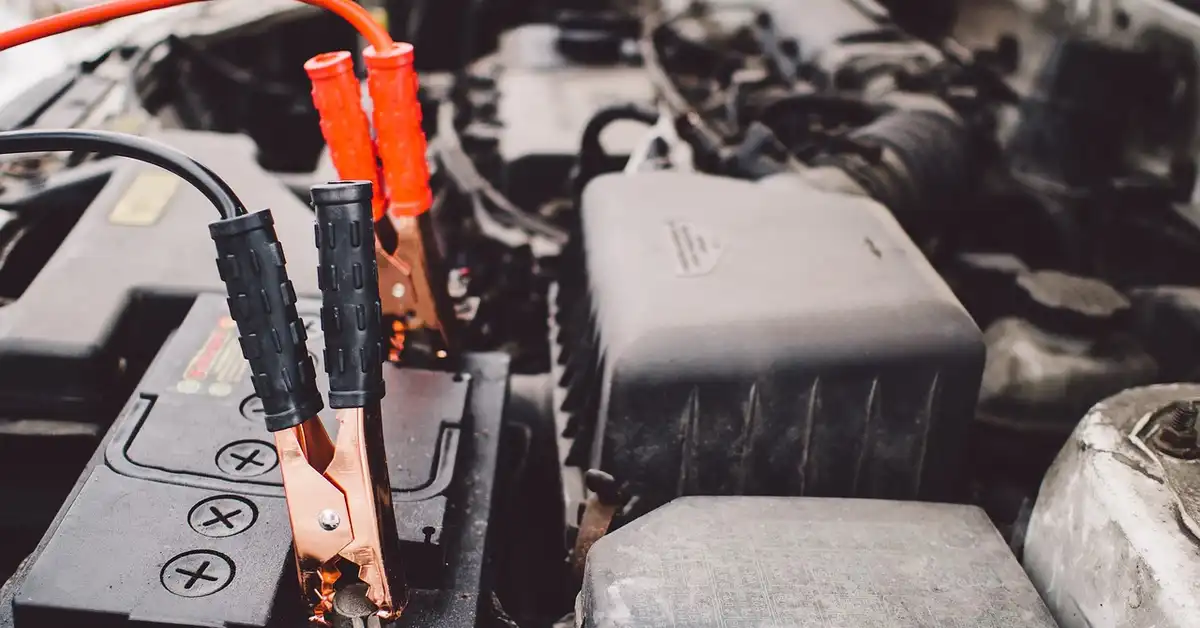
If all signs point to a weak battery, the next logical step is to try a jump-start. This is a basic skill every driver should know. You’ll need a set of jumper cables and another vehicle with a healthy battery. If you are unsure about the process, it is always safer to consult your owner’s manual or look up a reliable guide. The National Highway Traffic Safety Administration (NHTSA) offers excellent safety tips for all drivers.
If the jump-start works and your car starts right up, you’ve confirmed the battery was the issue. Don’t turn the car off right away! Let it run for at least 20-30 minutes to allow the alternator to put some charge back into the battery. Drive it around if you can.
Step 3: Check Your Battery Terminals
Sometimes, the battery is fine, but the connection is bad. Pop your hood and take a look at the battery terminals (the positive and negative posts where the cables connect). Are they covered in a fuzzy, white or bluish-green substance? That’s corrosion, and it can block the flow of electricity.
If you see corrosion, cleaning the terminals might solve your problem.
- Safety First: Always disconnect the negative (black) terminal first, then the positive (red) one. Wear gloves and eye protection.
- Cleaning Solution: You can use a mixture of baking soda and water to create a paste. Apply it to the terminals and scrub with an old toothbrush or a wire brush.
- Reconnect: Once clean, reconnect the positive (red) terminal first, then the negative (black) one. Make sure the connections are tight.
A good connection is crucial for your car’s electrical system to work properly.
Step 4: Consider the Alternator
If you jump-start your car and it dies again shortly after you disconnect the cables, you may have a problem with your alternator. The alternator is responsible for recharging your battery while the engine is running. If it fails, your battery will drain and eventually die, no matter how new it is.
Signs of a bad alternator include:
- Headlights that dim while you are driving, especially when you use other electronics.
- A battery warning light that stays on while the engine is running.
- A whining or grinding noise coming from the engine.
If you suspect the alternator, it’s best to have it tested by a professional mechanic.
Step 5: Test Your Battery’s Health
Even if a jump-start works, a weak battery may not be able to hold a charge for long. Most car batteries last between 3 to 5 years. If yours is in that age range, it might be time for a replacement. You can test its health in a couple of ways:
Use a Multimeter: If you’re comfortable with basic tools, you can use a multimeter to check the battery’s voltage. A healthy, fully charged car battery should read around 12.6 volts or higher when the car is off. If it reads below 12.4 volts, it’s low. If it’s below 12 volts, it’s considered discharged.
Visit an Auto Parts Store: Most major auto parts stores will test your battery for free. They have professional tools that can check not just the voltage, but also its ability to hold a charge under load. This is the most reliable way to know if your battery needs to be replaced.
Beyond the Battery: Other Reasons Your Car Won’t Start
While a weak battery is the most common reason a car won’t start, it’s not the only one. If you’ve checked your battery and it’s healthy, here are a few other potential culprits.
| Possible Issue | Common Symptom | What You Can Do |
|---|---|---|
| Bad Starter Motor | A single, loud click when you turn the key, but the engine doesn’t crank. | The starter might need to be replaced. This usually requires a trip to the mechanic. |
| Failing Alternator | The car starts after a jump but dies quickly. The battery light stays on while driving. | Have your charging system tested by a professional. |
| Clogged Fuel Filter | The engine cranks normally but won’t start or “catch.” It feels like it’s not getting gas. | Check your fuel gauge. You can try listening for the hum of the fuel pump when you turn the key to the “on” position. If it’s clogged, it needs replacing. |
| Bad Ignition Switch | Turning the key does nothing—no lights on the dash, no crank, no sound. | This is a more complex electrical issue that a mechanic should diagnose. |
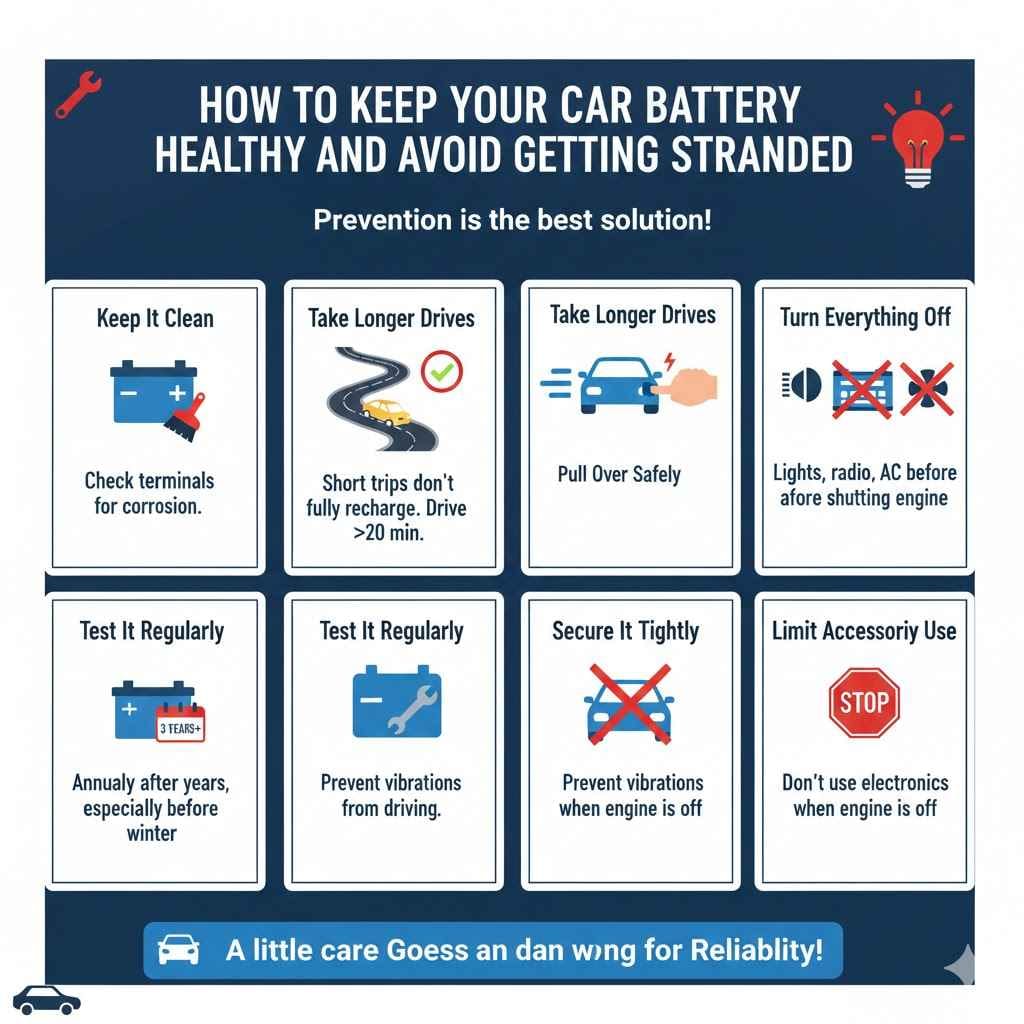
How to Keep Your Car Battery Healthy and Avoid Getting Stranded
The best way to deal with a dead battery is to prevent it from happening in the first place. With a little care, you can extend the life of your battery and avoid that sinking feeling of being stuck.
- Keep It Clean: Regularly check your battery terminals for corrosion. A clean connection ensures your battery charges efficiently.
- Take Longer Drives: Short trips of less than 20 minutes don’t give your alternator enough time to fully recharge your battery. Try to take a longer drive at least once a week.
- Turn Everything Off: Before you shut off your engine, make sure your headlights, interior lights, radio, and air conditioning are all turned off. This prevents unnecessary drain.
- Test It Regularly: After your battery is three years old, have it tested once a year, especially before winter. Cold weather is very hard on batteries.
- Secure It Tightly: Make sure your battery is held down securely in its tray. Vibrations from driving can damage a battery and shorten its life.
- Limit Accessory Use: Avoid using electronics like the radio for a long time when the engine is off. This is a quick way to drain your battery.
Conclusion: Your Confidence is the Best Tool
So, can your car lights turn on when the battery is dead? Absolutely. But now you know that those lights aren’t telling you the whole story. They only show that there’s a tiny bit of power left—enough for a sip, but not for the big gulp needed to start your engine.
The real danger is being lulled into a false sense of security, ignoring the warning signs until you’re stranded. By understanding the difference between a weak and a dead battery, knowing how to spot the clues, and having a clear plan of action, you can face this common problem with confidence.
Car care doesn’t have to be intimidating. Taking the time to learn these basics empowers you as a driver, saves you from stress, and helps you keep your car running reliably. The next time your car won’t start, you’ll know exactly what to look for and what to do.
Frequently Asked Questions (FAQ)
Why does my car make a clicking sound but won’t start?
A rapid clicking sound is the most common symptom of a weak or dying battery. The sound comes from the starter solenoid, which is a switch that sends power to the starter motor. It needs a lot of electricity to work. When the battery is weak, it sends just enough power to engage the solenoid (the “click”), but not enough to turn the engine, so it immediately disengages. This process repeats quickly, causing the rapid clicking.
Can a car battery die suddenly without warning?
Yes, a battery can fail suddenly, but it’s not very common. Usually, a battery gives warning signs before it dies completely, such as slow engine cranking, dimming lights, or the need for a jump-start. A sudden failure can happen if there’s an internal short in the battery or if a major electrical component like the alternator fails abruptly.
How long should a car battery last?
On average, a car battery lasts between 3 to 5 years. However, this can vary a lot depending on factors like your climate (extreme heat is very damaging), your driving habits (frequent short trips shorten its lifespan), and the quality of the battery itself.
Will my car alarm go off if the battery is dying?
It can. As the battery’s voltage drops, it can cause the car’s computer systems to act erratically. Some car alarms are designed to go off when they detect a sudden drop in power, as this could signal a theft attempt (like someone disconnecting the battery). So, if your alarm starts going off for no reason, it’s a good idea to get your battery checked.
Can I just recharge a completely dead battery?
Sometimes, but not always. If a battery is just discharged (for example, you left the lights on), it can often be fully recharged with a proper battery charger. However, if the battery is old or has been deeply discharged for a long period, it may be damaged and unable to hold a charge again. In that case, it will need to be replaced.
If I jump-start my car, is the problem solved?
Not necessarily. A jump-start is a temporary fix to get your engine running. It confirms that the battery was the immediate problem, but it doesn’t tell you why the battery was dead. It could be an old battery that no longer holds a charge, a faulty alternator that isn’t recharging it, or a parasitic drain that’s using power when the car is off. After a jump-start, you should always have your battery and charging system tested to find the root cause.
Does leaving a small light on, like a map light, really drain the battery?
Yes, it absolutely can. While a single small light draws very little power, it will slowly but surely drain your battery if left on overnight or for a few days. A healthy battery might survive a night with a map light on, but an older, weaker battery could easily be drained to the point where it can’t start the car.
Products related to this article
Sponsored / affiliate links. As an Amazon Associate I earn from qualifying purchases. I may earn additional commission from eligible campaigns.