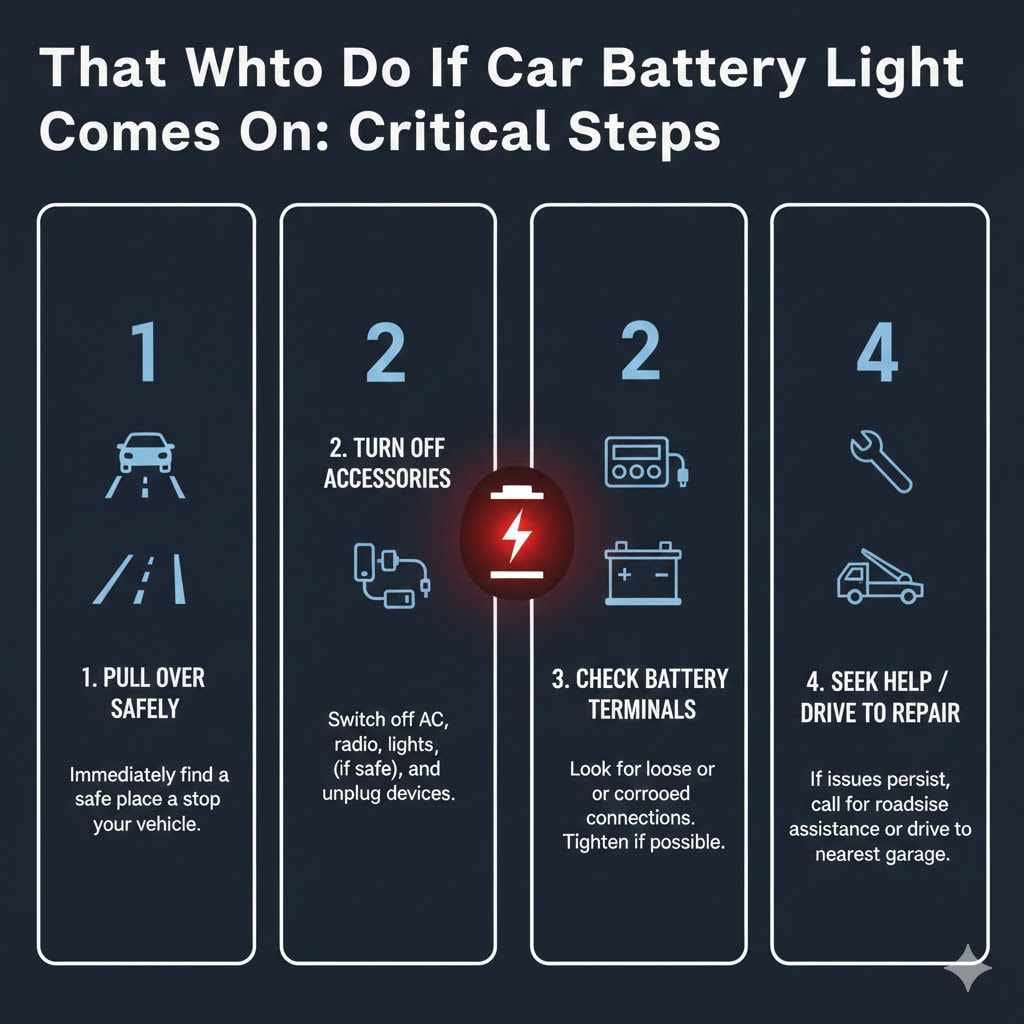
What To Do If Car Battery Light Comes On: Critical Steps
If your car battery light comes on, immediately turn off non-essential electronics like the radio and A/C to conserve power. Your car is running on the battery alone, so find a safe place to pull over as soon as possible. The light signals a charging system problem, often with the alternator or serpentine belt, not just the battery.
Seeing a warning light pop up on your dashboard is always a little stressful. That little red battery icon can make your heart sink. You might think your car is about to die right there on the road. But don’t worry! This is a common issue, and you can handle it.
This light is your car’s way of telling you something needs attention in its electrical system. In this guide, I’ll walk you through exactly what that light means and the simple, safe steps you can take to solve the problem. Let’s get you back on the road with confidence.
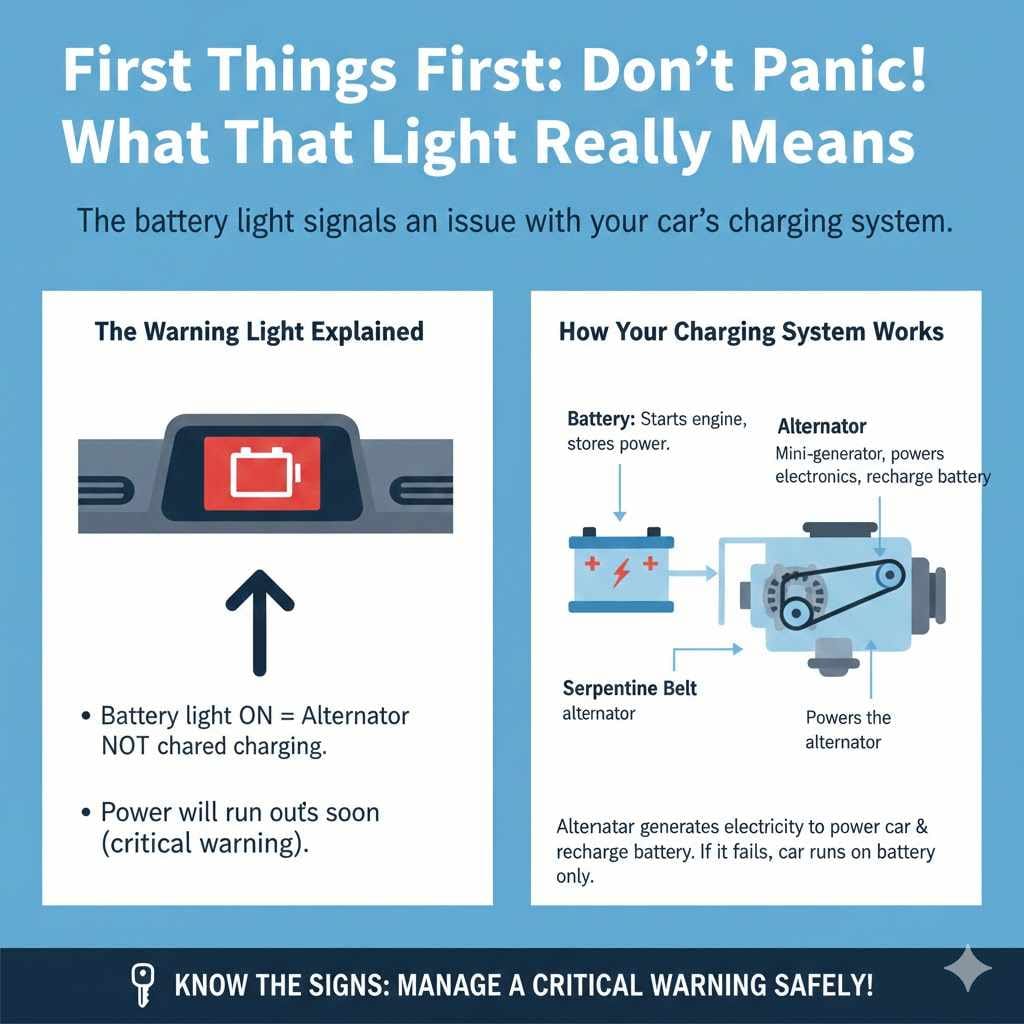
First Things First: Don’t Panic! What That Light Really Means
Before we dive into the steps, let’s clear up a common misunderstanding. The battery-shaped light on your dashboard doesn’t usually mean your battery is the main problem. Instead, it signals an issue with your car’s charging system. Think of it like a phone that’s plugged in but not charging. The phone still works for a while, but it will eventually run out of power.

Hemei9319
Wireless LED Lights for Car, Rechargeable Interior…
- ✨【Helpful Tips for Best Use】Before installation, thoroughly clean and dry the mounting surface for stronger adhesion. Before using…
- ✨【WIRELESS LED LIGHTS FOR CAR – NO WIRING NEEDED】 Upgrade your vehicle without messy wires. Each compact rechargeable light featur…
- ✨【8 COLORS, 10 MODES & 3 BRIGHTNESS LEVELS】 Customize your car interior lights with 8 colors, 10 lighting modes and 3 adjustable b…
As an Amazon Associate I earn from qualifying purchases.
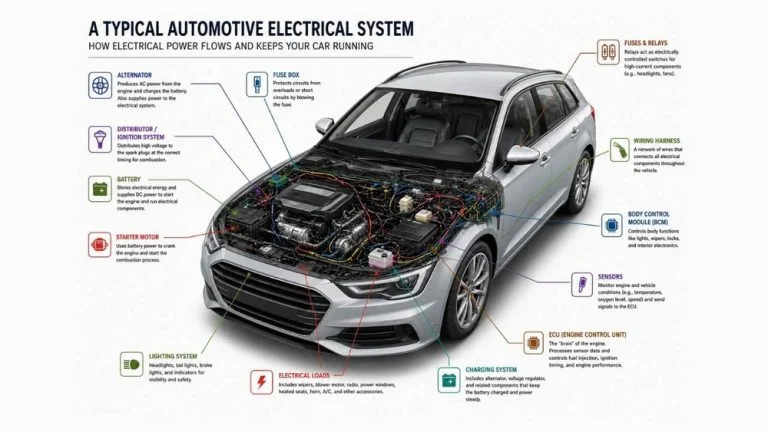
Your car is the same way. The battery provides the initial jolt of electricity to start the engine. Once the engine is running, the alternator takes over. The alternator is a mini generator, powered by a rubber belt called the serpentine belt. It generates electricity to power your lights, radio, and all other electronics. It also recharges your battery as you drive.
When the battery light comes on, your car is trying to tell you that the alternator is no longer charging the battery. The car is now running entirely on the battery’s stored power, which will only last for a short time. This is why it’s a critical warning, but it’s one you can manage calmly and safely.
Step 1: Safely Assess Your Situation (While Driving)
The moment you see the light, your first job is to stay calm and assess the situation without making any sudden moves. Your car will likely continue to run for a little while, giving you time to find a safe spot.
While you are still driving, pay attention to how your car is behaving:
- Check Your Gauges: Look at your dashboard. Are any other warning lights on? Is the temperature gauge climbing? An overheating engine combined with a battery light often points to a broken serpentine belt.
- Listen for Strange Noises: Do you hear a whining or grinding sound coming from under the hood? A high-pitched whine that changes with engine speed could be a sign of a failing alternator. A slapping or screeching sound could be a broken belt.
- Notice Any Performance Issues: Are your headlights starting to dim? Is your radio cutting out? Are your power windows moving very slowly? These are all signs that your car’s electrical system is losing power because the alternator isn’t working.
Your goal is to gather information while focusing on the most important task: driving safely. Start looking for a safe place to pull over, like a parking lot, a quiet side street, or the shoulder of the road, well away from traffic.
Step 2: Turn Off All Unnecessary Electronics
Since your car is running only on battery power, you need to conserve every bit of it. Think of it as putting your phone on low-power mode. This simple step can give you a few extra minutes of driving time to get to a safe location.
Turn off everything that uses electricity that isn’t essential for safety:
- The radio or stereo system
- The air conditioning or heater fan
- Heated seats or steering wheel
- Any devices plugged into USB or 12V outlets (like your phone charger)
- Interior dome lights
Do not turn off your headlights if it’s dark or your windshield wipers if it’s raining. Safety comes first. However, if you are driving during the day in clear weather, you can turn off your headlights to save significant power. This step reduces the electrical load on the battery, maximizing the time you have before it runs out of juice completely.
Step 3: Pull Over Safely and Shut Off the Engine
Continuing to drive with the battery light on is a gamble. You don’t know exactly how much power is left in your battery. It could be minutes or it could be longer, but it’s not a risk worth taking. Finding yourself stranded in the middle of a busy road is dangerous and much more stressful.
As soon as you find a safe spot, pull over completely. Put your car in park, engage the parking brake, and turn on your hazard lights (flashers) to make your vehicle more visible to other drivers. Once you are safely parked, turn off the engine.
One important thing to remember: if you turn the engine off, it may not start again. The battery might not have enough power left to crank the engine. This is why it’s so important to be in a safe, final location before you turn the key off.
Step 4: Perform a Quick Visual Inspection (If You Feel Safe)
If you’re comfortable and in a safe place, you can do a quick check under the hood. This can give you valuable clues about the problem. Before you start, make sure the engine is off and has had a few minutes to cool down, as many parts will be very hot.
You don’t need to be a mechanic to do this. You’re just looking for obvious issues.
Check the Battery Terminals
Open the hood and locate the battery. It’s a rectangular box, usually with red and black plastic covers on top. Look at the metal posts where the cables connect. These are the terminals.
- Look for Corrosion: Do you see a white, blue, or greenish fuzzy substance crusted around the terminals? This is corrosion, and it can prevent a good electrical connection.
- Check for Loose Cables: Gently and carefully try to wiggle the cables connected to the terminals. They should be tight and not move at all. A loose cable can interrupt the flow of electricity and trigger the battery light.
Inspect the Serpentine Belt
The serpentine belt is a long, black rubber belt that snakes around several pulleys at the front of your engine. It’s a critical component that powers the alternator, water pump, and power steering pump. An issue here is a very common cause of the battery light.
- Is the Belt There? First, just look to see if the belt is still in place. Sometimes they can snap and fly off completely. If it’s missing, you’ve found your problem.
- Is it Damaged? If the belt is there, look for signs of heavy wear and tear. Do you see cracks, fraying along the edges, or shiny, glazed spots? A worn-out belt can slip, failing to turn the alternator properly.
Knowing how an alternator works can help you understand why this belt is so important. The U.S. Department of Energy provides a simple explanation of how this component generates the power your car needs. A broken belt means the alternator stops spinning, and your car immediately starts losing power.
Step 5: Try to Restart the Car
This step is a diagnostic test. What happens when you try to restart the car tells you a lot about the state of your battery and charging system.
- If the car starts right up: This is good news, but you’re not out of the woods. It likely means the alternator is failing but is still producing a tiny bit of charge, or there’s an intermittent wiring issue. Do not assume the problem is fixed. Your next move should be to drive directly to the nearest auto repair shop or auto parts store. Don’t go home or run errands.
- If the car makes a rapid clicking sound but doesn’t start: This is the classic sign of a dead battery. The clicking is the sound of the starter trying to engage but not having enough power to turn the engine.
- If the car does nothing at all (no click, no lights): The battery is completely drained.
In the last two scenarios, you will not be able to drive the car. You will need a jump-start or a tow.
Common Causes of the Battery Light: A Simple Breakdown
Several different parts can fail and cause your battery light to turn on. Understanding these can help you talk to a mechanic and know what to expect. Here is a table breaking down the most common culprits.
| Potential Problem | Common Symptoms | What It Means |
|---|---|---|
| Failing Alternator | Dimming headlights, whining noise from engine, slow electronics, car stalls while driving. | The alternator is worn out and can no longer generate enough electricity to power the car and charge the battery. This is the most common cause. |
| Bad Battery | Car is slow to start, corrosion on terminals, battery is over 3-5 years old. | The battery can no longer hold a proper charge. Even with a good alternator, a bad battery can’t store the power, causing electrical system issues. |
| Worn or Broken Serpentine Belt | Loud squealing or screeching noise, loss of power steering, engine overheating. | The belt that spins the alternator is broken or slipping. The alternator isn’t turning, so it’s not producing any power. |
| Loose or Corroded Battery Cables | Trouble starting, flickering lights, visible fuzzy buildup on battery terminals. | The connection to the battery is poor. Electricity can’t flow properly from the alternator to the battery or from the battery to the car. |
| Faulty Wiring or Blown Fuse | Battery light comes on and off randomly, other electrical problems. | A damaged wire or a blown fuse is interrupting the electrical circuit, preventing the system from charging correctly. |
How to Tell If It’s the Battery or the Alternator
This is the big question on every driver’s mind. A battery is relatively cheap to replace, while an alternator is more expensive. Luckily, there’s a simple test you can perform if you can get a jump-start.
The Jump-Start Test:
- Safely connect jumper cables from a running car to your car, following the proper procedure (red to positive, black to negative/ground).
- Start your car. It should turn on with the help of the other car’s battery.
- Let it run for a minute while still connected.
- Carefully disconnect the jumper cables.
Now, watch what your car does.
- If your car dies immediately after disconnecting the cables: The problem is almost certainly your alternator. The car was running on power from the other vehicle. As soon as that power source was removed, your car’s faulty alternator couldn’t provide any power on its own, so the engine shut down.
- If your car stays running after disconnecting the cables: This suggests the alternator is working, but the battery is the problem. The battery is likely old or damaged and can’t hold a charge on its own. The alternator is keeping the car running now, but the battery will be dead again the next time you try to start it.
Here is another table to help you quickly diagnose the issue based on common symptoms.
| Symptom | Likely Cause |
|---|---|
| Car needs a jump but dies as soon as cables are removed. | Bad Alternator |
| Car needs a jump but stays running afterward. | Bad Battery |
| Headlights and interior lights are dim while driving. | Bad Alternator |
| Engine cranks very slowly when you try to start it. | Weak Battery |
| A loud whining sound comes from the engine. | Bad Alternator |
What to Do Next: Your Action Plan
Once you’ve safely pulled over and done a quick diagnosis, your next steps depend on your situation.
If You’re Stranded on the Road
If your car won’t start again, don’t try to flag down strangers. Stay in your vehicle with your hazard lights on and call for professional help.
- Roadside Assistance: If you have a service like AAA, your insurance provider, or a new car warranty, call them. They can send someone to test your battery, give you a jump-start, or tow your vehicle to a repair shop.
- Tow Truck: If you don’t have roadside assistance, you will need to call a local towing company to take your car to a mechanic.
If You Made It to a Safe Place (Home or a Parking Lot)
Your best bet is to get your charging system professionally tested. This is often a free service that can save you from buying parts you don’t need. Most national auto parts stores (like AutoZone, Advance Auto Parts, or O’Reilly Auto Parts) offer free battery and alternator testing. They have a handheld device they can hook up to your car to tell you the exact health of your battery and the output of your alternator.
Getting a professional diagnosis is crucial. Automotive technology programs, like the one at Lane Community College, teach students the importance of proper testing before replacing parts. You should adopt the same mindset. Don’t just guess—test!
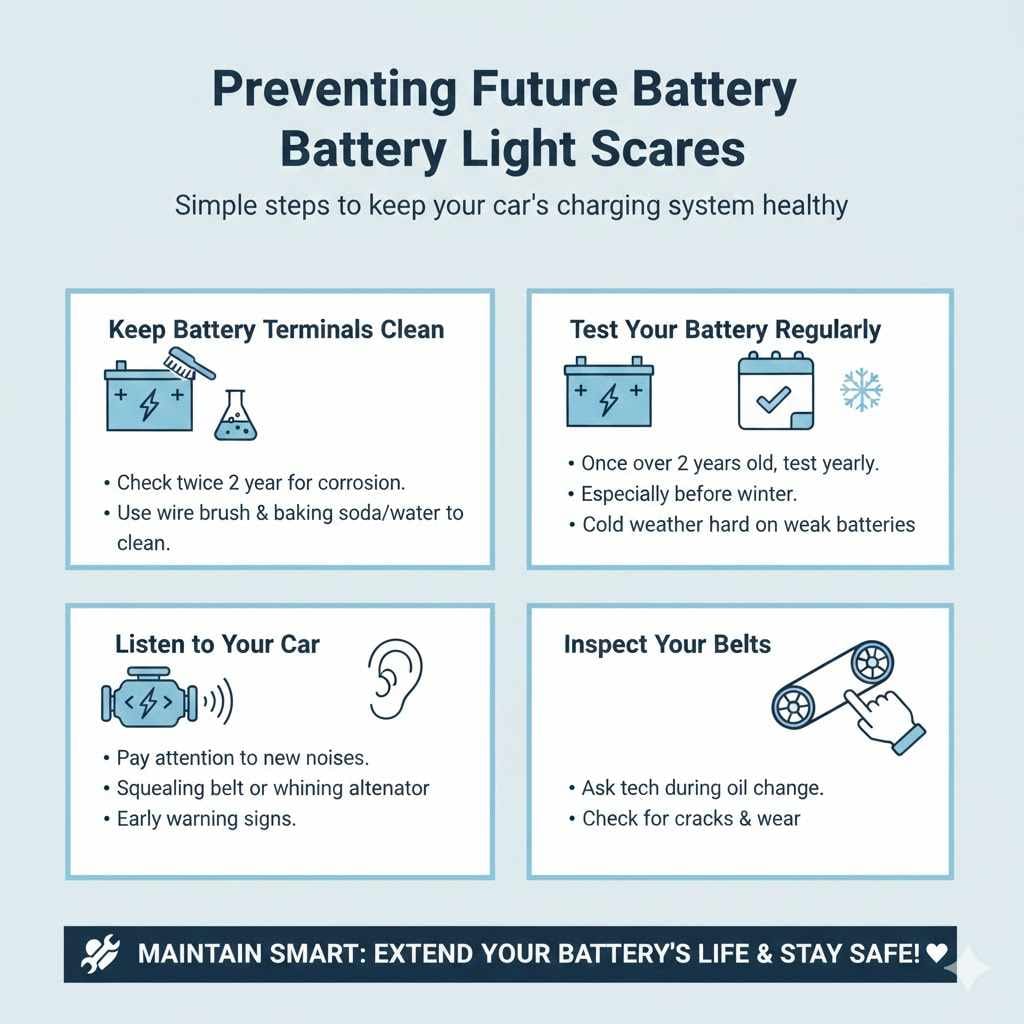
Preventing Future Battery Light Scares
While you can’t prevent every car problem, you can take simple steps to keep your charging system healthy and reduce the chances of seeing that scary red light again.
- Keep Battery Terminals Clean: About twice a year, check your battery terminals for corrosion. If you see any, you can clean it off with a wire brush and a mixture of baking soda and water.
- Test Your Battery Regularly: Once your battery is over three years old, have it tested once a year, especially before winter. Cold weather is very hard on weak batteries.
- Listen to Your Car: Pay attention to any new noises. A squealing belt or a whining alternator is an early warning sign that something is wrong.
- Inspect Your Belts: When you get your oil changed, ask the technician to take a quick look at the serpentine belt to check for cracks or wear.
Conclusion: You’ve Got This!
Seeing the battery light illuminate your dashboard can be alarming, but it’s not a reason to panic. It’s a signal from your car that your charging system needs help. By following these steps—assessing the situation, conserving power, pulling over safely, and performing a quick inspection—you can handle the event calmly and effectively.
Remember, the light is most often a warning about your alternator or a related part, not just the battery itself. Whether you need a simple battery terminal cleaning or a new alternator, the key is to stop driving and diagnose the problem before you get stranded. With a little bit of knowledge, you can face that little red light with confidence and make the right decision to get your car, and your life, back on track.
Frequently Asked Questions (FAQ)
1. How long can I drive with the battery light on?
It’s impossible to say for sure. It could be 20-30 minutes or it could be less than five. It depends on the age of your battery, the electrical load, and the exact problem. The best and safest answer is to drive only as far as you need to get to a safe place to pull over immediately.
2. Does the battery light always mean the battery is bad?
No, quite the opposite. The light usually indicates that the battery is not being charged. This is most often caused by a failing alternator, a broken serpentine belt, or a bad connection, rather than the battery itself.
3. Can a new battery fix the battery light?
Only if the old battery was the true cause of the problem, which is rare. If you install a new battery but have a bad alternator, the battery light will stay on, and the new battery will quickly drain and die, leaving you stranded again.
4. Why did my battery light come on and then go off?
This often points to an intermittent problem. It could be a loose battery cable, a serpentine belt that is just starting to slip, or an alternator that is in the very early stages of failing. Even if the light goes out, you should get your system checked as soon as possible, as the problem will likely return and get worse.
5. How much does it cost to fix a battery light problem?
The cost varies widely depending on the cause. A simple fix like cleaning corroded terminals or tightening a loose cable might cost very little. Replacing a battery typically costs $150-$300. Replacing an alternator is more expensive, often ranging from $400 to over $1,000, depending on your vehicle model.
6. Is it safe to jump-start a car if the battery light is on?
Yes, it is generally safe to jump-start the car. However, be aware of the “jump-start test” mentioned earlier. If the car dies as soon as you remove the jumper cables, the alternator is bad, and the car is not drivable.
7. Can cold weather cause the battery light to come on?
Cold weather puts a lot of strain on a car’s battery and charging system. While it doesn’t directly cause the light to come on, it can expose a pre-existing weakness. A battery or alternator that was already failing might finally give out during a cold snap, causing the light to appear. See also what does tpms mean on your car light simple answer.
Related pick: Check today's price on Amazon
Products related to this article
Sponsored / affiliate links. As an Amazon Associate I earn from qualifying purchases. I may earn additional commission from eligible campaigns.