Can a Bad Water Pump Cause Weak Cabin Heat in Cold Weather?
A bad water pump can cause weak cabin heat in cold weather, but only when coolant flow drops enough that the heater core never gets hot. If cabin heat changes with engine speed, or the engine also runs cold or hot, inspect coolant flow. Ignore it and you can keep buying parts while the real fault stays hidden. This guide shows how to separate water-pump failure from thermostat faults, air pockets, low coolant, and heater-core restriction.
Tell a bad pump from other common heat causes


Cabin heat depends on hot coolant moving through the heater core and enough airflow crossing that core. If flow is weak, the vents may blow air that never reaches normal winter heat, especially at idle or right after startup. Start by sorting a true coolant-flow problem from a control problem inside the dash.
What weak heat usually means before parts fail
Weak heat is often a clue, not a verdict. Low coolant, trapped air, a thermostat that stays open too long, a clogged heater core, a stuck heater control valve, or a blend door fault can all mimic a bad pump. A pump fault is more likely when heat changes with engine speed, the engine overheats, or a pump leak or bearing noise is present.
Suppose the gauge stays normal on the highway but the vents go cool at stoplights. That pattern points first to low flow at low engine speed, trapped air, or a control valve that is not opening fully, not straight to a failed water pump.
📊 One documented heat-pump test case survived temperatures as low as minus 29° F. Source: Consumerreports.
Can a bad water pump cause weak cabin heat?
Yes. A water pump that cannot circulate enough coolant will reduce flow through the heater core, so the core never receives steady hot coolant. That can happen with impeller wear, a loose impeller, a leaking shaft seal, bearing drag, a belt-drive problem, or an electric auxiliary pump that has failed or slowed down.
How reduced circulation lowers heater-core flow
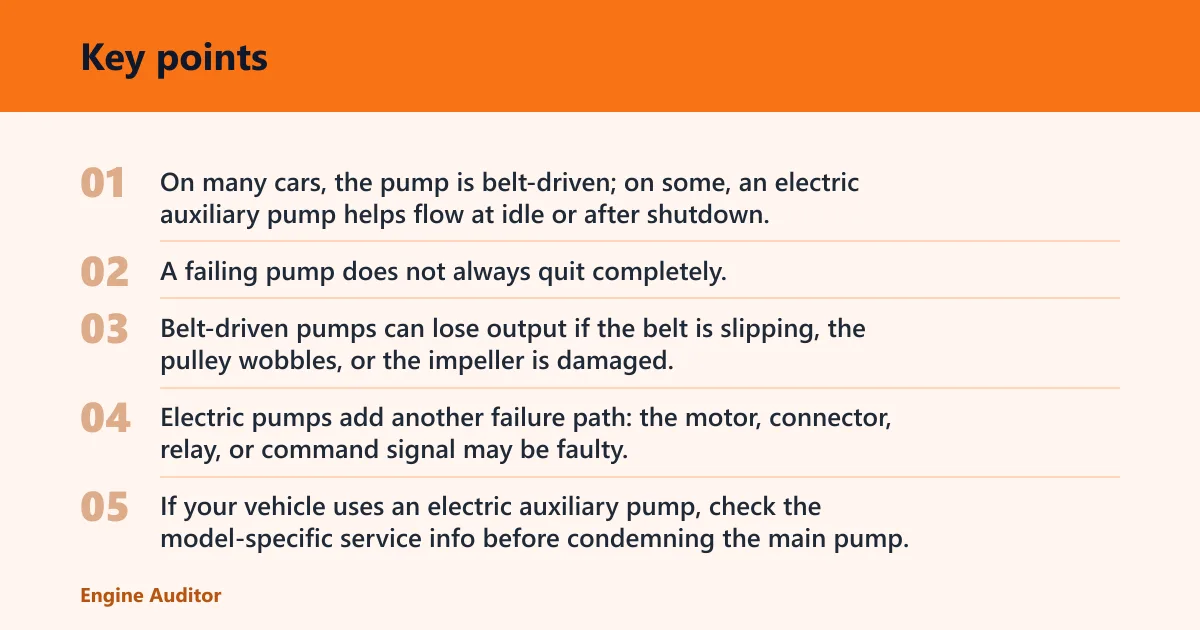
The heater core is a small radiator. If the pump cannot move coolant through it, the inlet hose may get hot while the outlet hose stays much cooler than expected, and cabin temperature drops first at idle or with the blower on high. On many cars, the pump is belt-driven; on some, an electric auxiliary pump helps flow at idle or after shutdown.
A failing pump does not always quit completely. Partial failure matters. A worn impeller can move less coolant than normal, and a leaking or noisy bearing can be a warning before the pump stops moving coolant at all.
Belt-driven and electric pump failure modes
Belt-driven pumps can lose output if the belt is slipping, the pulley wobbles, or the impeller is damaged. Electric pumps add another failure path: the motor, connector, relay, or command signal may be faulty. If your vehicle uses an electric auxiliary pump, check the model-specific service info before condemning the main pump.
Cabin heat decision table
| Symptom pattern | Most likely cause | First 2 tests | Likely next repair | Red-flag stop-driving condition |
|---|---|---|---|---|
| Weak heat at idle, improves with revs | Low circulation from pump wear, trapped air, or a heater control valve that is not opening fully | Check coolant level cold; compare heater hose temperatures with an infrared thermometer at idle and at 1,500 to 2,000 rpm | Bleed the system by the factory procedure, then inspect the pump and control valve | Temperature gauge climbs above normal or coolant pushes out of the reservoir |
| Weak heat only at highway speed | Blend door fault, thermostat running cool, or a heater core that is partially restricted | Read OBD-II coolant temperature; compare left-right vent temperature and heater hose temperatures | Repair the thermostat, heater core, or blend door actuator based on the test result | Gauge rises in traffic or warning lights appear |
| Weak heat plus overheating | Serious coolant-flow problem: low coolant, failing pump, stuck-closed thermostat, or major blockage | Check for leaks and coolant level; compare upper and lower hose temperature and scan coolant temperature | Repair the fault before further driving; pump replacement is common if the pump leaks, wobbles, or shows poor flow | Stop if the engine overheats, loses coolant, or the heater suddenly goes cold after being hot |
| Weak heat with gurgling or air noise | Air pocket, low coolant, or a leak that lets air into the system | Inspect the reservoir level cold; listen for gurgling at the dash or firewall while the engine warms | Find and fix the leak, then refill and bleed by the factory procedure | Stop if the coolant level keeps dropping or the engine runs hot |
Why does my heater get cold at idle but warm when driving?
That pattern usually means flow is marginal at low engine speed. The pump may be weak, the system may have air, the heater control valve may not open fully, or the heater core may be partly restricted. If the heat returns with higher rpm, the circulation path is still working some of the time.
Pump output versus engine speed
A worn pump often shows its weakness first at idle. As engine speed rises, coolant flow increases and the heater core gets hotter for a while. That is why a speed-related change in cabin heat can be a clue that circulation, not just the HVAC controls, needs attention.
Thermostat, air pocket, and heater-core clues
A thermostat that is stuck open usually makes the engine take too long to warm up and can leave both heater hoses only mildly warm because the engine never reaches normal operating temperature. A stuck-closed thermostat does the opposite: the engine overheats fast while the heater may go hot briefly, then erratic.
Air pockets are different. They can cause gurgling, uneven heat, and sudden hot-cold swings. A partially clogged heater core usually gives one hose much hotter than the other, with weak heat even after the engine is fully warm.
What checks should you do first?
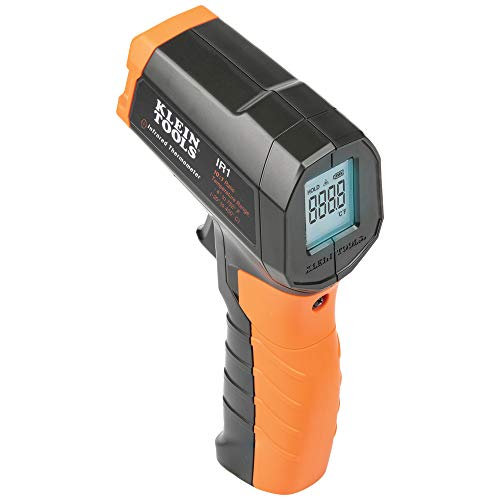
Start with the easiest causes. Check coolant level cold, verify the mix ratio matches the climate, confirm the engine reaches normal operating temperature on OBD-II data, and compare heater-hose temperatures with an infrared thermometer. Those checks can separate a flow problem from an air-mixing problem in minutes.
Coolant level and mix ratio
Check the reservoir when the engine is cold. Low coolant can mimic a failed pump because the pump may move air instead of coolant, and the heater core may never stay full. The coolant mix also matters because too much water weakens freeze protection and heat transfer; use the mix specified for your vehicle, or confirm it in the owner’s manual.
OBD-II coolant-temperature reading
Use scan data to see whether the engine reaches normal operating temperature. If the reading stays low for too long, suspect a thermostat stuck open. If the reading climbs high while cabin heat drops, suspect a circulation problem, major air pocket, or thermostat stuck closed. Fan command data can also help explain why the engine temperature changes at a stop.
Heater-hose temperature check with an infrared thermometer
Measure both heater hoses near the firewall with the engine fully warm. On a healthy system, both hoses should be close in temperature, with a modest difference that varies by model. A heater core that is restricted often shows a large inlet-to-outlet spread, while an air pocket can make both hoses inconsistent or cooler than expected. Use the owner’s manual or service data for the correct bleed procedure.
-
Check coolant cold. Look at the reservoir only when the engine is cold, then confirm the level is between the marks. If the level is low, inspect for leaks before chasing the pump.
-
Scan engine temperature. Read live OBD-II coolant temperature after a normal warm-up. If the engine never reaches normal operating temperature, focus on the thermostat before the pump.
-
Measure heater hoses. Aim the infrared thermometer at both heater hoses where they enter the firewall. A big temperature mismatch suggests flow restriction, air, or a valve problem.
-
Inspect for noise and seepage. Listen near the pump for bearing noise and look for coolant crust or wetness around the weep hole or pulley. Leakage or rough bearing noise makes the pump suspect.
How do I tell if the problem is the water pump, heater core, or thermostat?
Use symptom location and temperature data. A thermostat fault changes engine warm-up time and operating temperature. A heater-core restriction changes the temperature difference across the core. A water pump fault shows up as poor circulation, speed-sensitive heat, bearing noise, leakage, or overheating with weak heat.
Thermostat stuck open or stuck closed
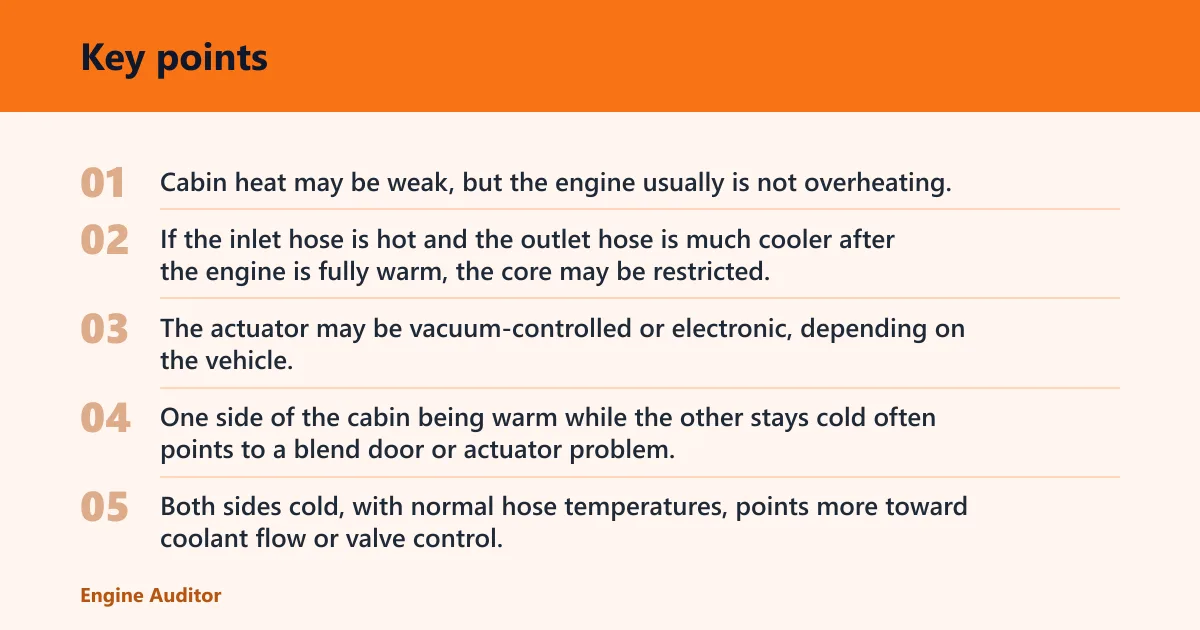
A thermostat stuck open usually gives a slow warm-up and an engine that runs below normal temperature, especially in cold weather. Cabin heat may be weak, but the engine usually is not overheating. A thermostat stuck closed usually causes rapid overheating and can make the heater go erratic or hot only for a short time.
Heater-core restriction and temperature difference
If the inlet hose is hot and the outlet hose is much cooler after the engine is fully warm, the core may be restricted. That difference is the clue. A normal system can have a measurable inlet-outlet split, but it should not leave one hose near ambient while the other is fully hot.
Picture a car that blows lukewarm air at 2,000 rpm, but the dash gauge sits normal and both heater hoses are almost the same temperature. That points away from a clogged core and toward a blend door or HVAC control issue.
Heater control valve and blend-door faults
A heater control valve that is stuck closed blocks hot coolant from the core, so both heater hoses may stay cooler than expected even though the engine is warm. The actuator may be vacuum-controlled or electronic, depending on the vehicle. A blend door fault, by contrast, lets hot coolant reach the core but mixes in too much cold air, so the vents stay cool while the hoses look normal.
One side of the cabin being warm while the other stays cold often points to a blend door or actuator problem. Both sides cold, with normal hose temperatures, points more toward coolant flow or valve control.
When weak heat signals a larger cooling problem
Weak heat becomes more serious when it appears with overheating, coolant loss, or pressure loss. A radiator cap that cannot hold system pressure lowers the boiling point and can push coolant into the overflow bottle or out a leak point. If the engine runs hot and the heater suddenly blows cold, stop treating it as a cabin complaint.
Overheating plus weak cabin heat
That combination means the cooling system is not moving or holding coolant properly. A bad pump, stuck-closed thermostat, large air pocket, or low coolant can all do it. Do not keep driving while the gauge climbs, the warning light comes on, or the heater turns cold after it was hot.
Loss of system pressure or coolant loss
Look for crusty residue around hose joints, the radiator cap area, the pump weep hole, and the reservoir. Pressure loss lets coolant boil sooner and can create intermittent heat. If the level keeps dropping, a leak is part of the problem even if the pump is also worn.
What signs of a failing water pump fit weak heat?
Look for bearing growl or squeal, coolant seepage near the pump, a wobbling pulley, belt dust, and weak heater performance that changes with engine speed. On some vehicles, an electric auxiliary pump fault shows up as weak idle heat but better heat after driving, because the pump is not helping at low speed.
Stop-driving conditions
If the engine overheats, the coolant warning light comes on, steam appears, or the reservoir keeps emptying, stop driving. Have the car towed if the temperature gauge rises past normal and stays there, or if heat vanishes while the engine begins to run hot. A weak heater can be the first warning before a larger failure.
Frequently asked questions
Can a bad water pump cause weak cabin heat in cold weather?
Yes. A bad pump can lower coolant flow enough that the heater core never gets a steady hot supply. That usually shows up with idle-sensitive heat, overheating, or pump noise or leakage. If the engine also runs cold, hot, or erratic, inspect circulation before replacing HVAC parts.
What are the signs of a failing water pump if my car heater is weak?
Common signs include bearing noise, coolant seepage, a loose or wobbling pulley, weak heat that improves with rpm, and overheating. On belt-driven systems, belt problems can look similar. On electric auxiliary pumps, the fault may show up as poor idle heat even though highway heat is better.
Can low coolant or air in the system look like a bad water pump?
Yes. Low coolant can let the pump move air, and an air pocket can stop hot coolant from reaching the heater core. Both problems can cause gurgling, weak heat, and temp swings that look like a pump fault. Check level cold first, then use the factory bleed procedure.
What checks can I do before replacing the water pump?
Check coolant level cold, inspect for leaks, read OBD-II coolant temperature, and compare heater-hose temperatures with an infrared thermometer. Also verify the thermostat, heater control valve, and blend door are working. Follow the factory cooling-system procedure in the owner’s manual or service information.
Products related to this article
Sponsored / affiliate links. As an Amazon Associate I earn from qualifying purchases. I may earn additional commission from eligible campaigns.