Is It Safe to Drive If Your Heater Isn’t Working?
If the heater is out but the windshield stays clear and the engine temperature stays normal, a short drive may be okay; if you cannot defrost the glass or the engine starts overheating, stop driving right away. Ignoring either problem can leave you blind in traffic or damage the engine fast. This guide explains the safety rule, warning signs, and what to do next.
No cabin heat starts as a comfort issue. It turns into a safety problem when the windshield fogs or frosts faster than the defroster can clear it, or when the same fault points to low coolant, a bad thermostat, or overheating. In freezing weather, windshield defogging and engine overheating matter more than cabin temperature.
Is it safe to drive with no heat?


When no cabin heat is only uncomfortable
If the vents blow cold air but the windshield stays clear and the temperature gauge sits in its normal range, the trip may still be manageable for a short distance. That is especially true for a short, direct drive on local roads, where you can reach shelter sooner and keep speeds down.
Cold seats and numb hands are unpleasant. They are not the same as a visibility failure or an overheating engine. If you can safely finish the trip in a few miles, the risk is usually lower than the hassle of stopping in a dangerous location.
When no heat becomes a visibility problem
The windshield defroster is a safety system because it clears fog and frost. If the glass clouds over and stays cloudy, or the frost keeps returning after a few seconds, the car is no longer safe to keep driving. You need clear forward vision more than warm cabin air.
Freezing weather can turn a small heater problem into a fast visibility problem. Moist breath, wet shoes, and snow on clothing can add humidity inside the cabin. If the heater cannot dry the glass, pull over before the view becomes too poor to judge traffic, lane position, and pedestrians.
When no heat points to engine trouble
Heat loss can be a clue, not just a comfort issue. Low coolant, a bad thermostat, or a restricted heater core can reduce heat output, and some of those faults can also lead to engine overheating. If the temperature gauge starts rising, the safe choice changes right away.
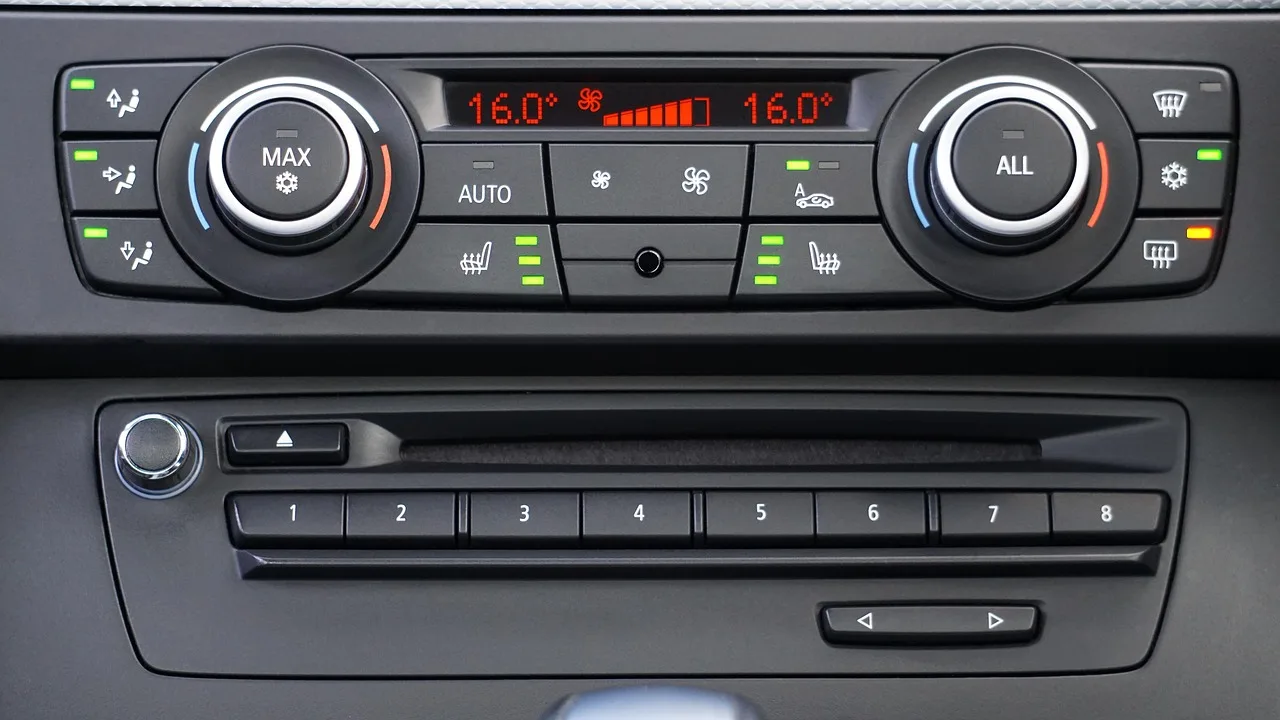
The heater system uses engine heat to warm cabin air. Hot coolant flows through the heater core as the engine reaches normal operating temperature, then the blower motor pushes air across that core and into the vents. If that chain breaks, the result can be no heat, weak heat, or cold air.
Car heater roadside decision table
This table separates a comfort problem from a driving hazard. Use the symptom you can see right now, then match it to the likely fault and the next move.
| Symptom | What it likely means | What to do |
|---|---|---|
| Fogging windshield | Defroster performance is failing or humidity is building faster than the system can clear it | Pull over soon if it keeps returning; stop immediately if you cannot keep the glass clear |
| Temperature gauge rising | Coolant flow or engine cooling is unsafe, often from thermostat trouble, low coolant, or another cooling fault | Stop immediately and shut the engine off |
| No airflow | Blower motor, fuse, relay, resistor, wiring, or a badly clogged cabin air filter may be limiting air movement | Pull over soon if defrost is weak; stop immediately if the windshield cannot stay clear |
| Cold air only | Low coolant, thermostat trouble, a restricted heater core, or a blend-door fault may be blocking heat transfer | Keep driving only if visibility and engine temperature stay normal; otherwise pull over soon |
| Coolant smell | Heater core leak or another coolant leak may be present | Pull over soon; stop immediately if the gauge rises or the windshield fogs badly |
| Overheating warning light | The engine cooling system is in a dangerous state | Stop immediately |
How your heater system fails
Most vehicles use engine heat to warm the cabin. The heater core acts like a small radiator inside the dashboard area, and the blend door directs air through the heater core, the evaporator, or a combination of both. If any link fails, the cabin may get weak heat, uneven heat, or none at all.
Common causes include low coolant, a coolant leak, thermostat trouble, or a restricted heater core. The heater can also fail because of a failed blower motor or a clogged cabin air filter. A blend-door problem or an electrical issue can also stop warm air from reaching the vents.
Low coolant or a coolant leak
Engine coolant must be at a proper level for heat output. When coolant is low, there may not be enough hot fluid to move through the heater core, so cabin heat drops first and engine cooling can suffer later. Check coolant only when the engine is completely cool.
Do not remove a radiator or coolant-reservoir cap from a hot engine. A pressurized cooling system can release scalding coolant or steam. If the heater suddenly turns cold and you later notice the level is low, that points to a leak that needs attention before the next long drive.
Thermostat faults
A thermostat helps the engine reach normal operating temperature. A thermostat stuck open may cause the engine to take too long to warm up, which often means weak cabin heat on cold days. A thermostat stuck closed can restrict coolant flow and cause overheating, which makes the issue urgent.
That difference matters on the road. Slow warm-up can be annoying but still manageable for a short trip. Overheating is not. If the gauge climbs instead of settling near its normal range, end the drive and deal with the cooling system before running the engine again.
Heater core problems
The heater core transfers heat from coolant to cabin air. If it is restricted, heat output can fade even when the engine is at operating temperature. If it leaks, you may smell coolant inside the cabin, see damp carpet, or get fog that returns after the defroster clears it.
A clogged or leaking heater core is a dash-mounted heat transfer fault, not a minor trim issue. It can leave you with little or no heat, and a leak can lower the coolant level enough to threaten the engine. That is why coolant smell deserves attention quickly.
Blower motor and electrical faults
The blower motor pushes air across the heater core, where the air warms before moving through the vents. If the motor fails, or if a fuse, relay, resistor, or wiring fault cuts power, you may get little airflow even though the heater core is hot.
That matters because weak airflow can make the defroster fail even when the engine is warm. A cabin that cannot move air across the windshield can become unsafe in minutes in freezing weather. Low airflow is not always a coolant problem.
Cabin air filter blockage
A clogged cabin air filter can reduce airflow and mimic heater failure. The air may feel weak at the vents, the windshield may defog slowly, and the cabin may never seem to warm up well. The heater may still be producing heat, but the air cannot move through the system properly.
This is one of the simpler faults, but the symptom can look worse than the cause. If the airflow is weak across all vent settings, a blocked filter is worth suspecting. If the temperature gauge is normal and the problem is only low airflow, the engine may be fine while the HVAC side is restricted.
Blend door or actuator faults
The blend door controls hot and cold airflow mix in many modern vehicles. If the actuator fails or the door sticks, the system may send heat to only some vents, or the air may stay stuck on cold even when coolant is hot. That can make the driver side and passenger side feel very different.
Heat at only some vents is a useful clue. It points more toward a blend-door fault than a coolant problem. If one side of the cabin gets warm and the other does not, the fault may be in the HVAC case rather than the engine cooling system.
Can you keep driving if the windshield still defrosts?
Yes, if the windshield stays clear and the engine temperature stays normal, you can often keep driving for a short distance even with no cabin heat. Once the defroster cannot keep the glass clear, the problem is no longer just discomfort. Visibility comes first, especially in freezing weather.
Defrost performance matters more than cabin warmth because the windshield is what lets you see traffic, road markings, and hazards. If the heat is gone but the glass remains clean and dry, the immediate risk is lower. If the windshield starts fogging faster than the defroster can clear it, stop soon.
When fogging means you should pull over soon
Pull over soon when fogging returns after a brief clearing, when the side glass turns milky enough to block mirror checks, or when the windshield takes more than a few minutes to clear after turning on the defroster. Those are signs that visibility is slipping below a safe level.
Say your heater only blows lukewarm air and the windshield starts hazing at every stoplight. That is a “pull over soon” situation, not a “keep going and hope for the best” situation. The risk rises fast in stop-and-go traffic, where moisture builds inside the cabin.
When you should stop immediately
Stop immediately if the windshield cannot stay clear long enough to drive safely, or if the heater failure is paired with a rising temperature gauge. A bad heater plus an overheating engine means you may have a coolant problem that can damage the engine and end the trip abruptly.
Picture a long highway run in subfreezing weather with the defroster losing strength every few miles. That is not a good time to “see how far it goes.” Cold outside air, wet clothing, and steady speed can make the glass fog hard enough that lane changes become risky.
What should you do if the heater fails while driving?
Keep the defroster on, watch the temperature gauge, and use only the safest temporary measures until you can decide whether to finish the trip or stop. If the windshield remains clear and the gauge stays normal, a short drive may still be reasonable. If either changes, end the trip.
The goal is not to “fix” the heater on the shoulder. The goal is to keep the glass clear, avoid overheating, and choose the right point to stop. A heater failure is a driving decision problem before it becomes a repair problem.
What to do right away
-
Turn the defroster on.
Aim air at the windshield and set the temperature to the warmest safe setting the system can deliver. If the car has an A/C button, use it with the defroster when the manual allows it, since dry air clears glass faster than humid air. -
Watch the gauge closely.
Check the temperature gauge every few minutes, and treat any move above normal as a reason to pull over. If an overheating warning light comes on, stop immediately and shut the engine off. -
Reduce cabin humidity.
Crack a window slightly if fogging starts, keep wet snow off floor mats and seats, and avoid recirculation if it makes the glass worse. Lower humidity helps the defroster do its job. -
Choose the shorter route.
If you must continue, take the shortest safe route to a warm, dry destination. Avoid a long highway segment in subfreezing weather if the windshield has already started to mist over.
Temporary actions that are safe on the road
Safe temporary actions are simple. Use the defroster, clear snow from the outside of the windshield, and keep your eyes on the temperature gauge. If the vents blow weakly, a clogged cabin air filter or blower issue may be part of the problem, but that does not change the need to stay visible first.
A common first-time mistake is focusing on warm feet while the windshield slowly clouds over. The correct priority is the glass. Warmth in the cabin is optional for a few miles; clear sight is not.
How to use the heater complaint as a fault clue
Specific heater symptoms can point you toward the right system. Cold air only, no airflow, heat only at some vents, coolant smell inside the cabin, and a rising temperature gauge each suggest different faults. That can help you decide whether to keep driving or stop immediately.
If the pattern points to engine cooling, treat it as urgent. If it points only to airflow or mix-control trouble and the windshield stays clear, the trip may be short and manageable. The decision should follow the symptom, not the inconvenience.
Cold air only
Cold air only often points to low coolant, a thermostat that is stuck open, a restricted heater core, or a blend-door fault. If the engine is not warming up, the air may stay cold because there is not enough heat to transfer. If the engine is hot but the vents stay cold, the HVAC side may be at fault.
No airflow from vents
No airflow usually points to the blower motor, fuse, relay, resistor, wiring, or a severe cabin air filter restriction. If the windshield defroster also weakens, visibility can fall quickly. In freezing weather, a dead blower can turn a manageable problem into a stop-now problem.
Heat only at some vents
Heat only at some vents points toward a blend-door or actuator problem. The system may send warm air to one side and cold air to another, or it may stick in one temperature setting. That is annoying, but it is less urgent than an overheating engine unless the windshield starts fogging.
Coolant smell inside the cabin
A coolant smell inside the cabin can mean a heater core leak. If the smell is joined by fog that returns quickly after clearing, the leak may be adding moisture and coolant vapor to the cabin air. That is a good reason to pull over soon and inspect the situation when safe.
Temperature gauge rising
A rising temperature gauge means the safety line has been crossed. A stuck closed thermostat can do this by restricting coolant flow, and low coolant can make the problem worse. Stop immediately, shut the engine off, and do not keep driving to “see if it settles down.”
Frequently asked questions
Is it safe to drive if my car heater is not working in freezing weather?
It can be safe for a short drive if the windshield stays clear and the engine temperature stays normal. It is not safe if the glass fogs or frosts over, or if the gauge starts rising. In freezing weather, visibility and engine heat decide the answer.
What should I do if my car heater stops working while I am driving?
Turn on the defroster, watch the temperature gauge, and reduce cabin humidity right away. If the windshield cannot stay clear, pull over soon. If the temperature gauge rises or an overheating warning light appears, stop immediately and shut the engine off.
Can I drive with no heat if the windshield still defrosts?
Yes, a short drive can be reasonable if the defroster keeps the glass clear and the engine temperature remains normal. The lack of cabin heat is uncomfortable, but it is not the main danger. The trip becomes unsafe when visibility drops or the engine overheats.
When does a broken car heater become a safety issue?
It becomes a safety issue when it stops clearing fog and frost, or when the same fault suggests a cooling-system problem. Low coolant, a stuck thermostat, or a leaking heater core can turn a comfort complaint into a roadside hazard fast. The windshield is the clearest warning.
Will low coolant make my car heater stop working?
Yes. Low coolant can reduce the amount of hot fluid reaching the heater core, so the cabin gets weak heat or none at all. Check coolant only when the engine is completely cool. Never remove a radiator or reservoir cap from a hot engine.
Can a faulty thermostat cause no heat and engine overheating?
Yes. A thermostat stuck open may make the engine take too long to warm up, which can leave the cabin cold. A thermostat stuck closed can restrict coolant flow and cause overheating. If the gauge rises, stop immediately rather than waiting for the heater to recover.
Products related to this article
Sponsored / affiliate links. As an Amazon Associate I earn from qualifying purchases. I may earn additional commission from eligible campaigns.