Why Does My Car Make Noise Only When It Is Cold?
If a cold-start noise fades within about 30–60 seconds and does not return once warm, it is often a belt, pulley, lifter, or exhaust shield reacting to cold. Any grinding, knocking, or a noise that continues after warm-up needs inspection before more driving. Ignoring that pattern can turn a low-cost repair into belt, bearing, or engine damage. This guide shows which parts shrink, thicken, or slip when cold, how to separate normal warm-up sounds from faults, and what to check first.
Why cold starts get louder
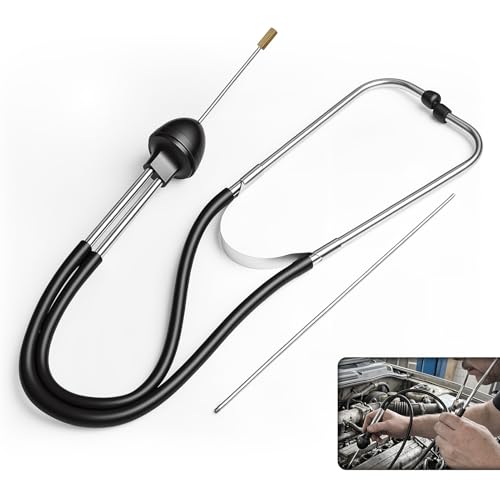
- Pinpoints the source of engine noise
- Amplifies sound for valves, bearings, and pumps
- Includes extension probe for tight spaces
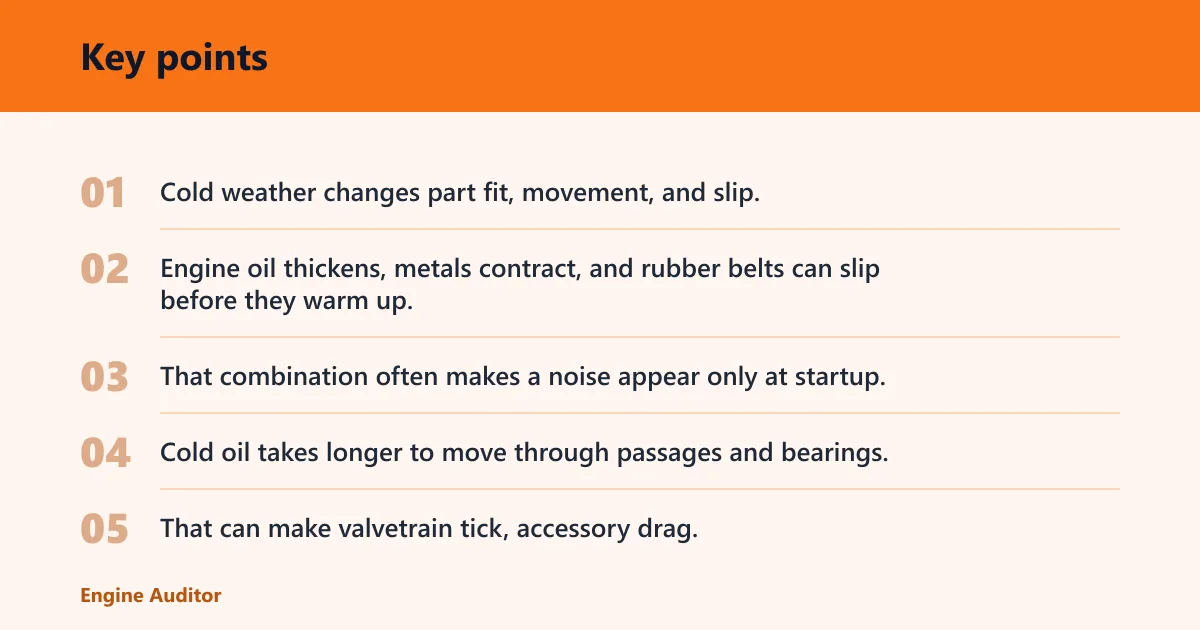
Cold weather changes part fit, movement, and slip. Engine oil thickens, metals contract, and rubber belts can slip before they warm up. That combination often makes a noise appear only at startup, then fade as heat and oil flow stabilize the system.
Thicker oil and slower circulation
Cold oil takes longer to move through passages and bearings. That can make valvetrain tick, accessory drag, and general mechanical noise more noticeable for a short period. Wrong, old, or degraded oil can make the effect worse because it does not flow as well when cold.
Metal contraction and tighter clearances
Cold metal shrinks slightly, so parts that are fine at operating temperature can rub, rattle, or change pitch when first started. Heat expansion can make the same noise disappear. That is why a sound that only happens in the first minute is often a temperature clue, not a mystery by itself.
Why belts and bearings complain first
Belts and small rotating bearings are often the first parts to complain because they start moving immediately. A worn or loose serpentine belt can whine or squeal and is often loudest on a cold start. The serpentine belt drives multiple accessories, so one slip can echo through the front of the engine bay.
| Noise type | When it appears | Likely subsystem | Quick DIY check | Urgency level |
|---|---|---|---|---|
| Squeal that fades fast | Below freezing, first 30 seconds | Serpentine belt, belt tensioner, idler pulley | Watch for belt glazing, frayed edges, or a belt that chatters on start | Inspect soon if it repeats |
| Whine that rises with revs | Cold morning, any speed change | Alternator bearing, water pump bearing, belt drive | Lightly raise RPM in park and see whether the pitch tracks engine speed | Prompt inspection |
| Groan or whine on steering input | Only while turning | Power steering pump or system air | Turn wheel at idle and check fluid level if the car uses hydraulic steering | Prompt inspection |
| Rattle that changes with temperature | Cold start, then vanishes warm | Catalytic converter heat shield | Listen from outside near the exhaust and note whether a light tap changes the sound | Usually non-urgent, unless loose metal is hanging |
| Clicking while turning | Only under load while cornering | CV joint | Drive slowly in a tight circle and note whether the click follows steering angle | Inspect soon |
| Hum or growl that follows road speed | After moving off | Wheel bearing or tire | Coast at the same speed in a straight line and listen for a road-speed pattern | Inspect soon, especially if it gets louder |
Is a cold-start squeal from a belt?
Often, yes. A cold-start squeal is one of the clearest belt-system clues, especially if it disappears after a short warm-up. Glazing, wear, or looseness can let the serpentine belt slip on pulleys, and the noise is usually loudest right after startup when everything is cold and the belt has not settled.
Serpentine belt wear, glazing, and looseness
A worn or glazed belt can lose grip for a few seconds, then quiet down as it warms. If the squeal appears with the first crank or the first idle, inspect the belt for shine, cracking, or missing ribs. A loose belt can also flap slightly and make a brief chirp or squeal.
Belt tensioner and idler pulley clues
The belt tensioner keeps the belt tight; if it weakens, the belt can slip more often when cold. An idler pulley with bearing wear may spin roughly or show play when inspected. That can create a whine or chirp that sounds like belt slip but actually comes from the pulley bearing.
When belt slip points to a deeper problem
If the squeal returns every cold morning, the problem is often more than moisture on the belt. A pulley that drags, a weak tensioner, or an accessory that is starting to seize can overload the belt. In that case the belt is a symptom, not the root cause.
If a 2.0-liter sedan squeals for about five seconds at a 5°C morning start and then stays quiet all day, that can point toward belt slip or a weak tensioner. That pattern points toward belt slip or a weak tensioner. If the same car squeals again after turning on the defroster and headlights, the extra load points toward a belt-drive issue, not random engine noise.
Why does my car make a whining noise on cold start?
A cold-start whine that rises with engine revs usually points to an engine-driven source, not a tire or road issue. Common suspects for a rev-dependent cold-start whine are the alternator bearing, water pump bearing, or power steering pump on vehicles with hydraulic steering. Electrical load, steering input, and RPM all help narrow it down.
Alternator bearing noise
A failing alternator bearing can whine as soon as the engine starts, and it often gets louder when electrical loads are switched on. Try the rear defogger, headlights, or blower. If the pitch changes with those loads and rises with revs, the alternator is a strong suspect.
Water pump bearing noise
A water pump bearing can produce a front-of-engine whine or a light growl that tracks revs. This matters because water pump failure can quickly lead to overheating. If the noise sits near the pump area and changes with engine speed, do not ignore it even if the car still seems to run normally.
Power steering pump whine
A power steering pump can whine when fluid is low, and air in the system can create cavitation noise. The sound often changes when you turn the wheel at idle. If the noise appears only while steering and the fluid is low, that is a useful clue, especially on cars with hydraulic power steering.
Picture a compact SUV that whines only when idling cold, then gets louder when the rear defroster and headlights are switched on. That pattern fits an alternator load change better than a wheel bearing. If the same whine also rises with a quick RPM blip, the engine-driven accessory side moves higher on the list.
Why does my car make noise when starting in the morning?
Morning startup is often the loudest because the car has sat overnight and every part is at the same low temperature. That makes oil thicker, belts stiffer, and metal parts more contracted than they will be after a few minutes. The key is whether the noise fades quickly or stays with the engine.
What is normal warm-up behavior?
Some noise that fades within about 30–60 seconds can be normal warm-up behavior, especially in colder weather. Modern direct-injection engines can also sound harsher for a short time during cold start, and turbocharged engines may add brief mechanical noise from the turbo area. The sound should settle as temperature rises.
When morning noise is not normal
A noise that keeps going after warm-up, gets louder, or comes with a warning light needs inspection. Grinding, knocking, vibration, loss of power, or steering changes move the problem out of the “wait and see” category. If the noise returns every morning and lasts longer each day, something is worsening.
Cold noise vs road noise
If the sound follows road speed instead of engine speed, the problem is probably not in the engine bay. CV joints usually click when turning, while a wheel bearing usually follows road speed. That difference matters because a cold-start engine noise and a driving noise can feel similar from the driver’s seat.
CV joint clicks when turning
A CV joint usually clicks during turns rather than only when the engine is cold. If the sound appears in a tight parking-lot turn and changes with steering angle, it points away from belts and pumps. The click often repeats in rhythm with wheel rotation and load on the joint.
Wheel bearing noise follows road speed
A wheel bearing noise usually grows with road speed, not engine revs. Coast at the same speed in a straight line and see whether the sound stays. If it does, the wheel end is more likely than the engine bay. Cold weather can change how noticeable it is, but the speed pattern stays the main clue.
A five-minute inspection sequence
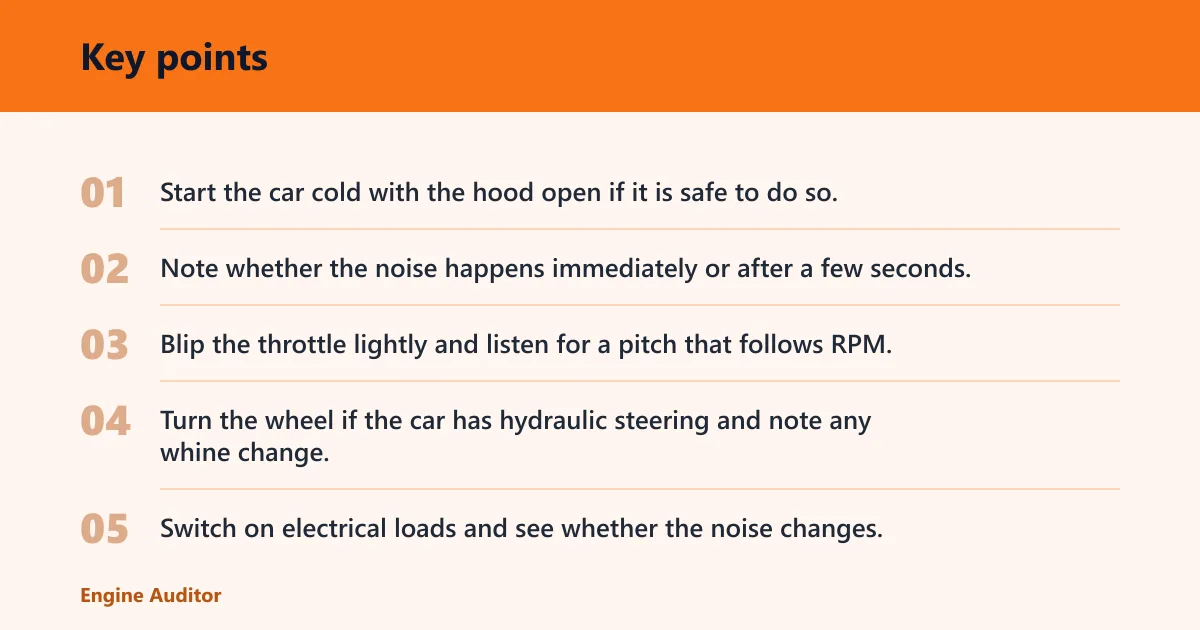
- Start the car cold with the hood open if it is safe to do so.
- Note whether the noise happens immediately or after a few seconds.
- Blip the throttle lightly and listen for a pitch that follows RPM.
- Turn the wheel if the car has hydraulic steering and note any whine change.
- Switch on electrical loads and see whether the noise changes.
- Look for belt dust, fraying, fluid leaks, or a loose heat shield.
- Drive only if the sound fades and there are no warning lights, vibration, or overheating signs.
Cold-start engine noises in modern cars
Modern cars can sound different at startup even when nothing is broken. Electric power steering removes the old hydraulic pump from many vehicles, so a steering-related whine may be absent. Turbocharged engines can sound busy for a short time, and direct injection can make cold combustion noise more obvious during the first moments after start.
Electric power steering differences
With electric power steering, a traditional pump whine is not part of normal operation. That means a steering-related noise on one of these cars may come from the belt drive, suspension, or an electric assist motor rather than a fluid pump. The diagnosis changes with the steering system design.
Turbocharged and direct-injection start-up sounds
Turbocharged engines may add a light whir or whoosh near the turbo, and direct injection can sound sharper when cold. Those noises should settle quickly. If the sound becomes a steady whine, squeal, or rattle that tracks RPM, treat it as a fault until proven otherwise.
What to record for the mechanic
Record the ambient temperature, how long the noise lasts, whether it changes with RPM, and whether it changes with steering or load. Also note whether it disappears after warm-up. Those details help separate cold-start behavior from a defect and can save time during diagnosis.
| What to record | Example note | Why it matters |
|---|---|---|
| Ambient temperature | 0°C, 5°C, or freezing | Cold-weather clues change which parts are most likely |
| Duration | 10 seconds, 45 seconds, 3 minutes | Fading quickly suggests warm-up behavior; persistence suggests a fault |
| RPM dependence | Noise rises with revs or stays the same | Engine-speed noise points to belt-driven accessories or engine parts |
| Steering dependence | Only when turning left, right, or at full lock | Helps separate power steering and CV joint issues from engine noise |
| Load dependence | Gets louder with headlights, rear defogger, or AC | Electrical load can expose alternator or belt-drive problems |
| Warm-up behavior | Gone after 1 minute, still present after 10 minutes | Disappearing noises are more likely temperature-related; persistent ones need inspection |
When should I stop driving if my car only makes noise when cold?
Stop driving if the noise is grinding, knocking, or getting worse, or if it comes with a warning light, overheating, vibration, a steering change, or loss of power. A brief squeal that vanishes warm is less urgent, but a repeating whine from a water pump or accessory drive should still be checked soon.
A common first-timer mistake is treating every cold-start squeal as harmless condensation. Moisture can make a belt noisy, but repeated squeal, a rough pulley, or a noise that returns under load points toward wear. If the sound changes from a brief chirp to a steady whine, the risk level has changed too.
Frequently asked questions
Why does my car make noise only when it is cold?
Cold weather makes oil thicker, metal parts slightly smaller, and belts less compliant. That can bring out noises that disappear once the engine warms. If the sound fades within 30–60 seconds and does not return hot, it is often a belt, pulley, lifter, or shield reacting to temperature.
Why is my car making a whining noise on cold start?
A cold-start whine that rises with engine revs usually points to an engine-driven accessory. The alternator bearing, water pump bearing, belt tensioner, or idler pulley are common suspects. If the whine gets louder with electrical load or steering input, that detail helps narrow the source further.
Why is my car making a squealing noise when it is cold?
Squealing on a cold start usually means belt slip. A worn, glazed, or loose serpentine belt is a common cause, and a weak tensioner can make it worse. If the squeal disappears quickly after startup and returns on damp or very cold mornings, the belt system deserves inspection.
Is it normal for engine noise to be louder when cold?
Yes, some increase in noise is normal when the engine is cold. Thick oil, contracted parts, and cold combustion can make the first moments louder. The important test is whether the noise fades promptly, stays linked to RPM, or comes with vibration, warning lights, or overheating.
How do I tell if a cold-start noise is a belt, pulley, or pump?
Use the pattern. Belt noise often squeals briefly on startup, pulley bearing noise often whines and changes with RPM, and a pump fault may change with steering, electrical load, or temperature. If the noise follows road speed instead of engine speed, look away from the belt drive.
Products related to this article
Sponsored / affiliate links. As an Amazon Associate I earn from qualifying purchases. I may earn additional commission from eligible campaigns.