Brake Warning Light in Winter: What It Means and When to Stop
If the red brake light stays on, or the pedal feels soft, sinks, or changes stopping distance, stop driving. A normal pedal with only ABS lights usually means cautious travel is possible. Ignoring the wrong warning can mean brake fade, wheel lockup, or a frozen sensor that turns a small fault into a tow. This guide sorts parking-brake, ABS, hydraulic, and sensor causes in snow, slush, and cold, then tells you when to park the car.
What the brake warning light means in winter
In winter, the brake warning light can point to anything from an engaged parking brake to a hydraulic fault, and the meaning varies by vehicle. A red brake light is typically treated as serious and safety-critical, while an ABS light points to anti-lock braking trouble rather than a total brake failure. Cold, slush, and road salt raise the odds of stuck hardware, leak points, and sensor faults.
That is why the dash icon alone is not enough. Check the exact symbol in the owner’s manual for your model, because some vehicles separate the main brake warning, parking brake, and ABS status clearly, while others use similar-looking icons for different faults.
Brake warning light triage table
| Dashboard symbol | Pedal feel | Likely winter cause | Immediate action | Stop driving or tow |
|---|---|---|---|---|
| Red brake warning light | Soft, sinking, or changed travel | Hydraulic fault, fluid loss, or severe brake system problem | Pull over safely as soon as possible and shut off the engine | Tow. Do not keep driving |
| Amber ABS light | Pedal feels normal | ABS fault, frozen sensor, damaged wiring, salt corrosion | Drive cautiously and leave more stopping room on wet or icy roads | Short move may be reasonable to a repair centre |
| Parking brake symbol | Normal or slightly changed | Parking brake left on, frozen cable, or stuck hardware | Release the parking brake fully and recheck whether the light clears | Park if it will not release cleanly |
| Brake warning light with low fluid | Soft or spongy | Leaking line, worn pads, or moisture contamination | Inspect the reservoir level and look for leaks | Stop driving. Tow if pedal feel is off |
| Brake light after a snowstorm | Pulls, drag, or uneven feel | Corrosion on connectors, seized caliper, frozen parking brake hardware, or rust on rotors | Check for wheel drag, salt buildup, and obvious damage | Drive only a very short distance if pedal feel is normal; otherwise tow |
What symptoms mean stop driving now?
A soft, spongy, or sinking pedal means stop driving now. So does a pedal that goes almost to the floor, because that points to air, moisture in brake fluid, or a leak in the hydraulic circuit. A red brake warning light with any of those symptoms is a tow situation, not a drive-it-later problem.
Pedal feel is the fastest clue
Brake pedal feel tells you more than the icon does. Soft or spongy usually points to compressible fluid, air, or a leak. A hard pedal can mean a vacuum assist problem or a stuck component, while changed travel or extra effort can signal a fault that needs immediate attention.
Picture a sedan in slush with a red brake light and a pedal that drops farther than usual at each stop. That combination fits the stop-driving rule, because the warning and the pedal both point toward a hydraulic problem.
Noise and vibration matter too
Squealing can mean a wear indicator tab is touching the rotor because the pad is thin. Grinding is worse; it often means metal-on-metal contact that can damage rotors quickly. Vibration or pulsing during braking often points to uneven pad deposits, rotor thickness variation, or uneven wear, not just literal rotor warping.
Winter can make these symptoms louder. Surface rust after damp storage can create a brief scrape, but a steady grind, a pull to one side, or a pedal that changes underfoot needs a brake inspection before more road use.
Can you keep driving if the brakes feel normal?
If the brake warning light is on but the pedal feels normal and fluid levels are normal, a short drive to a repair centre may be acceptable. That advice does not apply to a soft, sinking, or floor-reaching pedal, and it does not override a persistent red brake warning. Winter traction makes every stop less forgiving.
When a short move may be reasonable
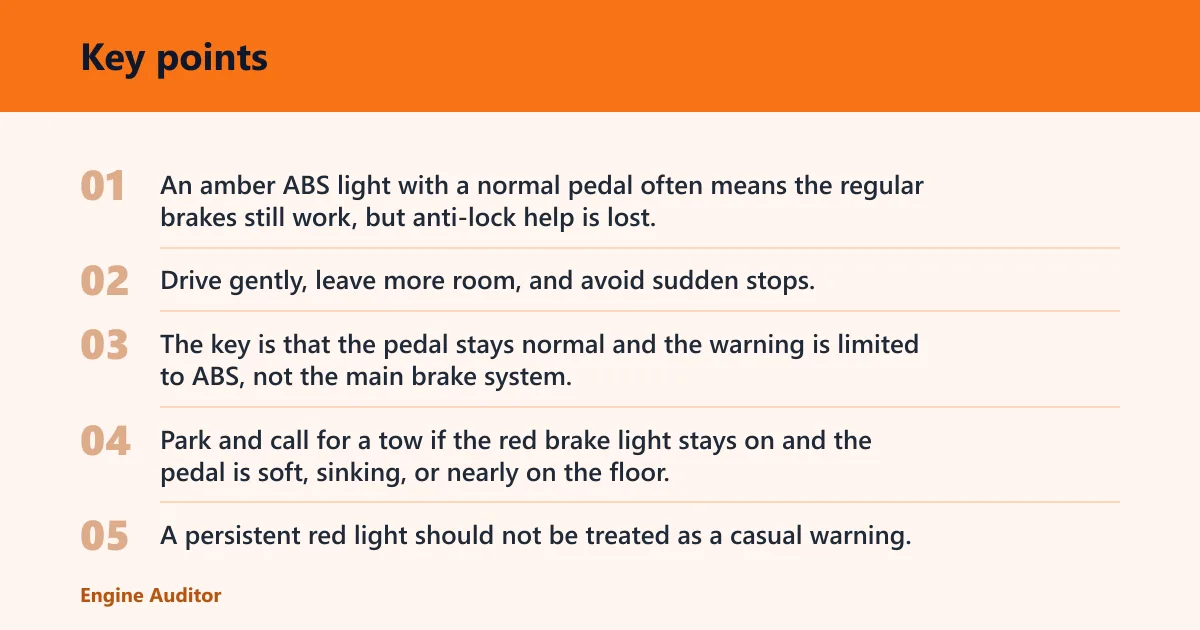
An amber ABS light with a normal pedal often means the regular brakes still work, but anti-lock help is lost. That matters more on wet or icy roads, where longer stopping distances are likely and wheel lockup becomes easier under hard braking. Drive gently, leave more room, and avoid sudden stops.
Say your ABS light comes on after a cold, wet commute, yet the pedal feels firm and the brake fluid is at the proper mark. A cautious trip to a shop may be reasonable. The key is that the pedal stays normal and the warning is limited to ABS, not the main brake system.
When to park and call for a tow
Park and call for a tow if the red brake light stays on and the pedal is soft, sinking, or nearly on the floor. Also stop if the car pulls hard to one side, the pedal effort changes sharply, or the warning flashes with a changed pedal feel. Those patterns point to a fault that can worsen fast.
A persistent red light should not be treated as a casual warning. Pull over safely as soon as possible and shut off the engine, then arrange service if the brake system does not return to normal after the parking brake check.
Winter causes to check first
Cold weather and road salt do more than coat the car. They can freeze parking brake hardware, corrode connectors, seize calipers, and attack brake lines. Low brake fluid is also common, but it usually points to a leak or worn pads, not a fill-and-forget problem.
Low brake fluid and possible leaks
Low fluid can trigger the brake warning light, and it can mean a leak in the hydraulic circuit. A soft or spongy pedal strengthens that concern. Check the reservoir level against the manufacturer marks, and use the brake fluid specification listed on the cap or in the manual; avoid guessing or opening a contaminated system casually.
Brake fluid that looks dark or cloudy can also signal moisture contamination, which matters more in winter because water lowers the system’s margin. If the level is low and you see dampness near the wheels, lines, or master cylinder, treat it as a repair issue rather than a top-up issue.
Frozen parking brake or corroded hardware
Parking brake hardware can freeze or stick after slush gets into cables, levers, or rear mechanisms. Corrosion in connectors or grounds can also trigger false warnings after salt exposure. If the parking brake light stays on after release, recheck the lever or switch and look for binding, not just a bad bulb or dash glitch.
Brake pads, rotors, calipers, and lines
Brake pads that are overly worn can trigger the brake warning light on some vehicles. Thin pads may squeal when the wear indicator tab touches the rotor; once the sound turns to grinding, damage can happen fast. Rotors can rust on the surface after damp weather, but uneven wear, deposits, or thickness variation are more likely to cause vibration.
Calipers can stick in winter corrosion, which may pull the car to one side and leave one wheel warmer or more worn than the others. Brake lines are also vulnerable to road salt; corrosion there raises the risk of a fluid leak and a hydraulic brake circuit failure.
How to check the brake system safely
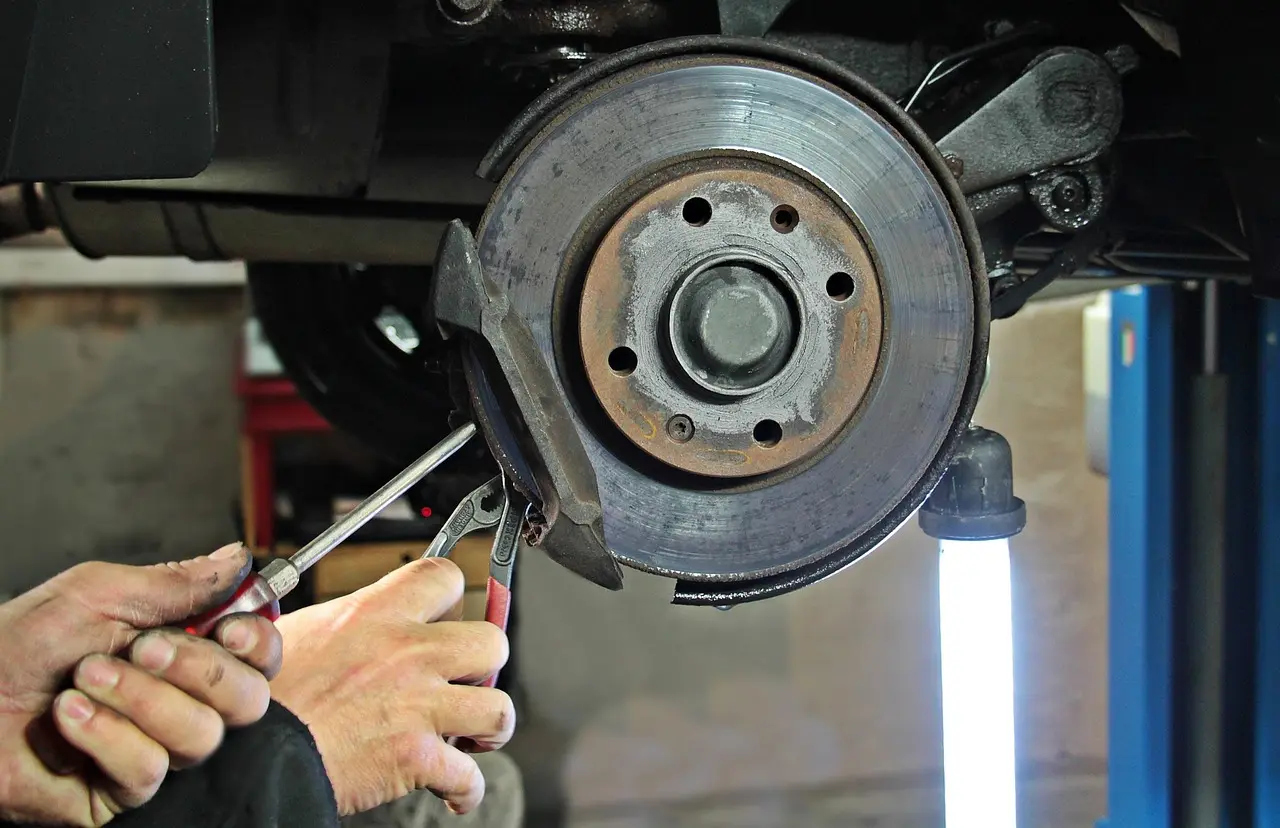
Start with the dash symbol, then check the exact meaning in the owner’s manual. Next, look at brake fluid level against the reservoir marks, and inspect for visible leaks, salt buildup, or damaged wiring near the wheels and under the hood. If the pedal feel is abnormal, do not keep testing on public roads.
-
Confirm the symbol. Check the owner’s manual for the exact icon and whether it refers to the parking brake, the main brake system, or ABS. Different makes use different symbols, so the dash text may not tell the full story.
-
Inspect the fluid level. Look at the reservoir without opening a contaminated system. Match the level only to the marks on the reservoir or the manual’s guidance, and use only the specified fluid type if the vehicle calls for service. Low fluid points to a leak or worn pads and needs prompt repair.
-
Check the wheels and lines. Look for wet spots, salt crust, torn wiring, or obvious corrosion around calipers, brake lines, and connectors. A seized caliper can leave one wheel dragging, and a line leak can turn a warning light into a sudden hydraulic failure.
-
Test pedal feel once. Press the pedal with the engine running and then with it off if the manual allows that check. Stop if it feels soft, spongy, sinks, or reaches the floor, because those are stop-driving symptoms.
A common first-timer mistake is seeing a brake warning after a snowstorm and assuming all winter brake noises are harmless. If the only symptom is a brief scrape from surface rust, that may clear after a short roll. If the light stays on, the pedal changes, or one wheel drags, the fault is not minor.
Frequently asked questions
What does a brake warning light mean in winter?
It can mean the parking brake is engaged, the fluid level is low, or the system has a hydraulic fault. In winter, frozen hardware, salt corrosion, and stuck connectors become more likely. Use the owner’s manual for the exact icon, because the same-looking light can mean different things by vehicle.
Can I keep driving if the brake light is on but the brakes feel normal?
If the light is on but the pedal feels normal and fluid levels are normal, a short drive to a repair centre may be reasonable. That is much less safe if the light is red and persistent, or if winter roads are icy or wet. Any soft or sinking pedal changes the answer to stop now.
Is a red brake warning light different from an ABS light?
Yes. A red brake light typically signals a serious, safety-critical problem, while an ABS light points to a fault in the anti-lock braking system. Regular brakes may still work with ABS trouble, but stopping distances can grow on wet or icy roads. Treat the two lights differently.
Does cold weather or road salt trigger brake warning lights?
Yes. Cold can freeze parking brake hardware, and road salt can corrode brake lines, connectors, and grounds. Damp storage after a storm can also leave surface rust on rotors. Those winter effects can trigger real warnings or false ones, so a light after snow deserves a close check.
What symptoms mean I should stop driving right away?
Stop right away if the pedal is soft, spongy, sinking, or going almost to the floor. Also stop for a red brake warning with changed pedal feel, a hard pedal with abnormal travel, or strong pulling to one side. Those signs point to a fault that can worsen quickly.
Can low brake fluid make the brake warning light come on?
Yes. Low brake fluid is a common trigger, and it can point to a leak or worn pads. A visual check of the reservoir can confirm the level, but use only the fluid type listed by the manufacturer. Do not treat low fluid as a normal maintenance reminder if pedal feel is off.
Products related to this article
Sponsored / affiliate links. As an Amazon Associate I earn from qualifying purchases. I may earn additional commission from eligible campaigns.