How to Check If a Heater Control Valve Is Stuck Closed
If the engine reaches normal temperature but one heater hose stays noticeably cooler than the other, the heater control valve may be stuck closed. If it is left alone, it can lead to no cabin heat, a fogged windshield, and a misdiagnosis that replaces good parts. This guide shows how to separate a stuck-closed valve from a bad thermostat, air pocket, or blend door with simple under-hood checks.
What a stuck valve does
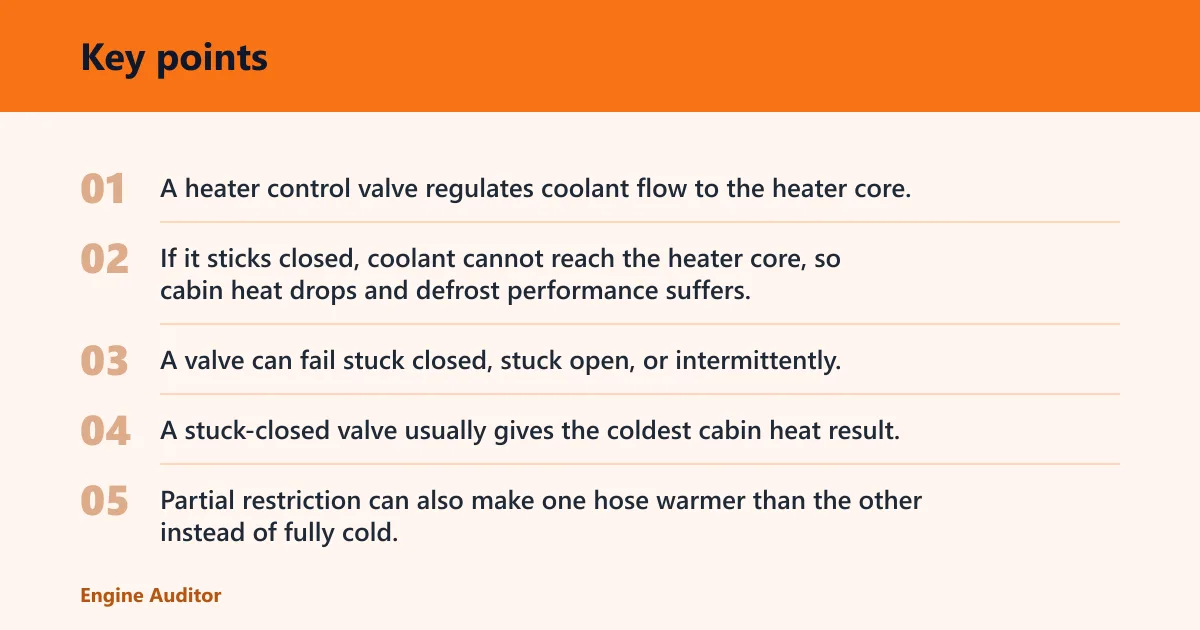

A heater control valve regulates coolant flow to the heater core. It may sit in the heater hose plumbing near the firewall or in the engine bay, and it may be vacuum-operated, cable-operated, or electronic. If it sticks closed, coolant cannot reach the heater core, so cabin heat drops and defrost performance suffers.
Common failure modes
A valve can fail stuck closed, stuck open, or intermittently. A stuck-closed valve usually gives the coldest cabin heat result. Intermittent sticking is harder to pin down because heat may return with engine speed, road speed, or a few extra minutes of warm-up. Partial restriction can also make one hose warmer than the other instead of fully cold.
That is why no-heat complaints need a hose check before parts replacement. The heater core needs coolant flow, but the thermostat and coolant level still matter, and an HVAC blend door fault can mimic the same symptom at the vents.
Where it sits in the hose routing
Most valves are easy to spot because they interrupt one of the two heater hoses before the line enters the firewall. Follow the small-diameter hoses from the engine toward the cabin. A valve that sits near the firewall often points toward a heater-core feed line, while some systems place it farther out in the engine bay with a cable or actuator attached.
If heater control valve checklist
This checklist separates a stuck-closed heater control valve from the most common lookalikes. Use the hose pattern, the valve input type, and the next test together. One clue alone is rarely enough.
| Symptom | Heater hose temperature pattern | Valve command/input type | Likely cause | Next test |
|---|---|---|---|---|
| No heat, engine reaches normal temperature | One hose hot, one hose much cooler | Vacuum, cable, or electronic valve not opening | Stuck-closed heater control valve | Check for valve movement or command signal, then retest hose temperatures |
| Weak heat only at idle | Hose difference grows at idle, improves with rpm | Any type, often partial restriction | Intermittent valve sticking or heater-core flow limit | Check hose routing for collapse, then inspect for restriction or air |
| Warm hoses, cold air at vents | Both heater hoses feel hot | Valve open or not the main fault | HVAC blend door fault | Change temperature setting and listen or feel for door response |
| Low engine temp, poor cabin heat | Upper radiator hose stays cool too long | Thermostat regulates coolant flow | Stuck-open thermostat | Scan for P0128 and compare live coolant temperature |
| Heat comes and goes after recent service | Hose temps may shift erratically | Any valve type | Trapped air or low coolant | Check coolant level and perform a bleed procedure |
| One hose hot, one hose cooler, engine temp normal | Sharp inlet/outlet split at the valve or firewall | Vacuum, cable, or electronic valve | Valve stuck closed or hose blocked | Inspect for kink, collapse, or blocked heater-core flow |
How to check the heater hoses
Start with the hoses because they give the fastest clue. After the engine reaches operating temperature, a working system usually shows hot coolant entering the heater core and a return hose that is still warm but often a bit cooler. A dead-cold hose points toward a blocked path, not a dashboard control problem.
-
Warm the engine fully. Let the gauge reach normal operating temperature before drawing conclusions. A thermostat usually regulates coolant in the 180 to 200°F range, so a cold engine can fool the diagnosis.
-
Feel both heater hoses. Compare the inlet and outlet hoses near the firewall. A large temperature difference with normal engine temperature points toward a stuck valve, blocked hose, or air pocket.
-
Inspect the hose path. Look for kinks, collapse, swelling, or a pinch where the hose bends around brackets. A hose that collapses under flow can act like a bad valve because coolant cannot reach the heater core in enough volume.
-
Watch for partial heat. Weak heat at idle, then better heat at road speed, suggests partial restriction or intermittent sticking. That pattern deserves a closer check of valve movement, hose routing, and heater-core flow before blaming the blend door.
Say your sedan warms normally, the dash gauge sits where it should, and the left heater hose is hot while the right hose near the firewall stays only lukewarm. That pattern leans toward a valve or flow restriction, not a thermostat that never lets the engine warm up.
Could low coolant or air in the system be the cause?
Yes. Low coolant and trapped air can mimic a stuck heater control valve because the heater core may not stay full of coolant. If the system was recently serviced, a small air pocket can leave you with weak heat, uneven hose temperatures, or heat that comes back after a few miles.
Coolant level check
Check the reservoir only when the engine is cool. A low level can starve the heater core before the engine itself shows an obvious overheating problem. This is why coolant level comes first in the diagnosis, before valve replacement or dashboard work.
Trapped air after service
Air often enters after hose, radiator, thermostat, or valve service. After a cooling-system bleed procedure, the heater output should stabilize and hose temperatures should become more even. If the heat returns after bleeding, the valve was probably not the only issue.
Never open a hot cooling system. Let the engine cool completely before opening the cooling system, because pressurized coolant can spray out and burn you.
Could the thermostat be the real problem?
Yes. A stuck-open thermostat can keep the engine running too cool and weaken heater output. It can also trigger code P0128, which points to coolant temperature below target. That problem is different from a stuck heater control valve because the whole engine may never reach the warmth needed for strong cabin heat.
Using live coolant temperature data
An OBD-II scan tool can read live coolant temperature and codes when a warning light is on. If the engine stays below the thermostat target and P0128 appears, the thermostat is often a stronger suspect than the heater valve. A basic OBD-II scanner can show P0128 when coolant stays below the thermostat point.
After about ten minutes, the upper radiator hose should feel hot as the engine warms. The lower hose should stay cooler until the thermostat opens. If both hoses stay cool too long, the thermostat may be stuck open or the engine may have another warm-up problem.
Thermostat versus heater valve
The thermostat controls overall engine coolant flow. The heater control valve only controls coolant flow to the heater core. That difference matters because a bad thermostat usually affects engine temperature and heater output together, while a stuck heater valve can leave the engine warm and the cabin cold.
A stuck-open thermostat can also worsen fuel economy and emissions. That clue points back to engine warm-up, not just the HVAC circuit.
Could the blend door be the lookalike?
Yes. A blend door fault can mimic no heat even when coolant flow is present. If both heater hoses are hot but the vents still blow cold air, the HVAC case may be routing air around the heater core or not moving fully into the heat position when the temperature control changes.
Heat at the hoses but not the vents
If coolant reaches the heater core yet cabin air stays cold, the problem is less likely to be the valve. The blend door, blend door actuator, or temperature control linkage may be at fault. This is the key split that many no-heat guides miss.
Temperature control setting response
Change the temperature setting from cold to hot and listen for movement behind the dash, if the vehicle is quiet enough. If the hoses stay hot but the discharge air does not change, the HVAC side deserves attention before you replace more cooling parts.
Suppose both heater hoses are hot after a 15-minute drive, yet the vents only blow cool air with the control set to full hot. That pattern fits a blend door issue better than a heater control valve problem, because coolant flow is already present.
Test the valve by valve type
The basic test sequence is the same for most cars: command heat, compare both heater hoses, and observe whether the valve moves or receives the right input. What changes is how you read the command. Vacuum, cable, and electronic valves need different checks.
-
Command full heat. Set the HVAC controls to the hottest setting and let the engine reach normal temperature. This places the valve in its expected open state on most systems and gives you a meaningful hose comparison.
-
Check valve movement. Watch the lever, diaphragm, or connector while a helper changes the temperature setting. If the valve does not move or never receives the command it should, the fault may be the control side rather than the coolant side.
-
Compare inlet and outlet heat. A hot inlet with a much cooler outlet points to restricted flow across the valve. If both sides are similar and hot, the valve is probably opening, and the next suspect is the blend door or heater core.
Vacuum-operated valves
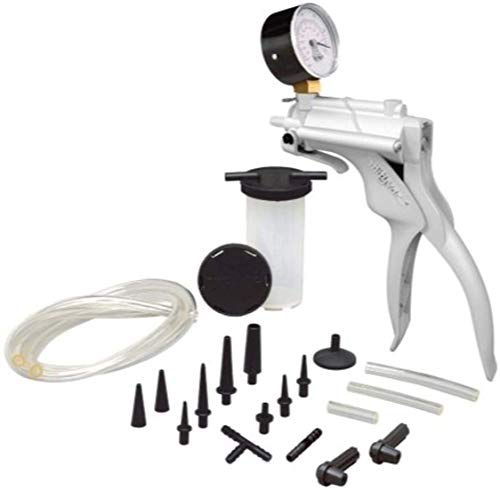
Vacuum valves are commonly found in older systems and in some truck applications. They usually move when engine vacuum reaches the diaphragm. A failed hose, cracked line, or missing vacuum signal can keep the valve closed even though the valve body itself is fine. Check for the command signal before condemning the part.
Cable-operated valves
Cable valves rely on mechanical travel from the dashboard control. If the cable slips, stretches, or detaches, the valve may stay closed or only open partway. On these systems, a stuck lever at the valve or a loose cable housing is a clear clue that the problem is control travel rather than coolant chemistry.
Electronic valves
Electronic valves use a motor or solenoid and may need scan-tool data or actuator command checks. When the HVAC module sends the wrong input, the valve may stay closed even though the hoses and coolant level are fine. If the valve has power and ground but does not respond, replacement is often the practical next move.
When to stop diagnosing and replace it
If the hose pattern keeps pointing to the valve, the command side checks out, and the cabin still gets weak or no heat, replacement becomes the likely fix. Intermittent sticking and partial restriction are hard to cleanly repair in place. The valve may open sometimes and still fail under load or at idle.
Also keep the heater core in view. A clogged or air-bound heater core can mimic valve failure, and some vehicles make it difficult to separate the two without confirming hose temperature, flow, and bleed condition first. If the valve is opening but the return hose stays much cooler than expected, the heater core moves higher on the list.
Replacement cost varies widely by vehicle and access. A common range is $150 to $580, depending on the part and labor involved. That is one reason a careful hose check matters before spending money on the wrong part.
Frequently asked questions
How do I tell if my heater control valve is stuck closed?
With the engine fully warm and the HVAC set to hot, one heater hose stays much cooler than the other if the valve is stuck closed. If the coolant level is correct and the engine is at operating temperature, that hose split is the clearest under-hood clue.
What symptoms does a stuck heater control valve cause?
Common symptoms are little or no cabin heat, weak defrost performance, and sometimes heat that comes and goes. A partial restriction can cause weak heat only at idle, while a fully stuck valve usually gives a stronger hose temperature difference and little heat at the vents.
Can a stuck heater control valve cause no heat at idle?
Yes. A valve that sticks partly closed may still pass enough coolant at road speed but not enough at idle. That creates heat that fades in traffic or at a stop, then improves again when engine speed rises and coolant flow changes.
How do I test a heater control valve without removing it?
Command full heat, then compare the inlet and outlet heater hose temperatures near the firewall. Check whether a vacuum line, cable, or electronic actuator actually moves the valve. If the valve responds but heat is still poor, look harder at air pockets, the heater core, or the blend door.
What is the difference between a bad thermostat and a bad heater control valve?
A bad thermostat changes engine warm-up behavior. A stuck-open thermostat keeps the engine running too cool and can set P0128, while a bad heater control valve can leave the engine warm but the cabin cold because coolant never reaches the heater core in enough flow.
Can I drive with a heater control valve stuck closed?
Usually, yes, if the engine temperature stays normal and there are no other cooling-system warnings. You may still have no cabin heat or poor defrost, so drive only as long as visibility and engine temperature remain safe. Fix the fault before cold-weather use becomes a problem.
Products related to this article
Sponsored / affiliate links. As an Amazon Associate I earn from qualifying purchases. I may earn additional commission from eligible campaigns.