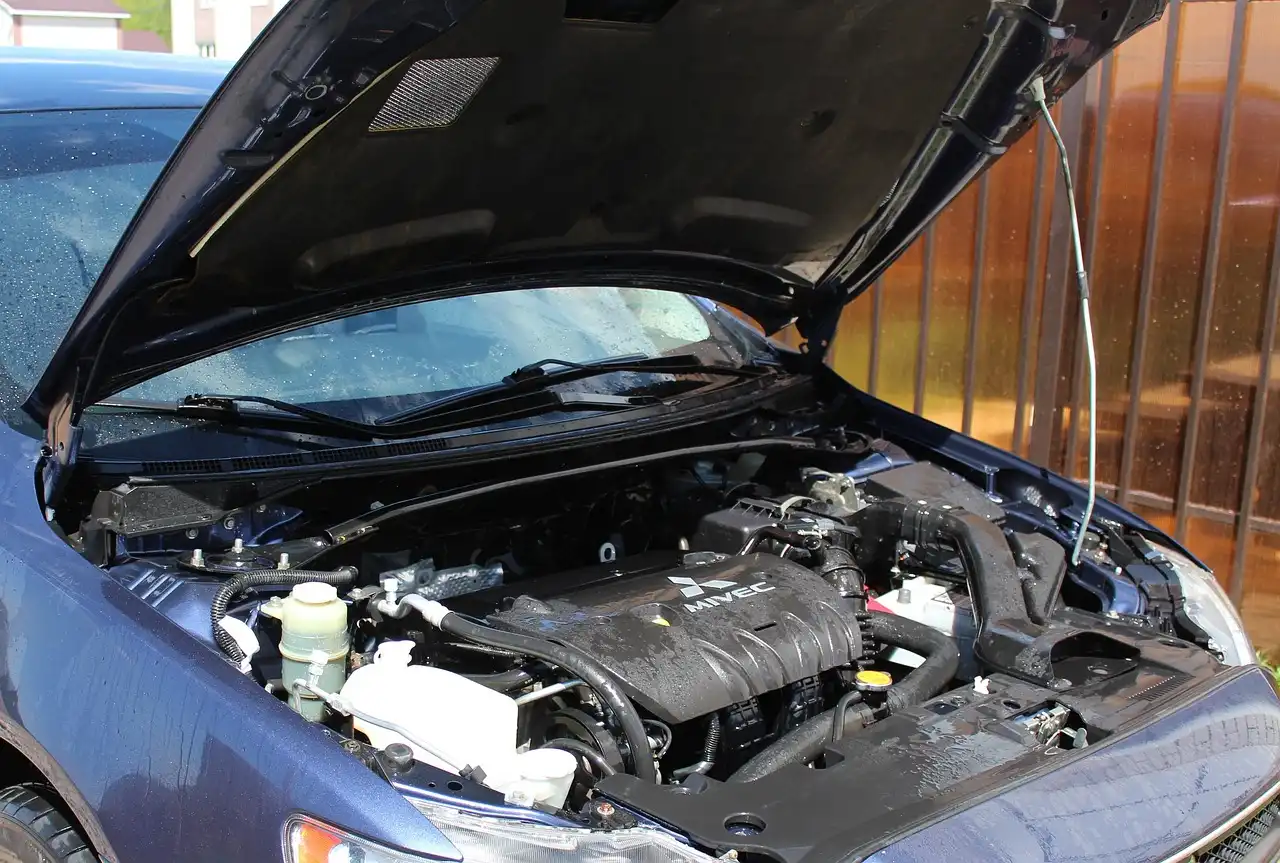
Why Your Car Smells Like Gas After Starting
If your car smells like gas right after starting, a brief odor that fades in about 1–2 minutes can sometimes be normal cold-start enrichment. A smell that lingers, gets stronger, or comes with fuel on the ground should be inspected right away. This guide sorts fuel vapor, exhaust, and EVAP faults with the shortest safe checks.
Gas smell diagnostic table


| Smell location | Timing | Likely subsystem | Quick checks | When to stop driving |
|---|---|---|---|---|
| Inside cabin | At startup, then fades while idling | EVAP purge valve, fuel line leak near firewall, exhaust leak drawing fumes in | Check for pending EVAP codes, inspect purge hose routing, smell near HVAC intake, look under hood for wet fittings | Stop if odor is strong, worsening, or paired with dizziness or visible fuel |
| Under hood | Only on cold start | Fuel injector seal, fuel rail, pressure regulator, exhaust manifold leak | Look for damp injector tops, cracked hoses, and soot at the manifold; scan for fuel trim and misfire data | Stop if you see wet fuel, dripping, or active spray |
| Rear of car or near filler area | After refueling or during first startup | Gas cap, filler neck, charcoal canister, tank vent lines | Check cap seal, cracked neck, loose quick-connects, and EVAP-related warning lights | Stop if fuel is leaking or puddling |
| After a minute of idling | Smell fades, then returns on throttle | Rich cold-start condition, misfire, fuel pressure fault, catalyst overload | Read pending codes, short-term fuel trim, coolant temperature sensor data, and misfire counts | Stop if the odor becomes strong or the check engine light flashes |
Why does it smell only after startup?
A brief gasoline odor right after startup often points to cold-start enrichment. The engine runs richer for a short time, then trims fuel back as coolant temperature rises and closed-loop control takes over. If the smell fades in about 1–2 minutes, the cause is often mixture-related rather than a steady leak.
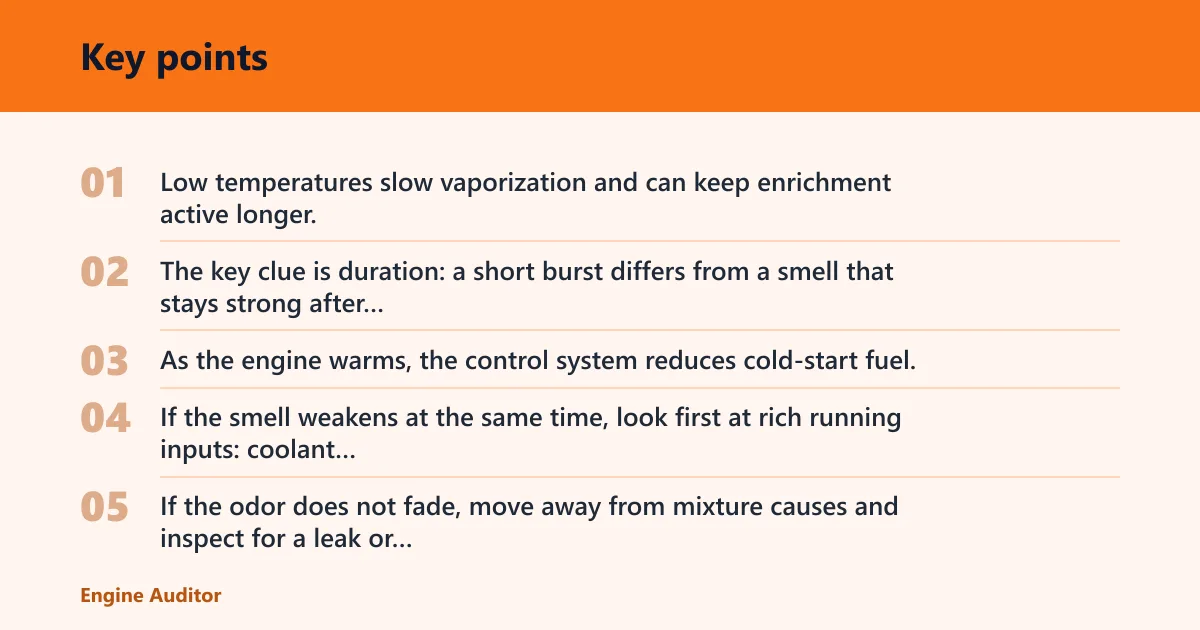
Cold weather can stretch that window. Low temperatures slow vaporization and can keep enrichment active longer, so a minor injector leak, weak pressure control, or a faulty coolant temperature sensor may smell worse at about 20°F than at about 60°F. The key clue is duration: a short burst differs from a smell that stays strong after warm-up.
Why the odor fades as the engine warms
As the engine warms, the control system reduces cold-start fuel. If the smell weakens at the same time, look first at rich running inputs: coolant temperature sensor data, fuel trims, and misfire counts. If the odor does not fade, move away from mixture causes and inspect for a leak or exhaust path.
Say your compact sedan smells like gas for 30 seconds after a winter start, then clears by the time you leave the driveway. That pattern fits cold enrichment better than an open leak. If the same car leaves a wet ring near an injector or the smell returns after refueling, the diagnosis changes fast.
Is a gas smell after startup dangerous?
Yes, it can be. A mild odor that disappears quickly is not the same as active fuel leakage, exhaust entering the cabin, or a flashing check engine light. Stop driving immediately if you see wet fuel, drips, puddles, or an odor strong enough to make the cabin unpleasant within seconds.
When to stop driving immediately
Treat these as tow-now signs: visible fuel on the engine, fuel dripping under the car, a strong odor that worsens with the engine running, or a smell paired with a flashing check engine light. Those symptoms point to an active leak, severe misfire, or catalyst threat, not a small nuisance.
When a same-day inspection is the right call
If the odor is repeatable but no liquid fuel is visible, a same-day inspection is still the right move. That applies to a lingering cabin smell, a rear-of-car odor near the tank, or a startup smell that lines up with EVAP or fuel trim codes. Waiting can let a pressure leak grow.
Why does the EVAP system cause gas smell?
The EVAP system stores fuel vapor in the charcoal canister and meters it back through the purge valve. If the purge valve sticks open, the engine can ingest vapor at the wrong time and smell rich after startup. A damaged gas cap, cracked hose, or saturated canister can also trigger EVAP codes and odor.
Gas cap checks and EVAP codes
Start with the cap only when the odor points to the tank or filler area. Check that it tightens fully, the seal is not cracked, and the neck is not damaged. A bad cap can trigger EVAP-related warning lights, but a cap is unlikely to explain a strong under-hood fuel smell or a wet rail fitting.
Look for pending EVAP codes with an OBD-II scanner. Codes tied to purge flow, system leaks, or canister vent faults point you toward the vapor-control side of the system. If the cap is tight and the code keeps returning, do not keep replacing the cap as a guess.
Fuel injectors and fuel pressure faults
Fuel injectors can smell after startup when a seal leaks or the injector dribbles fuel as pressure builds. The leak may be at the fuel rail, the top O-ring, or the bottom O-ring at the intake port. Cold-start enrichment can hide a small leak until the first few seconds after cranking.
Injector seal leakage at the rail
An injector seal leak often leaves a fuel smell under the hood, not at the rear of the car. Check for dampness around the injector body, fuel rail, and the base of the injector where it enters the manifold. Even a slight seep can create odor without a visible puddle.
Fuel pressure regulator and residual pressure
A regulator fault can create low or unstable rail pressure, or leak fuel on systems that use a vacuum reference. Residual pressure matters because pressure that bleeds off too fast can cause hard starts, rich bursts, and odor on restart.
Suppose a V6 starts cleanly after sitting overnight but smells rich every time it restarts after a 10-minute stop. That pattern can fit pressure bleed-down. If the rail pressure drops quickly after shutdown, a bad injector, regulator, or check-valve issue becomes more likely than a gas cap problem.
Fuel line and hose inspection
Inspect fuel lines for rubber cracking, chafing, loose clamps, and damaged quick-connects. Pressure-side leaks are more likely to create a strong smell under the hood or near the tank because they can seep under load or while priming. Return-side faults can also smell, but the leak path and pressure level differ.
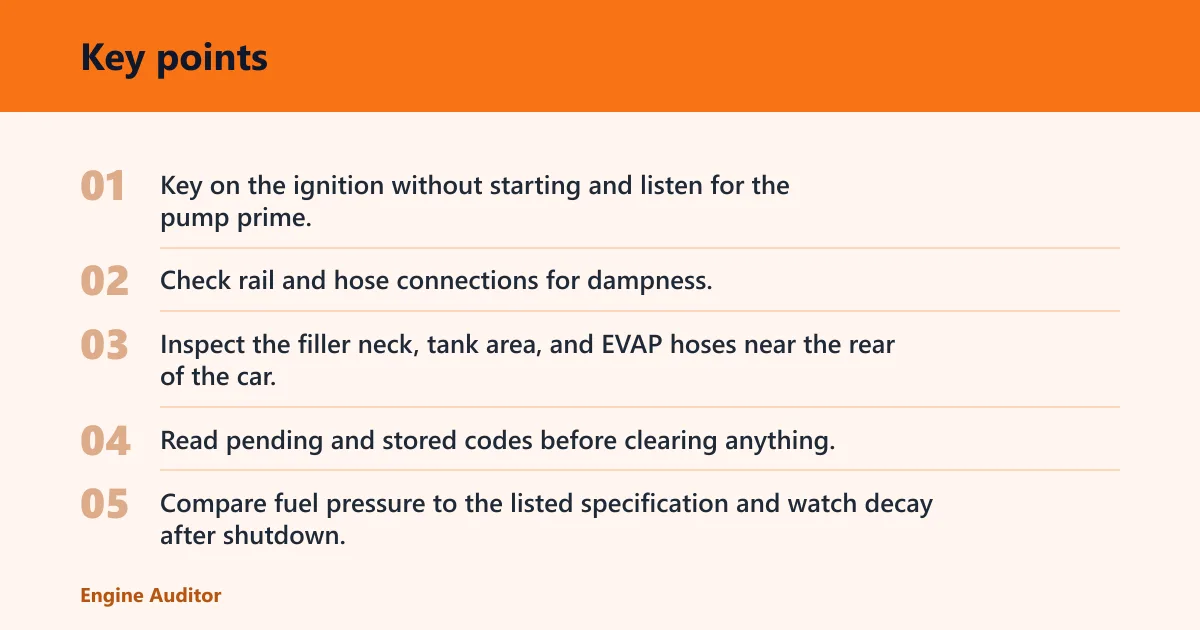
- Key on the ignition without starting and listen for the pump prime.
- Check rail and hose connections for dampness.
- Inspect the filler neck, tank area, and EVAP hoses near the rear of the car.
- Read pending and stored codes before clearing anything.
- Compare fuel pressure to the listed specification and watch decay after shutdown.
Could the exhaust be the source?
Yes. An exhaust manifold leak or pre-catalyst leak can smell like gas even when no fuel is leaking. Cold engine contraction can open a small gap at startup, then the seal improves as metal heats up and expands. That odor often appears under the hood or gets drawn into the cabin at idle.
How misfires affect catalyst odor
Misfires send unburned fuel into the exhaust stream, and that can overload the catalytic converter. When conversion efficiency drops, the exhaust may smell raw or gassy during startup and warm-up. A flashing check engine light, misfire codes, and rich fuel trims make this path more likely than an EVAP fault.
Cabin smell versus under-hood smell
A cabin smell that appears with the HVAC on can come from an exhaust leak near the firewall or from fumes pulled in at the cowl area. An under-hood odor points more toward injectors, fuel lines, rail fittings, or the exhaust manifold itself. Where the smell is strongest matters more than the word “gas” alone.
Why does a scan tool matter here?
An OBD-II scanner can separate a vapor problem from a fuel or exhaust problem. Pending codes, misfire codes, EVAP codes, fuel trims, and engine coolant temperature sensor data all narrow the fault before parts are replaced. That is faster than swapping a gas cap and hoping the smell goes away.
Pending codes and EVAP codes
Pending EVAP codes can point to purge or leak detection faults before the warning light is steady. Pending misfire codes point toward raw fuel entering the exhaust. Either one changes the next test. If the scanner shows no codes but fuel trims are far positive or negative, the engine data still has something to say.
Fuel trim clues and coolant temperature data
Short-term and long-term fuel trims show whether the engine is adding or removing fuel. Large negative trims can fit a rich cold-start condition. An implausible coolant temperature sensor reading can make the computer command too much fuel at startup, which can create a gasoline odor without any visible leak.
A common first-timer mistake is replacing the gas cap because the smell started near the driveway after a cold start. That can be the wrong move if the scanner shows a P0300 misfire code and fuel trim is heavily negative. In that case, the odor path is more likely rich exhaust than vapor from the tank.
Frequently asked questions
Why does my car smell like gas after starting it?
Usually because of one of three paths: fuel vapor from the EVAP system, a fuel leak near the injectors or lines, or raw exhaust odor from a rich cold start or exhaust leak. The location of the smell and how long it lasts tell you which path to inspect first.
Why does my car smell like gas when starting?
If the smell appears only during cranking or the first minute after startup, cold-start enrichment and pressure decay move to the top of the list. If it comes from the rear of the car, inspect the cap, filler neck, and EVAP hoses. If it is under the hood, check injectors and fuel lines first.
Why does my car smell like gas when I start driving?
A smell that appears as soon as you pull away can point to a leak that shows up under movement, such as a hose, connector quick-connect, or tank vent line. It can also reflect exhaust drawn into the cabin at idle and then masked by airflow once you drive, so location still matters.
Why does my car smell like gas when I start it in cold weather?
Cold weather lengthens warm-up and enrichment time, so rich running can be more noticeable. It also makes brittle hoses, seals, and manifold gaskets more likely to leak at startup. A smell that is mild in summer but strong in winter deserves the same inspection path, not dismissal.
Is a gas smell after startup dangerous or normal?
A brief smell that fades quickly can be normal on a cold start, but it should be short-lived and mild. A strong odor, a flashing check engine light, visible wet fuel, or a smell that persists after warm-up is not normal and needs immediate inspection or towing.
Why does my car smell like gas when first started?
That pattern often points to the richest part of the startup cycle. The engine may be adding fuel for cold operation, and a weak sensor, leaking injector, or purge fault can make the mixture richer than intended. If the odor fades fast, the issue may be transient; if not, test further.
Products related to this article
Sponsored / affiliate links. As an Amazon Associate I earn from qualifying purchases. I may earn additional commission from eligible campaigns.